Why Sora proves video AI is not ready for the mainstream
Sora showed video AI is impressive, but unreliable, costly, and too easy to misuse.
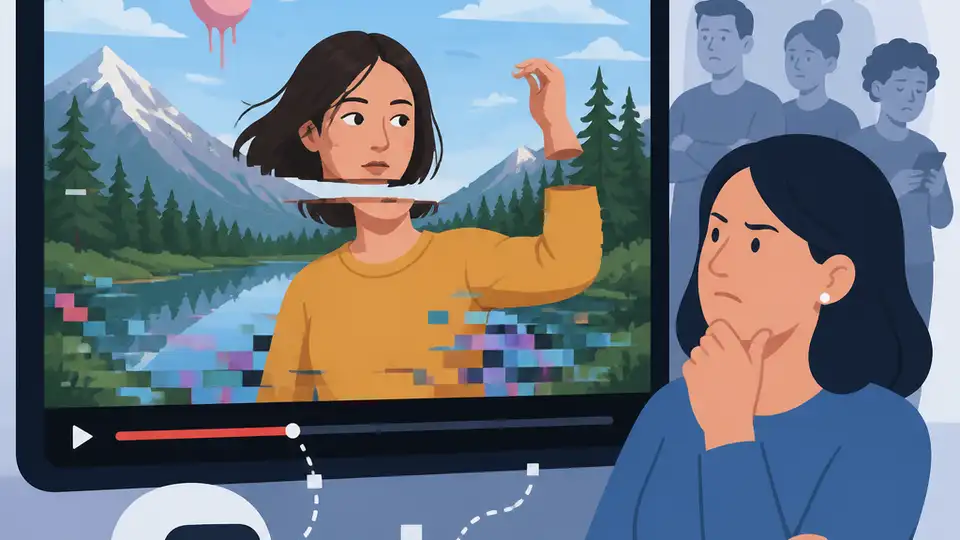
Sora proved video AI is impressive but not ready for mainstream trust.
Sora is the clearest proof that text-to-video has crossed the demo threshold but not the product threshold. OpenAI’s previews in February 2024 drew attention because the clips looked startlingly coherent, yet the model still struggled with simple physical logic, left-right consistency, and causal continuity. By the time the first public release reached ChatGPT Plus and ChatGPT Pro users in the U.S. and Canada in December 2024, the story had already shifted from “can it generate video?” to “can anyone safely rely on it?” The answer was no, and the eventual shutdown of the Sora app in April 2026 made that plain.
First argument: realism is not reliability
Get the latest AI news in your inbox
Weekly picks of model releases, tools, and deep dives — no spam, unsubscribe anytime.
No spam. Unsubscribe at any time.
The first reason Sora should not be treated as a mainstream breakthrough is that visual plausibility fooled people into overrating the model’s actual competence. OpenAI itself acknowledged limitations in simulating complex physics and distinguishing left from right. That is not a minor flaw in a video system; it is a structural weakness. Video is supposed to preserve motion, object permanence, and scene continuity over time. If a model cannot keep those basics straight, then the output may look convincing in a short clip while still being unusable for any task that depends on truth.
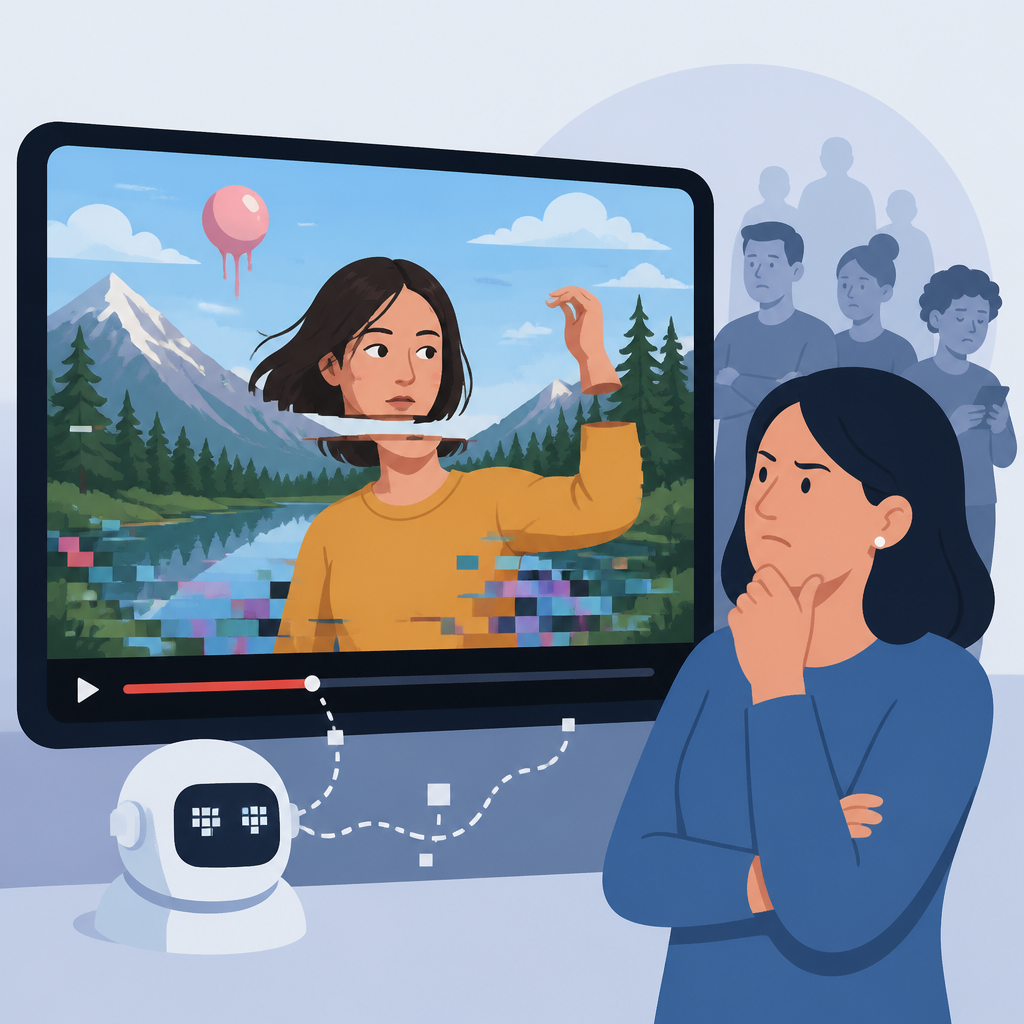
That gap matters because video is a higher-stakes medium than images. A single image can be judged as art or concept. A generated video can be mistaken for evidence, instruction, or documentation. Sora’s early showcase clips were impressive precisely because they resembled real footage, but the same quality made them dangerous as a communication tool. OpenAI added visible watermarks and C2PA metadata, yet third-party tools to remove the watermark appeared within a week of Sora 2’s release. Once the watermark can be stripped, the trust layer collapses and the model becomes a better engine for deception than for dependable creation.
Second argument: the economics punish scale
Sora also exposed a hard economic truth: video generation is expensive enough to break the product on contact with real demand. After launch, reports said Sora’s worldwide users peaked at around a million before falling below 500,000, while the service cost an estimated $1 million per day to run because video generation is computationally heavy. That is not a healthy consumer-app profile. It is the profile of a showcase that becomes a burden once the public starts using it at scale.
This cost structure explains why the company moved away from the product. OpenAI did not give a detailed reason for discontinuing Sora, but reports tied the decision to compute shortages, cost pressure, and a broader shift toward core enterprise products. That is the real lesson. A text-to-video model can produce astonishing clips, but if every minute of output burns expensive inference budget, the business model narrows fast. The market does not reward a tool that is cool, costly, and hard to govern. It rewards systems that are cheap enough to use daily and predictable enough to integrate into workflows.
The counter-argument
The strongest case for Sora is that every new medium starts as a rough prototype. Early image models also hallucinated hands, faces, and text, yet they still changed creative work. Supporters of Sora argue that the model’s flaws are temporary, that better training and more compute will fix them, and that the real value lies in unlocking a new creative interface where anyone can describe a scene and receive a polished video draft. They are right about one thing: the demo quality was real, and the creative leap was obvious.
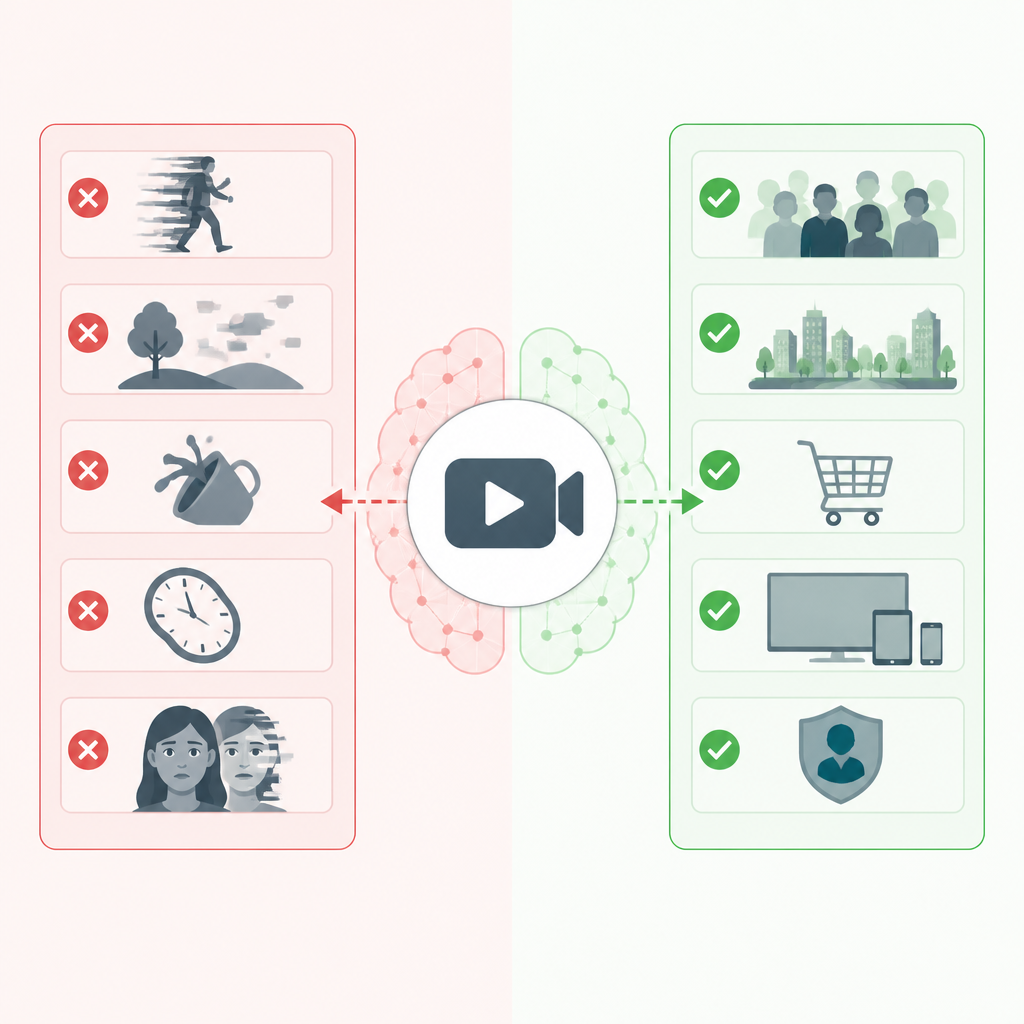
There is also a policy argument in Sora’s favor. OpenAI did introduce watermarks, metadata, and prompt restrictions for sexual, violent, hateful, celebrity, and IP-related content. It also limited access early on and used red-team testing with misinformation and bias experts. That shows the company understood the risk surface and tried to manage it rather than ignore it.
But these safeguards were not enough, and the reason is specific. Watermarks were removable, copyright defaults triggered backlash, and the app’s TikTok-like social layer pushed the product toward virality instead of controlled use. A model that is expensive to run, easy to strip of provenance, and structurally prone to misuse is not a foundation for broad trust. I accept that Sora was a meaningful research milestone. I reject the idea that it was ready for durable mainstream deployment.
What to do with this
If you are an engineer, treat Sora as a warning label: optimize for temporal consistency, provenance, and cost per generated second before chasing prettier samples. If you are a PM, do not confuse user delight with product readiness; build guardrails, abuse monitoring, and unit economics into the launch criteria. If you are a founder, stop assuming that “video generation” is a category by itself. The winning product will be the one that makes generated video trustworthy, affordable, and governable, not just impressive in a launch reel.
// Related Articles
- [RSCH]
How VLMs Learned Complex Scene Descriptions
- [RSCH]
Visual Pretraining Beats Text-Only in Language Models
- [RSCH]
PHINN-EEG brings topology to dream-state EEG
- [RSCH]
Google’s Android Bench update exposes Gemini’s gap
- [RSCH]
Benchmarks should not pick your LLM in 2026
- [RSCH]
Rust Breaks Into TIOBE’s Top 10