5 facts about Model Context Protocol for builders
5 facts explain how Model Context Protocol standardizes AI-to-tool connections, with Anthropic launching it in November 2024.

Model Context Protocol standardizes how AI apps connect to tools, files, and data.
Model Context Protocol, or MCP, is a new open standard for connecting AI systems to external data and tools. Anthropic introduced it in November 2024, and the protocol quickly drew support from OpenAI and Google DeepMind.
| Item | Introduced | Core transport | Notable adoption |
|---|---|---|---|
| MCP | Nov. 25, 2024 | JSON-RPC 2.0 | OpenAI, Google DeepMind |
| OpenAI function-calling | 2023 | Vendor API | OpenAI products |
| ChatGPT plug-ins | 2023 | Vendor connector | ChatGPT |
| LSP | Earlier standard | Message flow model | Code editors |
1. It fixes the N×M connector problem
Get the latest AI news in your inbox
Weekly picks of model releases, tools, and deep dives — no spam, unsubscribe anytime.
No spam. Unsubscribe at any time.
Before MCP, teams often had to build a separate connector for every app and every data source. Anthropic described that as an N×M integration problem, which gets messy fast when the number of tools grows.
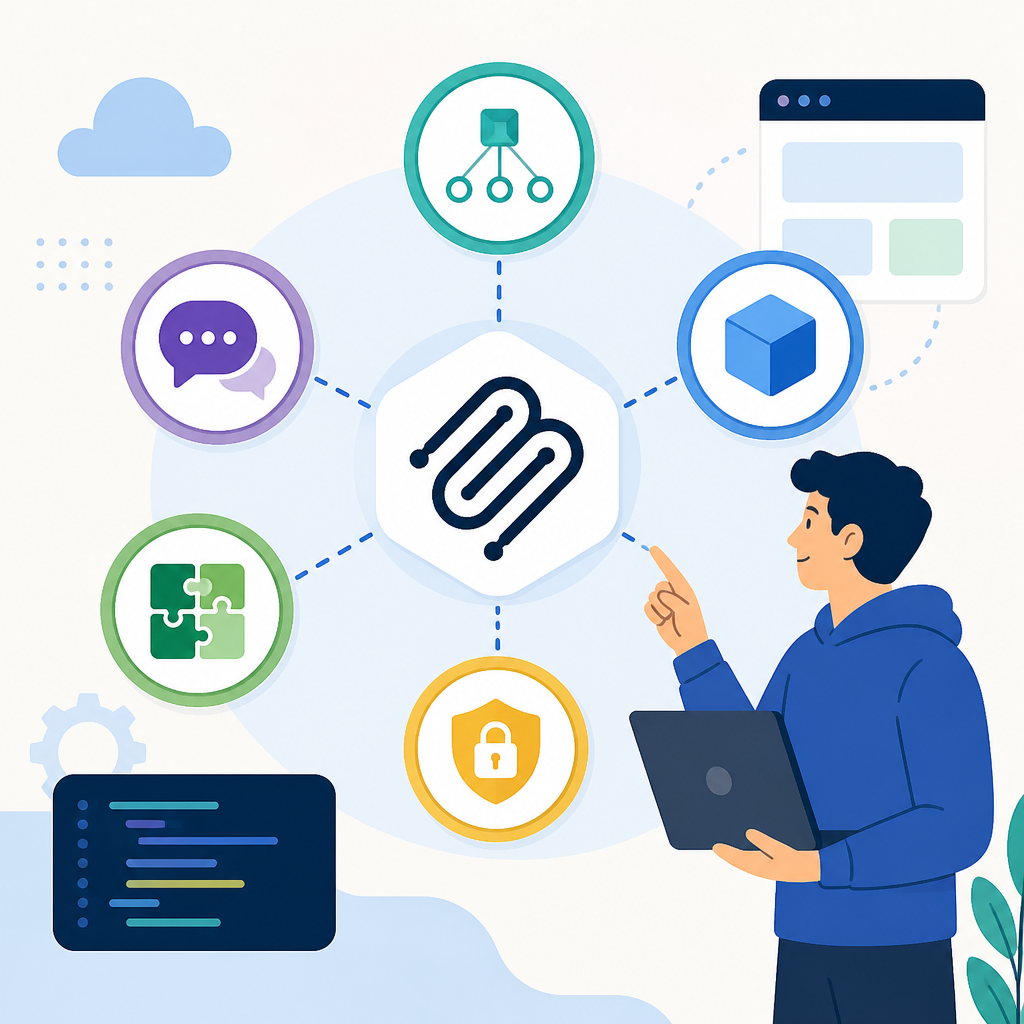
MCP tries to reduce that sprawl by giving AI apps one common way to talk to files, business systems, databases, and developer tools. That makes it easier to plug a new source into many assistants without rewriting the same connector logic over and over.
- One protocol for multiple tools
- One server can expose several data sources
- One client can work with different providers
2. It borrows ideas from developer tooling
MCP re-uses message-flow ideas from the Language Server Protocol, the standard that helped code editors talk to language servers. Instead of inventing a brand-new pattern, MCP adapts a model that software developers already know.
The protocol also runs over JSON-RPC 2.0, which gives it a simple request-response structure. That matters because AI tools often need predictable back-and-forth communication for reading context, calling functions, and returning structured results.
client -> server: request context
server -> client: return files, prompts, or tool results
3. It standardizes more than tool calls
MCP is not just for asking an app to run a function. The protocol covers reading files, executing functions, handling contextual prompts, and moving structured data between systems.
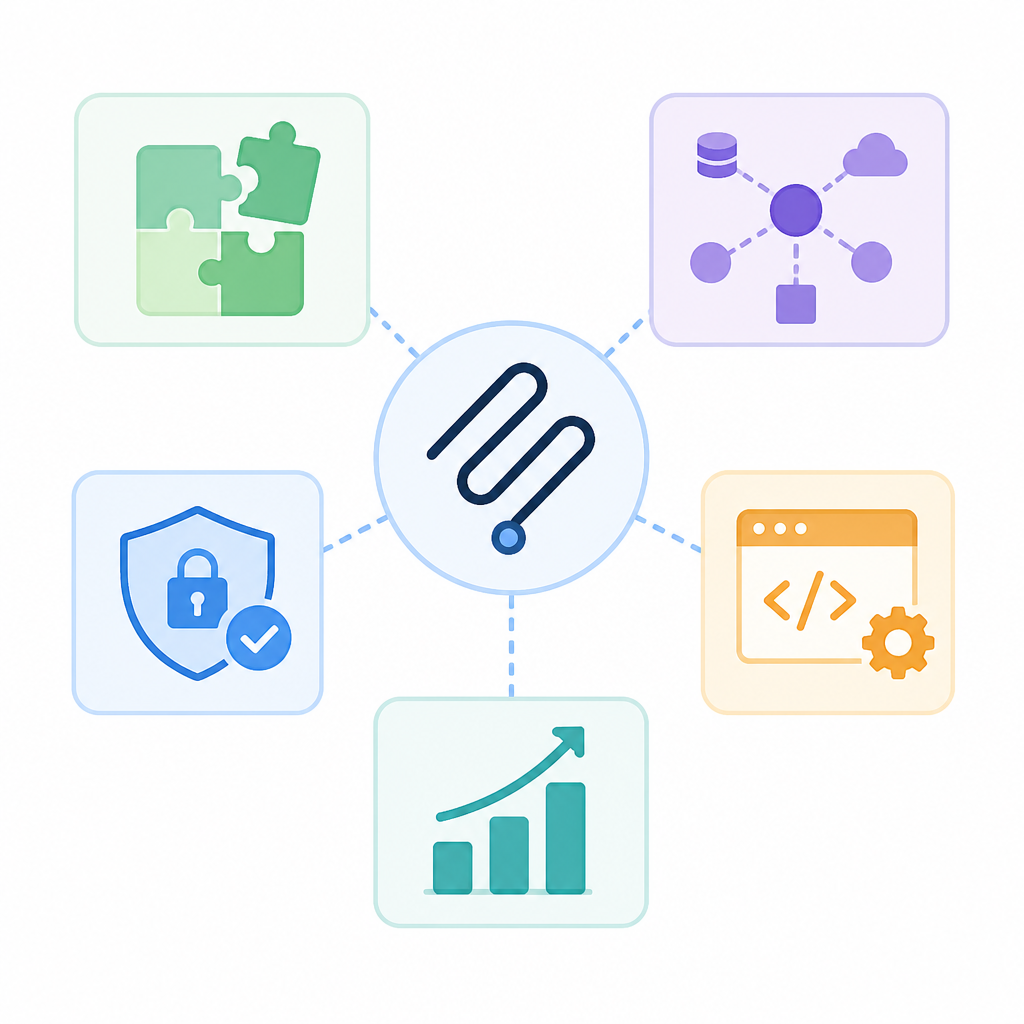
It also supports bidirectional connections, so data sources can send information back to AI tools when needed. That makes MCP useful for workflows like natural-language database queries, project-aware coding assistants, and systems that need metadata alongside raw content.
- File access
- Function execution
- Prompt context delivery
- Structured metadata tagging
4. It already has broad ecosystem support
Anthropic released SDKs in several languages, including Python, TypeScript, C#, and Java, which lowered the barrier for early adopters. The company also maintains reference server implementations, so developers can start from working examples instead of a blank slate.
Adoption spread quickly across AI products and developer tools. OpenAI adopted MCP in 2025, Google DeepMind followed, and tools such as Replit and Sourcegraph used it to give coding assistants live project context.
- SDKs: Python, TypeScript, C#, Java
- Hosts: Claude, ChatGPT, IDEs
- Developer tools: Replit, Sourcegraph
5. It still has security trade-offs
Researchers reported several open security issues in 2025, including prompt injection, tool permission abuse, and lookalike tools that can replace trusted ones. Those findings do not cancel MCP’s value, but they do show that standardization does not remove risk.
For teams deploying MCP, the main lesson is to treat tool access like any other sensitive integration. Validate tool identities, limit permissions, and review what data a server can read or send back to an AI client.
- Watch for prompt injection
- Restrict tool permissions
- Verify server and tool identity
How to decide
If you are building AI products that need to reach files, databases, or internal apps, MCP is the best fit when you want one shared integration layer instead of custom connectors for every vendor. It is especially attractive for teams that already use multi-tool workflows and want cleaner interoperability.
If you are focused on a single platform or a tightly controlled deployment, vendor-specific APIs may still be simpler today. MCP is strongest when portability, reuse, and ecosystem reach matter more than short-term convenience.
// Related Articles
- [IND]
Korea’s Nvidia talks point to an AI factory push
- [IND]
OpenAI should not rush its IPO just to win the AI race
- [IND]
OpenAI updates its Europe privacy policy
- [IND]
OpenAI is right to keep ads out of sensitive chats
- [IND]
AI bootlegs are already draining streaming royalties
- [IND]
AMD and Microsoft push Windows ML on GPU and NPU