5 reasons WebAssembly fits edge data processing
5 reasons WebAssembly works for edge data processing in Azure IoT Operations, from sandboxing to WIT-based composition.
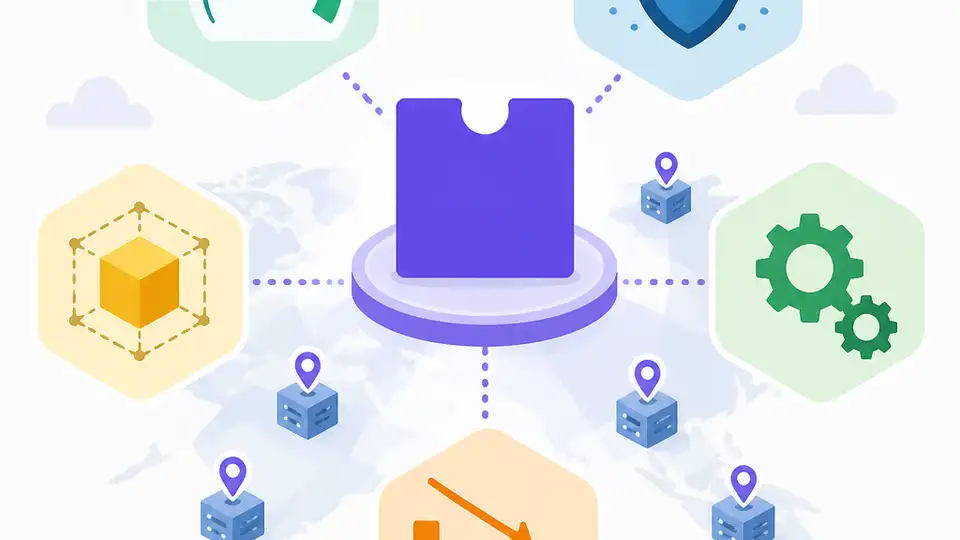
WebAssembly lets edge data operators stay safe, portable, and composable.
At the edge, Azure IoT Operations can run WASM operators with near-native speed while keeping each module in a sandbox. This article breaks down 5 reasons that model works.
1. Memory safety without giving up speed
Get the latest AI news in your inbox
Weekly picks of model releases, tools, and deep dives — no spam, unsubscribe anytime.
No spam. Unsubscribe at any time.
WebAssembly runs code in a bounded memory model, so a bad operator cannot scribble over host memory or keep going after a trap. That matters on production edge nodes where a single faulty filter can cause real damage.
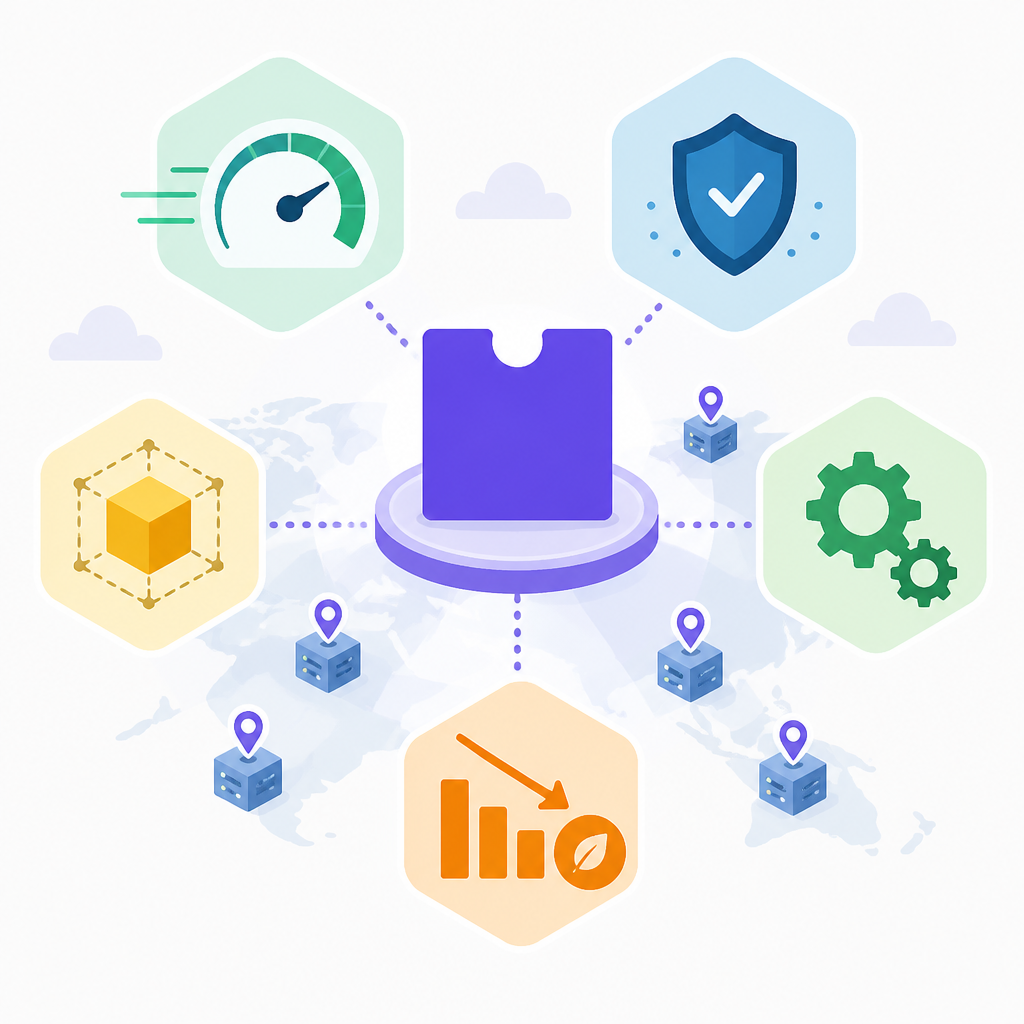
The post highlights three protections that make this practical: validated control flow, bounds-checked linear memory, and immediate traps for violations. In other words, the runtime stops unsafe behavior instead of trying to recover from it.
- Out-of-bounds reads and writes trap immediately
- Indirect calls are type-checked
- Division by zero and stack exhaustion also halt execution
2. Portable operators across languages
One reason the model works for Azure IoT Operations is that a team does not need to standardize on a single language. The article notes support for Rust and Python in the AIO WASM module guide, while WebAssembly itself can be compiled from C, C++, Go, and more.
That portability reduces friction for mixed-team environments. A Rust filter and a Python map can live in the same pipeline, as long as they follow the same component contract.
- Rust for performance-focused operators
- Python for quicker business logic changes
- Shared runtime behavior through WASM
3. Typed boundaries with the Component Model
Core WASM modules only exchange numeric types, which makes rich data awkward to pass around safely. The Component Model fixes that by adding typed interfaces, canonical encoding, and isolated component memories.
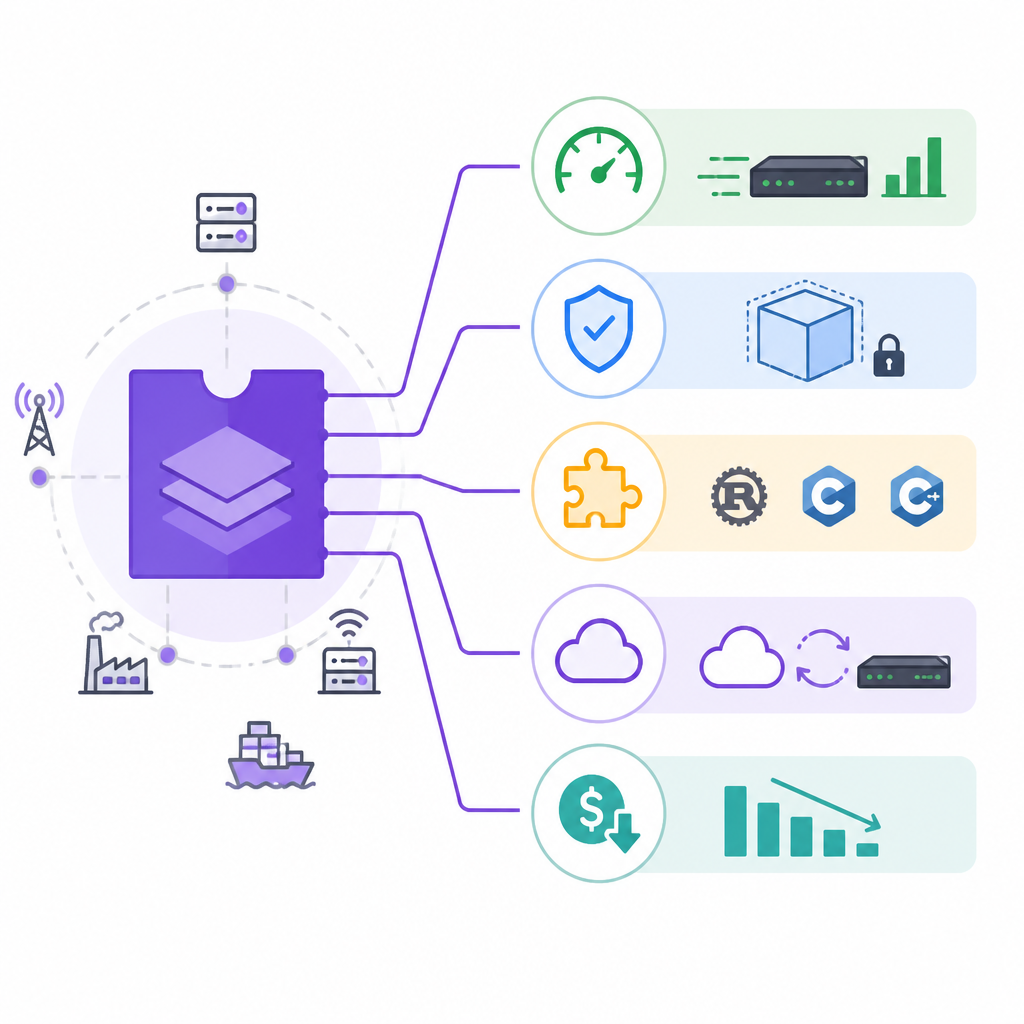
With WIT, teams describe inputs and outputs as records, variants, and lists instead of raw offsets and lengths. That gives operators a cleaner contract and makes integration errors easier to catch before deployment.
interface custom {
  process: func(message: data-model) -> result;
  init: func(configuration: module-configuration) -> bool;
}
4. Better team boundaries for multi-team pipelines
The strongest pattern in the post is composition. One team can own the Azure IoT Operations SDK integration, while another ships the business rules as a sealed binary. Neither team needs the other’s source code.
This split is useful when processing logic is proprietary, when different groups move at different speeds, or when you want to replace one operator without rewriting the rest of the pipeline. The build step can fuse the pieces together with wasm-tools compose.
- SDK layer and business logic stay separate
- Independent components can be swapped later
- Build-time composition checks the contract
5. Deployment fits the edge pipeline model
The article ties the whole stack back to Azure IoT Operations: pipelines are defined in YAML, compiled modules are pushed to a container registry as OCI artifacts, and deployment happens through Azure Resource Manager. That makes WASM feel like part of the platform, not a sidecar experiment.
It also means the operator lifecycle stays familiar to cloud teams. You compile to wasm32-wasip2, package the artifact, and let the edge runtime execute only the imports the component declared.
- YAML-defined dataflow graphs
- OCI artifact distribution
- Azure Resource Manager deployment
How to decide
If you need a single team to ship a simple operator, the monolithic pattern is the easiest entry point. If you need clean separation between platform code and business rules, the composed pattern is the better fit.
For edge systems that need safety, portability, and controlled access to host resources, the Component Model plus WASI Preview 2 gives you a practical middle ground between native binaries and containers.
// Related Articles
- [IND]
WebX 2026 turns speaker hype into a conference brief
- [IND]
AI Weekly: 2026-07-06 ~ 2026-07-13
- [IND]
The AI Act should be treated as Europe’s operating system for AI
- [IND]
Booz Allen’s OpenAI Deal Is Real Advantage, Not Hype
- [IND]
OpenSearch’s vector search benchmark in 5 parts
- [IND]
Vector Databases That Work in Production