Adam DeVine’s Career and Net Worth, Explained
Adam DeVine built a $3 million net worth through TV, film, stand-up, and voice work.
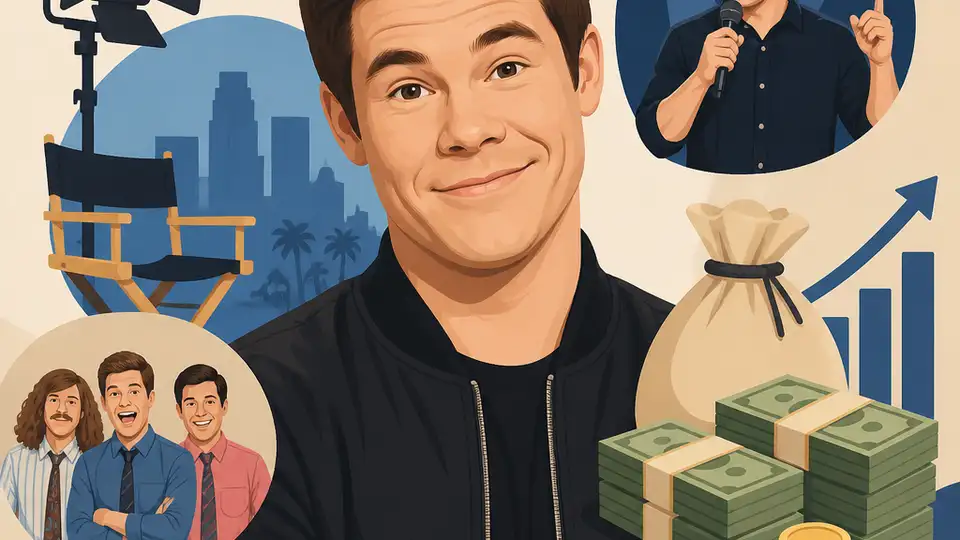
Adam DeVine built a $3 million net worth through TV, film, stand-up, and voice work.
Adam DeVine has turned sketch comedy, sitcoms, and voice roles into a steady Hollywood career, and the number most often attached to his finances is $3 million. That figure comes from years of work across Comedy Central, film, and live comedy rather than one giant payday.
What makes his path interesting is how early internet comedy fed into cable TV success. Before the movie roles and red-carpet appearances, DeVine was building an audience with YouTube-era clips, a comedy group, and a lot of writing work behind the scenes.
| Milestone | Detail | Year |
|---|---|---|
| Birth year | Born in Iowa, US | 1983 |
| Breakout TV work | Workaholics | 2011 |
| House-party series | Adam DeVine’s House Party | 2013 |
| Film breakthrough | Pitch Perfect | 2012 |
| Estimated net worth | Reported fortune | $3 million |
From Iowa to Los Angeles
Get the latest AI news in your inbox
Weekly picks of model releases, tools, and deep dives — no spam, unsubscribe anytime.
No spam. Unsubscribe at any time.
DeVine was born in 1983 in Iowa and later studied at Orange Coast College, where he met Blake Anderson. That connection mattered because the two would eventually help build the comedy projects that made DeVine a recognizable name.
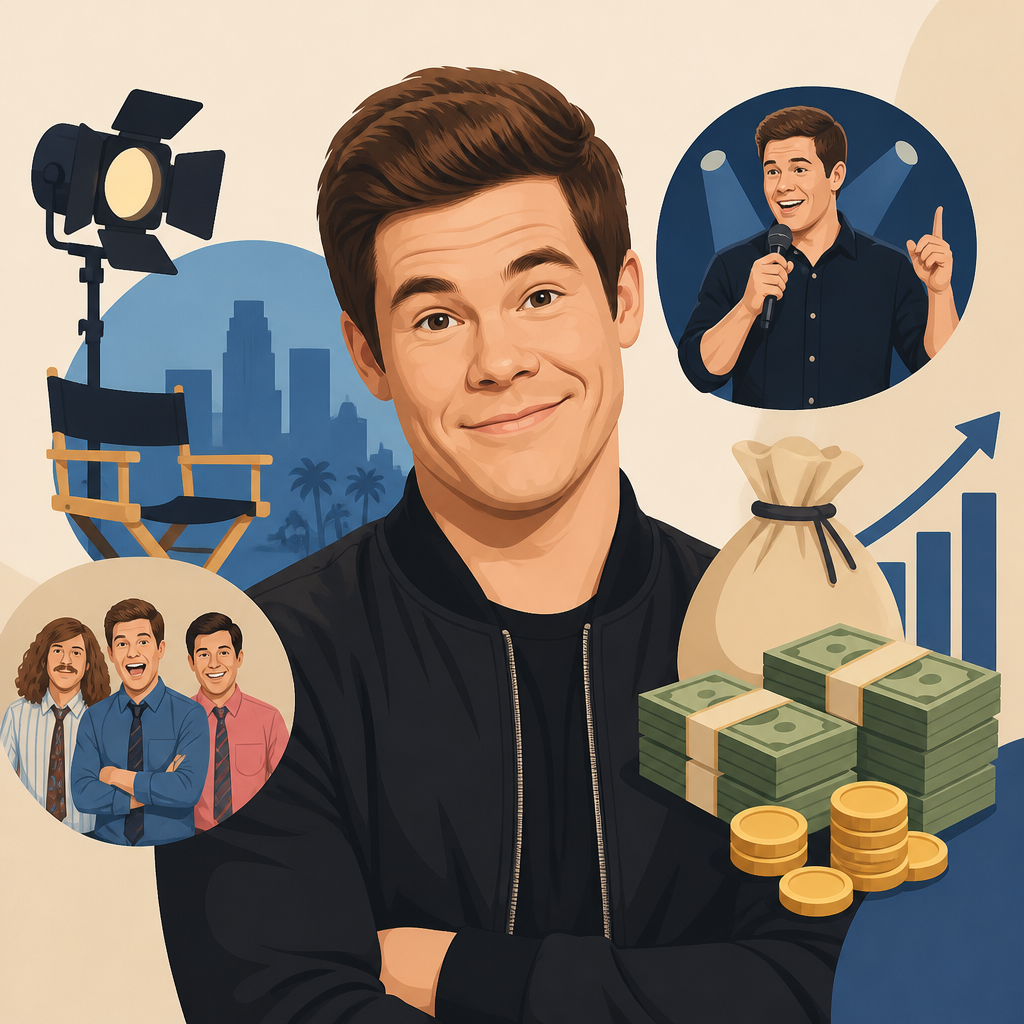
He moved to Los Angeles to pursue acting, and that move changed the shape of his career. Instead of waiting for a traditional break, he helped create his own material with friends and started putting it in front of audiences wherever he could.
The early years were not glamorous, but they were productive. DeVine, Anderson, and Kyle Newacheck formed Mail Order Comedy, a group that mixed live performance with online videos and music.
- The group gained attention through YouTube and MySpace.
- Their song “Wizards Never Die” reached a wider audience after appearing on Attack of the Show!.
- The group later released the album The Wizards in 2009.
The TV shows that built his name
DeVine’s biggest TV credit is Workaholics, the Comedy Central sitcom about three college dropouts trying to act like adults. He starred alongside Blake Anderson, Anders Holm, and Kyle Newacheck, and the show gave him a long-running platform that matched his style of loud, physical, self-aware comedy.
He followed that with Adam DeVine’s House Party, a stand-up showcase built around him hosting comedians at a fictional party. The show premiered in 2013 and was renewed for a second season, which is a useful reminder that cable TV still rewarded comedians who could bring both a voice and a format.
“I want to be the guy that can do a movie, a TV show, a stand-up special and a voice-over gig,” DeVine told NPR in an interview about his career range.
That quote gets at the business logic of his career. DeVine did not stay in one lane, and that made his income more durable than a single sitcom paycheck would have been.
He also wrote a lot of the scripted material for Adam DeVine’s House Party, which matters because writing credits often add both creative control and another revenue stream.
Film roles and the money side of comedy
DeVine’s film profile rose sharply with Pitch Perfect in 2012, where he played Bumper Allen opposite Anna Kendrick, Rebel Wilson, Anna Camp, and Skylar Astin. The role gave him a mainstream audience outside the Comedy Central crowd and led to more film work.
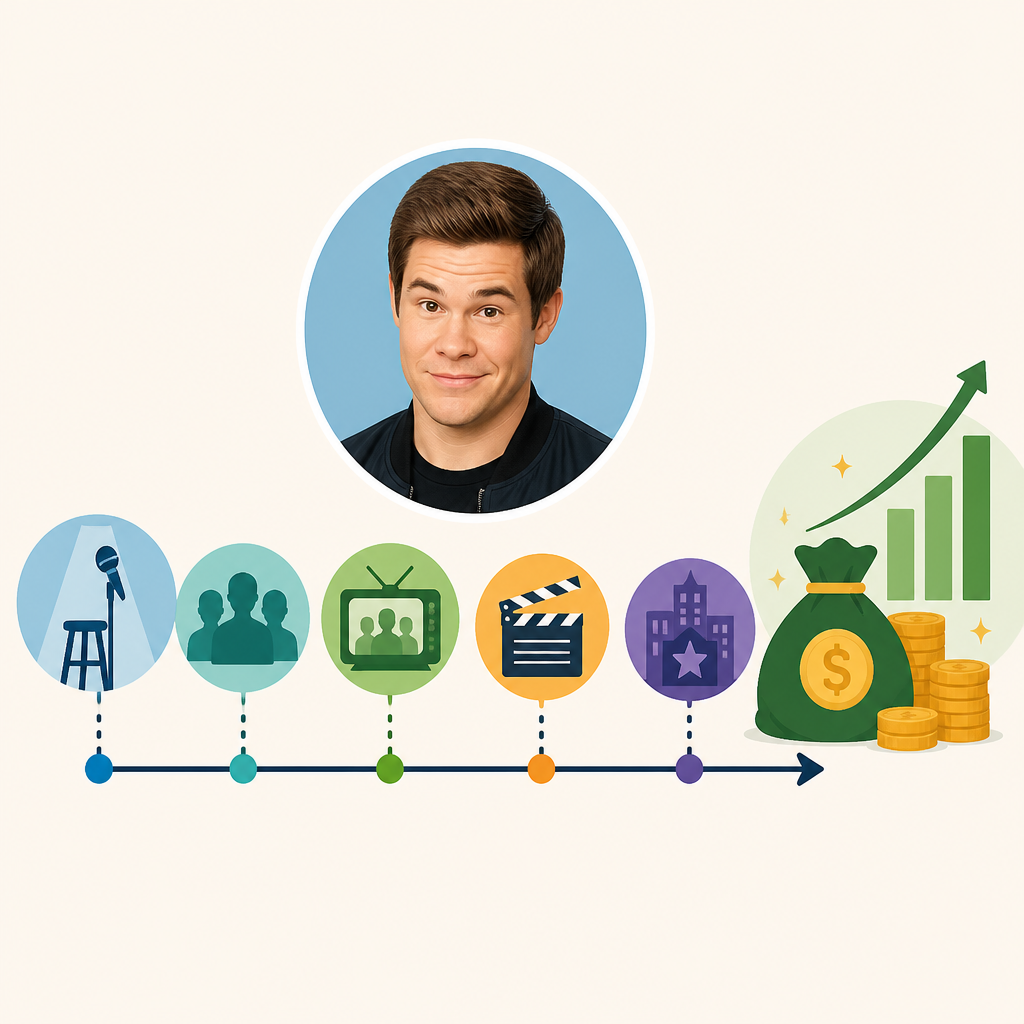
He later appeared in Pitch Perfect 2, The Final Girls, and The Intern. Those credits matter because even smaller supporting roles in studio films can raise a comedian’s earning power, especially when they arrive after a recognizable TV run.
- Pitch Perfect opened the door to wider film visibility.
- Pitch Perfect 2 kept him tied to a profitable franchise.
- The Intern put him in a more mainstream ensemble setting.
He also picked up a Teen Choice Award for his role as Bumper and got a nomination for Choice Movie Breakout. Awards like that do not directly explain a net worth estimate, but they help show why casting directors kept calling.
If you want a simple explanation for the $3 million estimate, it is this: DeVine made money the old-fashioned entertainment way, by stacking TV salaries, film checks, writing work, and live-performance income over time.
How his net worth compares in context
The $3 million estimate is solid for a working comic-actor, but it is modest next to the biggest names from the same era. That gap is normal; a performer can be widely known without landing the kind of ownership stakes or blockbuster deals that push net worth into much higher territory.
It also helps to compare his path with the structure of other comedians who moved from internet clips to cable TV. The people who make the most money usually own a lot of the material, produce their own projects, or stay on screen for a very long time.
- DeVine’s net worth: about $3 million.
- His income sources: acting, producing, stand-up, and voice work.
- His breakout platform: Comedy Central, which gave him national exposure but not the kind of ownership that can multiply wealth fast.
- His career model: ensemble comedy first, then film, then broader media work.
That mix explains why he remains visible even when he is not headlining a massive franchise. He has kept himself useful to studios and networks by being funny on camera, funny in a recording booth, and funny in a writers’ room.
For readers tracking entertainment money, DeVine is a good reminder that celebrity earnings are often built in layers. A breakout role creates attention, a second or third platform keeps the attention alive, and the money follows the consistency.
What Adam DeVine’s career says now
Adam DeVine’s career is a case study in how mid-tier Hollywood success works: build an audience, stay versatile, and keep moving between TV, film, and live comedy. His $3 million net worth reflects that steady approach more than a single headline-making payday.
If he keeps landing voice roles, ensemble comedies, and creator credits, that number can climb without needing a giant franchise hit. The real question is whether he keeps writing and producing enough of his own material to own more of the upside next time around.
For now, DeVine looks like exactly what he has been for most of his career: a comedian who turned a strong point of view into a durable business.
// Related Articles
- [IND]
Why Web3 and AI learning must become practical, not theoretical
- [IND]
3 Dev Adam vs Other Turksploitation Films
- [IND]
Why Big Slick’s celebrity rollouts still work
- [IND]
Why Jexi is wrong about AI comedy
- [IND]
Why AsiaStrategy’s stock looks cheap for a reason
- [IND]
Why Cricket Australia must stop pretending contract tension is normal