AI Trends for 2026: Tech Titans' Predictions
Tech giants like Google and Microsoft predict AI's role in 2026, highlighting AI agents, quantum computing, and industry applications.
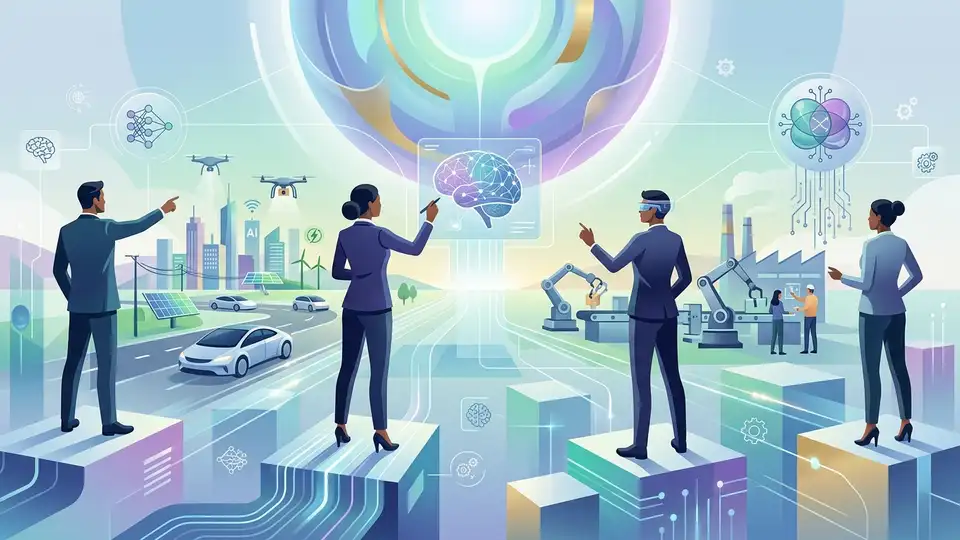
As we look towards 2026, technology titans such as Google, Microsoft, and Anthropic have shared their predictions for the evolution of artificial intelligence. Their forecasts highlight a significant shift towards AI agents, the integration of quantum computing, and expanding industry applications. With AI moving beyond experimental phases to large-scale implementation, the next few years promise substantial advancements.
Key Predictions from Major Players
Get the latest AI news in your inbox
Weekly picks of model releases, tools, and deep dives — no spam, unsubscribe anytime.
No spam. Unsubscribe at any time.
Several tech giants have released detailed reports outlining their vision for AI in 2026. These reports focus on various aspects, from AI's role in productivity to its integration with quantum computing.
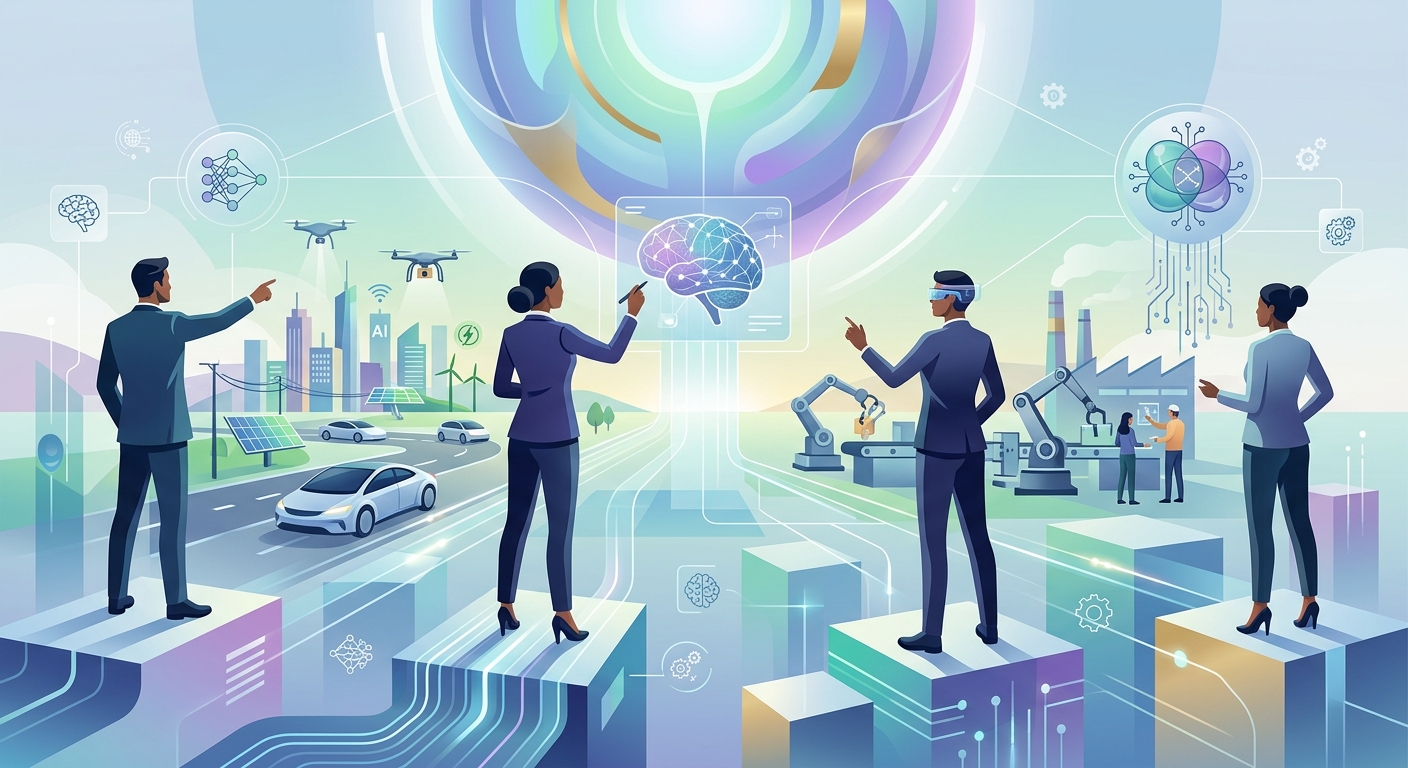
- Anthropic: Their "2026 Agentic Coding Trends Report" emphasizes the evolution of AI agents into collaborative partners, playing roles in productivity and workflow automation.
- Google: The focus is on personalized AI agents that enhance employee productivity and offer proactive customer service.
- Microsoft: Highlights include AI's role in reducing global healthcare disparities and accelerating scientific research.
- NVIDIA: Predicts the emergence of "physical AI," which will redefine industries with its ability to control actions and learn from real-world feedback.
Insights from Industry Leaders
One of the prominent voices in the AI industry, Andrew Ng, has shared his perspective on the future trajectory of AI. Ng, a co-founder of Coursera and a leading AI researcher, believes that the emphasis should be on practical applications of AI rather than just theoretical advancements.
"The real value of AI lies in its application across industries, solving real-world problems," Ng stated in an interview with MIT Technology Review.
Comparative Analysis: Current Trends and Future Projections
When comparing current AI trends with future projections, several key differences emerge. For example, the use of AI agents is expected to transform from simple tools to integral parts of the workforce. In 2021, only about 20% of tasks in tech companies were managed by AI, but this number is projected to rise significantly by 2026, with AI handling up to 60% of tasks.
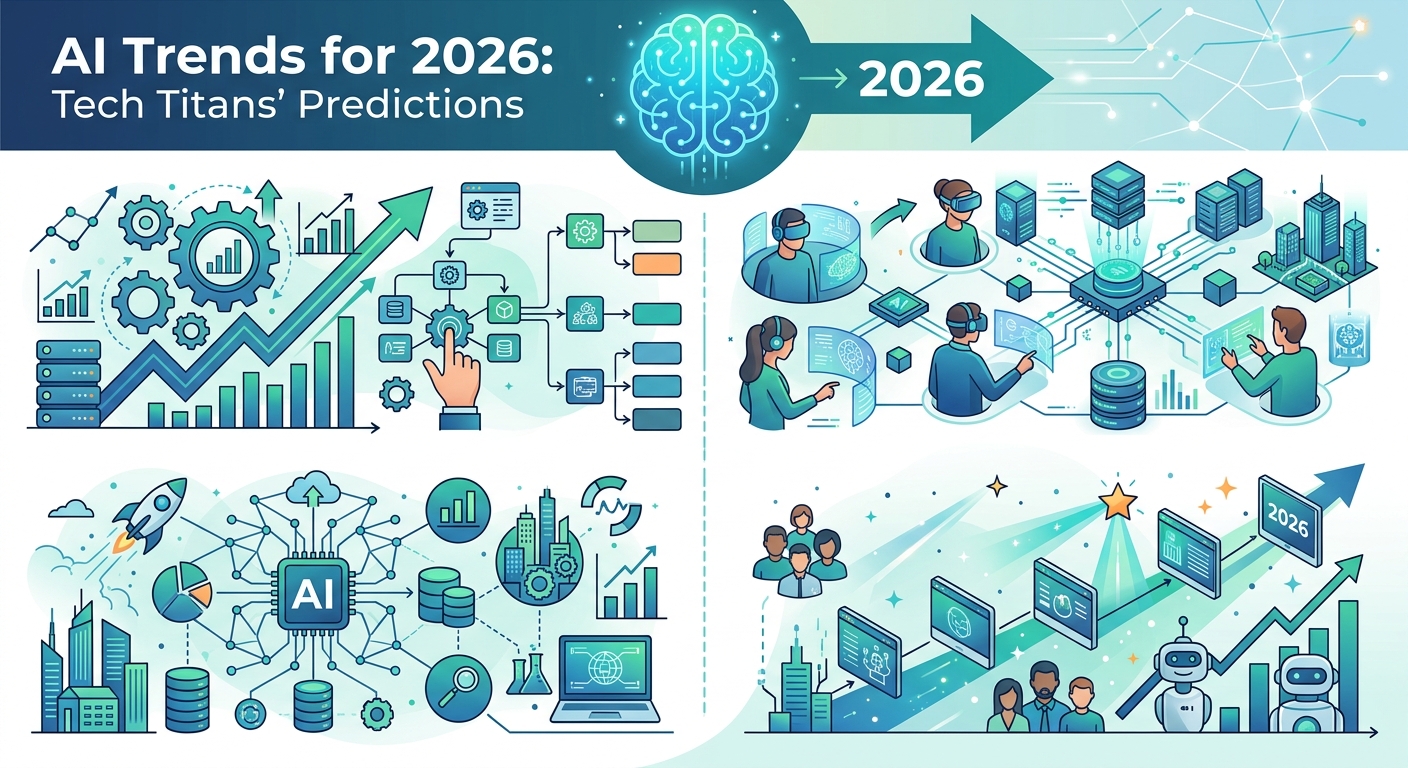
- Current AI Use: Predominantly in customer service and content generation.
- Projected AI Use: Expanded to include complex tasks like workflow management, scientific research, and personalized healthcare.
- AI in Production: Presently, AI is used in production environments by 52% of companies, a figure expected to grow as AI proves its value in operational efficiency.
A Glimpse into 2026: What to Expect
As AI continues to evolve, the integration of quantum computing will likely be a significant factor in its advancement. The combination of AI, supercomputers, and quantum computing could lead to what many refer to as "quantum advantage," where AI systems outperform conventional methods in specific tasks. This development could revolutionize industries ranging from healthcare to manufacturing.
While the precise trajectory of AI is hard to predict, the focus on ethical considerations, transparency, and security will undoubtedly play crucial roles. As more sectors embrace AI, understanding its implications and managing its growth responsibly will be essential for sustainable advancement.
// Related Articles
- [IND]
WebX 2026 turns speaker hype into a conference brief
- [IND]
AI Weekly: 2026-07-06 ~ 2026-07-13
- [IND]
The AI Act should be treated as Europe’s operating system for AI
- [IND]
Booz Allen’s OpenAI Deal Is Real Advantage, Not Hype
- [IND]
OpenSearch’s vector search benchmark in 5 parts
- [IND]
Vector Databases That Work in Production