AI turns dairy ops into a tighter feedback loop
A practical breakdown of how dairy teams can use AI for feed, transparency, and consumer messaging.

This breaks down how dairy teams can use AI for feed, transparency, and consumer messaging.
I've been watching ag folks talk about AI for a while now, and dairy is one of those places where the pitch usually sounds better than the reality. Too often it gets sold like magic: cameras on cows, dashboards everywhere, a chatbot for the farm, and somehow margins improve overnight. That is not how any of this works. If you've ever tried to bolt a new tool onto a barn workflow, you already know the pain. The sensor data is messy. The team is busy. The person who actually notices a sick animal is not the same person who owns the software login. And consumer outreach? Half the time it turns into generic marketing sludge that nobody on the farm asked for.
So when I read RFD-TV's report on the National Milk Producers Federation and Alan Bjerga talking about AI in dairy, I paid attention for a different reason: the useful part here is not the hype. It's the way AI is being framed as a set of small, specific jobs inside the barn and outside it. That matters. The article at RFD-TV says the industry is looking at precision, transparency, efficiency, feed efficiency, production output, and direct-to-consumer communication. That's a much more honest list than the usual AI fanfare.
Stop asking AI to be the farm manager
Get the latest AI news in your inbox
Weekly picks of model releases, tools, and deep dives — no spam, unsubscribe anytime.
No spam. Unsubscribe at any time.
"producers are using technology to improve precision, transparency, and efficiency in dairy operations"
What this actually means is that AI is being treated like an assistant layer, not a replacement for judgment. That's the right instinct. In dairy, the hard part is not generating an answer. The hard part is noticing the pattern early enough to act on it before milk yield slips, feed waste climbs, or a health issue spreads through a group.
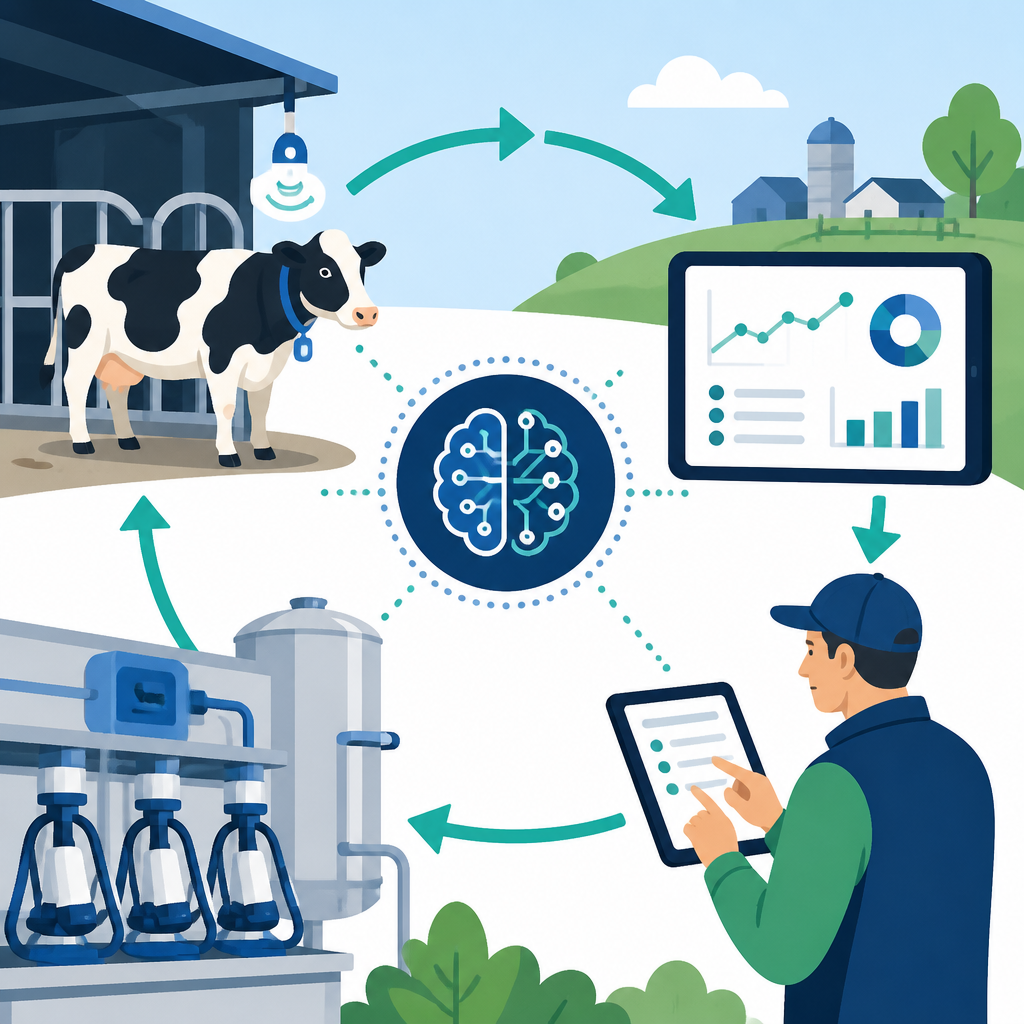
I ran into this same problem when I helped a team evaluate automation for a livestock workflow. The software was great at ranking alerts. It was terrible at understanding what the barn crew already knew from smell, behavior, and timing. The lesson was simple: if the tool cannot fit into the rhythm of the operation, it becomes another tab nobody trusts.
For dairy teams, "precision" should mean narrower decisions. Which pen needs attention first? Which cow group is drifting off target? Which feed change is improving conversion and which one is just making charts look busy? AI is useful when it helps answer those questions faster and with less guesswork.
How to apply it:
- Start with one decision you already make every day, like sorting animals, checking intake, or reviewing production anomalies.
- Use AI to rank signals, not to make final calls.
- Keep a human override in every workflow. If the crew does not trust the recommendation, the model is decorative.
The National Milk Producers Federation, which you can read more about at nmpf.org, is basically pointing to the same thing: useful AI in dairy is operational, not theatrical.
Feed efficiency is where the math finally gets real
"AI is being used in areas related to feed efficiency, production output"
Feed is where I stop listening to broad AI talk and start asking for numbers. If a tool cannot help reduce waste, improve ration decisions, or spot drift in intake patterns, then it is just another expensive screen. Feed efficiency is also one of the few places where small improvements can matter fast, because the cost structure is immediate and the feedback loop is visible.
What this actually means is that AI can help compare expected intake against actual intake, flag patterns by group, and surface changes that a person might miss until the next review. It can also help connect weather, health, and production signals so the team sees why output moved instead of just seeing that it moved.
I like this use case because it is boring in the best way. Boring usually means measurable. And measurable is what dairy needs if it wants to separate useful automation from vendor theater. If a model says a ration tweak improved output, fine. Show me the baseline, the time window, the herd segment, and whether the change held up after the novelty wore off.
How to apply it:
- Track feed, output, and health data in the same review window.
- Use AI to detect variance, then have a human explain the variance.
- Measure results in operational terms: waste reduced, yield stabilized, response time shortened.
If you're building the stack yourself, tools like TensorFlow or PyTorch are only useful if you already have clean input data and a reason to model the problem. Otherwise, you're just training a headache.
Transparency is not a slogan, it's a workflow
"improve precision, transparency, and efficiency"
Transparency sounds nice right up until you have to define it. In dairy, transparency can mean traceability for buyers, clearer reporting for processors, better records for compliance, or simply being able to explain what happened when production shifts. AI helps here when it reduces the time between an event and a readable explanation.
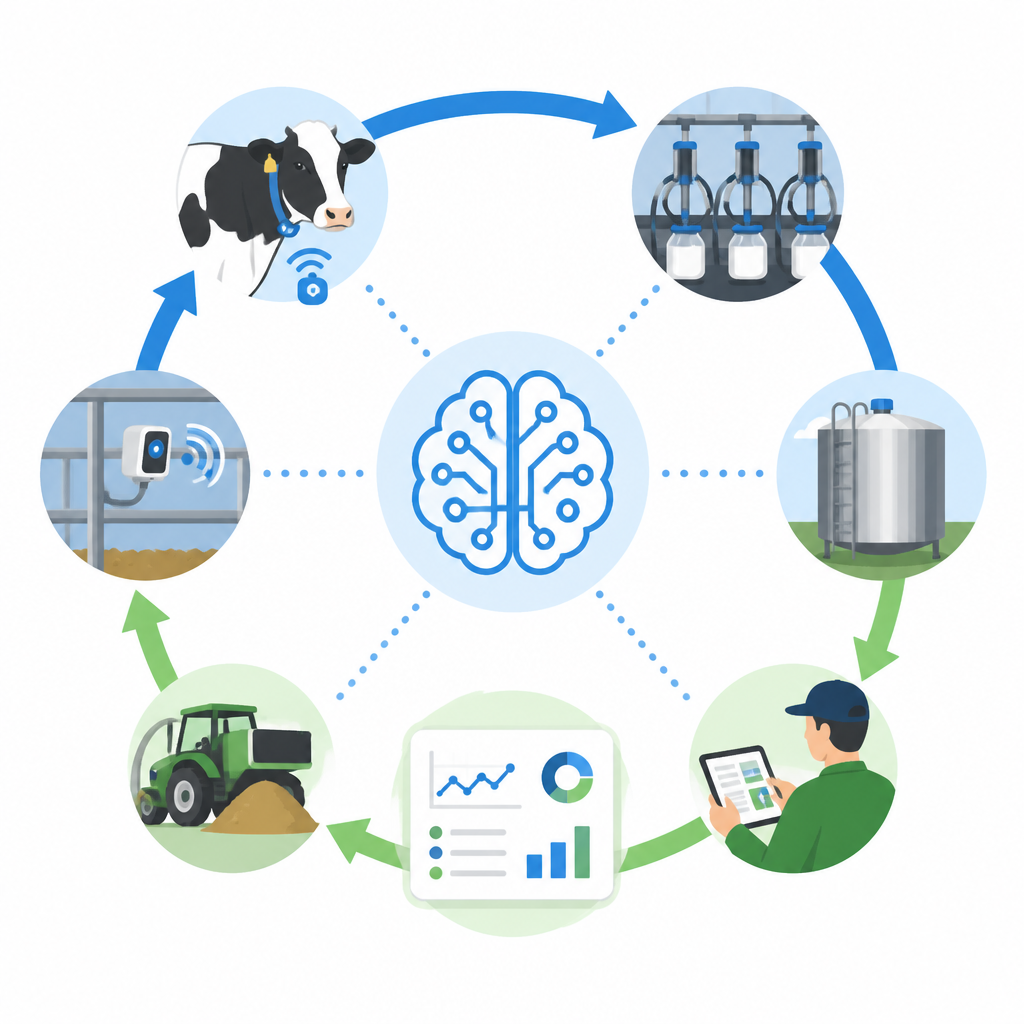
I've seen teams try to make transparency into a branding exercise. That usually fails because customers do not care about your internal dashboard. They care about whether they can trust the story you tell about the product. The article's framing is better: AI can support the operational side of trust, which then supports the outward-facing message.
What this actually means is that the same data feeding barn decisions can also feed traceability, reporting, and customer communication. If a producer can say, with evidence, how a process changed and why it improved, that is worth more than a polished sustainability paragraph.
How to apply it:
- Keep a short audit trail for major production decisions.
- Use AI summaries to turn raw logs into plain-language updates.
- Separate internal notes from public messaging so the marketing copy does not outrun the facts.
This is where a lot of teams get lazy. They want AI to write the story before they have the record. That order is backwards. Build the record first, then let AI help summarize it.
Consumer outreach only works if it sounds like a human wrote it
"the technology may continue to expand both inside and outside the barn"
The article mentions direct-to-consumer communication, and that is where dairy can either get smarter or get annoying very quickly. AI can help answer repetitive questions, draft updates, and tailor messages by audience. It can also produce bland corporate mush that makes a farm sound like a content farm. I have seen both.
What this actually means is that AI should help a dairy brand stay responsive without making every message feel automated. If a customer asks where milk comes from, how animals are cared for, or what changed in a process, AI can help staff answer faster. But the final message still needs a person who knows the operation and can write like one.
I think this matters more now because consumers are not just buying a product. They are buying confidence. And confidence gets built through repetition, plain language, and consistency. If AI helps a dairy team keep those messages accurate and timely, good. If it turns into canned outreach, people will smell that immediately.
How to apply it:
- Use AI to draft FAQ answers, not final public statements.
- Keep one human editor responsible for tone and accuracy.
- Base every consumer-facing claim on a real operational fact.
If you want a practical model for this kind of communication layer, look at OpenAI or Anthropic as general tooling references, but do not confuse model capability with good messaging. Those are different problems.
AI in dairy works best when it shortens the gap between signal and action
"AI adoption continues expanding both inside and outside the barn"
This is the part worth keeping. The real value is not "using AI". The value is shortening the gap between what is happening and what the team does next. In a dairy operation, that gap can mean lost feed efficiency, delayed treatment, inconsistent reporting, or a missed chance to explain a process clearly to buyers.
I've found that the best AI workflows in agriculture are the ones that respect existing expertise instead of trying to replace it. The barn crew knows things the model will never know directly. The model can still help by spotting patterns, ranking priorities, and turning scattered data into something a person can act on faster.
How to apply it:
- Pick one workflow where delay is expensive.
- Define the signal, the action, and the owner before adding AI.
- Review whether the tool changed decisions, not just whether it produced output.
If you're evaluating vendors, ask for proof that the system improves a real metric you care about. Not a demo. Not a slide. A metric.
The dairy AI playbook is smaller than people want it to be
That is not a bad thing. It is actually the reason this story matters. The National Milk Producers Federation conversation, as reported by RFD-TV, points toward practical uses: better precision, better transparency, better efficiency, better communication. That is enough. Dairy does not need a grand AI manifesto. It needs tools that help people notice, decide, explain, and repeat.
When I strip away the hype, that is the pattern I keep seeing in every useful AI deployment: narrow scope, clean data, human judgment, and a clear payoff. Anything beyond that is usually a sales deck looking for a farm to impress.
The template you can copy
# AI in Dairy Operations: Practical Rollout Template

## Goal
Use AI to improve one measurable dairy workflow without replacing human judgment.

## Best-fit use cases
- Feed efficiency tracking
- Production anomaly detection
- Herd health signal ranking
- Compliance and traceability summaries
- Customer FAQ drafting

## What AI should do
- Rank alerts by priority
- Summarize daily or weekly data
- Flag unusual changes in intake, output, or health patterns
- Draft plain-language updates for internal review

## What AI should not do
- Make final herd decisions
- Publish customer-facing claims without human review
- Replace barn crew observations
- Hide the source data behind a black box

## Simple rollout plan
1. Pick one workflow with a clear cost or delay problem.
2. Define the signal you already track.
3. Define the action a human will take.
4. Add AI only where it shortens the time between signal and action.
5. Review results weekly for one month.
6. Keep or remove the tool based on a real metric.

## Metrics to watch
- Feed waste reduced
- Response time to alerts
- Output stability
- Record accuracy
- Time saved on reporting
- Customer response consistency

## Human review checklist
- Does the recommendation match barn reality?
- Is the data current?
- Can the team explain why the model flagged this?
- Would we act on this without AI?
- Did the tool improve the metric we actually care about?

## Consumer messaging rules
- Draft with AI, edit with a person
- Use plain language
- Base claims on operational facts
- Keep a short audit trail
- Avoid sounding automated

## One-line test
If the AI tool disappeared tomorrow, would the dairy team still know what to do?
If the answer is no, the workflow is too dependent on the tool.
That template is my version of the article's idea, not a quote from the source. I built it from the RFD-TV report and the broader practical constraints I keep seeing in real ops work.
Source: https://www.rfdtv.com/how-artificial-intelligence-is-reshaping-the-dairy-industry. The framing about AI in dairy, feed efficiency, transparency, and consumer outreach comes from RFD-TV's coverage; the rollout template and operational advice here are my own synthesis.
// Related Articles
- [IND]
Anthropic’s $35 billion buildout proves AI now runs on finance and ch…
- [IND]
OpenAI Partner Network widens enterprise AI access
- [IND]
AI Weekly: 2026-06-08 ~ 2026-06-15
- [IND]
Anthropic’s offline move turns policy into code
- [IND]
89.2k-star MCP server directory for tool builders
- [IND]
OpenAI should face the multistate probe before it goes public