Anthropic’s $45B SpaceX Compute Deal
Anthropic will pay SpaceX nearly $45 billion over three years for computing resources to power Claude.

Anthropic will pay SpaceX nearly $45 billion over three years for computing resources.
Anthropic has agreed to spend nearly $45 billion on computing resources from SpaceX over the next three years, according to a securities filing reported by Bloomberg. The deal expands the infrastructure behind Claude, Anthropic’s AI assistant, and it is one of the largest private compute commitments tied to a model provider this year.
The size of the agreement matters because compute is the real bottleneck in modern AI. Training and serving frontier models eats up enormous amounts of GPU time, storage, networking, and power, and the companies that can secure capacity early usually get more room to ship products, run experiments, and keep response times under control.
| Deal detail | Number | What it means |
|---|---|---|
| Total value | Nearly $45 billion | One of the biggest disclosed AI infrastructure commitments |
| Term | 3 years | Long enough to lock in capacity through multiple model cycles |
| Product supported | Claude | Anthropic’s main consumer and enterprise AI software |
What Anthropic is buying
Get the latest AI news in your inbox
Weekly picks of model releases, tools, and deep dives — no spam, unsubscribe anytime.
No spam. Unsubscribe at any time.
The filing says Anthropic is paying for computing resources, which usually means a mix of accelerated hardware, networking, storage, and the data-center capacity needed to keep it all running. In practice, that kind of contract is about guaranteed access, not just raw chips.

For a company like Anthropic, this kind of deal reduces the risk of being squeezed by shortages or price spikes. It also signals that Claude’s usage, training needs, or enterprise demand are high enough to justify a multibillion-dollar commitment before the full capacity is even consumed.
- Nearly $45 billion in total spending
- Three-year term tied to compute access
- Expanded support for Claude
- Disclosed in a securities filing
Why this deal is so large
Anthropic is one of the few AI companies that can credibly spend at this level because the market has already accepted that model quality depends on huge infrastructure budgets. OpenAI, Google, and Meta have all pushed massive compute spending, and the economics of the sector reward the companies that can keep feeding their models.
“The next generation of AI models will likely require orders of magnitude more compute than today’s systems.” — Dario Amodei, Anthropic co-founder and CEO, in a 2023 interview with Time
That quote gets at the core issue here. AI progress is no longer just about model design. It is also about who can secure enough infrastructure to train the next version, run inference at scale, and keep margins from collapsing under the weight of usage.
This deal also shows how AI companies are increasingly behaving like infrastructure buyers, not just software vendors. They are signing contracts that look closer to telecom or cloud procurement than classic startup spending.
How it compares with other AI spending
There are a few ways to read the number. First, $45 billion over three years works out to about $15 billion a year, which is far beyond what most software companies spend on infrastructure. Second, the commitment is large enough to compete with the annual capex budgets of major cloud and chip companies.
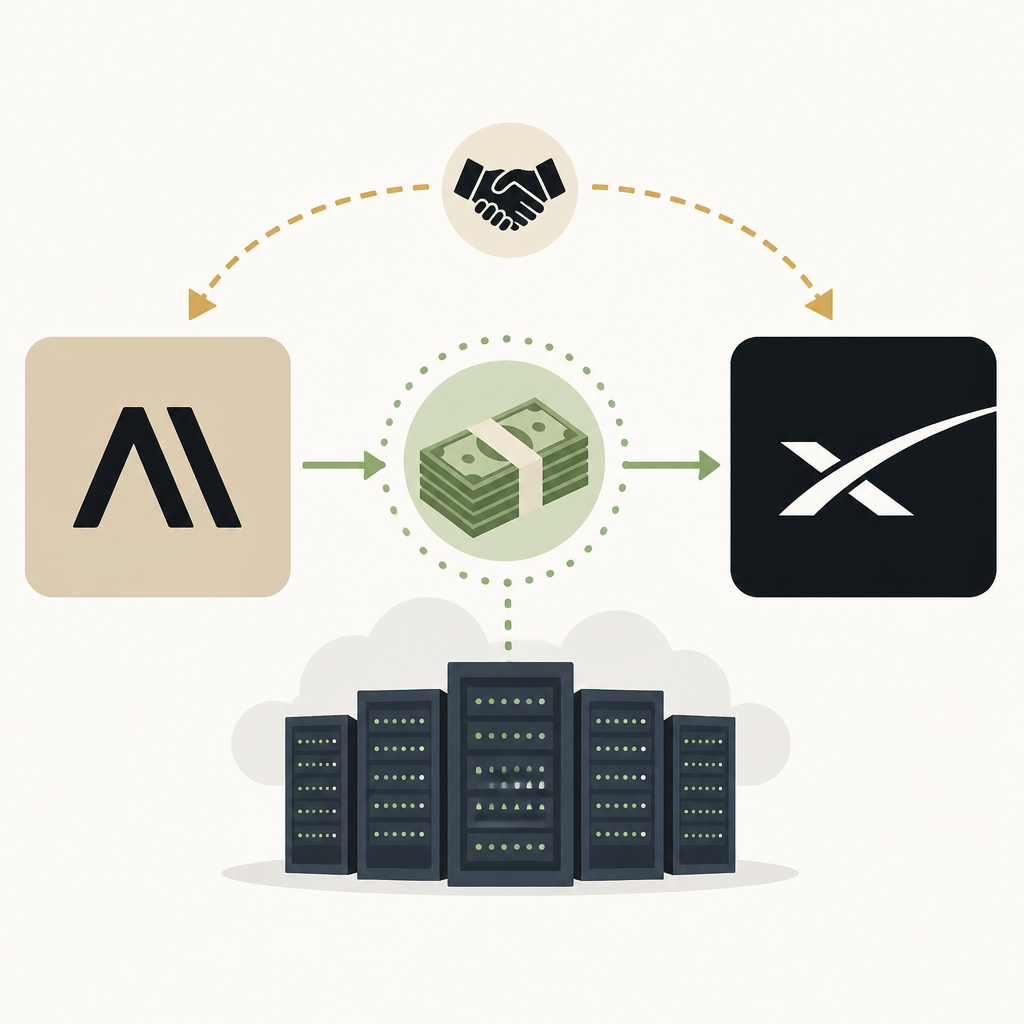
Here is the scale in plain terms:
- About $15 billion per year on average
- Roughly $1.25 billion per month
- About $41 million per day
- Enough to fund a very large, dedicated compute footprint
That comparison matters because it shows how far AI economics have moved from the old SaaS playbook. A company can have strong product demand and still need extraordinary capital just to keep the service running at the level users expect.
It also raises a practical question for the rest of the industry: if Anthropic is willing to commit this much for compute, how much pressure does that put on smaller model labs that still rent capacity on shorter, more expensive terms?
What to watch next
The immediate question is whether this deal is mainly about training future Claude models, serving existing demand, or both. The answer matters because the mix changes how investors should think about Anthropic’s burn rate and growth path.
It is also worth watching whether other AI companies respond with similar long-term infrastructure commitments. If they do, the next phase of AI competition may be decided less by product demos and more by who can lock down the most compute for the longest time.
For readers tracking the sector, the takeaway is simple: the AI race is now a supply-chain story as much as a software story. The companies that secure capacity early will have more room to iterate, and the ones that wait may find the best hardware already spoken for.
If you want a related read, see our coverage of Claude’s enterprise push and how model providers are reshaping cloud spending.
// Related Articles
- [IND]
Five AI coding IDEs that fit real workflows
- [IND]
Devin Desktop turns Windsurf into an agent hub
- [IND]
Korea’s Nvidia talks point to an AI factory push
- [IND]
OpenAI should not rush its IPO just to win the AI race
- [IND]
OpenAI updates its Europe privacy policy
- [IND]
OpenAI is right to keep ads out of sensitive chats