Cloudflare’s AI shift in one copyable brief
A plain-English breakdown of Cloudflare’s AI pivot, layoffs, and Anthropic tie-in, plus a copy-ready template for your own analysis.

I break down Cloudflare’s AI pivot, layoffs, and Anthropic tie-in into a copy-ready analysis template.
I've been watching Cloudflare for a while, and honestly, the story has felt a little lopsided. The company keeps talking like it’s built for the next wave of internet traffic, security, and AI workloads, but the signals around the business have been messy. You get a stock quote page, a market snapshot, a headline about layoffs, and then a partnership announcement that tries to reset the narrative. That mix is exactly what makes this worth unpacking.
What bothered me wasn’t that Cloudflare was changing. Every infrastructure company changes. It was that the change looked like three different stories at once: cost discipline, AI positioning, and investor reassurance. When I see that kind of overlap, I start asking a simple question: what is the company actually optimizing for right now? Because if I can’t answer that cleanly, I know a lot of other people are probably just reading the headline and moving on.
This is the kind of situation where a stock page tells you less than the mood around it. So I’m going to break down the actual signals I’d care about, what they mean in plain English, and how I’d turn the same structure into a reusable research note.
The source that triggered this for me was Yahoo Finance’s Cloudflare quote page for NET, which surfaced a headline saying Cloudflare is navigating AI-driven shifts, with recent layoffs impacting 20% of its workforce. Yahoo’s page also points to a new partnership with Anthropic, which is the part I’d treat as strategically important, not just promotional noise.
The layoffs are not the story, the reset is
Get the latest AI news in your inbox
Weekly picks of model releases, tools, and deep dives — no spam, unsubscribe anytime.
No spam. Unsubscribe at any time.
Cloudflare (NET) is navigating significant shifts due to AI advancements, with recent layoffs impacting 20% of its workforce.
What this actually means is that Cloudflare is trying to reallocate attention and expense toward the parts of the business that matter most in an AI-heavy market. A 20% workforce reduction is not a minor trim. It’s a reset. When a company cuts that deeply, it is usually saying some combination of: we hired too fast, some work no longer maps to the next phase, and we want margin discipline to show up faster.

I’ve seen this pattern before in infrastructure companies. They start with broad platform ambition, then the market tightens, then leadership gets religion about focus. The headline becomes “AI,” but the operational move is really about pruning the old shape of the company so it can look more credible in the new one.
That matters because investors often read layoffs as a sign of weakness only. Sometimes that’s true. But in a company like Cloudflare, layoffs can also be a signal that management is trying to protect the core while the product mix changes. The question is whether the cut was defensive or strategic. The answer usually shows up later in product velocity, gross margin behavior, and how often the company can sell higher-value AI-adjacent services without sounding desperate.
If I were analyzing this for myself, I’d ask three things:
- Did the layoffs remove redundant work, or did they weaken product execution?
- Did leadership pair the cut with a believable investment thesis?
- Does the market reward the move because it sees discipline, or punish it because it smells panic?
How to apply it: when you see a layoff headline, don’t stop at headcount. Tie it to the company’s next product bet and ask what got cheaper, what got faster, and what got harder to ship.
The Anthropic deal is the real tell
Cloudflare’s partnership with Anthropic is the part I’d pay attention to first because it tells me where management thinks demand is going. Anthropic is one of the names that matters in AI infrastructure conversations, and Cloudflare attaching itself to that ecosystem is not random. It’s a signal that the company wants to be closer to AI workloads, model access, and the traffic layer around those systems.
What this actually means is Cloudflare is trying to be more than a CDN, more than a security vendor, and more than a generic edge platform. It wants to be part of the plumbing that AI products depend on. That is a much better story than “we also support AI.” The latter is fluffy. The former is specific.
I ran into this exact problem when I tried to explain infrastructure companies to non-technical people. If I said “they help route traffic and protect apps,” their eyes glazed over. If I said “they sit in the path between users and the AI tools they’re hitting all day,” they got it immediately. That’s the difference between a feature and a business narrative.
For Cloudflare, the Anthropic link matters because it suggests distribution, relevance, and maybe even pricing power if the company can embed itself into AI workflows. But I’d be careful not to overread it. Partnerships can be real and still not move the financial needle fast enough. I’ve seen plenty of companies announce a big-name tie-up and then spend six quarters explaining why the revenue impact is “still early.”
How to apply it: treat AI partnerships as evidence of positioning, not proof of monetization. Then look for usage growth, attach rates, and whether the company starts talking about the partnership in customer terms instead of press-release terms.
Why the stock held up anyway
Yahoo Finance’s page shows the stock still moving with real conviction, even with the layoff overhang. That tells me the market is not simply punishing Cloudflare for cost cuts. It’s weighing the cuts against the AI story and deciding the company may be cleaning itself up for a more focused phase.
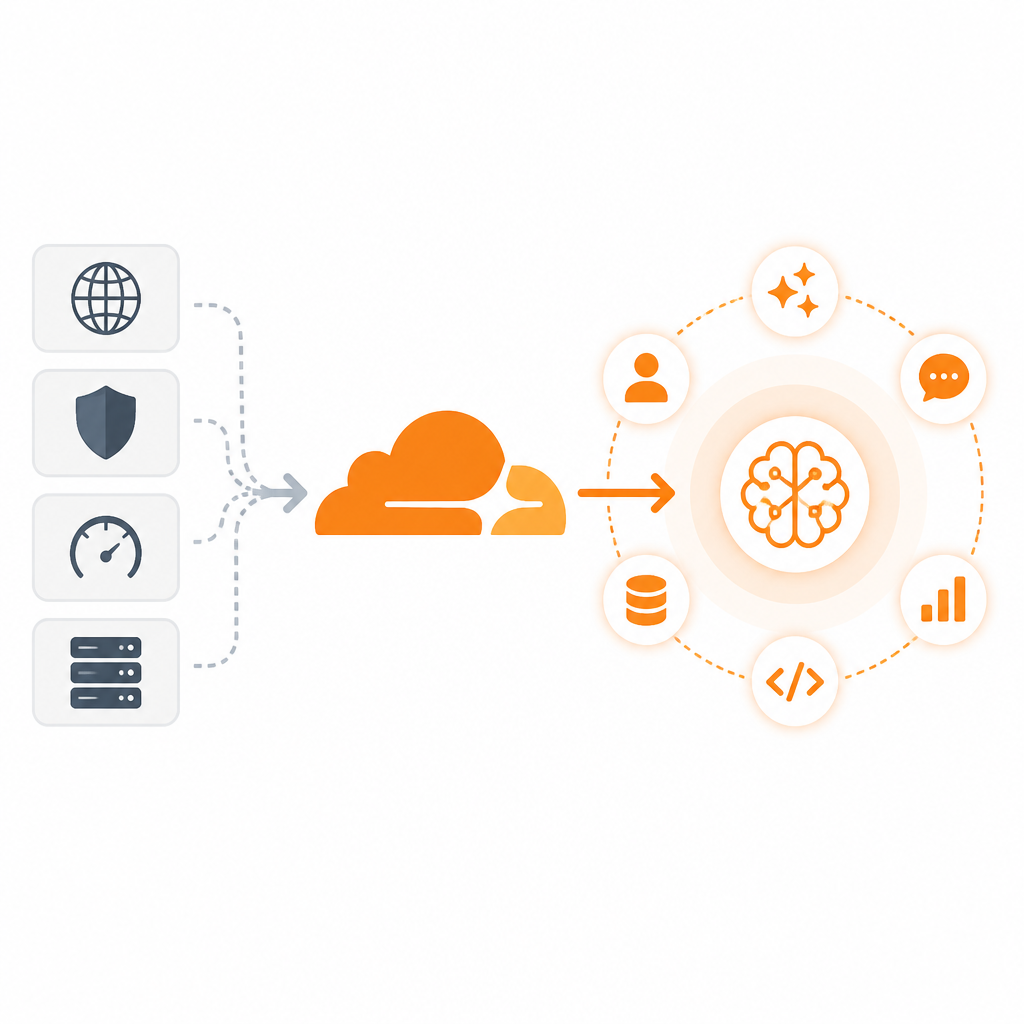
That’s the annoying part about markets. They don’t care about your preferred narrative. They care about whether the next few quarters look better than the last few. If investors believe AI demand can offset the messiness of restructuring, the stock can stay resilient even when the operational story is uncomfortable.
What this actually means is the stock is being priced like a company with optionality. Optionality is a dangerous word because it gets abused, but here it fits. Cloudflare has enough strategic relevance that the market may keep giving it credit for future wins before those wins are fully visible in the numbers.
I’d still keep one hand on the brake. Stocks with a strong story can stay expensive longer than you expect, but they can also gap down hard when the story gets too far ahead of execution. I’ve been burned by that more than once. The trick is not to confuse narrative momentum with durable operating improvement.
If I were tracking this as a developer-turned-investor, I’d watch:
- Whether AI-related revenue commentary becomes more concrete
- Whether operating expenses stabilize after the layoffs
- Whether customer growth stays healthy enough to justify the repositioning
How to apply it: when a stock holds up after a painful restructuring, assume the market is buying the next chapter. Your job is to check whether that chapter has actual pages or just a flashy title.
Cloudflare’s real business problem is focus
The hardest part of reading Cloudflare right now is that the company can do a lot of things, which is not the same as having a sharp story. That’s a problem because markets reward focus when the theme changes. If AI is the new center of gravity, then every business line has to answer a simple question: does this help us win there, or is it just legacy baggage?
What this actually means is management has to choose what it wants Cloudflare to be known for over the next few years. Security? Edge compute? AI inference plumbing? Developer platform? You can have all of those in the portfolio, but you can’t market all of them equally without making the message muddy.
I’ve had to do this in product work too. Teams love saying yes to everything because every feature sounds valuable in isolation. Then you look up and realize nobody can explain the product in one sentence. Public companies do the same thing, except the penalty shows up in valuation instead of roadmap meetings.
Cloudflare’s layoffs suggest the company knows it needs sharper priorities. The Anthropic partnership suggests it wants AI to be one of those priorities. The stock resilience suggests the market is willing to listen, for now. Put those together and you get a company in transition, not a company that has already arrived.
How to apply it: when you analyze a company with multiple product lines, force a ranking. Ask which line gets the most strategic oxygen, which line gets the most capital, and which line is mostly there because it used to matter.
What I’d actually watch next
If I were writing this up for my own notes, I would not obsess over the stock quote page itself. I’d use it as a starting point and then look for evidence that the restructuring is changing the business, not just the messaging. That means I’d want to see whether AI-related partnerships become productized, whether the company cleans up its cost base, and whether customer demand keeps pace with the story.
There’s also a timing issue here. Layoffs can make one quarter look cleaner without fixing the underlying complexity. Partnerships can make a slide deck look smarter without driving durable revenue. The real test is whether the company can turn these moves into a simpler operating model.
What this actually means is I’d be skeptical of any analysis that stops at “Cloudflare is an AI winner” or “Cloudflare is cutting costs.” Both can be true and still miss the main point, which is that the company is trying to reframe itself while the market is still deciding what it should be worth.
My practical checklist would be:
- Read the layoff as a strategic signal, not just a labor event
- Treat the Anthropic partnership as positioning evidence
- Watch for product and revenue proof before upgrading the thesis
How to apply it: build your own thesis in layers. First, identify the operational change. Second, identify the strategic bet. Third, look for financial proof. If those three don’t line up, the story is still incomplete.
The template you can copy
# Company research note template

## One-line read
[Company] is [changing because of X], and the market is reacting to [strategic signal] more than [headline noise].

## What triggered my attention
- Source: [link to original page]
- Main headline: [short quote or paraphrase]
- Why it matters: [one sentence]

## What the company is really doing
- Operational move: [layoffs / restructuring / hiring / product shift]
- Strategic bet: [AI / security / platform / cost discipline]
- Market message: [what investors are supposed to believe]

## What this actually means
Write this in plain English:
- [What changed]
- [What got better or worse]
- [What still needs proof]

## Signals I’d watch next
- Revenue growth in [relevant segment]
- Margin / expense trend after [event]
- Product or partnership proof that turns into usage
- Management language that becomes more specific over time

## My take
I think [company] is currently [early / mid / late] in the transition from [old story] to [new story].
The thesis works only if [condition 1] and [condition 2] show up in the next few quarters.

## Copy-ready prompt for analysis
Summarize the company’s latest move in plain English.
Then explain whether it is mostly:
1. a cost reset,
2. a strategic repositioning, or
3. a real monetization step.

Finish with:
- what changed
- what the market is pricing in
- what evidence I should watch next

## Fill-in example
[Company] is trimming costs and leaning into AI partnerships.
The market is reacting to the repositioning more than the layoff headline.
I will not call this a win until I see clearer product traction and revenue proof.
That template is the part I’d actually reuse. It keeps me from writing vague notes that sound smart but don’t help later. If I can’t answer what changed, what it means, and what proof I need next, then I don’t really have a thesis.
Source attribution: I built this breakdown from Yahoo Finance’s NET quote page and the headline surfaced there. The interpretation, structure, and template are mine, not Yahoo’s.
// Related Articles
- [IND]
Five AI coding IDEs that fit real workflows
- [IND]
Devin Desktop turns Windsurf into an agent hub
- [IND]
Korea’s Nvidia talks point to an AI factory push
- [IND]
OpenAI should not rush its IPO just to win the AI race
- [IND]
OpenAI updates its Europe privacy policy
- [IND]
OpenAI is right to keep ads out of sensitive chats