Deezer’s free AI music detector is the right move
Deezer’s free AI music detector is a necessary step for streaming trust and playlist transparency.

Deezer’s free AI music detector is a necessary step for streaming trust and playlist transparency.
Deezer should be applauded for making AI-track detection free and open to users of every major streaming platform, because the music business now needs a practical trust layer, not another closed feature buried inside one app.
When listeners cannot tell whether a track was made by a human artist or generated by a model, the platform itself becomes part of the confusion. A detector that works across playlists is a direct response to that problem, and it matters because playlists are where most streaming discovery now happens.
Streaming needs visibility, not guesswork
Get the latest AI news in your inbox
Weekly picks of model releases, tools, and deep dives — no spam, unsubscribe anytime.
No spam. Unsubscribe at any time.
The first reason this matters is simple: AI-generated music is already entering the same recommendation pipelines as human-made songs, and users deserve to know what they are hearing. Deezer’s tool does not solve copyright, attribution, or compensation, but it does give listeners a way to identify material that might otherwise pass as ordinary catalog content.

That is especially important for playlists, where a single synthetic track can sit beside licensed releases and independent uploads without any obvious signal. A free detector lowers the friction for casual users and power listeners alike, which is the right design choice if the goal is transparency rather than gatekeeping.
Free access is the part that makes this useful
Deezer would have made a smaller statement if it had hidden the detector behind a subscription or limited it to its own ecosystem. By making it free and available to users of major streaming platforms, Deezer turns the tool into a public utility for music verification instead of a branded retention feature.
That matters because the problem is industry-wide. A detector that only works inside one service would leave the rest of the market untouched, but a free tool creates a baseline expectation that every platform should be able to explain where AI content is appearing. In a market where trust is fragile, baseline expectations are powerful.
Detection is not a cure, but it is a necessary first layer
Critics will say detection tools are imperfect, and they are right. Generative systems evolve quickly, and no classifier will catch every synthetic track or avoid every false positive. But imperfection is not an argument against deploying the tool; it is an argument for treating detection as one layer in a broader transparency system.
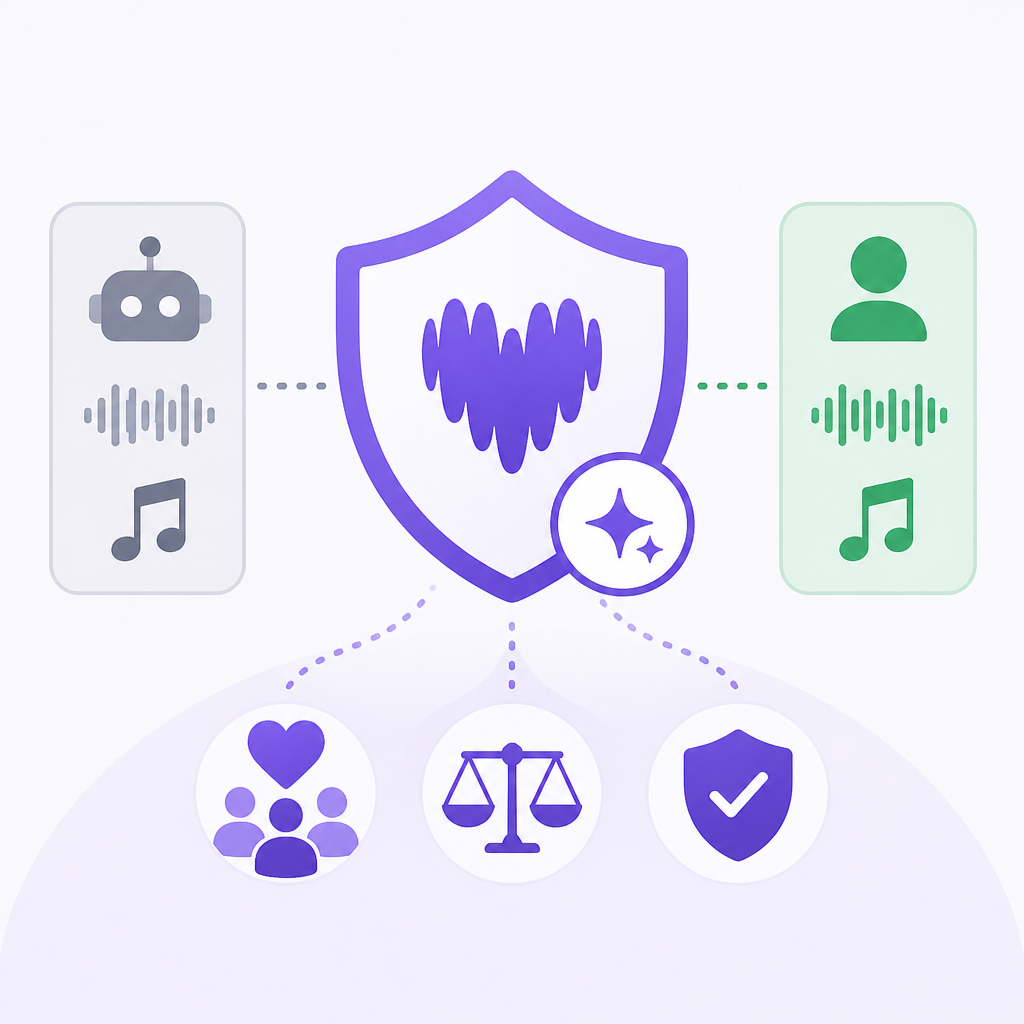
The stronger objection is that detection alone does nothing to fix royalties, consent, or metadata standards. That is true. Yet waiting for a perfect policy stack before offering users any signal would leave the market blind during the exact period when AI music is scaling fastest. Deezer’s move is valuable precisely because it starts with the most immediate problem: visibility.
What to do with this
Engineers should treat Deezer’s launch as a product pattern: build lightweight detection into the listening workflow, expose confidence clearly, and avoid pretending the classifier is an oracle. PMs should make transparency a user-facing feature, not a backend report. Founders should assume that the next trust advantage in music will come from making provenance legible, not from hiding the existence of AI content.
// Related Articles
- [IND]
AI music training is built on a copyright scandal, not a neutral data…
- [IND]
OpenAI’s private valuation hits $908.81B
- [IND]
美国AI监管风暴正在逼近OpenAI和Anthropic
- [IND]
Nvidia sells $25 billion of bonds for AI spending
- [IND]
A vibe coding workflow keeps AI builds on track
- [IND]
Anthropic’s suspension turns AI release into policy