EY and Microsoft put $1bn behind enterprise AI
EY and Microsoft will spend more than $1bn over five years to move clients from AI pilots to enterprise-wide deployment.
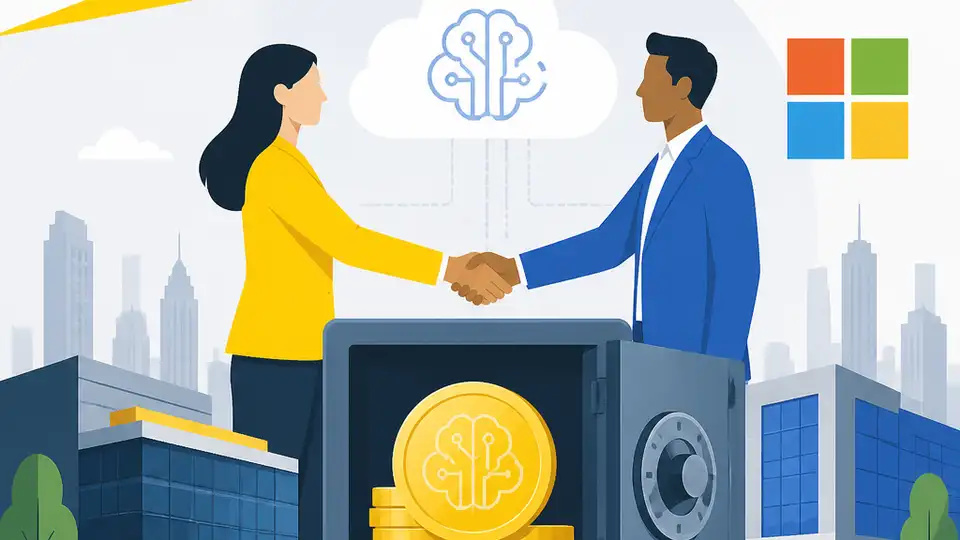
EY and Microsoft will spend more than $1bn over five years on enterprise AI deployment.
EY and Microsoft are putting more than $1bn into a five-year partnership aimed at getting AI out of pilot mode and into day-to-day business operations. The money is going into joint engineering, industry teams, and internal testing that EY says will help clients reach enterprise-wide results instead of one-off demos.
The announcement matters because it is unusually specific for a services partnership. EY says it has already rolled out Copilot to 150,000 users, claims a 15% productivity gain from that rollout, and plans to expand access to more than 400,000 people through Microsoft 365 E7: The Frontier Suite.
| Metric | Figure | Why it matters |
|---|---|---|
| Partnership investment | More than $1bn | Signals a long-term commitment, not a short pilot |
| Time horizon | Five years | Gives both firms room to build and tune industry use cases |
| Copilot rollout at EY | 150,000 users | Shows scale inside EY before client delivery |
| Reported productivity gain | 15% | EY says that gain was redirected into client work and learning |
| Planned expanded access | 400,000+ people | Indicates a much wider internal AI footprint |
Why EY is betting on itself first
Get the latest AI news in your inbox
Weekly picks of model releases, tools, and deep dives — no spam, unsubscribe anytime.
No spam. Unsubscribe at any time.
The most interesting part of the announcement is EY’s “client zero” approach. Instead of pitching Microsoft tools to customers from a slide deck, EY says it is testing them inside its own business first, then packaging what works for clients. That matters in consulting, where buyers increasingly want proof that a firm can use the tools it sells.
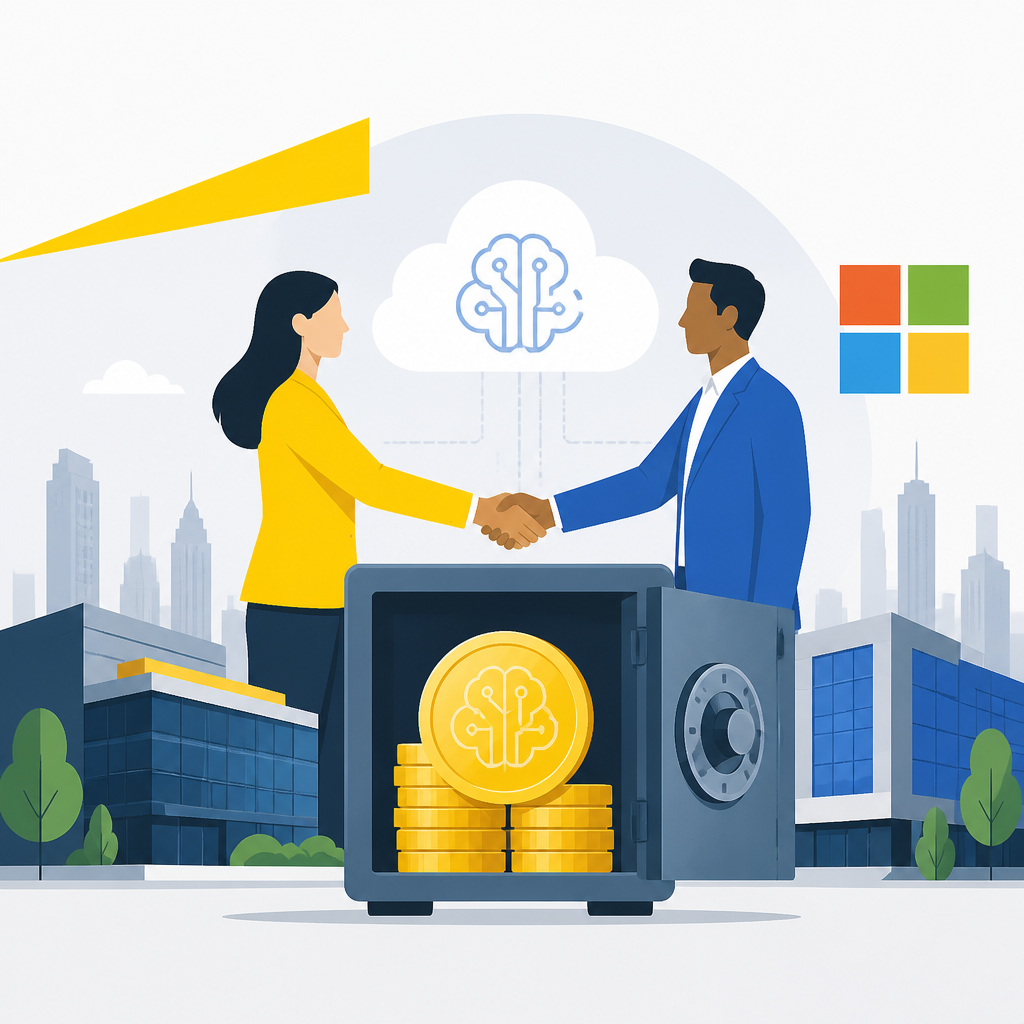
EY has already used Microsoft technologies to modernise finance processes with Microsoft Power Platform, build a multi-agent framework, and apply Azure AI Document Intelligence on its Global Tax Platform. Those are the kinds of internal deployments that make a partnership credible because they create reference points, operating data, and implementation patterns.
The company says the new programme will also focus on workforce upskilling and ongoing optimisation of agentic AI transformation. That wording is dense, but the intent is simple: train people, connect the tools to real processes, and keep tuning them after the first rollout.
How the joint delivery model will work
EY and Microsoft say the initiative will bring together Microsoft’s Forward Deployed Engineers and EY’s industry teams. That mix matters because enterprise AI projects usually fail for boring reasons: the model is fine, but the workflow is messy, the data is scattered, or the business team and technical team are speaking different languages.
Microsoft says the partnership uses its FDE AI-native Hypervelocity Engineering model to speed up implementation inside client change and delivery structures. In practice, that means the companies want to shorten the distance between an AI idea and an operational system that can be measured, audited, and maintained.
“Our initiative combines Microsoft’s trusted AI platform and engineering teams with EY’s industry capabilities and experience as Client Zero,” said Judson Althoff, CEO of Microsoft Commercial Business.
EY Global Chair and CEO Janet Truncale framed the deal as a way to help clients “unlock value through rapid deployment of AI at scale.” That is the right framing for this market. Most companies do not need another AI demo. They need help turning procurement, finance, risk, HR, and supply chain into systems that can actually use AI every day.
The first use cases are practical, not flashy
The initial services will target finance, tax, risk, human resources, and supply chain functions across financial services, industrials, energy, consumer and retail, government, and healthcare. That mix tells you where the money is: back-office and control-heavy workflows where AI can save time, reduce manual effort, and improve decision support without touching the customer-facing brand too aggressively.
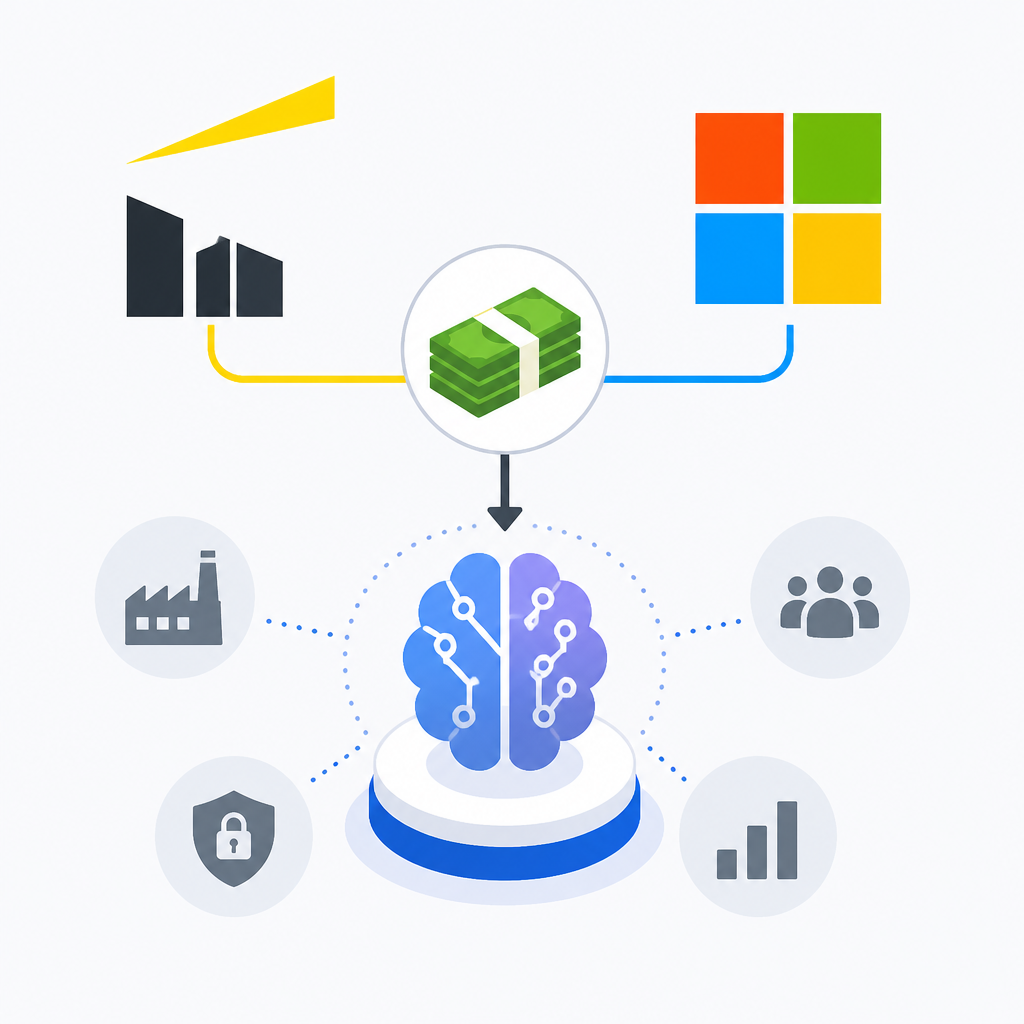
That is also where enterprise buyers are most willing to spend. A tax team that can process documents faster, a finance team that can close books with less manual work, or a supply chain team that can surface exceptions earlier produces measurable value. Those are easier to justify than experimental chatbots or broad “AI transformation” decks with no operational owner.
- Finance and tax are early targets because they have structured data and repeatable workflows.
- Risk and HR matter because they sit close to governance, compliance, and policy decisions.
- Supply chain use cases can pay off fast if the data quality is good enough.
- Industry focus includes sectors with heavy regulation and complex operations, which usually need more implementation help than software alone can provide.
Why this deal is bigger than a consulting headline
This partnership is really a signal about where enterprise AI is heading next. The first wave was about access: getting employees to try copilots, chat interfaces, and simple automations. The next wave is about integration, where AI has to fit into finance systems, document workflows, approval chains, and compliance controls.
That shift explains why the deal is worth more than $1bn. Building those systems takes engineers, domain specialists, governance work, and a lot of iteration. It also explains why EY’s internal usage numbers matter so much. If EY can show 150,000 users, a 15% productivity gain, and a path to 400,000-plus users, it gives Microsoft a live case study for enterprise adoption at scale.
- EY has 150,000 Copilot users today.
- EY says that rollout produced a 15% productivity increase.
- EY plans to extend Microsoft 365 E7 access to more than 400,000 people globally.
- The partnership runs across tax, assurance, consulting, and EY-Parthenon, which broadens the commercial reach.
What to watch next
The real test is whether this partnership produces repeatable playbooks that clients can buy, deploy, and audit without months of custom work. If EY and Microsoft can turn internal wins into packaged industry solutions, other large consultancies will feel pressure to show similar proof, not just promises.
For buyers, the takeaway is simple: ask vendors for internal usage data, productivity metrics, and the exact workflows they have already automated for themselves. That is where the difference between AI theater and actual enterprise execution becomes obvious.
Over the next 12 to 18 months, the key question is whether this $1bn commitment turns into measurable gains in close cycles, document handling, risk review, and supply chain planning. If those numbers move, this deal will be remembered less as a partnership announcement and more as a template for how large firms sell and deploy AI.
// Related Articles
- [IND]
Korea’s Nvidia talks point to an AI factory push
- [IND]
OpenAI should not rush its IPO just to win the AI race
- [IND]
OpenAI updates its Europe privacy policy
- [IND]
OpenAI is right to keep ads out of sensitive chats
- [IND]
AI bootlegs are already draining streaming royalties
- [IND]
AMD and Microsoft push Windows ML on GPU and NPU