Field of Memories turns Memorial Day into action
A copy-ready breakdown of Arlington Memorial Gardens’ Memorial Day tribute and veteran support playbook.

Arlington Memorial Gardens turns Memorial Day into a hands-on tribute for veterans.
I've been around enough Memorial Day coverage to know when something is just ceremonial noise. A flag photo here, a solemn quote there, then everybody goes back to treating the weekend like a barbecue coupon. This one felt different, and honestly, that’s why I paid attention.
WLWT’s interview with Lisa McLean from Arlington Memorial Gardens in Cincinnati is not trying to be clever. It’s trying to make the holiday mean something again. The piece centers on the cemetery’s Field of Memories, a display of 1,000 American flags, plus a second layer that matters just as much: support for local veterans through Ramp It Up for Veterans and the Eyes of Freedom traveling memorial. The original WLWT story is here: wlwt.com/article/arlington-memorial-gardens-heroes-mark-memorial-day/71340863.
What grabbed me was the structure. They didn’t just say “remember the fallen.” They built a public experience that forces the reminder into your field of view, then attached a real-world outcome to it. That’s the part most organizations miss. If you want remembrance to stick, it can’t live only in speeches. It needs a physical anchor, a clear beneficiary, and a reason for normal people to show up.
Stop treating Memorial Day like a branding opportunity
Get the latest AI news in your inbox
Weekly picks of model releases, tools, and deep dives — no spam, unsubscribe anytime.
No spam. Unsubscribe at any time.
“Our Field of Memories that we have coming up this weekend… could gently remind people, you know what? Memorial Day truly is about.”
What this actually means is simple: the event is designed to interrupt autopilot. Lisa McLean isn’t pitching a festival. She’s describing a deliberate visual reminder that pushes the holiday back toward its original purpose.
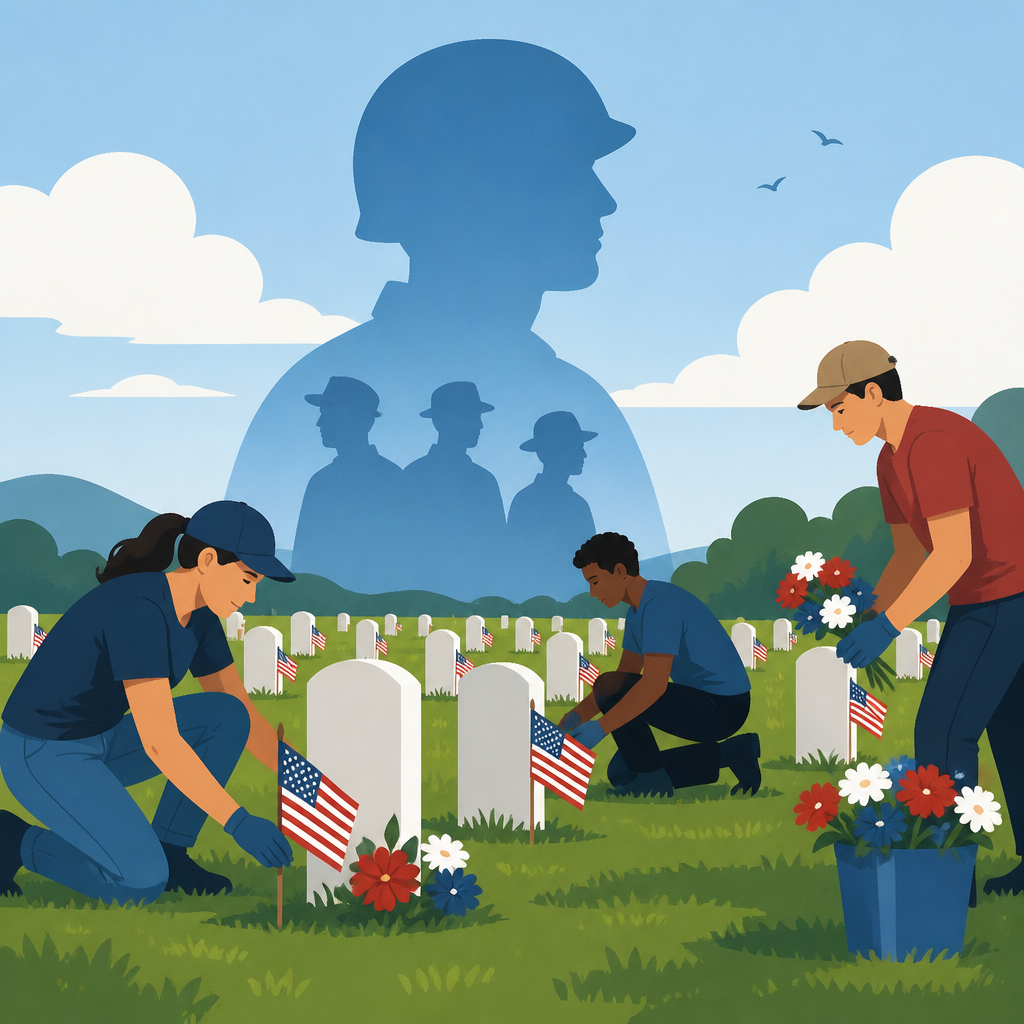
I’ve seen this problem in product teams, too. We build a page, a campaign, a launch, and then wonder why nobody feels anything. Because we optimized for attention, not meaning. Arlington Memorial Gardens takes the opposite approach. The flags are not decoration. They’re a cue. They say, “pause here.”
That matters because Memorial Day gets flattened fast. For a lot of people, it becomes the start of summer, the first cookout, the first long weekend. There’s nothing wrong with rest, but the rest only makes sense if the remembrance comes first. The Field of Memories is trying to restore that order.
How to apply it: if you’re building any public-facing experience, ask yourself what the user is supposed to feel before you ask what they’re supposed to do. If the answer is “click,” “buy,” or “share,” you’re already missing the point. Start with the emotional anchor. In this case, it’s the rows of flags. For your work, it might be one powerful image, one sentence, or one physical gesture that changes the tone.
There’s a reason this kind of thing works in public spaces. People don’t read mission statements with their bodies. They respond to scale, repetition, and context. A thousand flags does more than a paragraph ever could.
Make the tribute impossible to ignore
“You see it on our screen. It is so moving… they’ve been planting a thousand American flags.”
What this actually means is that the tribute is built to be seen, not merely announced. The number matters, but not in a vanity way. It matters because repetition creates weight. One flag says respect. A thousand says this is a community act.
Arlington Memorial Gardens says this is its 11th year. That’s not trivia. That’s proof the idea has enough traction to return, grow, and become part of the local calendar. I always trust recurring work more than one-off sentiment. Anyone can post a tribute once. Keeping it going for 11 years means the organization has moved from “nice idea” to “actual practice.”
I’ve run into this in internal comms and event planning: if you want people to care, you need a visual they can’t mentally skim past. The flags do that. They also create a natural path for participation. People don’t just observe; they walk among them. That changes the experience from passive to embodied.
- Use scale to create seriousness.
- Use repetition to create memory.
- Use physical placement to create participation.
How to apply it: don’t bury your strongest message in a paragraph. Put it in the environment. If you’re planning a memorial, fundraiser, conference, or product launch, think about what people will literally see first. A banner, a room setup, a printed wall, a repeated object, a number that means something. The medium is doing half the work here.
And yes, it’s okay if the display feels a little overwhelming. That’s the point. Memorials are supposed to interrupt your day. If they don’t, they’ve been designed too politely.
Attach remembrance to a real benefit
“All of the monies raised during the Field of Memories are donated to Ramp It Up for Veterans.”
What this actually means is the tribute is not just symbolic. It produces a tangible result for veterans in the community. That’s the move I wish more organizations made: turn attention into help.
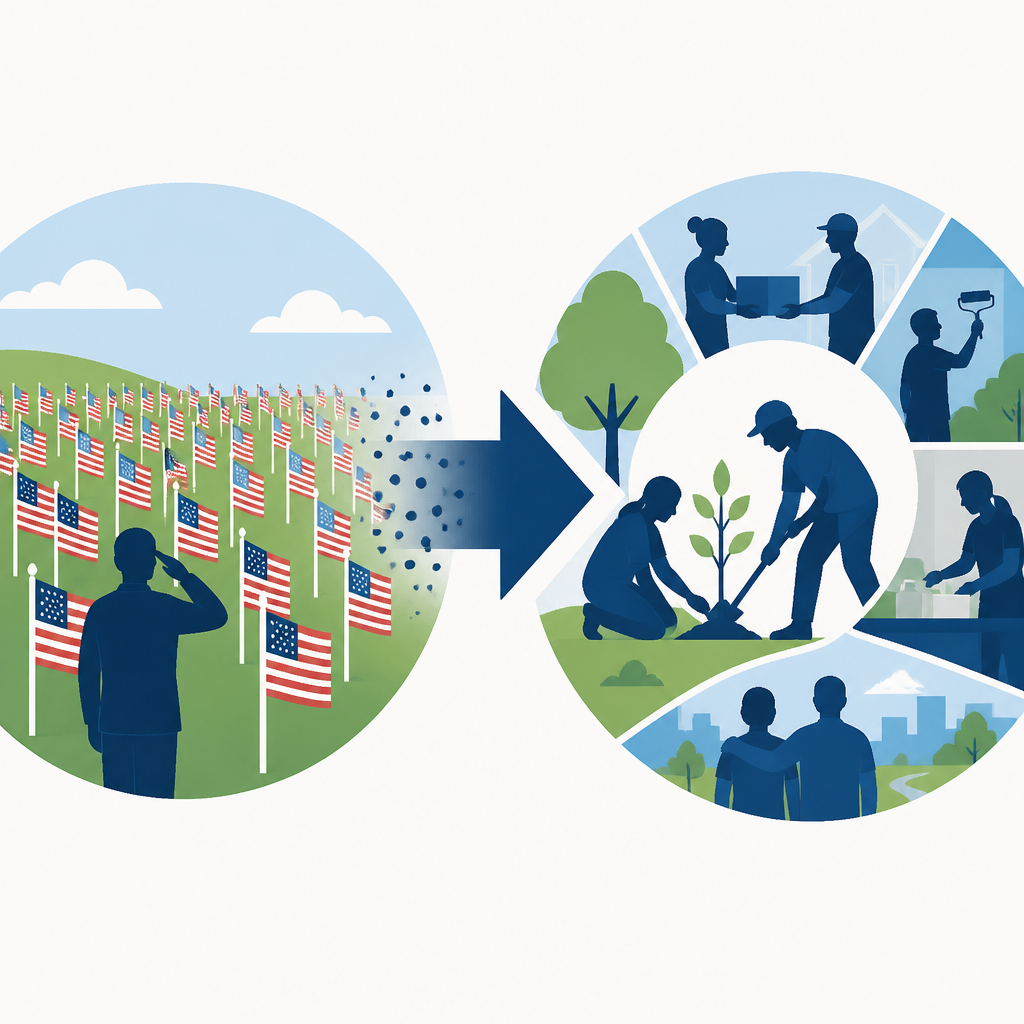
Ramp It Up for Veterans identifies veterans with mobility issues and installs ramps so they can get in and out of their homes more safely. That’s not abstract support. That’s a concrete quality-of-life fix. It’s also a smart fit for a Memorial Day event because it connects remembrance with service, which is the whole point of honoring veterans in the first place.
I like this because it avoids the trap of performative gratitude. Saying “thank you for your service” is fine, but it’s cheap if it stops there. A ramp changes a veteran’s daily life. It gives freedom back in a way that a speech never can.
How to apply it: whenever you’re asking people to gather, donate, or participate, tie the emotional event to a specific outcome. Not “support the cause.” Say what the money does. Say who benefits. Say what changes after the event. If you can’t answer that in one sentence, the fundraiser is too vague.
This is also where trust gets built. People are more willing to contribute when they can picture the result. A ramp is easy to picture. So is a repaired roof, a scholarship, a meal, or a service package. Make the outcome visible.
And if you’re the one running the event, don’t hide the beneficiary in a footer. Put them front and center. That’s what Arlington Memorial Gardens is doing here, and it gives the whole weekend more moral clarity.
Use a second memorial to widen the message
“The Eyes of Freedom display… it’s a traveling memorial… based on veteran mental health.”
What this actually means is the event doesn’t stop at honoring the dead. It also makes room for the living, especially veterans dealing with mental health struggles. That widens the scope without diluting the message.
The Eyes of Freedom exhibit is described in the WLWT segment as a silent battle display tied to the loss of 23 service members over a seven-month period. That’s heavy material, and it should be. A memorial that only celebrates sacrifice without acknowledging pain can feel incomplete. This one tries to hold both.
I think that’s important because a lot of organizations are nervous about complexity. They want one clean message. But real life is messier. Veterans are not just symbols. They’re people carrying loss, trauma, and survival. If you’re going to honor them honestly, you can’t flatten that into a slogan.
How to apply it: if your event or content has a single theme, ask what adjacent truth you’ve been avoiding. Maybe your “celebration” also needs space for grief. Maybe your “success story” also needs a section on what was hard. Maybe your “community event” should include a resource table, not just a stage.
- One memorial can honor sacrifice.
- A second memorial can acknowledge the cost of service.
- Together, they make the story feel human instead of scripted.
That’s the part I respect here. They didn’t try to make Memorial Day only about pride. They made room for sorrow, care, and support. That’s closer to the truth.
Let the community do the remembering
“I think it’s so important we have more people coming out each year.”
What this actually means is the event is working because people show up. Not because a committee declared success, but because the community keeps returning to it.
This is one of those details that sounds small until you’ve tried to build anything public. Attendance is not just a metric. It’s a signal that the ritual has become legible to the people around it. If they come back, the event has meaning. If they don’t, you’ve got a nice idea sitting in a parking lot.
There’s a practical lesson here for anyone running community-facing work. Don’t design for a one-time wow moment. Design for repeat participation. Arlington Memorial Gardens has done this for 11 years, and that consistency is probably why the event has grown. People know what it is. They trust the shape of it. They can bring family back next year.
How to apply it: make your event easy to explain, easy to revisit, and easy to share without sounding fake. If someone has to give a five-minute speech to describe what you do, your framing is too complicated. If they can say, “It’s the flag display that supports veterans and honors Memorial Day,” you’re in better shape.
Also, don’t underestimate the value of a recurring date. Annual rituals create memory faster than one-off campaigns. They give people something to return to, and that’s where culture starts to form.
Use one clear sentence to hold the whole thing together
“Memorial Day truly is about… the men and women who died defending our freedoms.”
What this actually means is the whole event has a single sentence at its core. Everything else supports that sentence. The flags support it. The donations support it. The traveling memorial supports it.
I’m a big believer in this because most messaging falls apart from trying to do too much. People want to honor veterans, raise money, educate families, acknowledge grief, and create a photo moment, all at once. That’s how you end up with mush. Arlington Memorial Gardens keeps the center of gravity on remembrance and service.
If you’re building a similar initiative, write your one-sentence purpose before you design anything else. Then test every element against it. Does this help people remember? Does it help someone in need? Does it make the holiday more honest? If not, cut it.
How to apply it: use the sentence as the filter for your copy, your visuals, your talking points, and your partner selection. If a detail doesn’t reinforce the purpose, it’s noise. The more serious the subject, the less room you have for noise.
That’s what I took from this WLWT piece. Not just that Arlington Memorial Gardens is hosting a Memorial Day event, but that they’ve built a repeatable model for turning remembrance into action. It’s simple, visible, and grounded in actual service. That’s why it works.
The template you can copy
# Memorial Day tribute playbook

## Purpose
Our event exists to honor those who died in service and to support the veterans still living with the consequences of that service.

## Public anchor
Create one large, visible memorial element that people can walk through or stand beside.
- Example: 1,000 flags
- Example: a wall of names
- Example: a field of markers

## Community action
Tie the tribute to a real benefit for veterans or military families.
- Partner with a local nonprofit
- Name the exact service provided
- Show where the money goes

## Secondary truth
Add one exhibit, panel, or installation that acknowledges the harder side of service.
- mental health
- grief
- mobility
- survivor support

## Messaging rule
Everything must support one sentence:
"This event honors sacrifice and helps veterans in a concrete way."

## Copy block
Memorial Day is more than a long weekend.
It is a time to remember those who made the ultimate sacrifice and to support the veterans still with us.
Visit the memorial, learn the story, and help fund the service.

## Event checklist
- Confirm the tribute visual
- Confirm the beneficiary nonprofit
- Confirm the donation flow
- Confirm the educational signage
- Confirm the volunteer plan
- Confirm the recurring annual date

## Short social post
We’re honoring Memorial Day with a public tribute and real support for veterans.
Come walk the memorial, learn the story, and help make a difference.
This template is original to this article, but the structure is adapted from the WLWT interview with Lisa McLean and the Memorial Day coverage at Arlington Memorial Gardens. The source story is here: https://www.wlwt.com/article/arlington-memorial-gardens-heroes-mark-memorial-day/71340863. Related organizations mentioned in the story: Arlington Memorial Gardens, Ramp It Up for Veterans, and Eyes of Freedom.
// Related Articles
- [IND]
Five AI coding IDEs that fit real workflows
- [IND]
Devin Desktop turns Windsurf into an agent hub
- [IND]
Korea’s Nvidia talks point to an AI factory push
- [IND]
OpenAI should not rush its IPO just to win the AI race
- [IND]
OpenAI updates its Europe privacy policy
- [IND]
OpenAI is right to keep ads out of sensitive chats