GGWP moves its moderation AI beyond games
GGWP raised $15 million to take its AI moderation system from games into publishing, commerce, ads, and real-money platforms.

GGWP is taking its AI moderation platform from games into other high-risk digital communities.
GGWP has spent years learning how to moderate live chat in games, and that experience is now getting repackaged for other businesses. The San Francisco company says it has moderated tens of billions of messages across more than 100 games, and it just raised $15 million to push into new sectors.
| Metric | Value |
|---|---|
| New funding | $15 million |
| Messages moderated | Tens of billions |
| Games covered | More than 100 |
| Company size | About 35 people |
| Languages supported | More than 20 |
Why GGWP thinks gaming taught it the hard part
Get the latest AI news in your inbox
Weekly picks of model releases, tools, and deep dives — no spam, unsubscribe anytime.
No spam. Unsubscribe at any time.
GGWP’s pitch is simple: if you can moderate a fast-moving game chat, you can probably handle a lot of other messy online communities. Games combine speed, anonymity, voice, text, usernames, and user reports, all while players expect decisions in real time.

That matters because moderation in a live game is rarely about a single toxic message. It is about patterns, escalation, and context. A word that looks harmless in isolation can mean something very different when it appears after a string of threats, harassment, or coordinated abuse.
The company says its system now combines several layers of analysis:
- Real-time review of text, voice, usernames, and reports
- Behavioral context models that track user history and recent activity
- Long-window risk detection for harms that build over time
- Automated enforcement workflows with audit trails and escalation paths
- Community intelligence that surfaces trends before they become incidents
That mix is what GGWP wants to sell outside gaming. George Ng, the company’s president and CTO, said the same pressures are showing up across digital platforms that look and feel more like games every year: real-time interaction, creator-led communities, visual feeds, and AI-generated content that is harder to police by hand.
Ng also pointed to regulation as a major reason for the expansion. When platforms face compliance obligations, moderation stops being a nice-to-have feature and becomes part of the business model.
The new targets are bigger than social chat
GGWP says it is moving into publishing, real-money gaming, commerce, and advertising. Those are very different businesses, but they share a common problem: if users cannot trust the environment, retention drops and brand risk rises.
That is where the company thinks its gaming background gives it an edge. Games have long been a testbed for online behavior systems, and GGWP argues that the same methods now apply to communities where money, safety, and legal exposure are all on the line.
“We see trust safety becoming more of a bigger conversation across gaming and AI,” said George Ng, president and CTO of GGWP.
GGWP says it already helped platforms like Fandom build safer environments at scale. The company also says its tools are designed for privacy-conscious and compliance-sensitive environments, where teams need explainable decisions and detailed logs for regulators.
That is an important distinction. GGWP is not selling a certification badge or a magic compliance stamp. It is selling software that helps a company create policy, enforce it, and keep records of what happened.
How the company stacks up against the old moderation model
Traditional moderation often starts with a report and ends with a human review. GGWP wants to move earlier in that chain, using behavior over time to catch risk before it becomes a crisis.
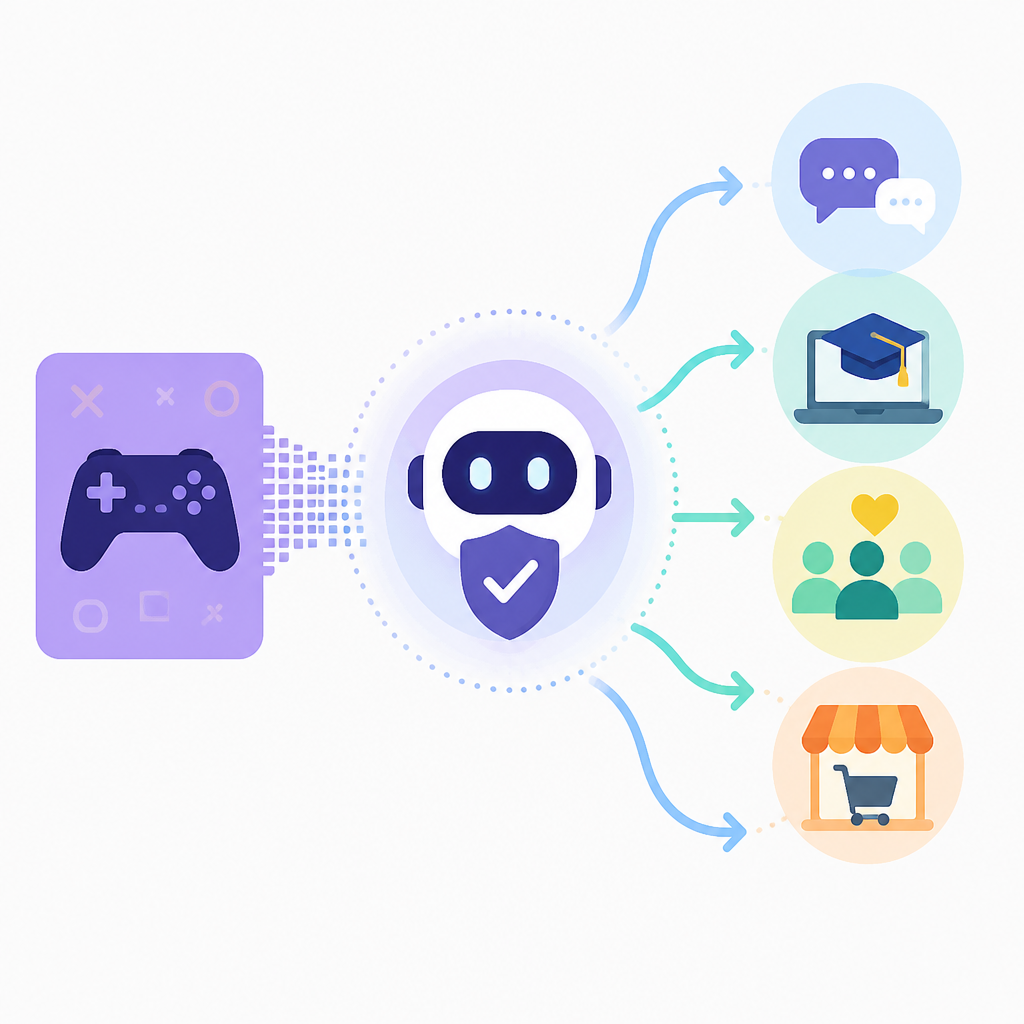
The company says that approach matters because AI is increasing both the volume and complexity of content. More posts, more voice, more images, more synthetic content, and more edge cases make pure manual review expensive and slow.
Here is the practical difference:
- Reactive moderation waits for a violation to be reported
- GGWP’s approach looks for patterns across a user’s history and activity
- Manual review can be accurate but slow at scale
- Automated workflows can move faster, but need policy and auditability
- Hybrid systems can reduce workload while keeping humans in the loop for hard calls
That hybrid model is where a lot of trust-and-safety software is headed, and GGWP is betting that its gaming data gives it a head start. It says it moderates content in more than 20 languages, which is another sign that the company has already dealt with the multilingual mess that global platforms face every day.
The investor list also tells you where GGWP is aiming. Backers include Headline Asia, Smilegate, Korea Investment Partners, Sony Innovation Fund, Bandai Namco Entertainment, and Samsung Ventures, along with Riot Games and other strategic investors.
What this expansion says about trust and safety
GGWP’s move is a good signal that trust and safety is becoming infrastructure, not an afterthought. When a platform’s core product is user interaction, moderation affects revenue, retention, and legal exposure at the same time.
The company says it has about 35 people, which is small for a business that wants to sell into enterprise markets. That means the $15 million raise has to do a lot of work: build product, expand sales, support compliance-heavy buyers, and prove the system works outside gaming.
There is also a bigger shift here. The moderation problems once associated with games are now showing up in creator platforms, commerce communities, ad tools, and betting products. Those businesses do not just need cleaner comment sections. They need systems that can explain why a user was flagged, what policy was applied, and how the decision was logged.
GGWP’s bet is that the companies most willing to pay for that kind of infrastructure will be the ones where user behavior directly affects revenue and regulation. If that is right, the next phase of moderation software will look less like a content filter and more like an operating system for risk.
My read: the real test is whether GGWP can prove its gaming model works when the stakes are money, compliance, and brand safety, not just chat toxicity. If it can do that, the company may have found a much larger market than the one it started in.
// Related Articles
- [IND]
Five AI coding IDEs that fit real workflows
- [IND]
Devin Desktop turns Windsurf into an agent hub
- [IND]
Korea’s Nvidia talks point to an AI factory push
- [IND]
OpenAI should not rush its IPO just to win the AI race
- [IND]
OpenAI updates its Europe privacy policy
- [IND]
OpenAI is right to keep ads out of sensitive chats