How Iran Used Hormuz to Pressure the U.S.
Iran used attacks on Gulf states and pressure on Hormuz to create leverage despite military weakness.

Iran gained leverage by pairing attacks on Gulf states with pressure on the Strait of Hormuz.
Iran does not need to outmatch the United States militarily to create pain. In The New York Times analysis, that is the point: Tehran used a mix of regional strikes and threats around the Strait of Hormuz to force attention, raise costs, and expose a weakness in U.S. strategy.
The article frames this as “triangular coercion,” a tactic built around pressure on multiple sides at once. The message is simple: if Iran cannot win a direct fight, it can still make the region expensive and unstable enough that Washington, Gulf capitals, and global markets all feel the squeeze.
| Data point | What it means |
|---|---|
| May 20, 2026 | Publication date of the analysis |
| 6:51 | Audio length listed by The New York Times |
| 319 | Share count shown on the article page |
What “triangular coercion” means
Get the latest AI news in your inbox
Weekly picks of model releases, tools, and deep dives — no spam, unsubscribe anytime.
No spam. Unsubscribe at any time.
The phrase describes a pressure campaign that does not rely on one target. Iran can hit Gulf states, threaten maritime traffic, and shape the wider U.S. response all at once. That matters because the Strait of Hormuz is one of the world’s most important energy chokepoints, and even a temporary disruption can ripple through oil prices, shipping insurance, and military planning.
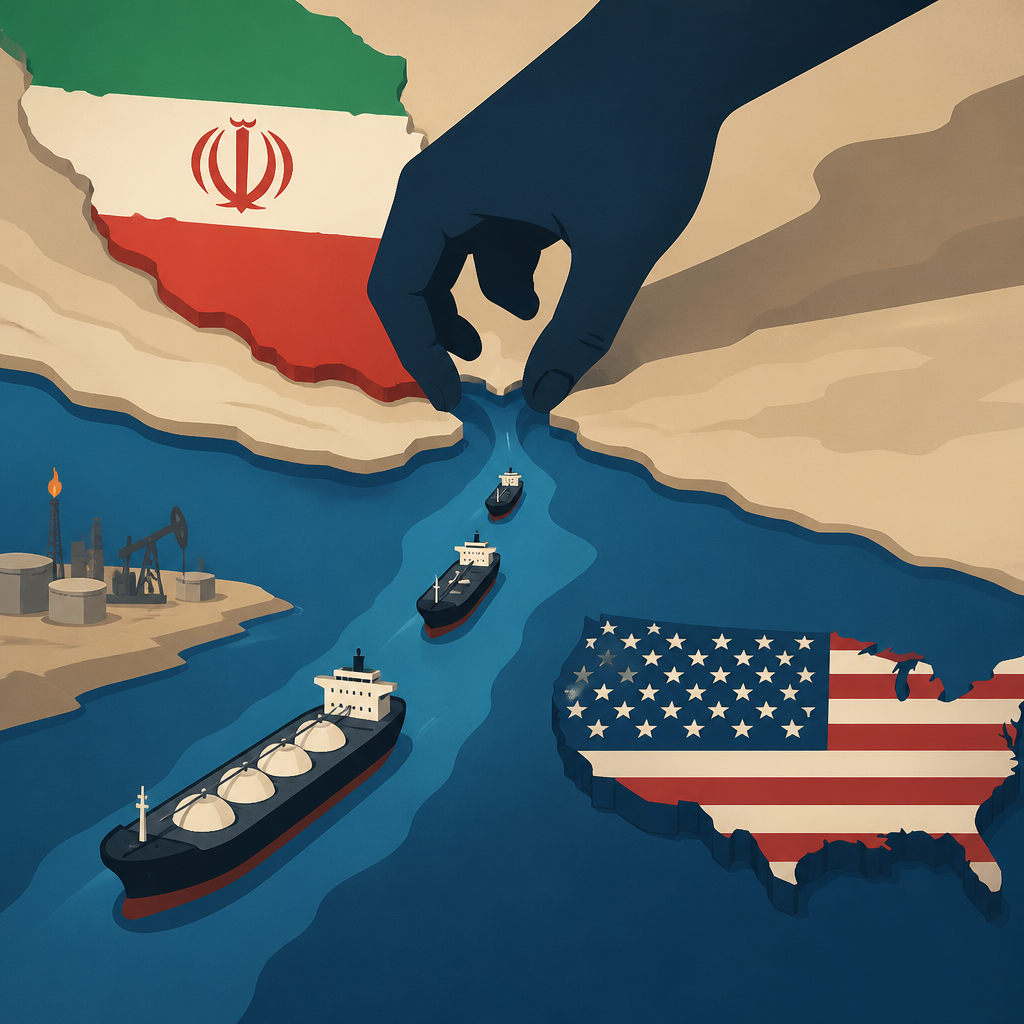
This is why Hormuz matters more than the number of missiles fired. A threat to the waterway changes behavior before any shot is taken. Traders price in risk, regional governments tighten defenses, and U.S. planners have to think about protecting shipping lanes rather than only counterstrikes.
- The Strait of Hormuz connects the Persian Gulf to the Gulf of Oman and the Arabian Sea.
- Roughly one-fifth of the world’s oil consumption has historically moved through the chokepoint.
- Even short disruptions can affect fuel prices far beyond the Middle East.
- Iran’s pressure works because shipping risk is cheaper to create than to eliminate.
Why this exposes a U.S. problem
The core argument in the Times piece is that U.S. military superiority does not automatically translate into control. Iran can absorb damage, spread risk across allies and trade routes, and keep the conflict below the threshold that would invite a full-scale American response. That creates a frustrating asymmetry for Washington.
The U.S. can strike back, but it cannot easily erase geography. Hormuz is narrow, heavily trafficked, and tied to global energy flows. If Iran turns that chokepoint into a bargaining chip, the U.S. has to decide whether to escalate, absorb the economic hit, or push partners in the Gulf to carry more of the burden.
“The Strait of Hormuz is the world’s most important oil chokepoint,” the U.S. Energy Information Administration says.
That line captures the strategic logic better than any slogan. Iran does not need to close Hormuz forever. It only needs to convince everyone else that closure is possible, costly, and politically messy. That is enough to shape decisions in Washington, Riyadh, Abu Dhabi, and global energy markets.
How the strategy compares with direct conflict
Direct war is expensive, visible, and risky for Iran. Coercion through chokepoints is cheaper and often more effective. It lets Tehran project strength without committing to a battle it would likely lose. It also gives Iran room to calibrate pressure, which is important when its goal is bargaining power rather than outright victory.
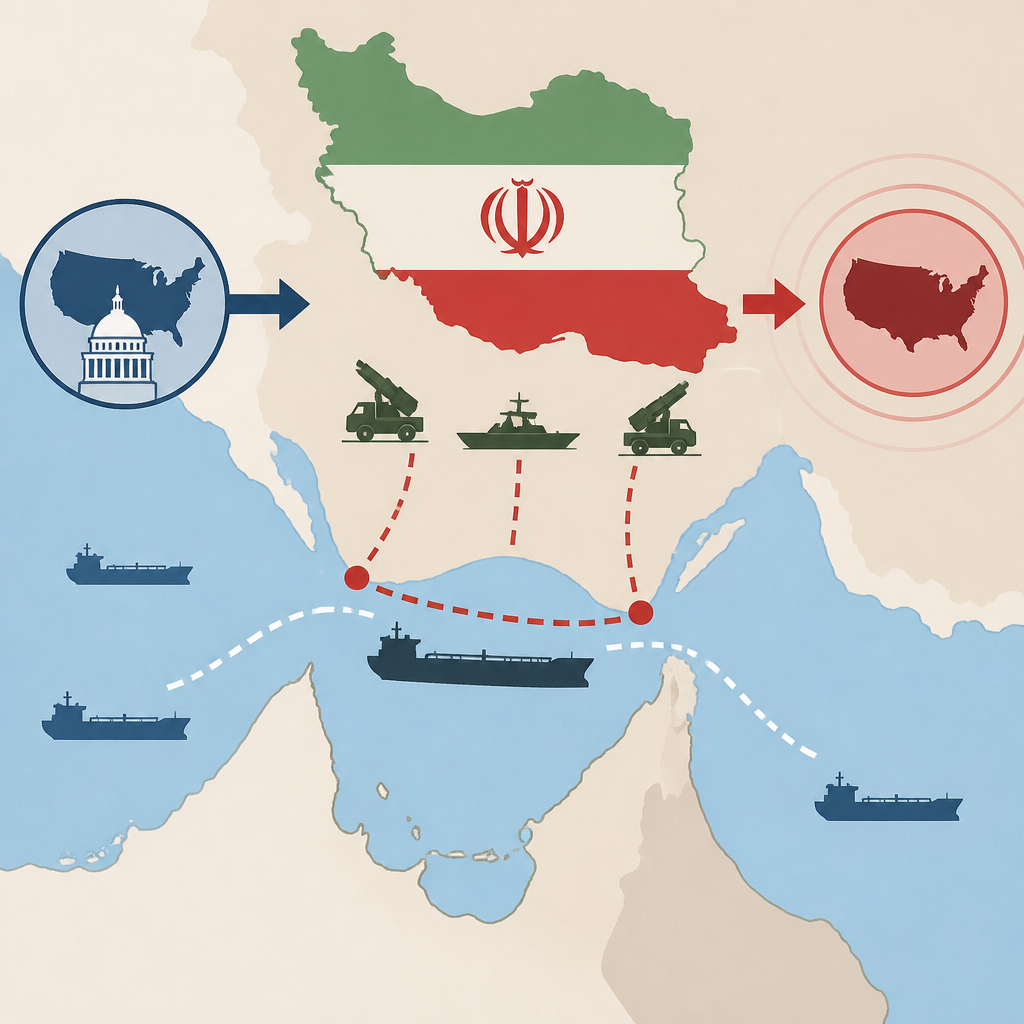
Compared with a conventional military campaign, this approach has a few clear advantages:
- It creates uncertainty without requiring sustained battlefield success.
- It spreads pressure across oil markets, regional allies, and U.S. planners.
- It raises the cost of inaction for everyone else.
- It gives Iran room to stop short of a full escalation.
There is a reason this pattern keeps showing up in Middle East crises. Geography is durable, and the chokepoint gives Iran a tool that survives changes in weapons, doctrine, and leadership. The U.S. can destroy hardware faster than it can remove the strategic value of a narrow sea lane.
What to watch next
The key question is whether Washington treats Hormuz as a one-off crisis or as a recurring pressure point that needs a longer plan. That means more than naval patrols. It means energy diversification, tighter missile defense coordination with Gulf partners, and a clearer response ladder for maritime threats.
If Iran keeps finding ways to turn regional instability into bargaining power, the next confrontation may look less like a war between states and more like a contest over shipping, insurance, and market fear. The real test is whether the U.S. can reduce the value of that pressure before Tehran uses it again.
// Related Articles
- [IND]
Five AI coding IDEs that fit real workflows
- [IND]
Devin Desktop turns Windsurf into an agent hub
- [IND]
Korea’s Nvidia talks point to an AI factory push
- [IND]
OpenAI should not rush its IPO just to win the AI race
- [IND]
OpenAI updates its Europe privacy policy
- [IND]
OpenAI is right to keep ads out of sensitive chats