Jared McCain vs starting role
Jared McCain’s latest update shows he is coming off the bench for Game 1 against Phoenix.

Jared McCain’s latest update shows he is coming off the bench for Game 1 against Phoenix.
If you want to understand what McCain’s bench role means, the real comparison is between his current usage, his recent production, and what Oklahoma City gains by keeping him out of the first five.
At a glance
Get the latest AI news in your inbox
Weekly picks of model releases, tools, and deep dives — no spam, unsubscribe anytime.
No spam. Unsubscribe at any time.
| Dimension | Jared McCain | Typical starting guard |
|---|---|---|
| Role in Game 1 | Bench | Starter |
| Recent playing time | 27, 26, 18, 16, 10 minutes in last 5 games | Usually 30-36 minutes |
| Recent scoring | 24, 12, 7, 13, 3 points in last 5 games | Often 12-20 points with steadier volume |
| Season production | 8.3 PPG, 2.0 RPG, 1.3 APG | Varies by starter, but higher assist load is common |
| Size | 6'3", 195 lb | Similar for many combo guards |
| Experience | 1 NBA season | Usually more established rotation trust |
McCain’s bench role
McCain’s non-starting status does not read like a demotion so much as a lineup choice. He has already shown he can swing games in shorter bursts, including a 24-point night in 27 minutes and a 12-point, three-assist outing in 26 minutes. That kind of production fits a bench guard who is asked to attack second units, keep pace high, and punish mismatches without carrying the full burden of opening possessions.

The bigger clue is the minute pattern. Over his last five games, McCain has gone from 10 minutes to the high 20s, which suggests his role can expand quickly when the matchup calls for it. For a playoff team, that flexibility matters: a reserve guard who can score efficiently enough to close games is often more valuable than a starter who needs more touches to get going.
What Oklahoma City is optimizing
Keeping McCain out of the starting lineup gives Oklahoma City more control over spacing, defensive assignments, and substitution timing. A bench scorer can enter against less stable lineups and keep the offense from stalling, which is especially useful in playoff series where every possession gets tighter. The Thunder also preserve the option to stagger him with other creators instead of asking him to fit a fixed opening script.
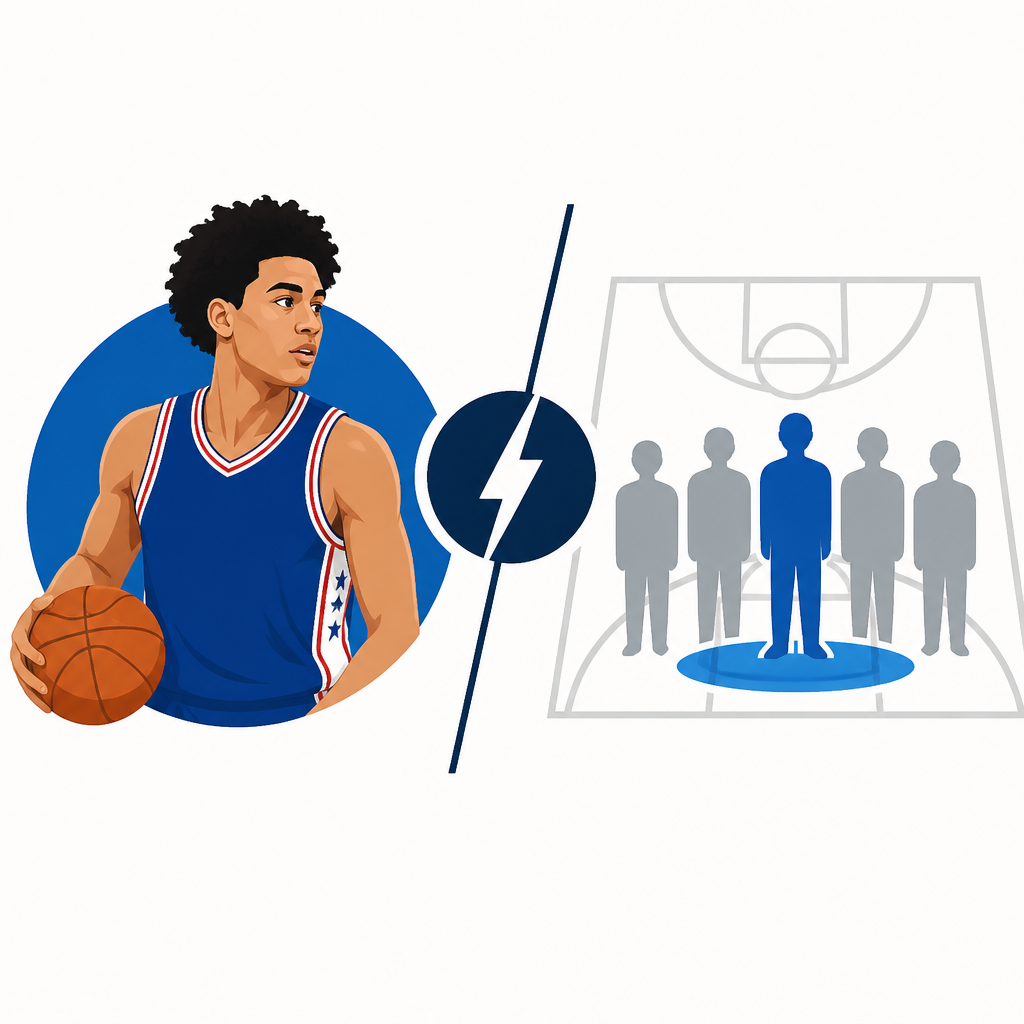
His recent stat line shows why that approach makes sense. McCain has averaged 8.3 points, 2.0 rebounds, and 1.3 assists on the season, but his recent games have been more aggressive and more productive than those averages imply. That gap is the classic sign of a player whose impact is rising, yet whose best use may still be as a high-energy piece rather than a locked-in starter.
Why the matchup matters
Against Phoenix, the first unit has to balance shot creation with defensive reliability. A bench role can protect McCain from early foul trouble and from being targeted by the opponent’s best perimeter defenders right away. It also lets the coaching staff choose when to unleash his scoring instead of letting the game’s opening rhythm decide it for them.
There is also a developmental angle. For a 22-year-old with one NBA season, playoff minutes are not only about raw totals. They are about learning how to read coverages, handle pressure, and stay effective when the opponent adjusts. Coming off the bench can be a cleaner environment for that growth because the role is narrower and the expectations are more specific.
When to pick what
If you want the safest playoff setup, pick McCain as a bench guard, because that is the role that best matches his current production, his recent minute trend, and Oklahoma City’s need for lineup flexibility.
If you want the highest-upside version of McCain, pick the starter path, but only when the Thunder need more shot-making in the opening group and are willing to trade some structure for offense.
If you are judging him as a fantasy or betting angle, the bench role is the better baseline because it signals a more volatile minute range, while the starting path is the better upside play if an injury or matchup forces a lineup change.
The default pick is bench usage, and the only thing that changes the answer is a matchup or injury that makes Oklahoma City need his scoring in the opening five.
// Related Articles
- [IND]
Gemini lands inside Apple’s developer stack
- [IND]
Five AI coding IDEs that fit real workflows
- [IND]
Devin Desktop turns Windsurf into an agent hub
- [IND]
Korea’s Nvidia talks point to an AI factory push
- [IND]
OpenAI should not rush its IPO just to win the AI race
- [IND]
OpenAI updates its Europe privacy policy