Mathematicians Warn AI Could Distort Math
Sixteen experts warn that AI-generated proofs could weaken math’s standards as OpenAI’s latest stunt draws fresh scrutiny.

Sixteen mathematicians warn that AI-generated proofs could weaken math’s standards.
OpenAI made headlines last week with an AI-generated proof, and now 16 experts have answered with a declaration that says the technology may threaten mathematics as a discipline. The warning lands at a moment when AI tools are moving faster than the institutions that judge whether a proof is elegant, correct, or even worth trusting.
That tension is bigger than one proof or one company. It cuts into how mathematicians decide what counts as knowledge, how journals review work, and how much confidence researchers should place in machine-generated reasoning.
| Item | Number | Why it matters |
|---|---|---|
| Experts behind the declaration | 16 | A coordinated warning from working mathematicians |
| OpenAI’s proof headline | 1 week earlier | The trigger that brought the debate into public view |
| California public universities’ AI spending | $16.9 million | A sign that institutions are already spending heavily on AI |
Why mathematicians are worried
Get the latest AI news in your inbox
Weekly picks of model releases, tools, and deep dives — no spam, unsubscribe anytime.
No spam. Unsubscribe at any time.
The core complaint is simple: if AI can produce convincing-looking proofs, then the field may get flooded with arguments that are hard to verify and easy to overrate. Math depends on precision, and a machine that generates fluent but shaky reasoning can create more noise than insight.
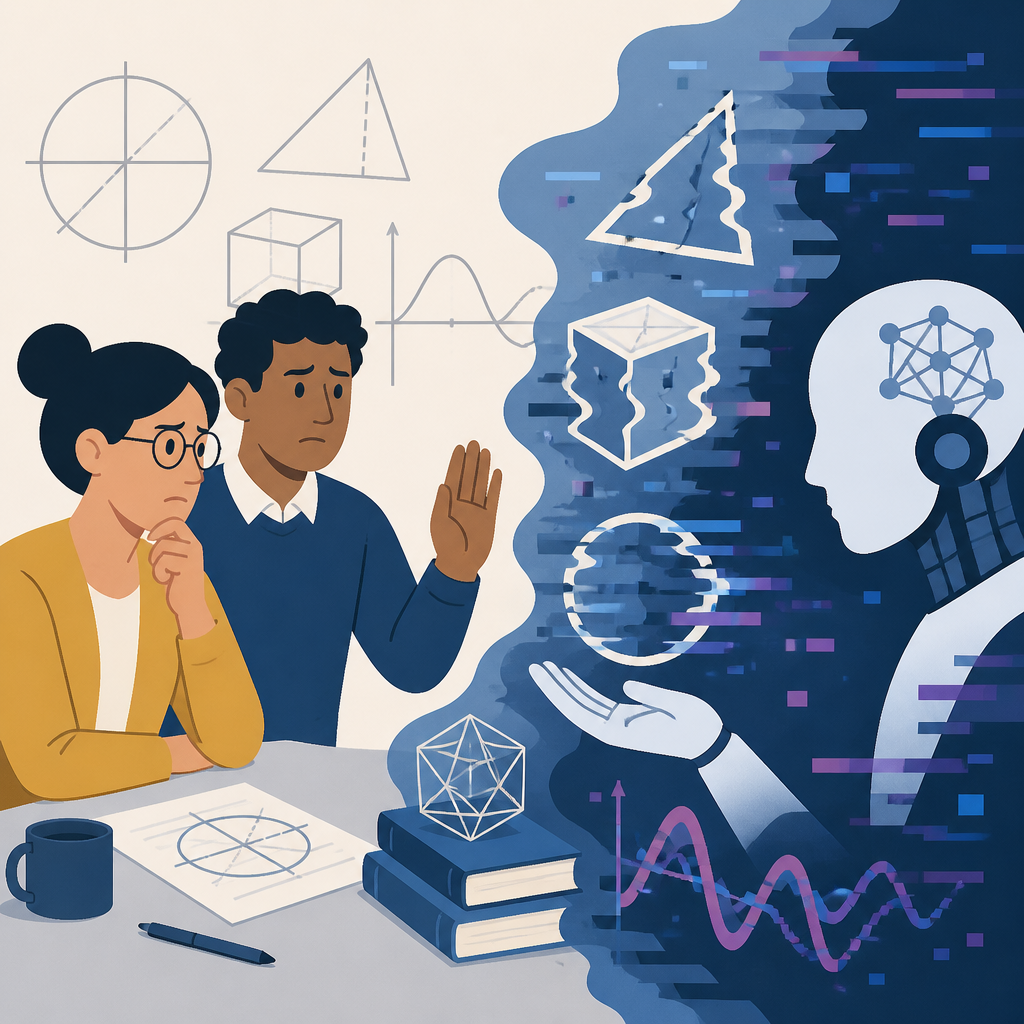
That does not mean AI has no place in mathematics. It already helps with search, pattern-finding, and code. The concern is about authority. If a proof arrives from a model, who checks it, and how much trust should it get before a human has done the hard work?
There is also a cultural issue here. Mathematics has always prized proof as a human-made chain of logic. If that chain starts being assembled by systems trained on vast text corpora, the field has to decide whether the output is a tool, a draft, or something closer to a claim.
- AI can accelerate pattern discovery and symbolic manipulation
- AI can also produce plausible errors that are hard to spot
- Math journals and researchers may need stricter verification norms
- Students could learn the wrong lesson if machine output is treated as proof
The OpenAI moment that set this off
The report from OpenAI matters because it puts a very visible company at the center of a very old discipline. OpenAI has spent years pushing models into more technical tasks, and math is one of the cleanest ways to test whether a model can reason instead of merely imitate.
But the public reaction shows a familiar pattern: a technical milestone becomes a cultural argument almost instantly. One camp sees progress in machine-assisted reasoning, while another sees a warning sign that the field is being asked to accept output before it has a good way to audit it.
“We are not saying that AI has no role in mathematics. We are saying that the role must be carefully defined and controlled.”
That quote, from the declaration cited in the New York Times ChatGPT coverage, captures the middle ground better than the usual hype cycle does. The issue is not whether AI can help. It is whether the rules of mathematical legitimacy can survive the speed of machine output.
How this compares with other AI fights
The math debate looks different from the fights around writing, image generation, or customer support. In those areas, the output can be useful even when it is imperfect. In mathematics, a single wrong step can invalidate the whole result.
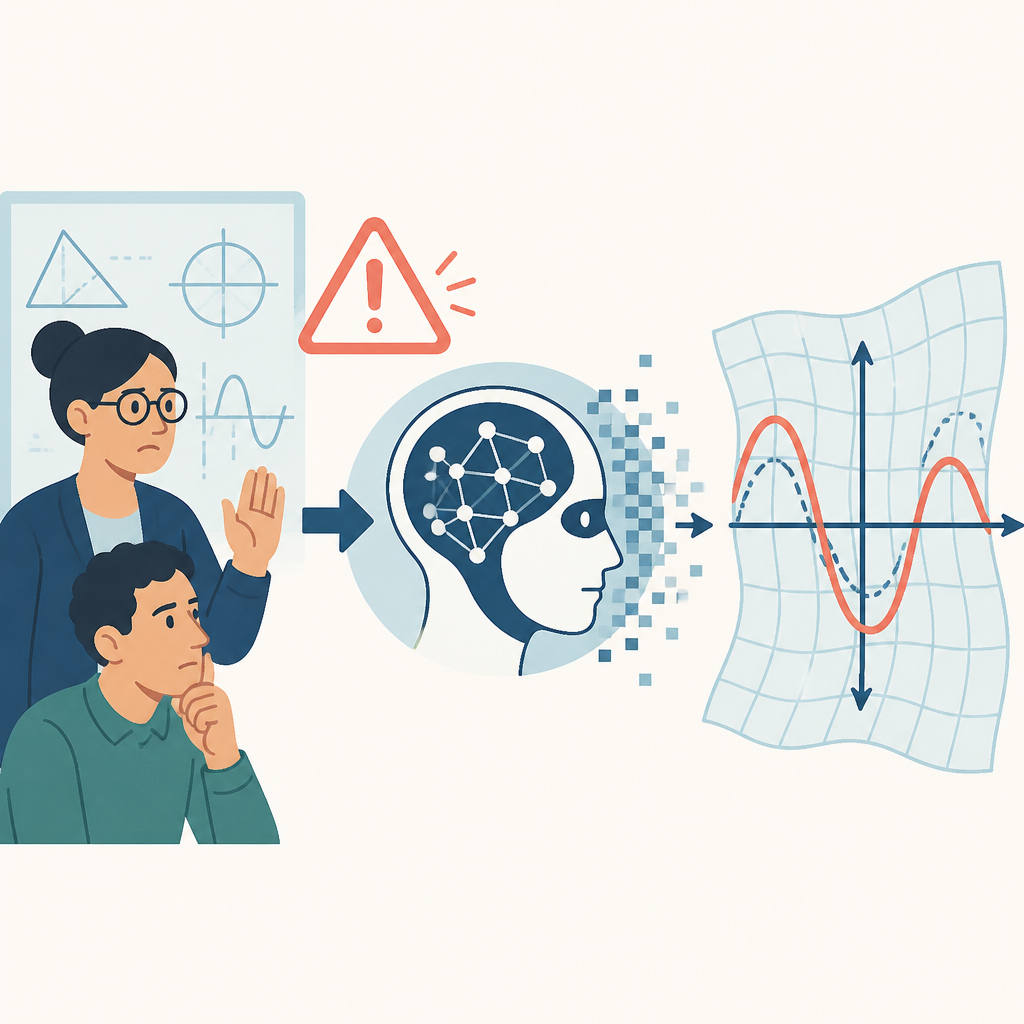
That makes the standard for acceptance much higher. A chatbot can draft an email with a few mistakes and still save time. A proof that misses one implication can mislead a whole line of research. The cost of error is higher, and the margin for sloppiness is much smaller.
- In writing tasks, errors are often tolerable if a human edits the result
- In coding, broken output can be tested and fixed quickly
- In mathematics, hidden mistakes can survive much longer
- That raises the bar for review, replication, and explanation
Other stories in the current wave of ChatGPT coverage point to the same pressure from different angles. Florida’s lawsuit against OpenAI shows regulators focusing on safety, while Anthropic filing to go public shows the commercial race is still accelerating. Even Box says AI is creating new roles inside companies, which means the technology is spreading faster than the institutions around it can adapt.
What happens next for math and AI
The next step is not a ban. It is a set of clearer norms: when AI can draft a proof, when a human must verify it, and what level of machine assistance should be disclosed. If the field gets that wrong, the damage will be subtle at first, then expensive later.
My read is that mathematicians will not reject AI outright. They will demand traceability. The real question is whether journals, departments, and research labs move quickly enough to make machine-assisted proofs auditable before the flood of generated output gets too large to sort cleanly.
For developers and researchers, the takeaway is practical: treat AI in math like a powerful junior collaborator, not an authority. If a model can write a proof, the next question is whether a human can explain every step without the model’s help.
// Related Articles
- [RSCH]
How VLMs Learned Complex Scene Descriptions
- [RSCH]
Visual Pretraining Beats Text-Only in Language Models
- [RSCH]
PHINN-EEG brings topology to dream-state EEG
- [RSCH]
Google’s Android Bench update exposes Gemini’s gap
- [RSCH]
Benchmarks should not pick your LLM in 2026
- [RSCH]
Rust Breaks Into TIOBE’s Top 10