Microsoft’s May 2026 partner updates: Copilot, Marketplace, and compl…
Microsoft’s May 2026 Partner Center update adds three-year Copilot buying, Marketplace auto activation, and new compliance deadlines.

Microsoft’s May 2026 Partner Center update adds new Copilot terms, Marketplace automation, and compliance deadlines.
Microsoft packed May 2026 with Partner Center changes that matter to CSPs, Marketplace sellers, and compliance teams. The biggest headline is a new three-year purchasing option for Microsoft 365 Copilot in CSP, announced on May 1, 2026.
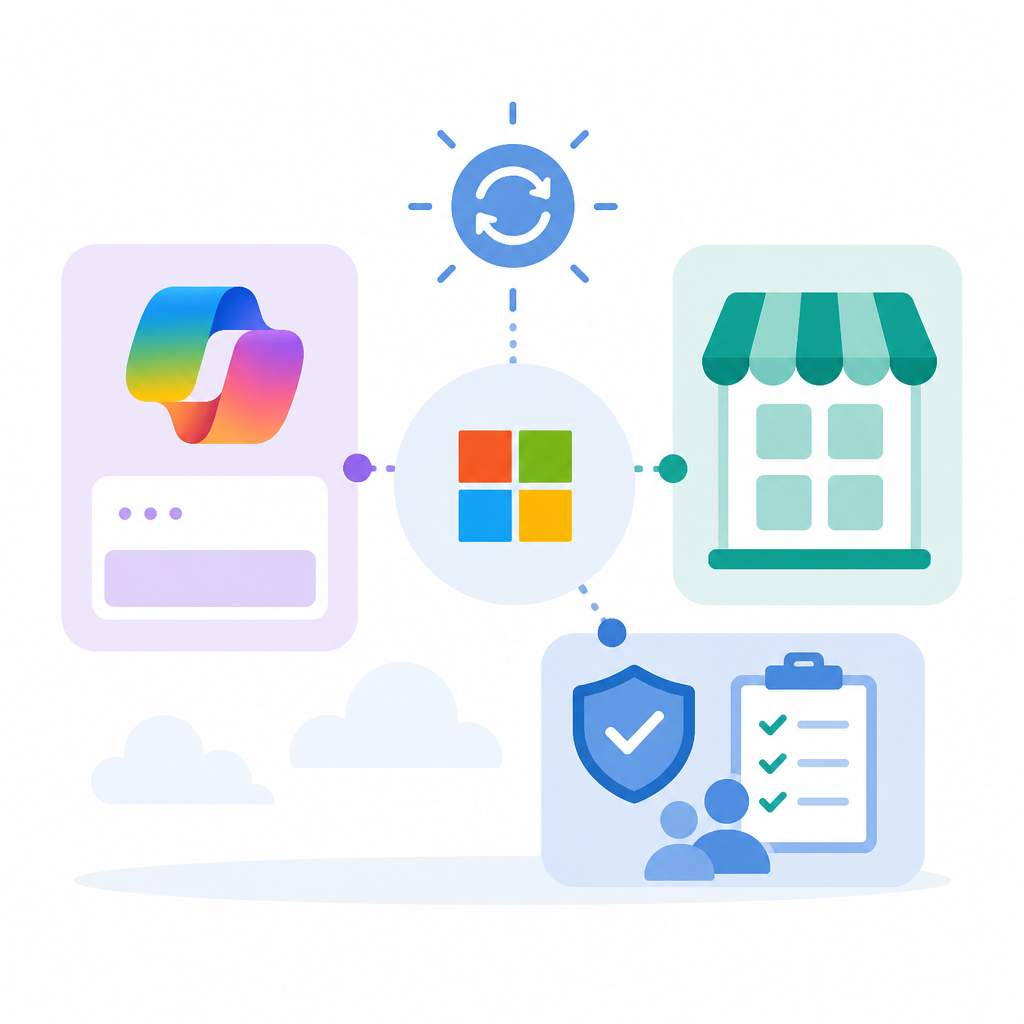
That update lands alongside several operational changes: auto activation for SaaS in Microsoft Marketplace, Secure Boot certificate updates for Windows devices, Azure migration planning tools, and France e-Invoicing requirements that kick in on September 1, 2026. If you sell, deploy, or manage Microsoft cloud services, this is one of those months where the admin details matter as much as the product news.
| Date | Update | Who it affects | Why it matters |
|---|---|---|---|
| May 1, 2026 | Three-year Microsoft 365 Copilot in CSP | CSP partners | Aligns Copilot with existing three-year Microsoft 365 E3 and E5 SKUs |
| May 18, 2026 | Auto activation for SaaS in Marketplace | Marketplace SaaS publishers | Billing starts at purchase time, before product activation |
| May 19, 2026 | Secure Boot certificate updates | All partners | 2011-issued certificates begin expiring in June and October 2026 |
| September 1, 2026 | France e-Invoicing compliance date | Microsoft France transacting partners and customers | Missing tax data can block invoice issuance |
Copilot gets a longer buying cycle in CSP
Get the latest AI news in your inbox
Weekly picks of model releases, tools, and deep dives — no spam, unsubscribe anytime.
No spam. Unsubscribe at any time.
The most commercially important update in the batch is Microsoft’s new three-year purchasing option for Microsoft 365 Copilot in CSP. Microsoft says the new option brings Copilot in line with existing three-year Microsoft 365 E3 and E5 SKUs, which matters because procurement teams like consistency more than novelty.

For partners, that means fewer awkward conversations about why AI add-ons have a different commitment model than the core productivity stack. It also gives sellers a cleaner way to tie Copilot into a longer customer planning horizon, especially for organizations that buy Microsoft 365 on annual or multi-year terms.
Microsoft did not frame this as a pricing play in the announcement. It framed it as alignment. That distinction matters. Alignment usually means less friction in the sales motion, simpler renewals, and fewer exceptions for finance teams that want all their Microsoft commitments to follow the same cadence.
- Copilot now has a three-year option in CSP.
- Microsoft 365 E3 and E5 already had three-year SKUs.
- The change is designed to make partner selling easier, not to change the product itself.
Marketplace billing now starts before activation
Microsoft also introduced auto activation for SaaS offers in Marketplace. The mechanics are simple: when a customer buys a SaaS offer, billing starts immediately, and Microsoft sends the partner a real-time webhook confirming the purchase. Activation can happen later, but the billing clock does not wait.
This is a meaningful shift because it removes a common gap between purchase and fulfillment. In the old flow, partners often treated customer outreach as the first signal that a sale had happened. Now the platform itself becomes the signal source, which should reduce manual follow-up and make onboarding more predictable.
“With auto activation, billing begins as soon as a customer buys your SaaS offer in Microsoft Marketplace, even if product activation happens later.”
Microsoft also made the default behavior explicit. Existing plans keep auto activation turned off unless the partner republishes the offer and changes the setting. New plans turn it on by default, though publishers can switch it off during publication. Private offers inherit the public offer setting unless a new SaaS plan with a unique plan ID is created.
- Existing SaaS plans: auto activation is off by default.
- New SaaS plans: auto activation is on by default.
- Private offers follow the public offer’s setting unless you create a new plan ID.
- Billing begins immediately when the purchase completes.
That default matters because it changes who needs to think about activation logic first: Microsoft or the partner. If your onboarding process depends on manual review, customer approval, or internal provisioning checks, you will want to keep the setting off. If your SaaS product can handle immediate billing and delayed activation cleanly, the new model removes a step.
Azure Migrate is trying to compress planning time
Microsoft’s Azure partner message in May is less about product novelty and more about operational speed. The company says Azure Migrate can move migration planning from weeks to hours by turning discovery, assessment, and reporting into a repeatable workshop-to-deck flow.
That claim is aimed at global systems integrators and enterprise software development companies that still spend too much time exporting spreadsheets, classifying workloads by hand, and rebuilding the same presentation every time a customer asks for a migration plan. Microsoft’s pitch is that the collector can scan a customer’s IT estate offline, enrich the inventory with tags and application groupings, and generate a PowerPoint deck with migration and modernization recommendations.
Here the promise is less flashy than it sounds, and that is a good thing. A lot of migration work fails because the first planning artifact is stale before the meeting even starts. If Azure Migrate really trims the prep cycle from weeks to hours, partners get more room for customer conversations and less time formatting slides.
- Azure Migrate Collector scans an IT estate offline.
- The output includes PowerPoint-ready recommendations.
- Microsoft says the process can shrink from weeks to hours.
- The workflow covers lift-and-shift, security posture, and cost insight.
Compliance teams have two dates to care about
Two of the May updates are pure operational housekeeping, but both could cause real pain if ignored. First, Microsoft warned partners to keep an eye on Secure Boot certificate updates. Certificates issued in 2011 begin expiring in June and October 2026, and Microsoft says many Windows devices will receive updated certificates automatically depending on configuration and support status.
That is the kind of notice that gets overlooked until a fleet starts behaving badly. Microsoft recommends using Microsoft Intune, registry keys, Windows Configuration System, or Group Policy for managed deployments. It also says more Secure Boot certificate check capabilities are planned for a future release, which suggests the tooling is still catching up with the scale of the problem.
Second, Microsoft France is preparing for France e-Invoicing requirements that start on September 1, 2026. Partners and customers that transact directly with Microsoft France need valid tax identifiers, including a French VAT ID, SIREN, and in some cases a SIRET and electronic delivery address tied to the French Government Directory.
The compliance message is blunt: inaccurate or missing tax data can cause invoices to be rejected by government systems. That is not a theoretical inconvenience. It can stop e-invoice issuance and create a mess for finance teams that thought the paperwork was already done.
- Secure Boot certificates issued in 2011 expire in June and October 2026.
- France e-Invoicing starts on September 1, 2026.
- Microsoft requires valid VAT, SIREN, and sometimes SIRET data.
- Tax data errors can block invoice issuance.
What partners should do next
The common thread across Microsoft’s May 2026 announcements is control. Microsoft is giving partners longer-term buying options for Copilot, more automated billing behavior in Marketplace, faster migration tooling, and firmer compliance deadlines. None of that is abstract. Each change affects revenue timing, customer onboarding, or back-office readiness.
If you sell Copilot through CSP, check how the new three-year option fits into your renewal motion. If you publish SaaS in Marketplace, decide whether immediate billing matches your activation process. If you manage Windows fleets, treat the Secure Boot update as a maintenance item, not a future concern. If you touch Microsoft France transactions, verify tax records now, not in late August.
The real question is which of these changes will hit your team first. For many partners, the answer will be Marketplace automation, because billing and activation changes tend to surface quickly. For others, the first visible issue will be compliance, since certificate expiration and tax validation usually wait until they become expensive. Either way, May 2026 is a reminder that Microsoft partner updates are rarely just announcements. They are operating instructions.
For more partner news and product updates, see our related coverage on Microsoft Partner Center changes and Microsoft Marketplace updates.
// Related Articles
- [IND]
Korea’s Nvidia talks point to an AI factory push
- [IND]
OpenAI should not rush its IPO just to win the AI race
- [IND]
OpenAI updates its Europe privacy policy
- [IND]
OpenAI is right to keep ads out of sensitive chats
- [IND]
AI bootlegs are already draining streaming royalties
- [IND]
AMD and Microsoft push Windows ML on GPU and NPU