Mid-2026 Tube Bending Trends: AMOB's Read
AMOB says 2026 tube bending demand is shifting toward electric, precise, and highly specialized machines for naval, boiler, and auto work.
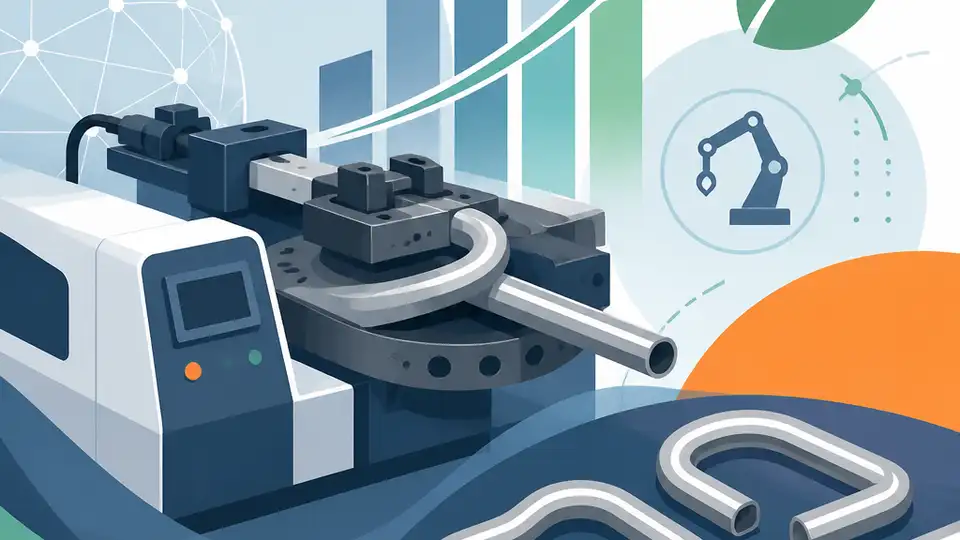
AMOB says 2026 tube bending demand is shifting toward electric, precise, and highly specialized machines.
By mid-2026, AMOB says the tube bending market is no longer buying for raw output alone. The company points to three sectors pulling investment now: naval, boilers and heat exchangers, and automotive.
That matters because each of those sectors is asking for a different kind of machine behavior. In one case it is full electric control, in another it is tight-radius bending with wall-thickness control, and in the third it is cycle-time reduction without giving up accuracy.
| Trend | AMOB machine | What it is optimized for |
|---|---|---|
| Naval industry | eMOB 225 | 100% electric operation, stability, repeatability |
| Boilers and heat exchangers | CH 120 Booster | Very tight bends, wall-thickness control, lower ovalization |
| Automotive | eMOB 63 2 Bend | Faster production cycles, flexible part handling |
Electric machines are winning attention in naval work
Get the latest AI news in your inbox
Weekly picks of model releases, tools, and deep dives — no spam, unsubscribe anytime.
No spam. Unsubscribe at any time.
AMOB’s first point is simple: the naval industry wants more electric tube bending machines. Not because electric sounds modern, but because it gives manufacturers tighter process control, better repeatability, and lower energy use.

The company highlights the eMOB 225 in projects where stability and reliability matter most. That fits naval work, where large parts, long service lives, and strict quality requirements leave little room for variation.
The practical shift here is worth watching. For years, a lot of heavy industrial bending buying decisions centered on capacity. Now the buying logic is moving toward how well a machine handles precision over long production runs, especially when the part has to perform in harsh environments.
- AMOB describes the naval demand as centered on 100% electric solutions.
- The company calls out process control, precision, and energy efficiency as the main buying criteria.
- The eMOB 225 is the machine it links most closely to this demand.
Boilers and heat exchangers need tight bends without distortion
The boiler and heat exchanger segment has a different problem. These parts often require very small bend radii, and that is where tube geometry starts to break down if the machine cannot control the material properly.
AMOB says the CH 120 Booster was built for exactly this kind of work. Its Booster technology is aimed at controlling wall thickness and reducing ovalization, which are two of the biggest quality risks in demanding bends.
“The only way to get good results is with a machine that can control the process from start to finish,” said António M. B. Oliveira, AMOB’s founder and CEO, in the company’s published materials.
That quote matches the technical direction of the article. In heat exchanger work, the machine is not simply bending tube. It is trying to preserve the original tube characteristics as much as possible while forcing it into a much tighter shape.
For buyers in this segment, the tradeoff is clear: if the machine saves time but damages geometry, the part is wasted. The value is in keeping the tube usable after the bend, even when the radius gets very small.
- AMOB says the CH 120 Booster keeps wall thickness under control.
- The company says it significantly reduces ovalization during bending.
- It also says the machine preserves geometry even at very small radii.
Automotive buyers want speed without losing accuracy
Automotive manufacturing has its own pressure point. Parts are getting more complex, production windows are shrinking, and factories need machines that can switch between jobs without slowing the line.
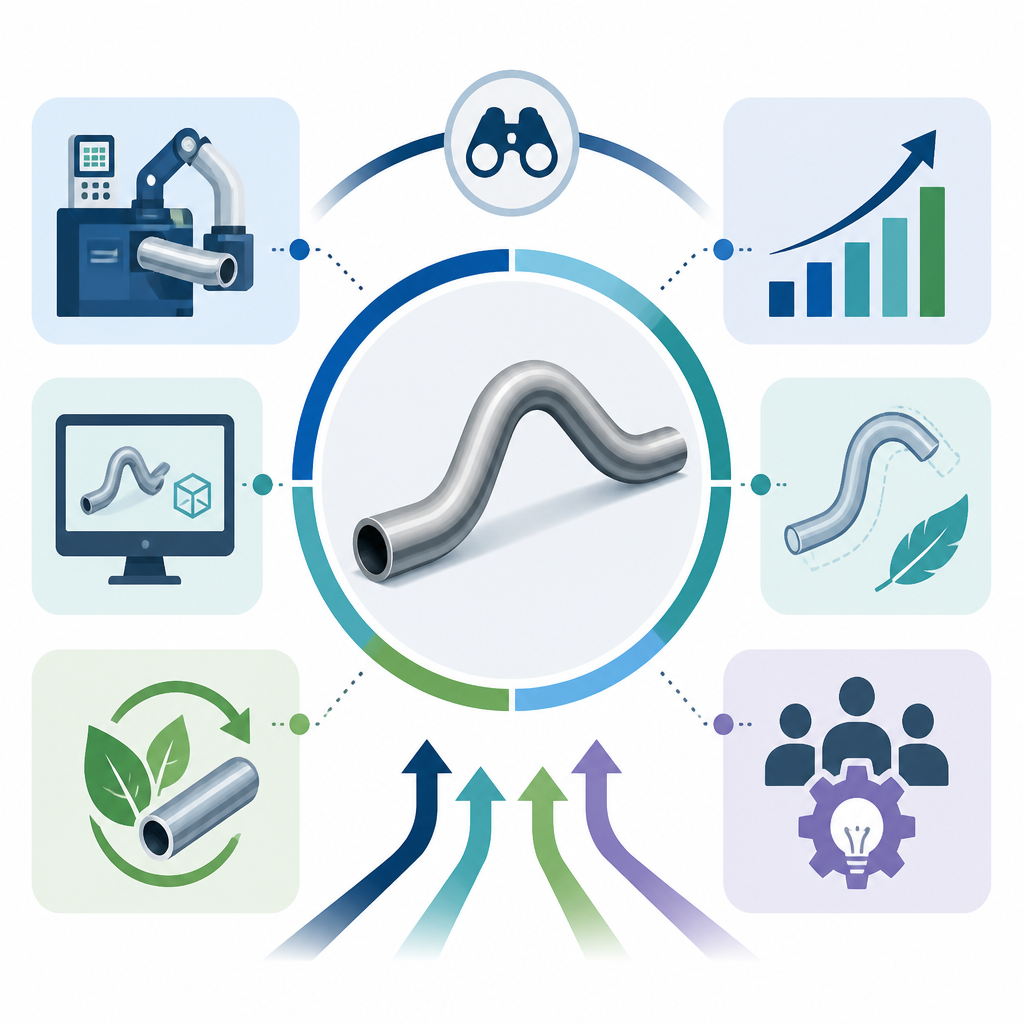
AMOB points to the eMOB 63 2 Bend as a response to that need. The pitch is straightforward: improve production cycles while keeping the final part accurate and consistent.
This is where the article gets useful beyond sales copy. It shows that the tube bending market is splitting into specialized use cases rather than one broad “industrial machine” category. Automotive wants flexibility. Boilers want geometry control. Naval wants electric precision.
That split is also a sign that machine builders are being judged less on general-purpose claims and more on how well they solve one specific production problem.
- Automotive parts are becoming more geometrically complex.
- Manufacturers want shorter production times and higher efficiency.
- AMOB positions the eMOB 63 2 Bend around flexibility and productivity.
What the first half of 2026 says about the market
AMOB’s broader argument is that the first half of 2026 points to a market shaped by specialization. The common theme is not raw speed. It is fit-for-purpose engineering.
That is a useful lens for anyone buying bending equipment this year. If a plant still shops for tube benders as if one model can cover every job, it will probably overpay somewhere, either in wasted capability or in missed process requirements.
The company’s own product lineup reflects that shift. Its eMOB Series, eMOB 2 Bend Series, and CH Booster Series each target a different production problem instead of trying to cover everything at once.
That is probably the clearest takeaway from AMOB’s mid-year read: tube bending buyers are asking sharper questions, and machine makers have to answer with narrower, better defined tools. If you are shopping for equipment in the second half of 2026, the right question is not “Which machine bends tube?” It is “Which machine protects the part quality my process can’t afford to lose?”
You can also read more OraCore coverage on industrial automation in our automation trends report.
// Related Articles
- [IND]
Gemini lands inside Apple’s developer stack
- [IND]
Five AI coding IDEs that fit real workflows
- [IND]
Devin Desktop turns Windsurf into an agent hub
- [IND]
Korea’s Nvidia talks point to an AI factory push
- [IND]
OpenAI should not rush its IPO just to win the AI race
- [IND]
OpenAI updates its Europe privacy policy