Mumbai News Live: The big stories shaping the city
Mumbai’s live news feed tracks rain, trains, crime, housing drives, and civic flashpoints across the city.
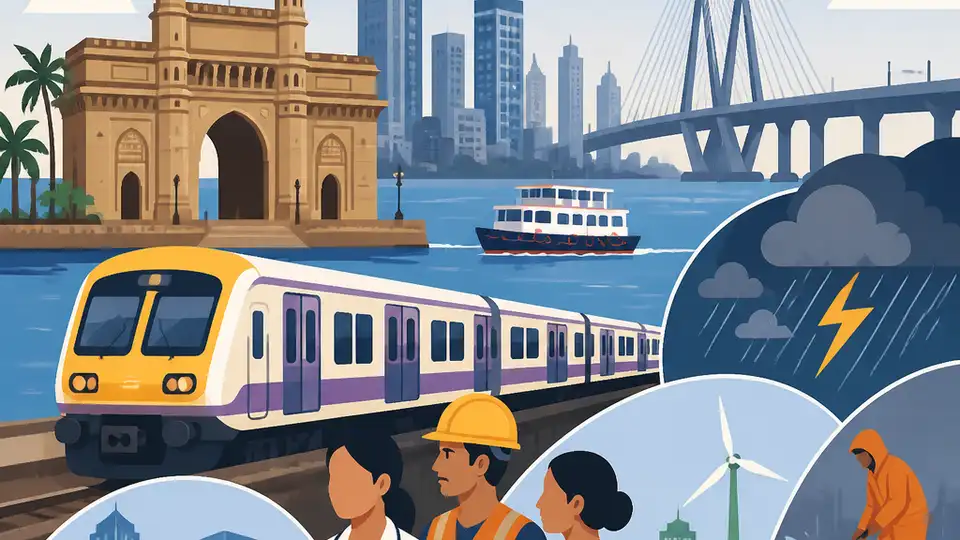
Mumbai’s live news feed tracks rain, trains, crime, housing drives, and civic flashpoints across the city.
Mumbai is moving on several fronts at once: the city has a population of 20,667,656, the suburban rail network carries more than 7.5 million commuters a day, and the municipal budget has crossed Rs 39,038 crore. That scale explains why even a single incident on a road, at a station, or in a slum pocket can ripple across the city fast.
The latest stream of stories from Times of India’s Mumbai page mixes hard civic news with crime, transport, and public safety updates. There is no single headline that defines the day here; Mumbai news is usually a stack of pressure points, from housing demolitions in Bandra to train-station safety, fraud probes, and weather worries.
| Data point | Figure | Why it matters |
|---|---|---|
| Mumbai population | 20,667,656 | Shows the scale of the city’s daily infrastructure load |
| Daily suburban rail commuters | More than 7.5 million | Explains why rail disruption becomes a citywide issue |
| BMC budget | Rs 39,038 crore | Indicates how much money the city can deploy on civic services |
| BEST bus accident case | 1 pedestrian-related fatality reported | Highlights road safety risks on busy city streets |
| Bandra eviction drive | Hundreds of families displaced | Shows the human cost of infrastructure expansion |
What the latest Mumbai headlines are really about
Get the latest AI news in your inbox
Weekly picks of model releases, tools, and deep dives — no spam, unsubscribe anytime.
No spam. Unsubscribe at any time.
The biggest theme in the feed is pressure on public space. In Bandra East, an eviction drive in Garib Nagar displaced hundreds of families for railway expansion, and residents said children and elderly people were left in harsh heat with little immediate support. That story matters because Mumbai’s growth often collides with its housing shortage in the same neighborhood.
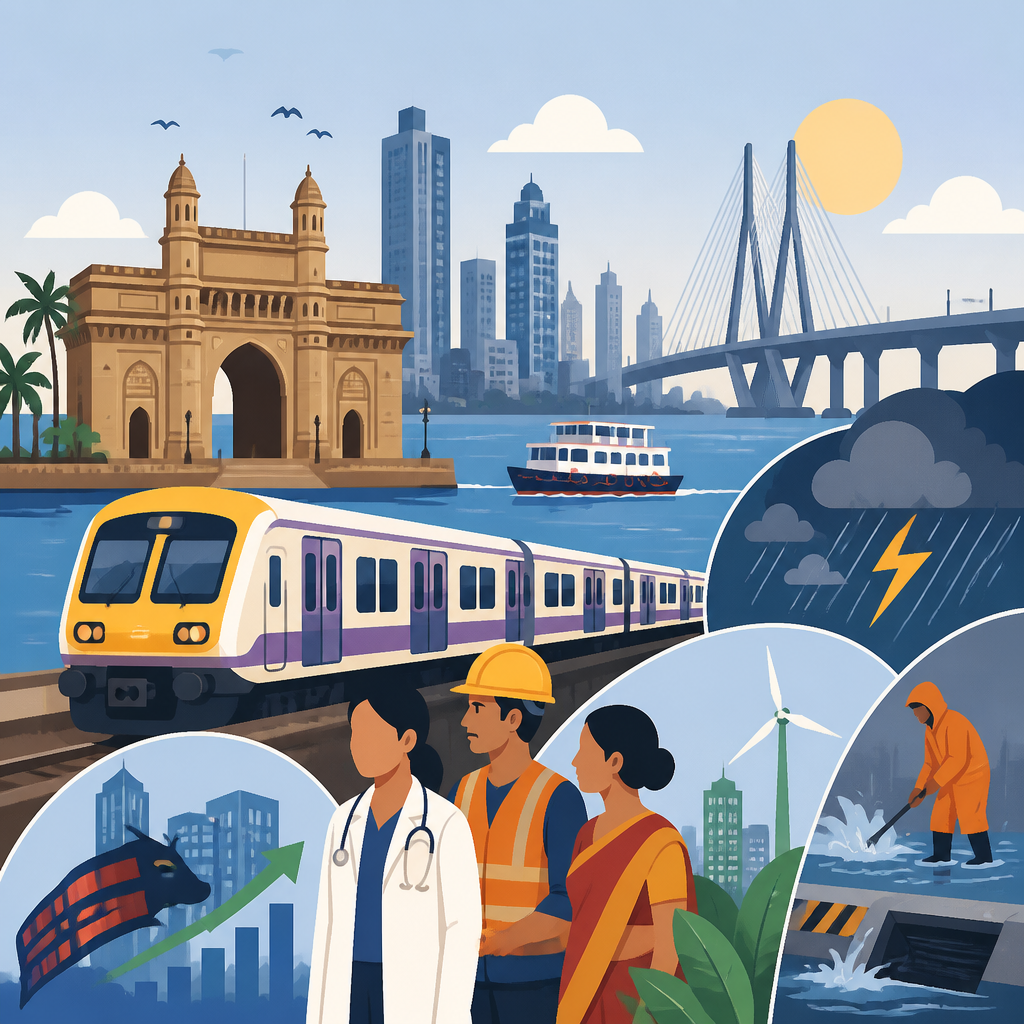
Transport is the second major thread. One report says a pillion rider was crushed by a BEST bus after a biker braked suddenly to avoid a pedestrian crossing in Andheri. Another update says local train safety, road congestion, and airport-linked traffic remain constant pressure points for commuters who already spend hours in transit each day.
Crime and enforcement keep showing up too. The city feed includes an Enforcement Directorate custody case, a digital arrest scam that cost a 77-year-old resident Rs 50 lakh, and multiple assault and harassment cases near railway stations. These are not isolated incidents; they are part of a pattern of urban fraud and public-space vulnerability.
- Housing and eviction tension, especially in Bandra and other redevelopment zones
- Road and rail safety incidents that hit ordinary commuters first
- Police and court cases involving fraud, extortion, and digital scams
- Weather, pollution, and airport updates that affect movement across the city
Why Mumbai’s transport stories hit harder than most
Mumbai is one of those cities where a transport headline never stays a transport headline for long. A bus collision, a train delay, or a road closure can affect office arrivals, school runs, hospital visits, and airport transfers on the same morning. That is why the city’s rail and road reports get such intense attention.
The numbers make the point. The suburban rail system runs 2,342 train services a day and carries more than 7.5 million commuters. The city also has a dabbawala network delivering roughly 2,00,000 tiffins daily, which tells you how tightly work, food, and movement are tied together in Mumbai.
For a useful comparison, look at the scale of the city against its infrastructure load:
- Population: 20.67 million
- Daily suburban rail ridership: more than 7.5 million
- Dabbawala deliveries: about 2,00,000 meals a day
- BMC budget: Rs 39,038 crore for 2021-22
Those figures explain why traffic bottlenecks, station safety incidents, and monsoon alerts get treated as citywide events. Even a small disruption can spread across business districts, residential suburbs, and airport corridors in a matter of hours.
Public safety, scams, and the human cost of city pressure
The city feed also shows how public safety has widened beyond street crime. Digital arrest scams have become a recurring problem, and the report about a 77-year-old resident losing Rs 50 lakh is a reminder that older people are often the easiest targets. On the ground, station harassment cases and violent theft reports continue to surface with uncomfortable regularity.
One of the clearest voices in the broader public-safety debate comes from Amitabh Chandra, who has said, “The biggest problems in health care are not the ones that get the most attention, but the ones that affect the most people.” The line comes from his public commentary on systems and incentives, and it fits Mumbai too: the city’s biggest problems are often the ones that touch the most commuters, tenants, and workers, even if they do not trend for long.
That is why the Bandra eviction story matters as much as a court order or a police case. It is not just about land use. It is about who absorbs the pain when the city expands, and how quickly relief reaches the people who are pushed aside.
There is also a quieter but important civic thread in the feed: tree damage probes, waste collection drives, school plot policy fights, and public pressure on municipal offices. These stories may look smaller than a crime report, but they shape whether the city feels livable or merely functional.
What to watch next in Mumbai news
Three things will tell you where the city is heading in the near term. First, weather and monsoon-related disruption will keep testing roads, rail lines, and drainage systems. Second, redevelopment and eviction disputes will keep exposing the gap between infrastructure plans and housing protection. Third, police and court action on scams, extortion, and station crimes will show whether enforcement is keeping pace with the city’s growth.
If you follow Mumbai closely, the smartest reading habit is to treat each headline as part of a larger system. A bus crash points to road discipline. An eviction points to redevelopment pressure. A scam points to digital trust gaps. Put those together, and you get a city that is still expanding faster than many of its support systems.
The next real question is whether Mumbai can keep moving millions of people every day while also giving residents safer streets, clearer housing rules, and faster civic response when things go wrong.
// Related Articles
- [IND]
Korea’s Nvidia talks point to an AI factory push
- [IND]
OpenAI should not rush its IPO just to win the AI race
- [IND]
OpenAI updates its Europe privacy policy
- [IND]
OpenAI is right to keep ads out of sensitive chats
- [IND]
AI bootlegs are already draining streaming royalties
- [IND]
AMD and Microsoft push Windows ML on GPU and NPU