Ripple Opens Washington Office for Crypto Policy Push
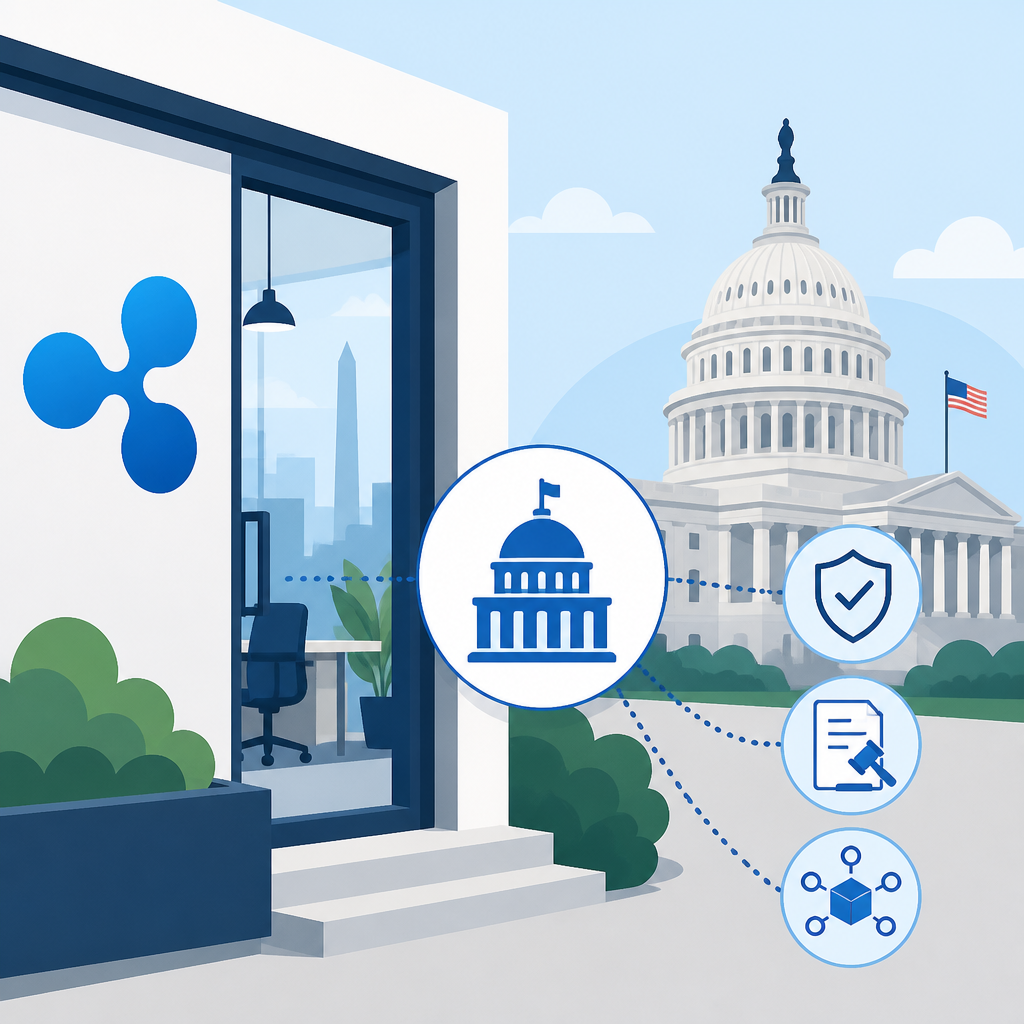
Ripple opened a Washington, D.C. office to deepen its push on US crypto rules, stablecoins, and payments policy.

Ripple opened a Washington, D.C. office to push harder on US crypto policy and payments rules.
Ripple says its new downtown Washington, D.C. office is now open, and the timing is hard to miss. Lawmakers are still arguing over crypto market structure, stablecoins, and payments modernization while the company is trying to shape the rules that will define all three.
The move is less about optics than access. In Washington, proximity matters, and Ripple wants a permanent base for meetings with policymakers, regulators, and industry groups as the debate over digital asset oversight gets more specific.
| Item | Detail |
|---|---|
| Office location | Downtown Washington, D.C. |
| Announcement date | June 2 |
| Policy focus | Crypto market structure, stablecoins, payments modernization |
| Executive quoted | Stuart Alderoty, Ripple CLO |
| Global expansion note | RLUSD stablecoin went live in Turkey |
Why Ripple wants a bigger Washington footprint
Get the latest AI news in your inbox
Weekly picks of model releases, tools, and deep dives — no spam, unsubscribe anytime.
No spam. Unsubscribe at any time.
Ripple has spent years arguing that crypto firms should help write the rules they have to follow. The company’s new office gives that argument a physical address in the capital, where staff can meet staffers, regulators, and lobbyists without treating every conversation like a one-off trip.

The company framed the office as a hub for policy advocacy and stakeholder meetings. That matters because crypto regulation in the US is no longer just a broad debate about whether digital assets belong in the financial system. It is now a set of practical fights over who supervises what, how stablecoins are backed, and what payment rails should look like when they touch blockchain infrastructure.
Ripple also tied the expansion to its long-running pitch that the US can still lead in financial technology if lawmakers write clearer rules. That is a familiar message from the company, but it lands differently now that Congress is actively debating market structure language and stablecoin frameworks.
- Ripple wants direct access to policymakers instead of relying on trade groups alone.
- The office is meant to support advocacy around consumer protection and innovation.
- The company is linking policy work to its enterprise payments business and RLUSD stablecoin.
What Stuart Alderoty actually said
Ripple’s chief legal officer, Stuart Alderoty, used the announcement to make the company’s position plain. The firm is not asking to be left out of the rulemaking process; it wants to be in the room while the rules are drafted.
“Ripple has always believed the future of digital assets should be built with policymakers and regulators, not around them,” said Stuart Alderoty, Ripple’s chief legal officer.
That quote captures the core of Ripple’s Washington strategy. The company is trying to present itself as a regulated, enterprise-focused crypto player that wants clarity, not chaos. It is also a reminder that Ripple’s business model depends heavily on regulatory outcomes, especially in payments and stablecoins.
There is a practical reason for that posture. Ripple has spent more than a decade building blockchain infrastructure for global payments, custody, and liquidity management, so policy uncertainty is not an abstract problem. It affects how fast banks, payment firms, and corporate clients are willing to adopt the technology.
How this fits into Ripple’s broader playbook
The D.C. office is part of a larger strategy that mixes product expansion with policy influence. Ripple is still pushing its XRP-linked payments business, but it has also been widening its stablecoin and cross-border payments ambitions. The company said RLUSD has now gone live in Turkey, which shows it is not waiting for US rules before expanding elsewhere.
That split approach is smart. If Washington moves slowly, Ripple can keep building abroad. If US lawmakers settle on workable rules, the company already has a seat close to the table. Either way, it is trying to avoid being boxed into a purely defensive legal posture.
For context, Ripple is not the only crypto company spending more time in Washington, but it is one of the few that can connect policy work to a payments business that already has enterprise customers and a stablecoin in circulation. That gives its lobbying effort more weight than a generic industry plea.
- Ripple has been building enterprise blockchain products for over a decade.
- Its focus areas include faster payments, custody, and liquidity management.
- RLUSD adds a stablecoin angle to the company’s policy arguments.
What this means for US crypto rules
The timing is important because the policy debate is getting more concrete. The CLARITY Act, stablecoin proposals, and payments modernization efforts all point toward a more defined regulatory framework, even if the final shape is still uncertain. Companies like Ripple want to influence those details before they calcify.
That is where the new office matters most. It gives Ripple a place to host conversations, respond faster to legislative updates, and keep its message consistent across Capitol Hill, agencies, and industry partners. In Washington, that kind of steady presence often matters more than a one-day announcement.
Here is the real takeaway: Ripple is betting that the next phase of US crypto regulation will reward companies that show up early, speak the language of compliance, and offer working infrastructure instead of theory. If Congress keeps moving toward clearer rules, expect more crypto firms to copy this playbook and plant their own flags in Washington.
For readers tracking the policy side of digital assets, this is the same story that keeps showing up in other forms too, from the CLARITY Act timeline to debates over stablecoin legislation. Ripple is simply making its move before the next draft becomes the one that matters.
// Related Articles
- [IND]
OpenAI’s IPO will expose AI hype to Wall Street
- [IND]
Gemini lands inside Apple’s developer stack
- [IND]
Five AI coding IDEs that fit real workflows
- [IND]
Devin Desktop turns Windsurf into an agent hub
- [IND]
Korea’s Nvidia talks point to an AI factory push
- [IND]
OpenAI should not rush its IPO just to win the AI race