Saint Mary’s softball turns one day into history
A Saint Mary’s postseason recap broken into a copy-ready template for turning a team milestone into a clean, story-driven article.
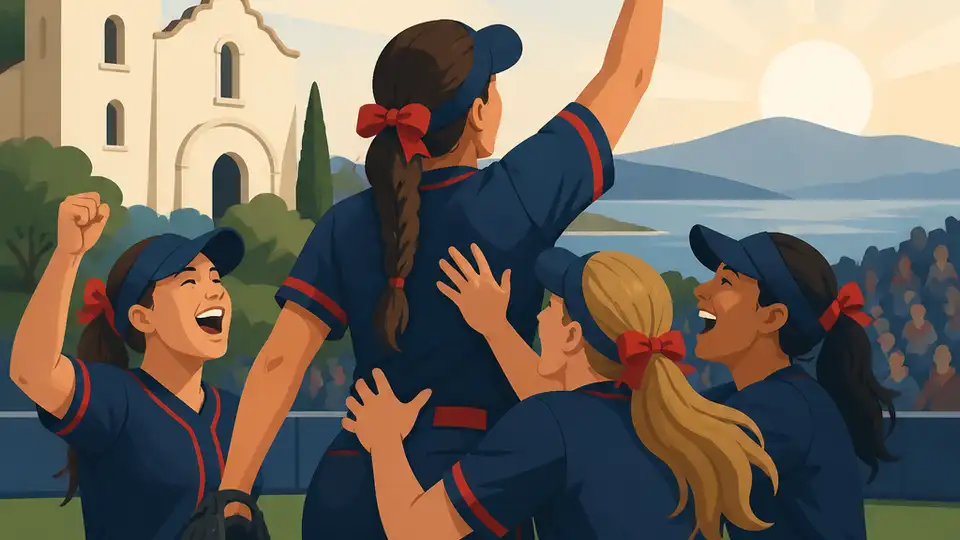
A copy-ready breakdown for writing a milestone sports recap.
I've been using sports recaps like this for years, and most of them read like they were assembled by a box score with a pulse. Scores, names, a quote if someone remembered to ask for one, then the whole thing is tossed over the wall. This Saint Mary’s softball piece felt different to me, but not because it was polished in some magical way. It was off in the way good stories are often off: too much raw history packed into one night, too many turning points, and a school record buried inside a postseason win that already mattered on its own.
That’s what pulled me in. The article from Saint Mary’s College is not just a game recap. It is a template for how to frame a breakthrough without flattening it. You get the emotional hook, the sequencing, the record-setting detail, and the team-first angle all at once. I’m going to break down how it works, why it works, and how I’d reuse the same structure when a team suddenly stops being a nice story and starts being a problem for everybody else.
Start with the night, not the bracket
Get the latest AI news in your inbox
Weekly picks of model releases, tools, and deep dives — no spam, unsubscribe anytime.
No spam. Unsubscribe at any time.
“Saturday, May 16, 2026 was a historic day for Saint Mary’s Softball: The Gaels notched not one but two NCAA Tournament Wins for the first time in program history to move onto the Eugene Regional Final.”
What this actually means is simple: don’t bury the headline in tournament jargon. The article opens by telling me the day mattered before it tells me why the bracket changed. That’s a good instinct. I’ve seen too many recaps lead with “in the regional” and “in double elimination” and “advancing to” like the reader already has the tournament map memorized. Most people don’t. They need the emotional shape first.
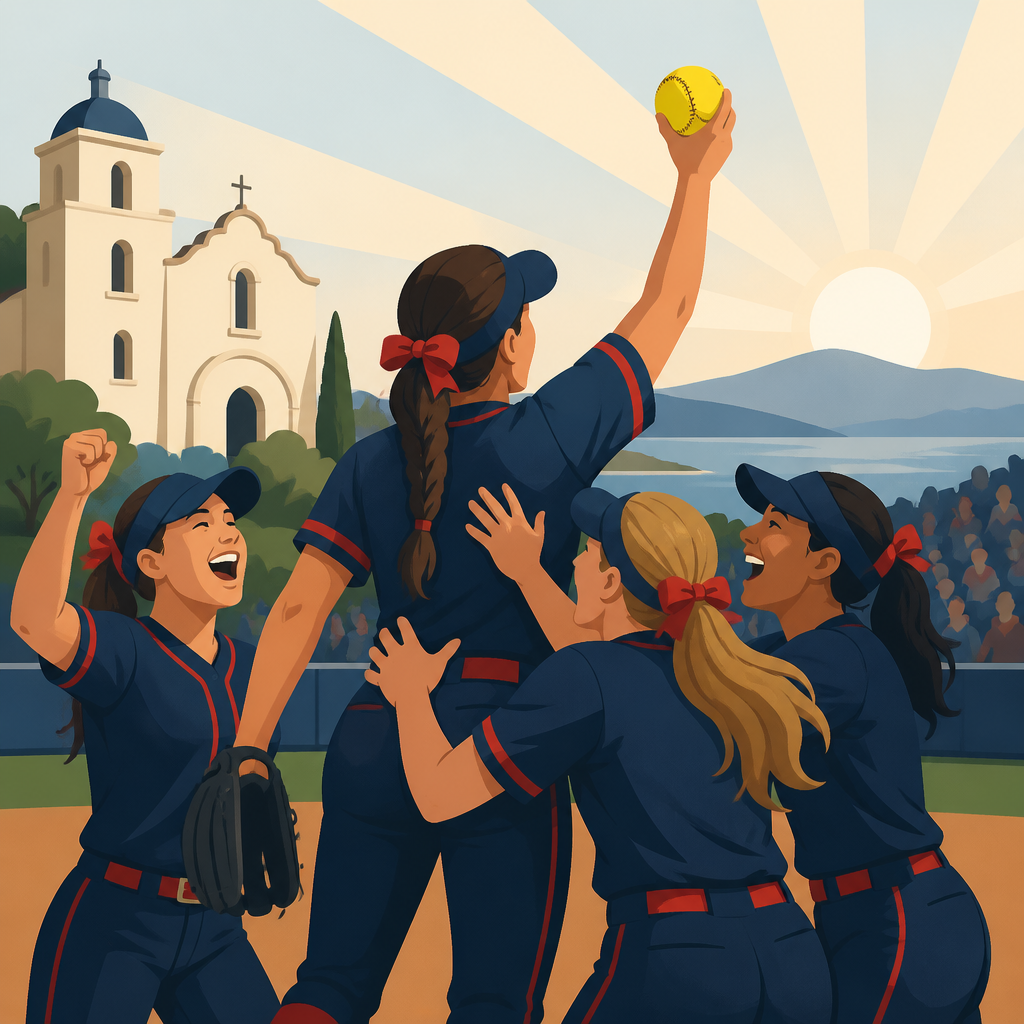
I like that this opening gives me a clean narrative promise. Two wins. First time ever. Regional final. That is enough to make me keep reading. The rest of the article then gets to prove it.
If I were applying this in my own writing, I’d do the same thing every time a team hits a milestone. I’d ask: what is the human-sized version of this achievement? Not the bracket detail. Not the seed number. The thing that makes a coach exhale, a senior cry, or a program point to a date and remember it forever.
- Lead with the day, the result, and the first-time angle.
- Save the bracket mechanics for the second or third paragraph.
- Use one sentence that tells the reader, “this is bigger than one game.”
Make the record feel earned, not decorative
“The wins also marked the Gaels’ 41st and 42nd victories of the year—tying and breaking the Saint Mary’s College record for most wins by any program in a single season.”
This is the kind of detail that can easily read like a footnote, and that would be a mistake. The article doesn’t treat the record as a trivia line. It drops it right where the emotional value is highest, after the postseason breakthrough. That placement matters. If you put the record too early, it can feel like you’re padding the story. Put it too late and it gets lost under the game-by-game noise.
What this actually means is that records work best when they are framed as proof, not decoration. The team didn’t just survive a postseason weekend. It validated an entire season. That’s a stronger story than “they set a record.”
I ran into this same problem when I’ve written about software teams shipping something unusually good. If I lead with the metric, nobody cares. If I first show the pain, the constraint, and the moment the team broke through, then the number matters. Sports writing is the same. The number only lands when the reader already feels the weight of the climb.
Here’s the practical move: when you have a record or milestone, attach it to a visible consequence. Advancing. Beating a ranked opponent. Ending a drought. That gives the stat a reason to exist.
- Use records as evidence of momentum, not as standalone bragging rights.
- Pair the number with a consequence the reader can picture.
- When possible, connect the milestone to a program history comparison.
Split the story into one-game and two-game logic
“In this double-elimination style tournament, the Gaels defeated Idaho State 3–1 in an elimination contest in an afternoon game. Then they turned around for a second game and upset the 14th ranked Oregon Ducks 5–4 to bounce them from their own regional.”
This is where the article gets structurally smart. It doesn’t just list two wins. It tells me why the second win is harder than the first. The first game is survival. The second game is the punchline. That distinction gives the whole piece shape.

What this actually means is that the writer understands pacing. In a double-elimination setup, not all wins are equal. One game keeps you alive. The next one becomes the upset people remember. If you write both wins as if they’re identical, you flatten the drama.
I like this approach because it lets the article breathe. Game one is about pressure and composure. Game two is about defying the host and knocking out a ranked opponent. Those are different emotional jobs, so they deserve different treatment.
If I were copying this model, I’d build a recap in layers: first the survival game, then the signature upset, then the meaning of doing both in one day. That structure keeps the reader oriented even if they don’t care about NCAA softball beyond the headline.
Let the players do the heavy lifting
“While both wins were truly the embodiment of team victories, Hannah Ferguson had a tremendous offensive day: She logged five hits over the two contests on Saturday...”
This is one of the cleaner choices in the piece. It says team first, then immediately gives me a player who made the day possible. That balance matters. If you only celebrate the team, the article gets vague. If you only spotlight one player, you lose the collective feel of a postseason run.
The article keeps doing this well. Andrea De La Rosa gets the winning hit in game one. Tori Cervantes drives in the eventual game-winning run in game two. Odhi Vasquez picks up both relief wins. That’s not random name-dropping. It’s a map of who mattered when the pressure was highest.
I’ve found that readers remember stories better when each turning point has a face attached to it. “The team rallied” is fine. “De La Rosa delivered the two-run single with two outs” is sticky. That’s the line you can picture. That’s the line that survives the scroll.
How I’d apply it: pick three or four players max for a recap like this, then assign each one a role in the story. Starter. Closer. Go-ahead hitter. Defensive saver. Don’t list everybody unless the context really demands it. Too many names and the narrative starts to sag.
- Assign players to moments, not just stat lines.
- Use one sentence to explain each player’s impact.
- Keep the team-first framing, but don’t hide the heroes.
Use the game flow like a staircase
“The Gaels wasted no time pulling back ahead.”
That sentence is tiny, but it does a lot of work. The article keeps building the game in a staircase pattern: score, respond, score again, hold on. It avoids the trap of narrating every pitch in equal detail. Instead, it gives me the momentum changes that matter.
What this actually means is that game recaps should not read like play-by-play unless the play-by-play itself is the point. The reader needs the swings. The article gives me the leadoff homer, the first lead change, the bases-loaded rally, the defensive stop, and the final outs. That’s enough. I can feel the game without being buried in it.
I especially like how the article handles the Oregon game. Oregon jumps out. Saint Mary’s answers. Oregon ties it. Saint Mary’s takes it back. That back-and-forth rhythm makes the win feel earned instead of lucky. It also gives the final paragraph of the game a natural place to land: Odhi Vasquez protecting the lead like she owns the place.
If you’re writing your own recap, map the game as a sequence of pressure points. Don’t ask, “what happened in order?” Ask, “what changed the feeling of the game?” That’s the version people actually read.
Don’t waste the upset on a generic adjective
“The Gaels’ victories on Saturday are notable for a few more reasons. Saint Mary’s became the first team to eliminate a host national seed this postseason.”
This is the part where a lot of writers get lazy and just say “major upset” or “huge win.” The article does better. It tells me exactly why the victory matters in the larger NCAA context. First team to eliminate a host national seed this postseason. That’s specific, and specificity is what makes an upset feel real.
The same goes for the ranking detail. Oregon wasn’t just “good.” Oregon was 13th-ranked. That number gives the reader a clean reference point. It also tells me this wasn’t a fluke against a soft draw. Saint Mary’s beat a team that carried real weight.
I’d use this same approach anytime a team outperforms expectation. Name the expectation. Name the opponent’s standing. Then show the result. Otherwise the reader has to guess whether the win was meaningful, and that’s a waste of attention.
One thing I appreciate here is that the article doesn’t oversell. It doesn’t pretend the Gaels suddenly solved the sport. It just says they beat a ranked host and did something nobody else had done in that postseason. That’s enough. Let the fact be impressive on its own.
Close the loop with program history, not just one weekend
“And with its first two NCAA postseason wins, Saint Mary Softball joins the Men’s Basketball program as laying claim to winning multiple games in an NCAA postseason.”
This is the kind of ending I wish more school stories would use. It widens the frame without losing the event. The weekend is still the center, but now I understand where it sits in the school’s broader athletic memory.
That’s smart because it gives the reader a second reason to care. If you’re a Saint Mary’s fan, you get a new historical marker. If you’re not, you still get the sense that this program has crossed into a different tier of relevance.
The article also ties in coach recognition and season-long milestones, which helps the piece avoid feeling like a one-off miracle. Sonja Garnett’s WCC Coach of the Year honor, the program wins record, the comparison to the 1977 baseball team, the hits record chase for Hannah Ferguson. All of that says the season had depth. It wasn’t built on one lucky weekend.
That matters for structure too. If you end a recap at the final score, you leave the story too small. If you end by showing how the result changes the program’s identity, you give the reader something to carry away.
The template you can copy
# Title: [Team] turns [timeframe] into [milestone] with [result]

[Lead paragraph]
[Team] had the kind of day that changes how people talk about a program. [Specific date or moment], the [mascot/team] [did the milestone], [what it meant in plain English].

[Context paragraph]
This was [tournament/season context]. The important part is not the format. The important part is that [team] had to [survive/advance/beat a ranked opponent/set a record] to get here.

[Game 1 section]
## The game that kept them alive
[Describe the first game in 3-5 sentences.] Focus on:
- the pressure
- the key run-producing hit
- the pitcher or defender who stabilized things
- the moment the game turned

> "[Insert one direct quote or exact line from the original source]"

[Game 1 takeaway]
What this actually means is [plain-language explanation of why the first win mattered].

[Game 2 section]
## The upset that made the day historic
[Describe the second game in 4-6 sentences.] Focus on:
- the opponent’s ranking or status
- the early deficit or momentum shift
- the rally that flipped the game
- the player who delivered the deciding hit
- the pitcher or defender who finished it

[Milestone section]
## Why this mattered beyond one bracket
[Explain the record, ranking, or historical first in 3-5 sentences.] Connect the result to:
- program history
- season-long progress
- coach or player milestones
- what changed because of the win

[Closing paragraph]
This wasn’t just a win. It was [plain-English summary of the program’s new status].

[Copy-ready recap formula]
Use this formula:
1. Lead with the milestone.
2. Break the story into survival and statement wins.
3. Name the players who changed the game.
4. Explain the historical significance.
5. End by showing what the result means for the program.
The reason I like this template is that it keeps the writing honest. It doesn’t force drama where none exists, and it doesn’t drown the reader in box-score sludge. It gives you a clean spine, then lets the details do their job.
If I were using this for my own work, I’d keep the structure almost exactly as written and just swap in the relevant sport, bracket, or milestone. The point is not to sound like Saint Mary’s. The point is to borrow the storytelling shape that makes a big day readable.
Source attribution: Original article by Ryan Barnett for Saint Mary’s College, published at https://www.stmarys-ca.edu/news/oh-what-night-saint-marys-softball-notches-first-two-ncaa-postseason-victories-move-regional. This breakdown is my own structural read of that source, not a reproduction of the article.
// Related Articles
- [IND]
Korea’s Nvidia talks point to an AI factory push
- [IND]
OpenAI should not rush its IPO just to win the AI race
- [IND]
OpenAI updates its Europe privacy policy
- [IND]
OpenAI is right to keep ads out of sensitive chats
- [IND]
AI bootlegs are already draining streaming royalties
- [IND]
AMD and Microsoft push Windows ML on GPU and NPU