Spotify and UMG Plan AI Cover Songs for Fans
Spotify and UMG are adding AI-made covers and remixes for premium users, with artist consent, credit, and payout rules.

Spotify and UMG are adding AI-made covers and remixes for premium users.
Spotify said the new feature will let Premium subscribers generate AI covers and remixes of songs from participating artists and songwriters. The company unveiled the plan during its investor day on Thursday, and it framed the move as a way to turn fan-made music experiments into paid activity instead of letting them live outside the system.
The timing matters. Spotify has spent the past year tightening its response to AI music spam while also signing deals to build AI products with rights holders. UMG, meanwhile, has been making its own AI licensing moves with companies such as Udio, Splice, and Nvidia.
| Item | What Spotify and UMG said |
|---|---|
| Access | Premium subscribers only |
| Content type | AI-generated covers and remixes |
| Rights scope | Only participating artists and songwriters |
| Spotify spam cleanup | 75 million spammy songs removed last year |
| AI deal timeline | About seven months after Spotify said it had agreements with all major record companies |
What Spotify is actually building
Get the latest AI news in your inbox
Weekly picks of model releases, tools, and deep dives — no spam, unsubscribe anytime.
No spam. Unsubscribe at any time.
Spotify did not give a release date, and it also skipped the technical details. We still do not know what model powers the feature, how the interface will work, or how users will select songs for a cover or remix. What Spotify did say is more important for the music business: this is a licensed AI feature, not a free-for-all upload tool.

That distinction is the whole story. Spotify has been under pressure from listeners who complain about AI slop, while labels want a way to profit from the demand for personalized music tools. The new feature tries to split the difference by keeping the activity inside Spotify and tying it to rights-holder approval.
- Spotify said the feature is for songs from participating artists and songwriters.
- The company said it will be available only to premium subscribers.
- Spotify described the plan as “accretive,” though it gave no financial forecast.
- It called the feature a new revenue driver for creators through streams generated by fan-made content.
The quotes show where the money and control sit
Spotify co-CEO Alex Norström framed the feature as a way to solve a long-standing problem in music: fans already want to make covers and remixes, but the industry has not had a clean way to monetize that behavior. His wording is revealing because it puts consent and compensation at the center of the product pitch.
“What we’re building is grounded in consent, credit, and compensation for the artists and songwriters that take part.” — Alex Norström, Spotify co-CEO
UMG CEO Sir Lucian Grainge made the same point from the label side. He said the initiative is designed to support human artistry, deepen fan relationships, and create more revenue opportunities for artists and songwriters. That language matters because it suggests UMG sees AI less as a threat to be blocked and more as a licensing category to be shaped.
UMG’s roster includes Billie Eilish, Taylor Swift, Sabrina Carpenter, and Post Malone, though Spotify did not say which artists will opt in at launch.
How this compares with Spotify’s recent AI cleanup
Spotify’s pitch lands better because it comes after a year of visible moderation work. The company introduced AI tagging this year, and last year it said it had removed 75 million spammy songs. That number matters because it shows the platform already sees AI content as a scale problem, not a novelty.
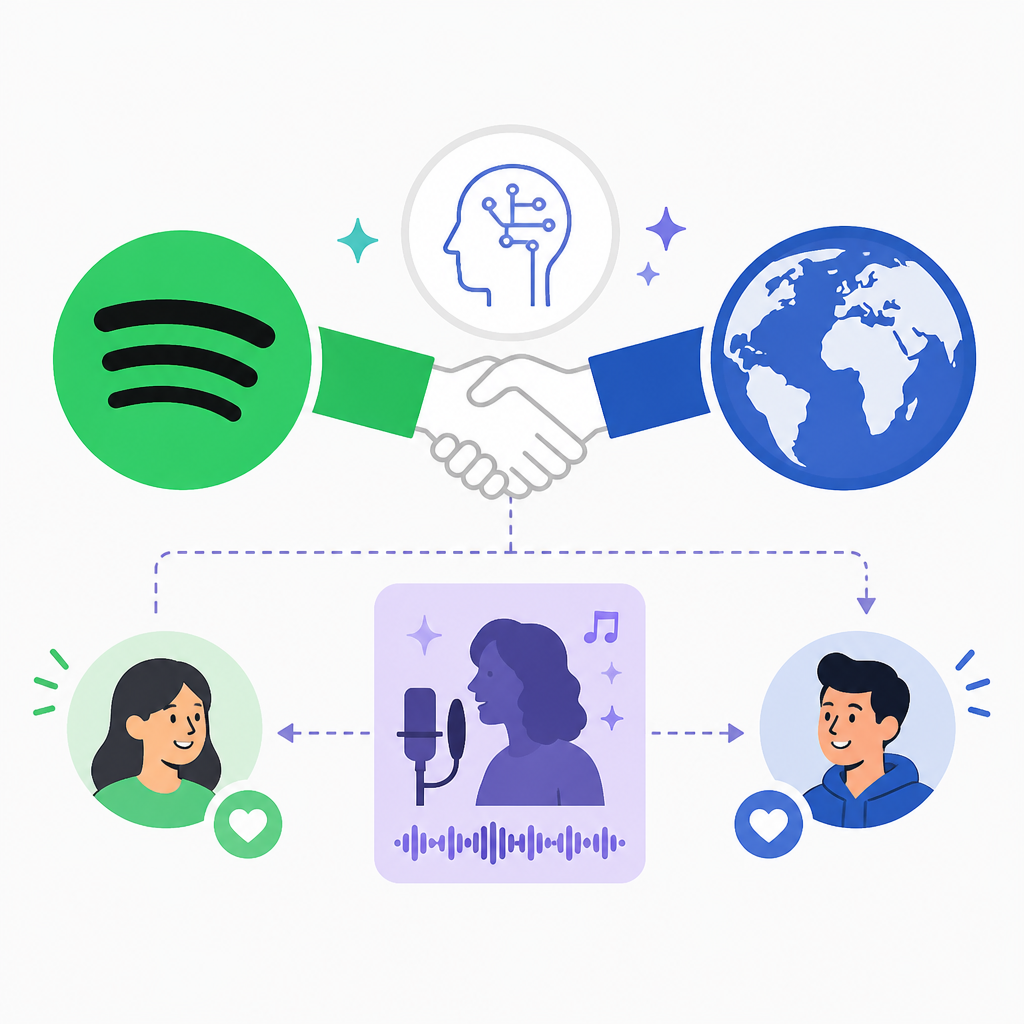
There is also a strategic reason to prefer licensed AI over open-ended uploads: Spotify gets to define the rules, UMG gets a cut, and artists get a say. That is very different from the current mess on social platforms, where AI-generated music can spread first and get labeled later.
- Spotify said it had agreements with all major record companies about seven months earlier.
- The new feature follows those deals instead of replacing them.
- UMG has already signed AI-related agreements with multiple technology companies.
- Spotify has not said whether the feature will affect subscription pricing.
For comparison, the music business has spent years arguing about whether AI should be blocked, labeled, licensed, or all three. Spotify and UMG are choosing the licensing path, which is the only one that can scale without turning the platform into a rights headache.
That does not mean the rollout will be simple. The unanswered questions are the ones users will care about first: which songs can be covered, how much creative control the AI gives fans, and how payouts are calculated when a remix starts earning streams. If Spotify gets those details wrong, the feature could feel like a stunt. If it gets them right, it could become a model for how major platforms sell AI music without trashing the catalog.
What to watch next
The biggest signal will be the artist list. If major UMG acts opt in early, Spotify gets a credible launch story and a built-in audience for the feature. If participation is thin, the product may look more like a demo than a business line.
The second signal is whether Spotify opens this beyond a small pilot or keeps it tightly controlled. My guess: the company starts narrow, uses premium users as the test group, and expands only after it has payout rules and content filters that rights holders can live with.
The real question is whether fans want AI covers badly enough to pay for them inside Spotify instead of making them elsewhere. If the answer is yes, this could become one of the clearest examples of licensed AI music making money. If the answer is no, the feature will join the long list of platform ideas that sounded smart in an investor deck and faded in the wild.
// Related Articles
- [IND]
Gemini lands inside Apple’s developer stack
- [IND]
Five AI coding IDEs that fit real workflows
- [IND]
Devin Desktop turns Windsurf into an agent hub
- [IND]
Korea’s Nvidia talks point to an AI factory push
- [IND]
OpenAI should not rush its IPO just to win the AI race
- [IND]
OpenAI updates its Europe privacy policy