Why Trump’s ‘Perfect’ Dementia Test Brag Is a Self-Own
Trump’s repeated bragging about cognitive tests makes his mental-sharpness claim look weaker, not stronger.
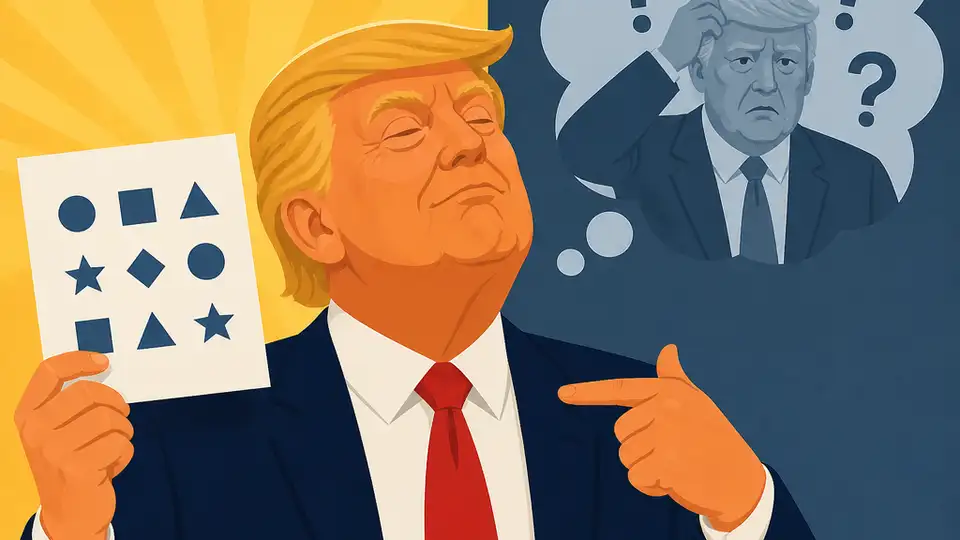
Trump’s repeated bragging about cognitive tests makes his mental-sharpness claim look weaker, not stronger.
Trump’s “perfect score” talk on dementia screenings is not proof of strength; it is proof that the test is doing exactly what it is supposed to do, which is raise questions when a patient keeps coming back to it.
First, repeated testing is not a flex
Get the latest AI news in your inbox
Weekly picks of model releases, tools, and deep dives — no spam, unsubscribe anytime.
No spam. Unsubscribe at any time.
Montreal Cognitive Assessments are screening tools, not championship rounds. They are designed to flag possible decline, not to crown someone a genius. When a public figure boasts about acing the same screening four times, the boast lands backward. The ordinary reader hears not “healthy mind,” but “why is this person being tested so often?”
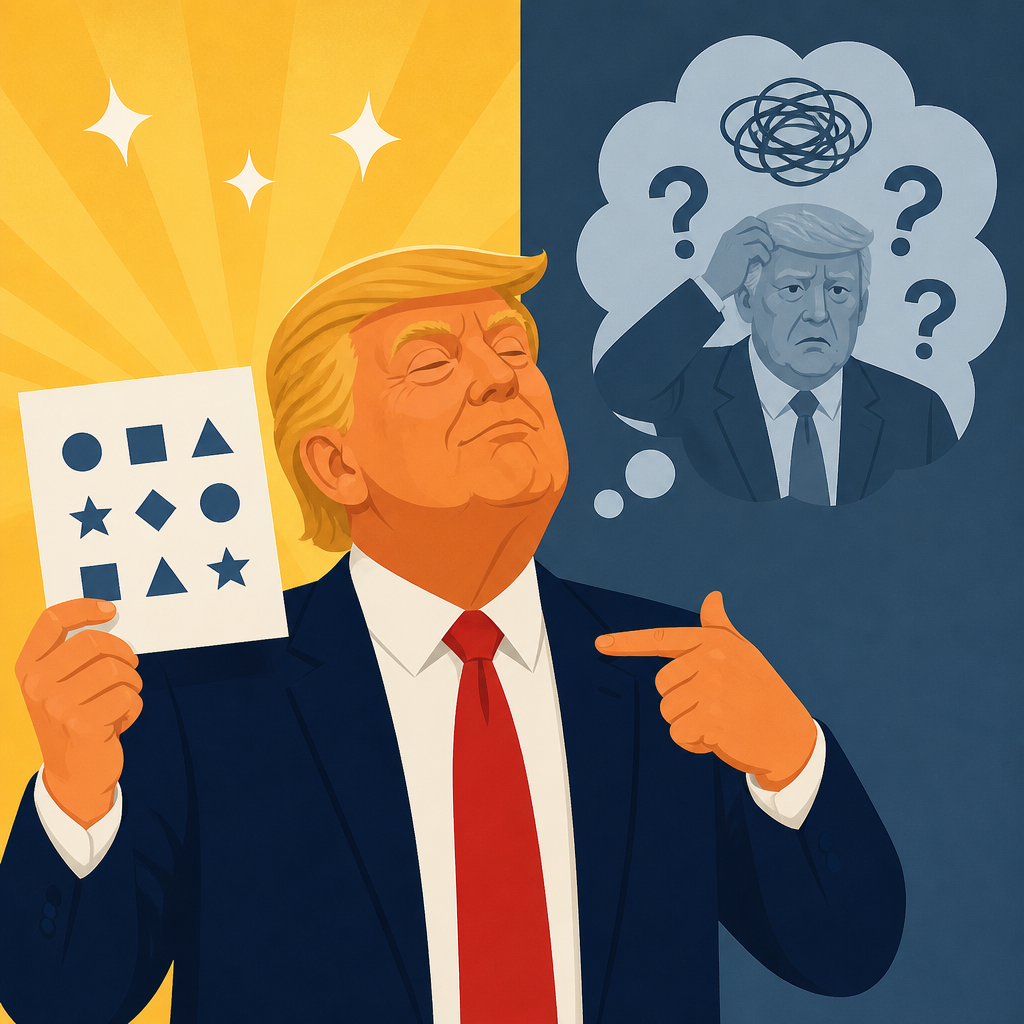
Seth Meyers’s breathalyzer line works because it names the obvious logic problem. If police kept making a driver retake a breath test, nobody would interpret that as a compliment. They would assume the first result was in doubt, the driver was impaired, or both. That same instinct applies here: repetition signals uncertainty, and uncertainty is the opposite of the brag Trump wants to make.
Second, Trump keeps turning medical language into marketing copy
Trump’s phrase “extreme intelligence” is a case study in how he converts a clinical report into a campaign slogan. Doctors do not write that way because medicine is built on precision, not hype. A real health update sounds boring on purpose: score, findings, recommendations, follow-up. When the language turns into superlatives, the statement stops sounding like evidence and starts sounding like persuasion.
That matters because the public does not just judge the score, it judges the presentation. A patient who needs a physician to certify “excellent health” while also bragging on social media about “120 correct answers out of 120” is not projecting confidence. He is broadcasting anxiety about how he is perceived. The louder the self-congratulation, the more it suggests the underlying claim needs help.
The counter-argument
Steelman the other side: if Trump truly keeps passing the cognitive screen, then repeated testing is not evidence of concern at all. It can simply mean a doctor, an employer, or a political operation wants documentation over time. On that reading, the fourth test is routine, and the brag is just standard Trumpian self-promotion.
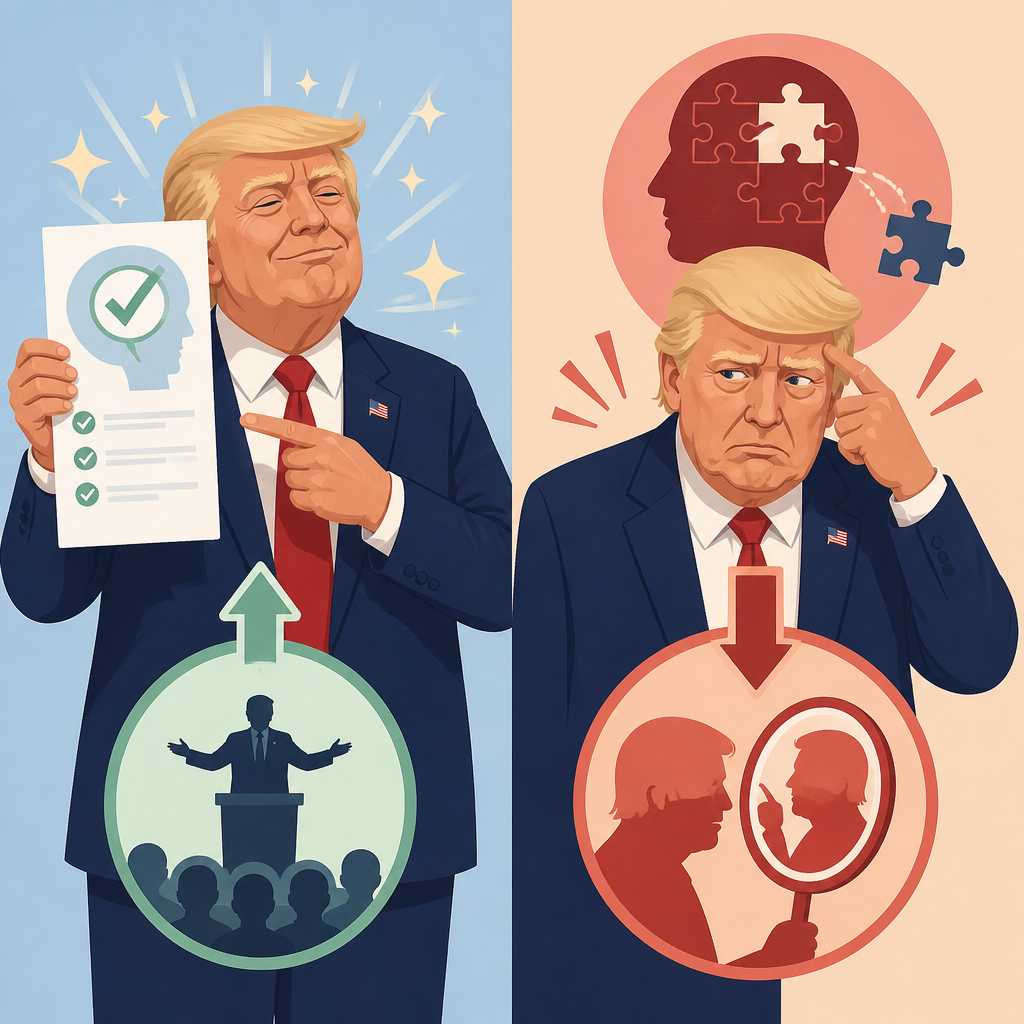
That argument has one real strength: a repeated test is not automatically a red flag. Follow-up exams happen in medicine all the time. But Trump’s own framing destroys the benign interpretation. He does not describe a routine checkup; he advertises a “perfect” result, calls the test “high difficulty,” and treats the score like a trophy. If the point were mere documentation, he would not need the victory lap.
What to do with this
If you are an engineer, PM, or founder, stop confusing repeated validation with proof of brilliance. A metric that must be loudly explained is usually a metric with weak signaling power. Build systems that stand on quiet evidence: clear baselines, transparent methodology, and language that matches the actual measurement. And if you are communicating results in public, remember this rule: the more you have to insist it is impressive, the less impressive it sounds.
// Related Articles
- [IND]
Korea’s Nvidia talks point to an AI factory push
- [IND]
OpenAI should not rush its IPO just to win the AI race
- [IND]
OpenAI updates its Europe privacy policy
- [IND]
OpenAI is right to keep ads out of sensitive chats
- [IND]
AI bootlegs are already draining streaming royalties
- [IND]
AMD and Microsoft push Windows ML on GPU and NPU