Why the 76ers were wrong to trade Jared McCain to the Thunder
The 76ers made a bad bet by trading Jared McCain for picks, and the Thunder are already proving it.
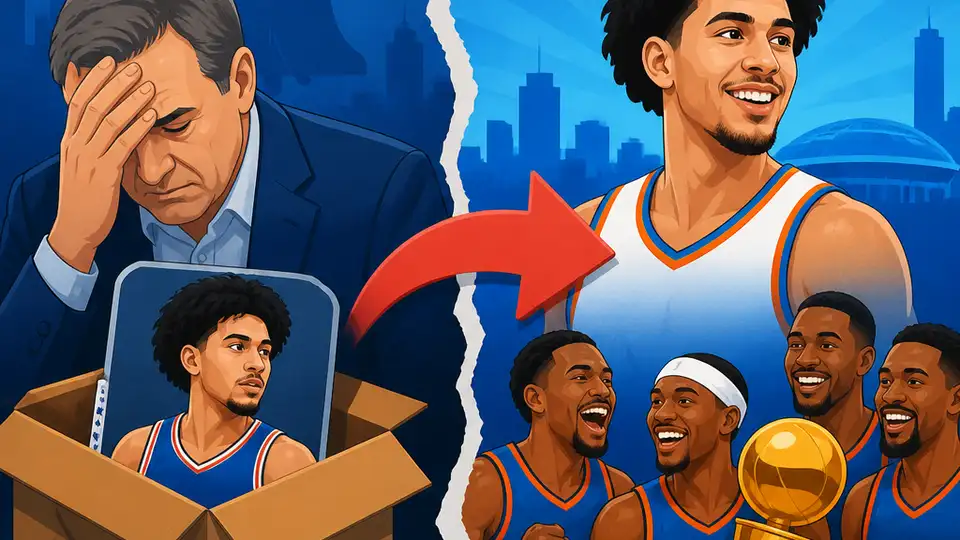
The 76ers made a bad bet by trading Jared McCain for draft picks.
The Philadelphia 76ers should not have traded Jared McCain to the Oklahoma City Thunder, because they moved a proven young scorer for uncertain draft capital while he was still on the rise. Philadelphia got four picks back, but the most valuable piece is a late first-rounder from Houston in 2026, plus three second-rounders that rarely become the kind of player McCain already is. That is a classic front-office move on paper and a mistake in practice, especially now that McCain is helping the Thunder in the playoffs while the 76ers watch from home.
The first mistake was treating a young guard like a replaceable asset
Get the latest AI news in your inbox
Weekly picks of model releases, tools, and deep dives — no spam, unsubscribe anytime.
No spam. Unsubscribe at any time.
McCain was not some fringe rotation piece with no clear NBA future. Philadelphia drafted him 16th overall in 2024, and he immediately looked like a hit: quick scoring, real shooting gravity, and enough offensive feel to project as a long-term backcourt piece. Then injuries interrupted the momentum, which made the decision tree harder, not easier. A team that invests a mid-first-round pick in a player like that is supposed to be rewarded for patience, not to cash out before the player has even had a fair runway.

The 76ers’ mistake was not simply that they traded a young player. It was that they traded a young player whose value was already visible and whose weaknesses were still developmental, not fatal. When a rookie flashes enough to enter Rookie of the Year conversations, the organization’s job is to test the fit, build the role, and learn what the player can become. Philadelphia instead let the injury history and rotation uncertainty flatten McCain’s value into something disposable. That is how teams lose good players for less than they are worth.
The return was too thin for the upside Philadelphia gave up
Four picks sounds like a haul until you inspect the quality. The Houston first-round pick in 2026 is projected to land in the late 20s, which means the odds of landing a player with McCain’s level of impact are already low. The rest of the package consists of a favorable second-rounder, Oklahoma City’s own second-round pick, and Milwaukee’s second-round pick. That is not the kind of return that should justify surrendering a promising mid-first-round guard who has already shown he can score in the league.
Second-round picks are lottery tickets with worse odds. Front offices talk themselves into them because they are cheap and flexible, but the hit rate on reliable contributors is poor. If Philadelphia wanted to move McCain, the team needed a player or pick package with real upside, not a pile of assets whose best-case outcome is still uncertain. The arithmetic is simple: the 76ers drafted McCain at No. 16, and they effectively turned that slot into a late first and a handful of long shots. That is not asset management. It is value leakage.
The Thunder are proving the 76ers misread the player, not just the market
McCain’s playoff role with Oklahoma City tells the real story. The Thunder are using him as a sharpshooter off the bench in a system built on structure, spacing, and clear responsibilities. That matters. Some players do not need more talent around them so much as a stable role and a coaching staff that knows exactly how to deploy them. Oklahoma City has given McCain that environment, and he is responding by helping in meaningful postseason minutes.
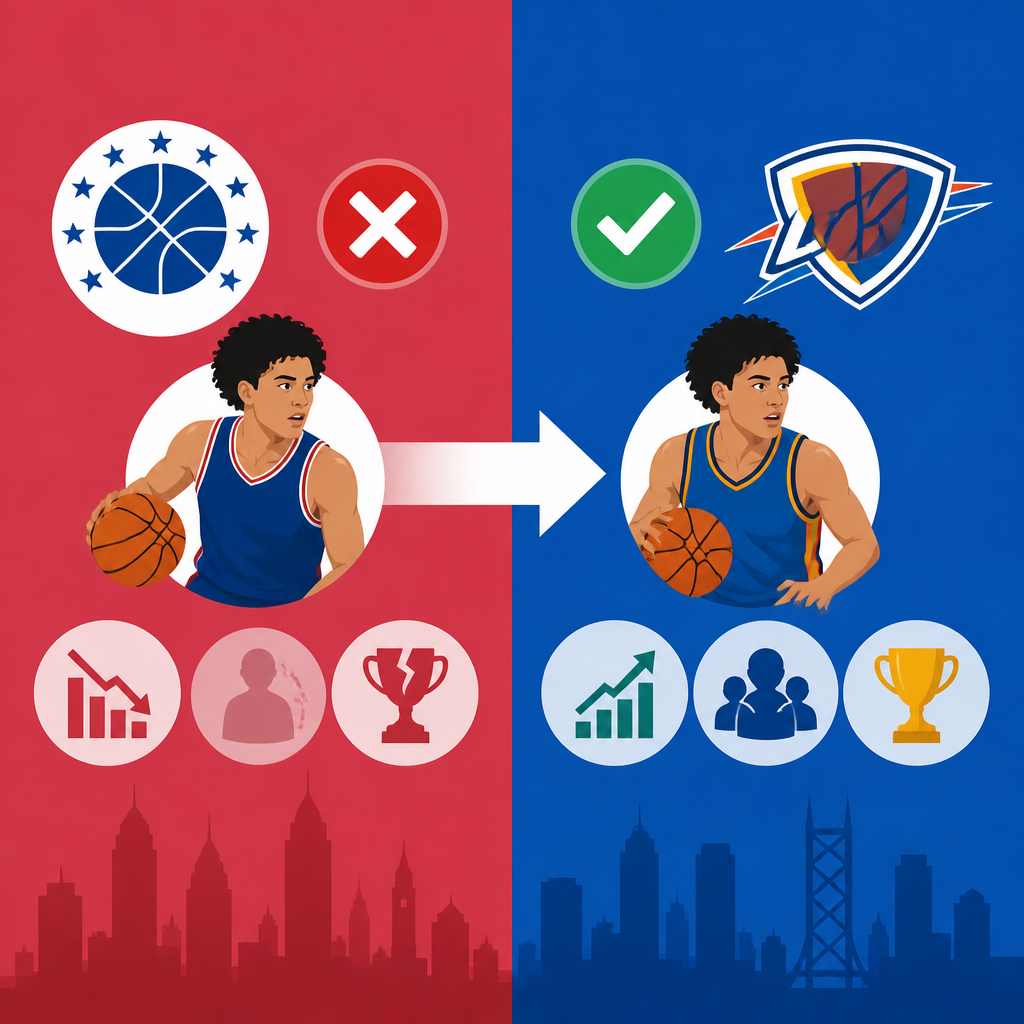
This is what makes Philadelphia’s decision look worse with every game. The 76ers did not trade away a player who could not function in winning basketball. They traded away a player who can function in winning basketball when the environment supports him. The Thunder’s roster design has exposed the flaw in Philadelphia’s evaluation: the organization treated McCain’s inconsistent usage as evidence that he lacked value, when the more likely answer was that the team failed to use him correctly. A player thriving elsewhere is the sharpest rebuttal to a trade like this.
The counter-argument
The best defense of the trade is that front offices must make hard decisions before sentiment distorts the market. McCain had been injured, his role in Philadelphia had become unstable, and the 76ers may have believed his value had peaked. If a team thinks a player will not receive consistent minutes, moving him for picks can protect future flexibility and reduce risk. That is a rational philosophy, and it is the kind of logic executives use when they want to avoid being trapped by a player whose fit has gone sideways.
That argument has one real strength: it acknowledges uncertainty. But it still fails here because the 76ers sold low on a player whose ceiling had not been tested, and the return did not compensate for the loss. Trading for future assets is defensible when the incoming package has meaningful upside. This one did not. The late first-rounder and second-rounders do not match the value of a 16th overall guard who has already shown he can contribute in the playoffs. Philadelphia did not just choose flexibility over certainty. It chose weaker certainty over stronger upside.
What to do with this
If you are an engineer, PM, or founder, the lesson is not to overreact to short-term friction in a promising asset. When a person or product shows real signal, do not confuse temporary deployment problems with permanent limitations. Build the system around the signal first, then decide whether the fit is truly broken. The 76ers treated McCain like a misfit when the evidence now says he was a player whose value depended on context. That is a costly mistake in sports, and it is a costly mistake in any organization.
// Related Articles
- [IND]
Gemini lands inside Apple’s developer stack
- [IND]
Five AI coding IDEs that fit real workflows
- [IND]
Devin Desktop turns Windsurf into an agent hub
- [IND]
Korea’s Nvidia talks point to an AI factory push
- [IND]
OpenAI should not rush its IPO just to win the AI race
- [IND]
OpenAI updates its Europe privacy policy