Why Caitlin Clark’s injury caution is the right call
Caitlin Clark is right to prioritize body confidence over forcing early-season minutes after repeated injuries.
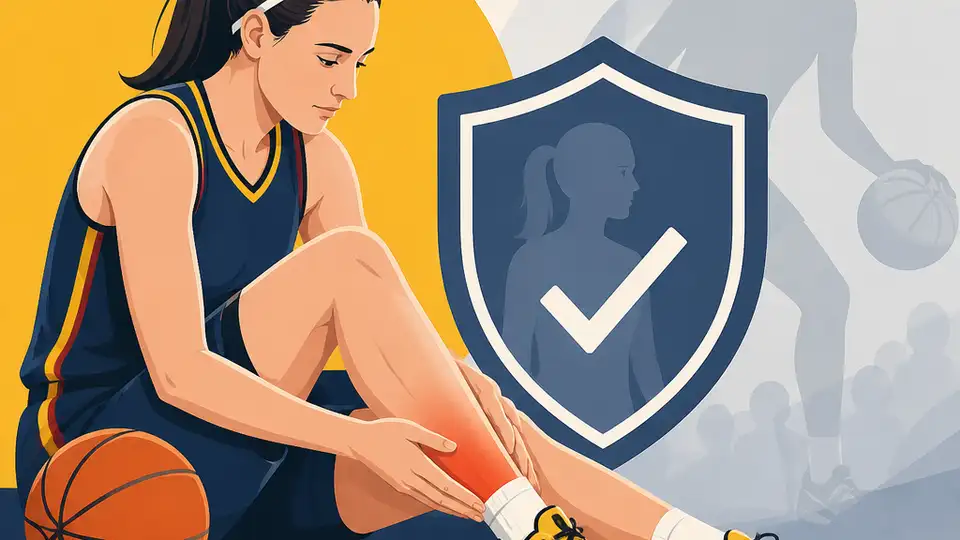
Caitlin Clark is right to prioritize body confidence over forcing early-season minutes.
Caitlin Clark is making the correct call by treating her injury recovery as a confidence problem, not a toughness test. The Fever guard said that coming back after multiple soft-tissue issues has been “a real mental challenge,” and that if she does not feel fully confident in her body on Game 5, forcing it is not worth the risk. That is not softness. That is elite athletes learning the difference between pain you can play through and a body that is still asking for proof.
Her 2025 season has already shown why caution matters. Clark was limited to 13 games after a groin strain and an ankle bone bruise, then returned to a workload that still includes heavy minutes, physical defensive attention, and the pressure of being the league’s biggest draw. She has also said the difference between offseason basketball and WNBA games is the sustained contact and volume. That distinction matters because recovery is not just about healing tissue. It is about rebuilding trust in movement under game stress.
First, the body is not the only thing that breaks after injuries
Get the latest AI news in your inbox
Weekly picks of model releases, tools, and deep dives — no spam, unsubscribe anytime.
No spam. Unsubscribe at any time.
Clark’s comments are a useful reminder that athletes do not return from injury with a simple yes-or-no switch flipped back on. They return with memory. If a player has felt a groin tighten, an ankle absorb a bad landing, or a back flare up after a hard week, the brain starts guarding before the body does. That is why she talked about needing grace and why she described the process as traumatizing. The issue is not whether she wants to play. The issue is whether she can play freely enough to be effective.

The best evidence is in her own performance arc. Clark missed Wednesday’s game, then came back Friday and still produced 22 points and nine assists in 32 minutes. That is the profile of a player who can be excellent when available, but who is still calibrating workload and recovery. If she had rushed back before she trusted her body, the result would not have been heroism. It would have been compromised movement, reduced burst, and a higher chance of another setback. In a sport where one bad step can wreck a month, that is a bad trade.
Second, the Fever need Clark healthy more than they need a short-term narrative
The temptation around a player like Clark is to treat every missed game as a crisis because the league’s television value, ticket demand, and social media attention all orbit her. That pressure is real, but it should not dictate medical decision-making. Indiana beat Portland without her. That matters. It shows the Fever are not a one-player exhibition and that a single regular-season absence does not justify dragging a recovering star back onto the floor before she is ready. Winning one game is less important than protecting the engine that drives the season.
There is also a basketball reason to resist the rush. Clark is not a role player easing into 12 minutes off the bench. She is the team’s primary initiator, shot creator, and transition trigger. When she is on the floor, the offense changes shape. When she is limited, the Fever’s ceiling drops. So the rational move is not to squeeze out every possible early-season minute. It is to preserve the version of Clark who can handle high usage in August, not just survive May. A little restraint now is how you avoid a much larger problem later.
The counter-argument
The strongest case against Clark’s approach is that stars are supposed to set the tone by playing through discomfort. Fans pay to see her, teammates feed off her presence, and the WNBA benefits when its biggest name is on the court. There is also a broader sports culture argument: if the injury is not structurally catastrophic, then sitting can look like overprotection. In that view, caution risks normalizing missed games for problems that previous generations would have played through.
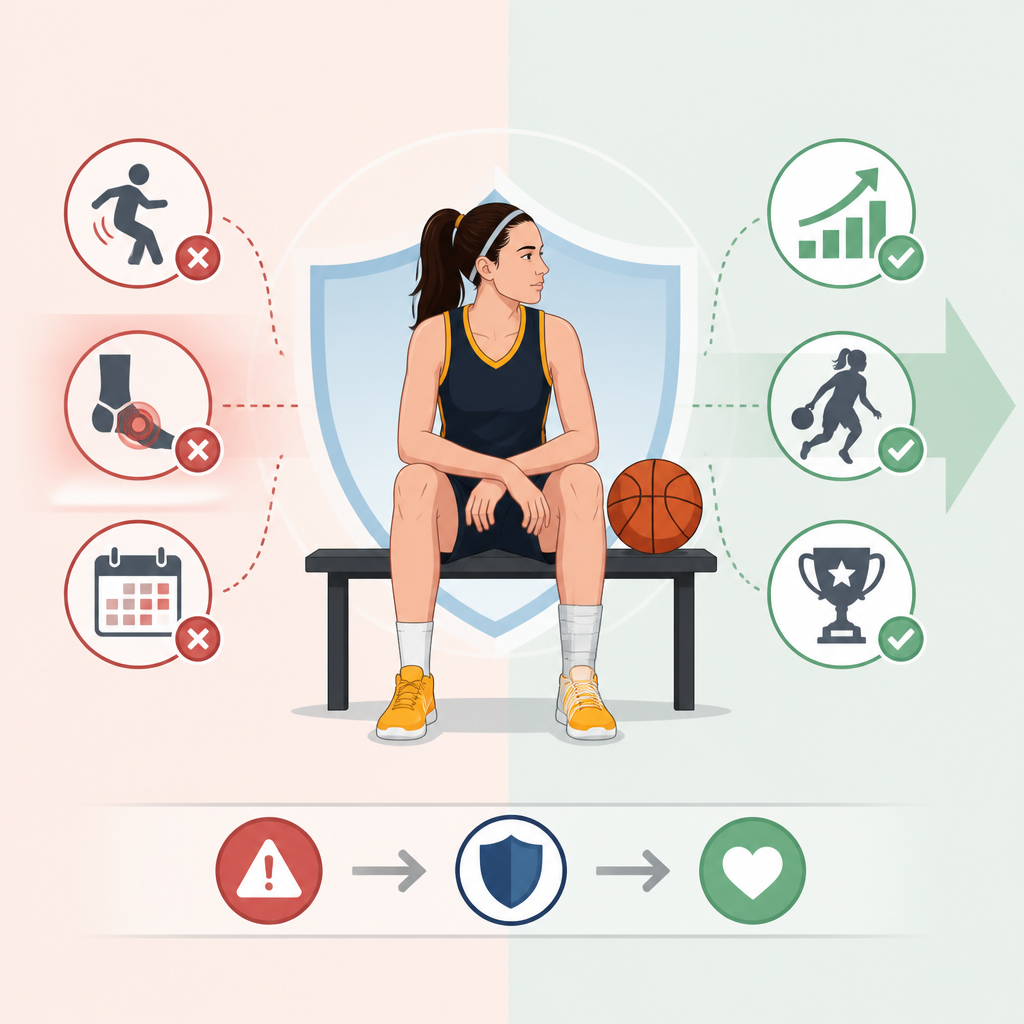
That argument has weight, but it stops short of the actual reality of modern elite sports. Soft-tissue injuries are not a character test, and “playing through it” is not a strategy when the player is already telling you the issue is confidence in movement. Clark is not refusing competition. She is managing the conditions required to compete at her level. The limit is obvious: if she starts stacking missed time without clear medical reason, the caution becomes a problem. But based on what she has said, this is not avoidance. It is disciplined load management from a franchise player who knows that half-ready is often not ready at all.
What to do with this
If you are an engineer, PM, or founder, take the same lesson Clark is applying to her body: do not confuse output with readiness. Build recovery into the system before the failure, not after it. For teams, that means protecting high-value contributors from premature re-entry, measuring confidence as seriously as capacity, and refusing the pressure to ship or perform before the foundation is stable. The best long-term results come from respecting the cost of forcing a return too soon.
// Related Articles
- [IND]
Korea’s Nvidia talks point to an AI factory push
- [IND]
OpenAI should not rush its IPO just to win the AI race
- [IND]
OpenAI updates its Europe privacy policy
- [IND]
OpenAI is right to keep ads out of sensitive chats
- [IND]
AI bootlegs are already draining streaming royalties
- [IND]
AMD and Microsoft push Windows ML on GPU and NPU