Why Halo: Campaign Evolved should go all-in on co-op
Halo: Campaign Evolved should treat co-op, not nostalgia, as its core design promise.
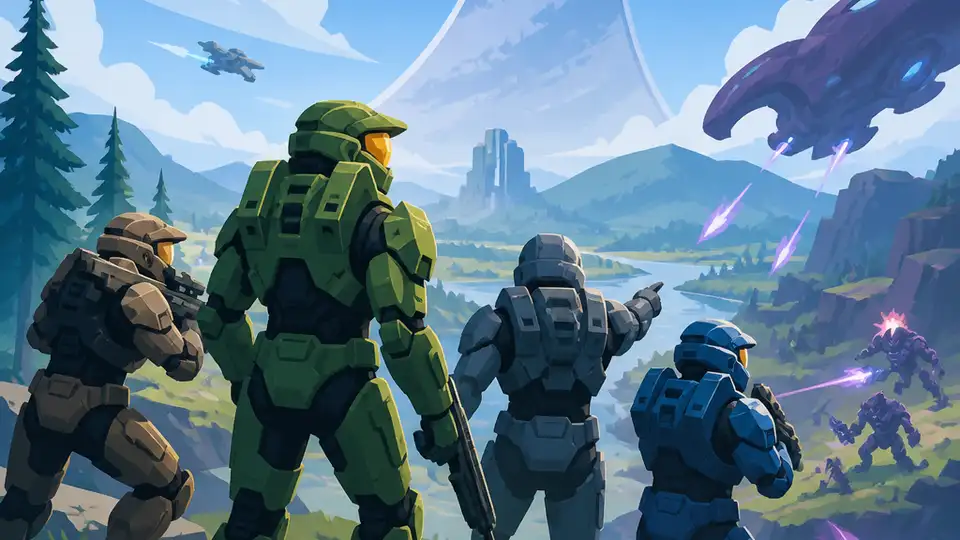
Halo: Campaign Evolved should treat co-op as its core design promise.
Halo: Campaign Evolved will work only if it treats co-op as the main event, not a bonus feature stapled onto a familiar name. The pitch is already clear: a new pre-Combat Evolved arc for Johnson, new environments, new enemies, split-screen on console, four-player online co-op, crossplay, and shared progression across console and PC. That is not a museum piece. That is a modern campaign built around how people actually play together now.
Co-op is the real product, not the nostalgia layer
Get the latest AI news in your inbox
Weekly picks of model releases, tools, and deep dives — no spam, unsubscribe anytime.
No spam. Unsubscribe at any time.
The strongest reason to back this direction is simple: the game’s differentiator is not “Halo again,” it is “Halo together.” The franchise has always had a social identity, and the GameStop listing makes that explicit by foregrounding 2-player split-screen and 4-player online co-op before almost anything else. That is the right call. A prequel can survive without leaning on the exact beats of Combat Evolved, but it cannot survive if it fails to deliver a campaign that feels built for shared play from the first mission onward.

There is a practical reason this matters too. Shared progression and crossplay remove the old friction that used to kill co-op momentum: one friend on console, another on PC, different schedules, different saves, different headaches. By making progress travel with the player, the game turns a campaign into a social loop instead of a one-off weekend event. That is how you keep a campaign alive after launch, and it is how you make a prequel feel contemporary instead of nostalgic.
New story space is better than retreading the ring
The decision to set the arc before Halo: Combat Evolved is not a detour. It is the only sensible way to make a new Halo campaign feel legitimate. A prequel gives the team room to write around a known timeline without being trapped by the obligation to recreate the original’s beats. Johnson is a strong anchor for that approach because he is already one of the franchise’s most recognizable figures, which means the story can deepen the universe without depending on a brand-new protagonist to carry all the emotional weight alone.
New environments, gameplay, characters, and enemies are not filler language here; they are the proof that the project understands its own risk. A remake that simply re-stages old missions asks players to compare every corridor to memory. A prequel with fresh spaces asks them to judge the game on its own terms. That is a much healthier design challenge. It also gives the studio room to build encounters around co-op roles, enemy variety, and pacing instead of trying to preserve a 2001 mission structure that no longer matches how shooters are played.
Modern accessibility beats preservation for its own sake
The best argument for this project is that it refuses the trap of treating old design constraints as sacred. Split-screen on console is a smart nod to the series’ roots, but the real progress is in the online layer: four-player co-op, crossplay, and shared progression. Those features reflect the reality of the audience in 2026, where friends rarely sit in the same room and where platform boundaries are less important than whether a squad can stay together across devices.
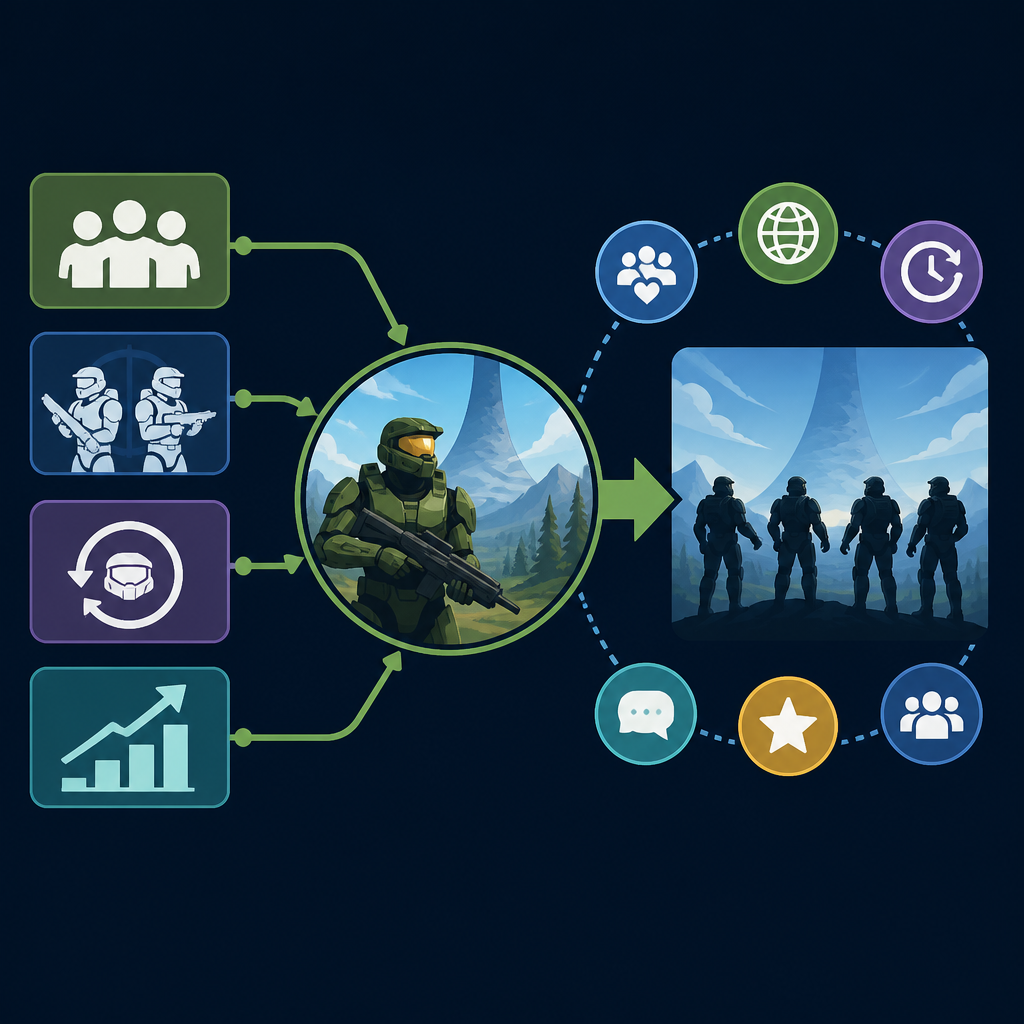
That matters because the old model of campaign co-op was always limited by hardware and household setup. A modern Halo campaign cannot pretend those limits are virtues. If the game wants to be more than a nostalgia exercise, it has to make joining a session easier, not harder. Crossplay and shared progression do exactly that. They lower the cost of entry, raise the odds of completion, and make the campaign more useful as a recurring activity rather than a one-time story run.
The counter-argument
The strongest objection is that Halo risks losing its identity when it chases feature parity with modern co-op shooters. Fans who want a more traditional experience are not wrong to worry. If the campaign becomes too tuned around four-player coordination, it can flatten the tension that made earlier Halo missions memorable. Split-screen can also force design compromises, and shared progression can tempt studios to over-index on checklist systems instead of strong mission structure.
There is also a preservation argument. Some players want a Halo campaign that feels like a time capsule, with the friction, pacing, and solitude that defined the original era. They are not asking for a museum exhibit; they are asking for authorship that respects the old form. If the new game changes too much, it risks becoming a generic co-op shooter wearing Halo armor.
That concern is real, but it does not defeat the case for this approach. Halo does not need to preserve every old limitation to preserve its identity. Its identity has always been built on readable combat, vehicle play, memorable spaces, and shared experience. The GameStop details suggest the team understands that distinction. A campaign can honor Halo by keeping its combat language and universe intact while modernizing the way people access and replay it.
What to do with this
If you are a founder or product leader, take the lesson literally: define the product around the behavior you want repeated, not the nostalgia you want admired. If you are an engineer, build the co-op stack, save system, and crossplay flow first, because those are the systems that determine whether the campaign gets finished. If you are a PM, measure success by session continuity, co-op completion, and friend-to-friend return rate, not just launch-week buzz. Halo: Campaign Evolved should be judged as a social campaign platform with a story attached, and that is exactly why it has a chance to matter.
// Related Articles
- [IND]
Why Claude’s announcement cadence is the real product
- [IND]
5 ways Claude’s new credit caps affect users
- [IND]
Why Go’s release policy is better than LTS
- [IND]
Halo PS5 port lets you rewrite Xbox rules
- [IND]
Why Halo on PS5 is the right move, even if it hurts Xbox
- [IND]
Why Halo on PS5 is the right move for Microsoft