Why OpenAI's IPO is the right move
OpenAI should go public because the company now needs capital discipline, transparency, and a durable governance model.

OpenAI should go public because it needs capital discipline, transparency, and durable governance.
OpenAI preparing a confidential IPO filing is not a distraction from its mission; it is the clearest sign that the company has outgrown the private-market structure that helped it scale. A business that sits at the center of the AI boom, serves millions of users, and spends heavily on compute cannot keep operating like a research lab with venture funding forever. Public markets force a hard reset: clearer numbers, tighter priorities, and accountability for promises that have become too large to leave inside boardroom walls.
First, the capital demands are too large for private patience
Get the latest AI news in your inbox
Weekly picks of model releases, tools, and deep dives — no spam, unsubscribe anytime.
No spam. Unsubscribe at any time.
Training frontier models is brutally expensive, and the cost curve does not care about press releases. Every new generation of models requires more chips, more power, more data center capacity, and more operational resilience. That is not the profile of a company that should rely on episodic private rounds and strategic backstops. An IPO gives OpenAI access to deeper capital at a scale that matches the scale of the infrastructure race.

Look at what the market already tells us: the AI leaders are being valued not just on current revenue, but on their ability to mobilize enormous amounts of capital quickly. The companies that win this phase will be the ones that can fund compute, distribution, and enterprise expansion without constantly renegotiating their future with investors. Public equity is a better instrument for that than a perpetual cycle of private financing, secondary sales, and opaque structure.
Second, public markets would impose the discipline OpenAI needs
OpenAI’s biggest risk is not lack of demand. It is strategic sprawl. A company that is simultaneously a consumer product, an enterprise platform, a model lab, an infrastructure buyer, and a policy flashpoint can drift into doing too much at once. Public-company reporting would force management to explain where margins come from, which product lines matter, and how the company balances growth against burn.
That discipline matters because AI hype has a habit of hiding weak economics. If OpenAI wants to keep asking the market for trust, it should accept the market’s rules. Quarterly scrutiny will not solve every problem, but it will make it harder to blur research ambition with commercial reality. Investors, employees, and customers all benefit when the company’s claims are tested against actual financial performance.
The counter-argument
The strongest case against an IPO is that OpenAI could lose the freedom that made it valuable in the first place. Public companies are often slower, more cautious, and more exposed to short-term pressure. In a field where model releases, safety decisions, and product pivots can happen on compressed timelines, critics argue that quarterly earnings calls would turn a frontier lab into a conventional software business.
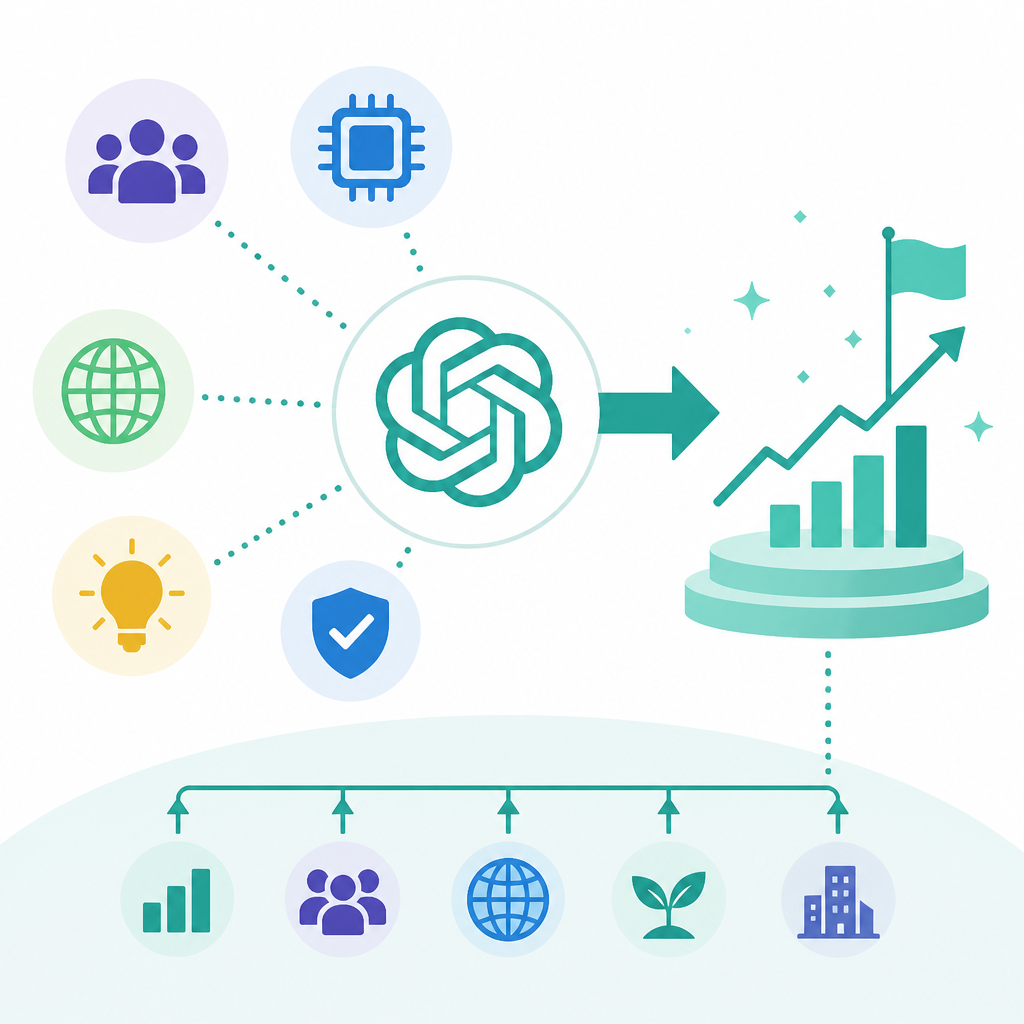
There is also a real concern that disclosure could reveal too much about strategy, spending, or competitive positioning. OpenAI’s rivals would love more visibility into its economics and operational priorities. If the company is still in a fast-moving phase of model development, going public could create friction just when speed matters most.
That objection is real, but it is no longer decisive. OpenAI is already too important, too expensive, and too visible to stay wrapped in private-market ambiguity. The answer is not to avoid accountability; it is to structure it well. If the company wants the benefits of scale, it must accept the obligations that come with scale. The cost of disclosure is lower than the cost of operating a systemically important AI company without the checks that public ownership provides.
What to do with this
For founders and product leaders, the lesson is simple: if your AI company’s economics depend on massive infrastructure, treat governance as a product decision, not an afterthought. Build reporting, metric discipline, and board oversight early. For engineers and PMs, assume the company will be judged on reliability, cost efficiency, and explainability, not just model quality. The firms that survive the next phase of AI will be the ones that can scale both their systems and their accountability.
// Related Articles
- [IND]
Korea’s Nvidia talks point to an AI factory push
- [IND]
OpenAI should not rush its IPO just to win the AI race
- [IND]
OpenAI updates its Europe privacy policy
- [IND]
OpenAI is right to keep ads out of sensitive chats
- [IND]
AI bootlegs are already draining streaming royalties
- [IND]
AMD and Microsoft push Windows ML on GPU and NPU