Why Saint Mary’s UCLA upset proves college baseball still rewards pit…
Saint Mary’s 3-2 win over UCLA shows pitching, defense, and nerve still beat rankings.

Saint Mary’s beat No. 1 UCLA 3-2 by pairing elite pitching with timely power.
Saint Mary’s 3-2 upset of No. 1 UCLA was not a fluke, a lucky bounce, or a one-off regional miracle; it was a proof point that college baseball still belongs to teams that pitch, defend, and stay calm under pressure.
The Gaels walked into Jackie Robinson Stadium facing the top overall seed, then held UCLA to two runs on six hits while John Damozonio and Cam Staton combined for nine innings and nine strikeouts. That is not chaos. That is control. Damozonio gave Saint Mary’s seven innings and Staton finished the final two, including the final out against Roch Cholowsky, the sport’s top overall prospect. Rankings matter until the first pitch, then command and execution take over.
Pitching beats pedigree when the margin is thin
Get the latest AI news in your inbox
Weekly picks of model releases, tools, and deep dives — no spam, unsubscribe anytime.
No spam. Unsubscribe at any time.
Saint Mary’s did not need a barrage of hits to beat UCLA. It needed one starter to keep the game level and one reliever to slam the door. Damozonio did the first part by working seven innings and allowing only two runs, which kept the Gaels within striking distance even after UCLA briefly took a 2-1 lead.

That structure is the real lesson. In a regional opener, the favorite often wins by simply forcing the underdog to chase the game. Saint Mary’s refused to do that. By holding UCLA to just six hits and getting through nine innings with only two arms, the Gaels made the Bruins play a one-run game on their terms, and that is exactly where upsets become possible.
One swing changes everything when the foundation is solid
Jacob Johnson’s two-home-run night was the headline, but it only mattered because the rest of the game had been built to support it. He opened the scoring with a solo shot in the fourth, then returned in the ninth and launched the go-ahead homer to right field. Same hitter, same game, different pressure. The first homer announced Saint Mary’s belonged; the second decided the upset.
That kind of late-inning damage is what separates a competitive underdog from a real threat. Makoa Sniffen’s RBI double in the sixth tied the game at 2-2 and kept the Bruins from settling in. Tanner Griffith’s baserunning created the run-scoring chance. Johnson’s blast was not an isolated hero moment. It was the final strike in a game Saint Mary’s had spent eight innings manufacturing.
The counter-argument
The obvious objection is that this was baseball, the most volatile of the major college sports. A single game can be distorted by a hot pitcher, a gust of wind, or a bad night from the favorite. UCLA still finished with a 51-7 record and had the No. 1 overall seed for a reason. One upset does not erase a season of superiority.
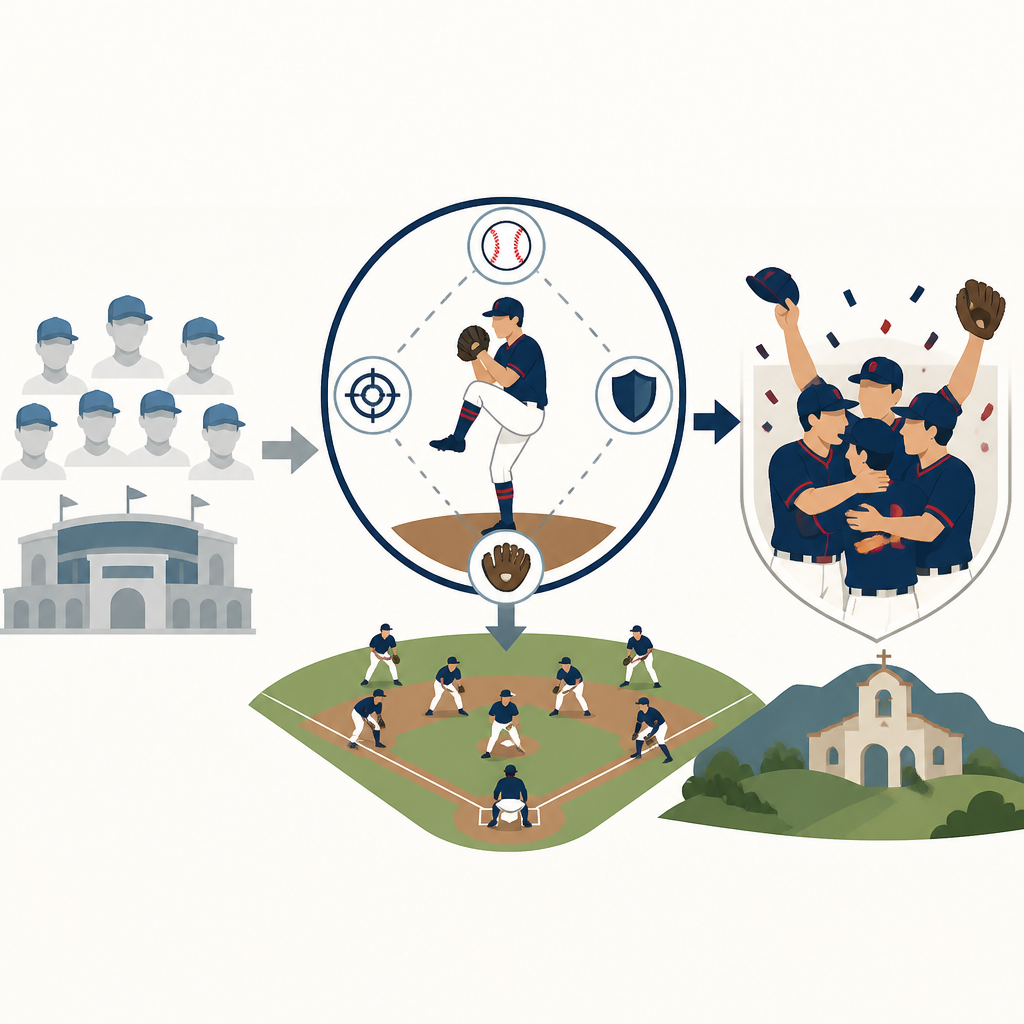
That is true, and it is also beside the point. Nobody serious is arguing that Saint Mary’s was better than UCLA over 58 games. The argument is narrower and stronger: in NCAA baseball, the best team on paper does not automatically control the most important moments. Saint Mary’s did not win because UCLA was fake. It won because the Gaels understood the regional format better than the Bruins did in that one game. They kept the score tight, attacked with power, and trusted their bullpen to finish the job. That is not luck. That is a repeatable tournament formula.
What to do with this
If you are an engineer, PM, or founder, treat this game like a product lesson: build for leverage, not volume. Saint Mary’s did not outspend, out-recruit, or out-hype UCLA. It won by concentrating quality where it mattered most, starting pitching, late-inning relief, and one swing in the ninth. In your work, that means prioritizing the few systems that decide outcomes under stress, then training your team to execute when the room gets loud. Rankings, brand, and reputation matter until real pressure arrives. After that, poise and process win.
// Related Articles
- [IND]
Gemini lands inside Apple’s developer stack
- [IND]
Five AI coding IDEs that fit real workflows
- [IND]
Devin Desktop turns Windsurf into an agent hub
- [IND]
Korea’s Nvidia talks point to an AI factory push
- [IND]
OpenAI should not rush its IPO just to win the AI race
- [IND]
OpenAI updates its Europe privacy policy