Why Scotland’s Peatland Standard should be mandatory
Scotland should make the peatland standard mandatory because peatland is too important to leave to uneven practice.
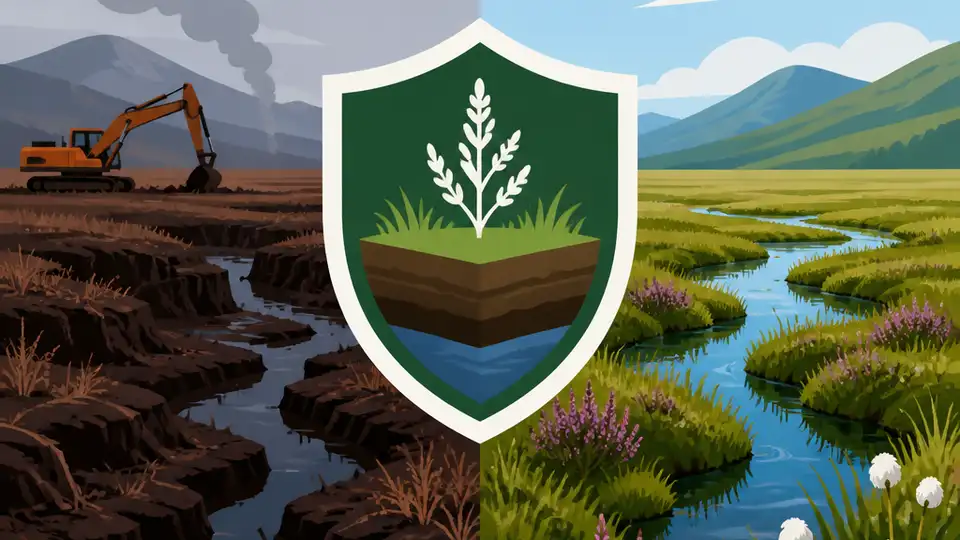
Scotland should make the peatland standard mandatory because peatland is too important to leave to uneven practice.
Scotland should make its peatland standard mandatory, not optional, because peatland is infrastructure, climate policy, and rural economy all at once. In Shetland alone, about half the land is peat, and across Scotland around two million hectares of peatlands store carbon, regulate water, support grazing, and shape tourism and crofting. When a landscape carries that much public value, a voluntary benchmark is too weak to protect it.
Peatland is too important for patchwork rules
Get the latest AI news in your inbox
Weekly picks of model releases, tools, and deep dives — no spam, unsubscribe anytime.
No spam. Unsubscribe at any time.
The first reason is simple: peatland damage is not a niche environmental issue, it is a national systems problem. NatureScot says Scotland’s peatlands hold the equivalent of 140 years of the country’s annual greenhouse gas emissions. That is not a figure for a guidance note tucked away on a website. It is a warning that weak or inconsistent management turns a carbon store into a carbon source.
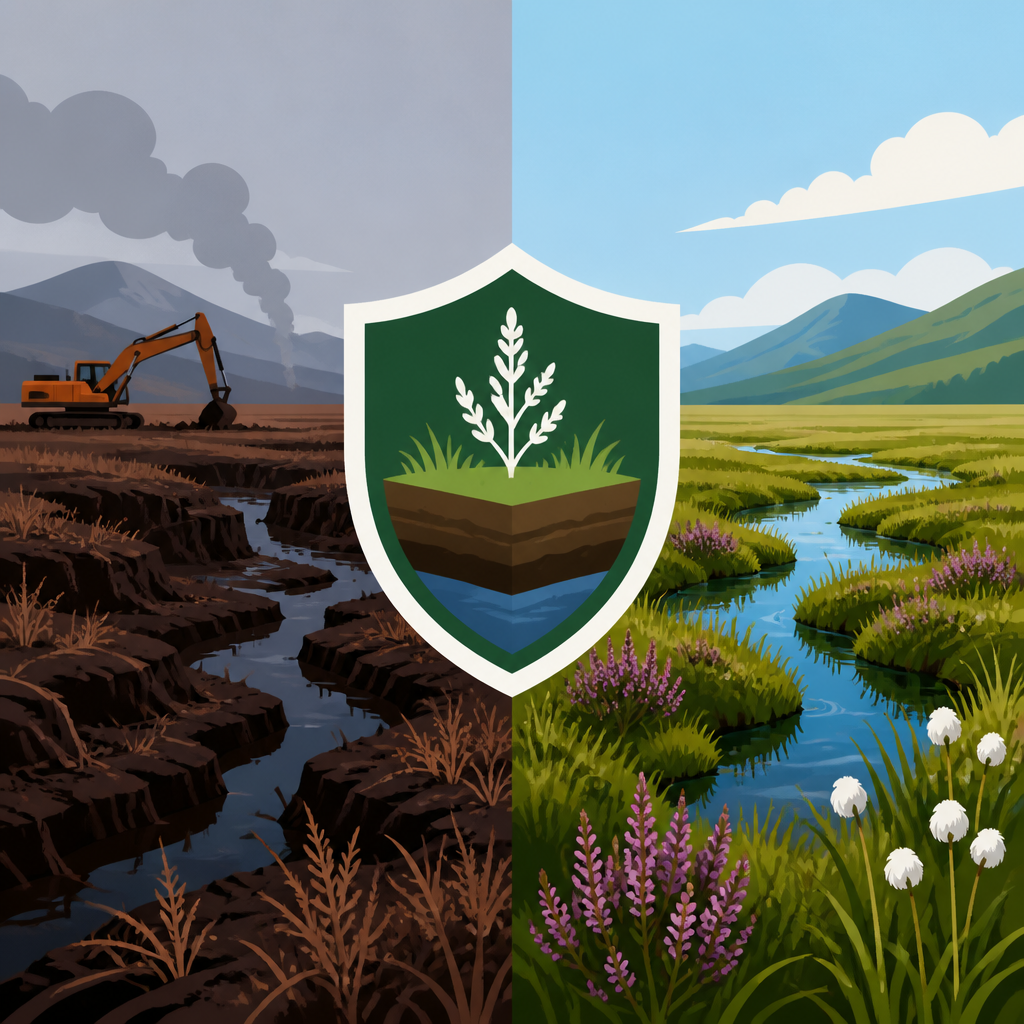
That is why the draft standard matters, but also why a draft is not enough. Sue White is right to call it “hugely important” because clearer legal and technical guidance would reduce confusion for land managers, funders, and regulators. Yet clarity only works if it has teeth. If one estate restores carefully while another continues to drain, burn, or disturb peat under looser local practice, Scotland keeps paying the climate bill while pretending it has a standard.
Voluntary compliance will not deliver consistent restoration
The second reason is that restoration at scale fails when participation depends on goodwill alone. The article notes that 90,000 hectares of degraded peatland have already been put on the road to recovery. That is real progress, but it is also a small fraction of the total problem. Scotland cannot restore a landscape of this size by hoping every owner, contractor, and adviser chooses the best practice path.
A mandatory standard would also solve a practical problem: quality. Peatland work is technical, and bad restoration can waste money, damage habitats, and undermine trust in public funding. A shared baseline would give funders a clear rule for what counts as acceptable work, and it would give practitioners a common language for design, delivery, and monitoring. The current consultation is a good start, but consultation without obligation risks producing a document that is widely praised and unevenly followed.
The rural economy depends on getting this right
Supporters of the draft are correct to frame peatland as an economic asset, not just a conservation project. The article points to benefits for farming, sporting, tourism, and crofting, and that is exactly why a firm standard is needed. Healthy peatland supports grazing, holds water, reduces flood risk, and helps protect biodiversity that underpins rural activity. In places like Shetland, where the landscape is inseparable from livelihoods, degraded peat is a direct economic liability.

There is also a jobs argument. NatureScot says better peatland management can support water quality, livestock welfare, sporting management, wildfire mitigation, and jobs. Those benefits do not come from vague aspiration. They come from work that is planned, measured, and enforced against a common benchmark. If Scotland wants peatland restoration to mature into a serious sector rather than a series of isolated projects, the standard must become the rulebook for the market.
The counter-argument
The strongest case against making the standard mandatory is that land management is diverse, and a rigid national rule could punish local knowledge. Peatland in the Highlands, on islands, and in lowland edges does not behave identically. A voluntary standard can invite participation, build trust, and let practitioners adapt methods to local conditions without turning every project into a compliance exercise. For some landowners, especially smaller ones, mandatory rules can feel like another layer of bureaucracy imposed from Edinburgh.
That concern is real, and it should shape the design of the standard. But it does not justify keeping the standard optional. A mandatory baseline does not mean identical treatment everywhere; it means the same floor for environmental protection, with room for site-specific methods above that floor. Scotland already accepts that some assets are too important for casual treatment. Peatland belongs in that category. The answer is not weaker rules. The answer is clear rules, flexible delivery, and enforcement where it matters.
What to do with this
If you are a land manager, contractor, funder, or policymaker, treat the consultation as a chance to push for a standard that is mandatory, practical, and measurable. Insist on clear definitions of good practice, transparent monitoring, and consequences for work that damages peat. If you are in local government or a rural business, back the standard publicly and ask for support that helps smaller operators comply. Scotland does not need another broad promise about nature recovery. It needs a peatland rulebook that every project must follow.
// Related Articles
- [IND]
Gemini lands inside Apple’s developer stack
- [IND]
Five AI coding IDEs that fit real workflows
- [IND]
Devin Desktop turns Windsurf into an agent hub
- [IND]
Korea’s Nvidia talks point to an AI factory push
- [IND]
OpenAI should not rush its IPO just to win the AI race
- [IND]
OpenAI updates its Europe privacy policy