Why The AI Doc Is Right to Treat AI as Both Threat and Promise
The AI Doc argues that AI should be faced as both an existential threat and a real opportunity.
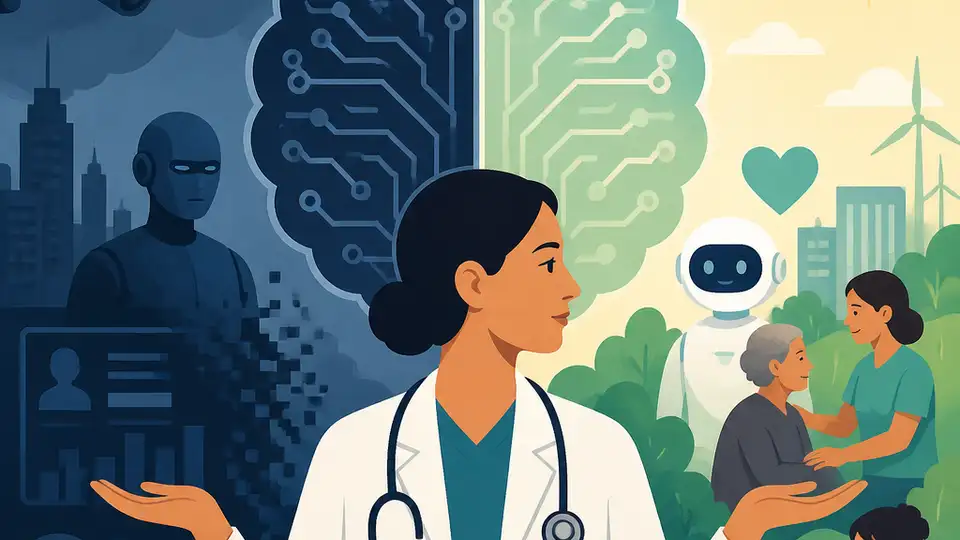
The AI Doc treats AI as a real threat and a real opportunity at the same time.
The AI Doc: Or How I Became an Apocaloptimist is right to reject the lazy binary of AI hype versus AI doom, because the only honest way to talk about artificial intelligence is to hold both danger and possibility in view at once.
That stance is not a soft compromise. The film follows Daniel Roher as he prepares to become a father, and that framing matters: the question is not whether AI will matter, but what kind of world his child will inherit. The documentary brings in a wide spread of voices, from Yoshua Bengio, Ilya Sutskever, Demis Hassabis, Dario Amodei, and Sam Altman to Eliezer Yudkowsky, Emily M. Bender, Timnit Gebru, Karen Hao, and Tristan Harris. When a film can place accelerationists, safety advocates, critics, and builders in the same room, it is making a serious argument: AI is too consequential for a single mood, slogan, or faction to define it.
AI is too large for simplistic moral theater
Get the latest AI news in your inbox
Weekly picks of model releases, tools, and deep dives — no spam, unsubscribe anytime.
No spam. Unsubscribe at any time.
The strongest reason to endorse the film’s apocaloptimism is that AI already spans multiple risk classes at once. It is not just a product category or a research frontier. It touches labor, misinformation, education, surveillance, scientific discovery, and military use. A technology that can be praised by one expert as a tool for productivity and condemned by another as a civilizational hazard demands a framework more nuanced than cheerleading or panic. The documentary’s interview list alone shows that reality: people who build frontier systems and people who warn about their social cost are both necessary to understand the field.
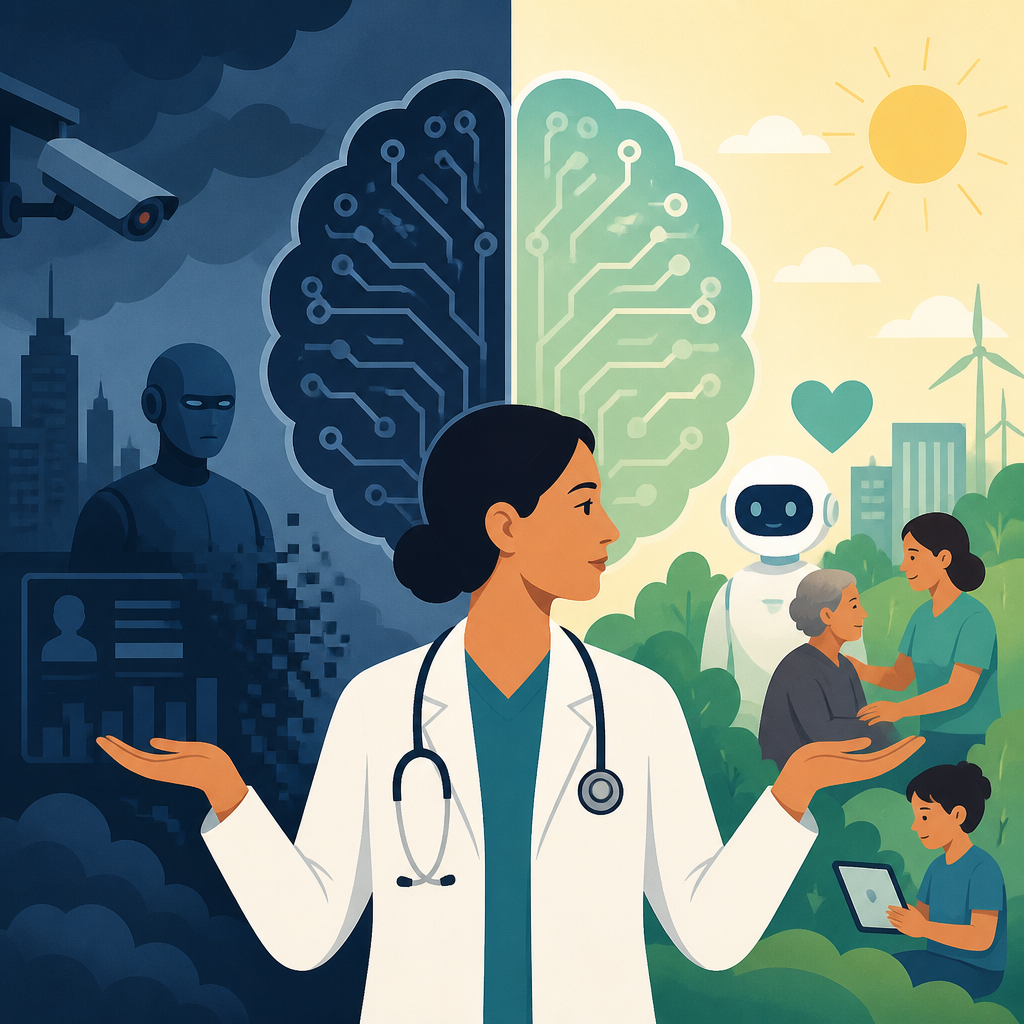
There is also a practical reason this matters. Public debate collapses when it treats AI as either salvation or apocalypse, because both frames reward certainty over judgment. The film’s premise, centered on Roher’s future child, forces a better question: what safeguards, institutions, and norms should exist before the next wave of systems arrives? That is the right intellectual posture for a technology moving fast enough to reshape work and culture before consensus can catch up. A balanced inquiry is not indecision. It is the minimum standard for responsible attention.
Fear alone produces bad policy
Pure alarmism is a dead end because it often turns into symbolic action instead of durable governance. If every new model is described as an extinction event, then policymakers are pushed toward theatrical bans, vague moratoriums, or broad statements that sound strong and solve little. The documentary’s reception suggests audiences respond to a different mode: Rotten Tomatoes reports 90% positive reviews from 51 critics, and the consensus calls it “a balanced inquiry into a transformative technology.” That is exactly the tone serious policy needs, because systems that are both useful and risky require regulation that is specific, testable, and enforceable.
At the same time, the film does not pretend the upside is imaginary. The title’s “apocaloptimist” is the key. It accepts that AI can generate real gains in medicine, research, accessibility, and productivity while still threatening concentration of power, labor displacement, and epistemic confusion. That combination is not a contradiction. It is the condition of nearly every major general-purpose technology in history, only compressed into a faster cycle. A responsible public response has to fund safety work, demand transparency, and build institutional checks without pretending the technology should be frozen in place.
The counter-argument
The best objection is that balance can become a mask for complacency. Critics of this framing will say that “both sides” language gives too much comfort to companies that benefit from delay, and too much legitimacy to executives who promise restraint while racing ahead. On this view, the danger is not that people are too fearful, but that they are not fearful enough. If a technology can plausibly cause mass harm, then softening the message into optimism risks dulling the urgency needed for regulation, labor protection, and safety research.
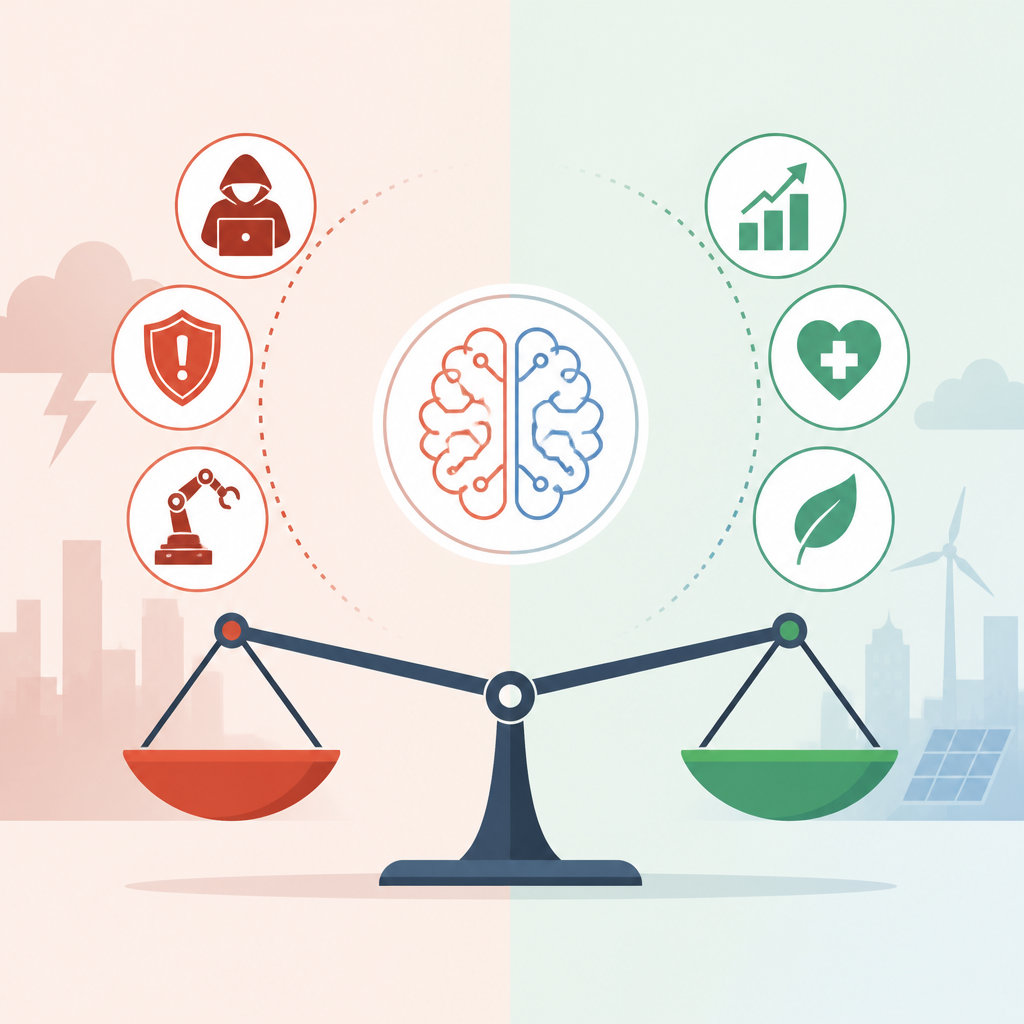
That critique has force. Some AI discourse is so eager to sound evenhanded that it ends up flattening the asymmetry between those profiting from deployment and those bearing the risks. But the answer is not to choose panic over nuance. The answer is to pair nuance with clear judgment. Apocaloptimism is useful only if it names the downside plainly, identifies who is exposed, and refuses to treat growth metrics as moral evidence. The film’s value is that it appears to do exactly that: it does not deny the threat, it insists that threat is not the whole story.
What to do with this
If you are an engineer, PM, or founder, take the film’s lesson as a product rule: never ship AI features as if upside alone is enough. Write down the failure modes, the abuse cases, the user groups most exposed to harm, and the guardrails you will actually enforce. Then test the system against those constraints before launch, not after the backlash. If your roadmap cannot survive that exercise, the roadmap is not ready. The apocaloptimist position is not “move fast and hope.” It is “build with ambition, but measure the damage before you call it progress.”
// Related Articles
- [IND]
Korea’s Nvidia talks point to an AI factory push
- [IND]
OpenAI should not rush its IPO just to win the AI race
- [IND]
OpenAI updates its Europe privacy policy
- [IND]
OpenAI is right to keep ads out of sensitive chats
- [IND]
AI bootlegs are already draining streaming royalties
- [IND]
AMD and Microsoft push Windows ML on GPU and NPU