Why TP.HCM should treat tomorrow’s weather warning as a serious risk
TP.HCM should treat tomorrow’s weather warning as a serious risk, not routine rain.
TP.HCM should treat tomorrow’s weather warning as a serious risk, not routine rain.
TP.HCM should not read tomorrow’s forecast as ordinary wet weather. The warning is specific: cloudy skies, scattered showers and thunderstorms, some places with heavy to very heavy rain, southwest winds at level 2-3, and the chance of tornadoes, lightning, and hail during storms. That combination is not just an inconvenience. It is the kind of forecast that changes how people move, work, and protect property.
First, the forecast contains the kind of detail that demands action
Get the latest AI news in your inbox
Weekly picks of model releases, tools, and deep dives — no spam, unsubscribe anytime.
No spam. Unsubscribe at any time.
The most important part of this bulletin is not that rain is coming. Rain is common. The important part is the escalation: “cục bộ có nơi mưa to đến rất to,” plus thunderstorm hazards like lightning, hail, and strong gusts. That is a warning profile, not a background weather note. When a forecast names multiple severe phenomena, the right response is preparation, not casual optimism.
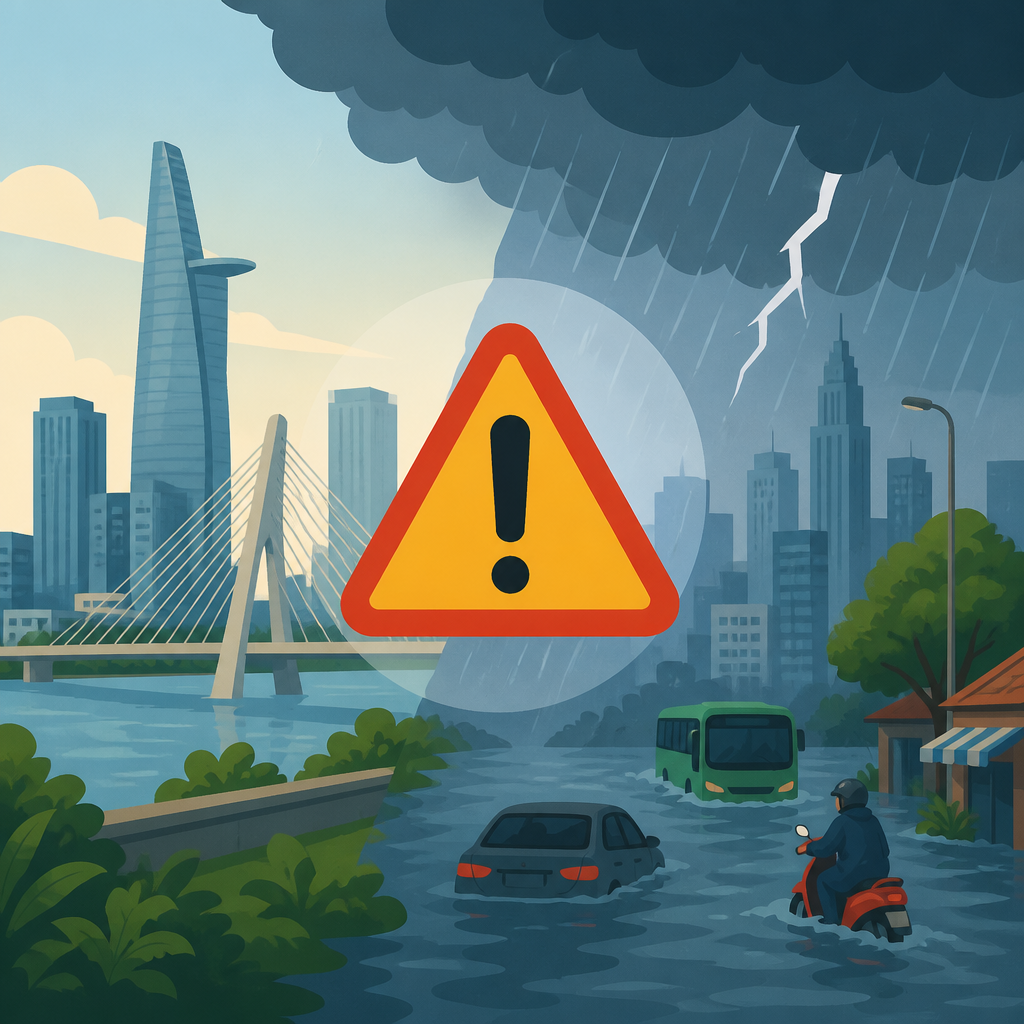
In practical terms, a city like TP.HCM cannot afford to treat localized heavy rain as harmless because localized is exactly how disruption spreads. A single intense cell can flood a street, stall traffic, damage goods in open areas, and create electrical and safety risks in minutes. The forecast gives enough signal to justify early caution for commuters, vendors, delivery teams, and anyone managing outdoor operations.
Second, this is a traffic and operations problem, not only a weather problem
In a dense city, rain becomes an infrastructure stress test. Roads, drainage, parking areas, construction sites, and outdoor markets all absorb the impact at once. Southwest winds at level 2-3 may sound modest, but the real issue is what happens inside thunderstorms, where wind, lightning, and hail can turn a normal commute into a chain of delays and hazards. The forecast points to exactly that kind of compound disruption.
For employers and managers, the lesson is straightforward: do not wait for the first downpour to decide what to do. Shift schedules, secure equipment, protect electrical systems, and reduce exposure for teams working outside. For residents, the same logic applies. Charge devices, plan earlier travel, avoid parking under weak structures or trees, and keep an eye on sudden changes in sky conditions. The cost of being early is small. The cost of being late is usually paid in lost time or damaged property.
The counter-argument
There is a reasonable case for restraint. Weather forecasts are not certainty, and localized storms do not hit every district with the same force. People also grow numb when warnings repeat, especially in a tropical city where afternoon rain is frequent. From that angle, overreacting to every alert can create fatigue and unnecessary disruption.
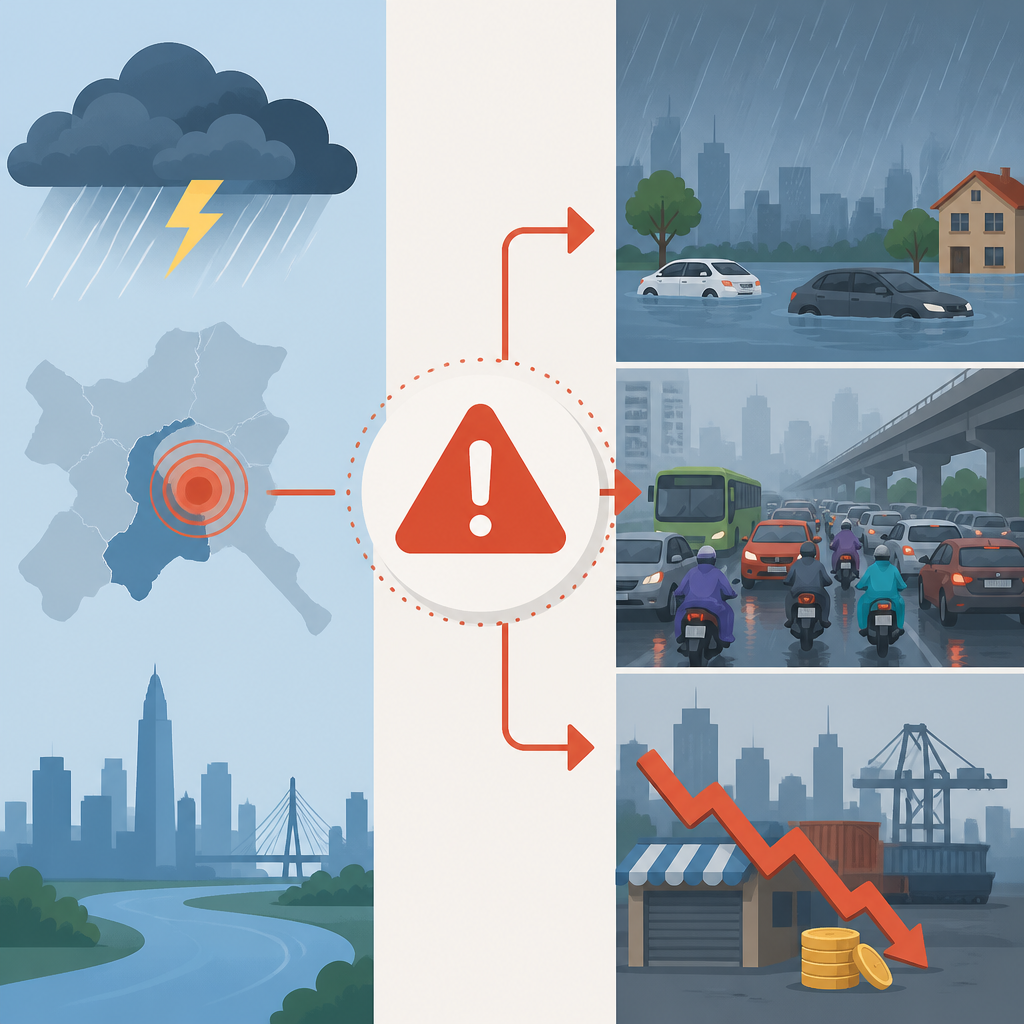
That objection is valid in general, but it does not fit this forecast. The bulletin does not simply mention rain; it explicitly includes heavy to very heavy localized rainfall and thunderstorm hazards such as lightning, hail, and possible tornadoes. That is enough specificity to justify a serious response. The right standard is not panic. It is disciplined caution based on the level of risk named in the forecast.
What to do with this
If you are an engineer, PM, founder, or operations lead in TP.HCM, treat this as a readiness check for tomorrow, not a weather update to skim. Move outdoor work earlier or indoors, protect equipment and documents, confirm drainage and backup power, and tell teams what happens if storms intensify. If you manage people, make the decision tree simple: who pauses work, who moves, who stays in contact, and what counts as a stop condition. In weather like this, clarity beats improvisation.
// Related Articles
- [IND]
Korea’s Nvidia talks point to an AI factory push
- [IND]
OpenAI should not rush its IPO just to win the AI race
- [IND]
OpenAI updates its Europe privacy policy
- [IND]
OpenAI is right to keep ads out of sensitive chats
- [IND]
AI bootlegs are already draining streaming royalties
- [IND]
AMD and Microsoft push Windows ML on GPU and NPU