WSO2’s $600M sale caps a 20-year open-source run
WSO2 sold to EQT for over $600 million after 20 years building open-source middleware, identity, and API software.

WSO2 sold to EQT for over $600 million after 20 years building open-source enterprise software.
WSO2 is one of those companies that quietly powered a lot of enterprise plumbing for years, then suddenly became a much bigger story. Founded in 2005, the Sri Lanka-headquartered software vendor now has 900+ employees, 11 offices, and a product line that spans integration, identity, API management, and agent platforms.
The biggest headline is the ownership change. In May 2024, EQT’s Asian private fund bought WSO2 for more than $600 million, closing the deal three months later. That price puts a clean number on what the market thinks open-source enterprise infrastructure is worth when it has real customers and a long operating history.
| Metric | Value | What it means |
|---|---|---|
| Founded | August 4, 2005 | Two decades of product and customer history |
| Employees | 900+ | Large enough for global enterprise support |
| Offices | 11 | International sales and engineering footprint |
| EQT acquisition | Over $600 million | Signals strong buyer interest in middleware and identity software |
| 2021 financing | $90 million | Fresh capital before the sale |
| 2022 Series E | $93 million | Another late-stage vote of confidence |
From Apache roots to enterprise software
Get the latest AI news in your inbox
Weekly picks of model releases, tools, and deep dives — no spam, unsubscribe anytime.
No spam. Unsubscribe at any time.
WSO2 was founded by Sanjiva Weerawarana, Paul Fremantle, and Davanum Srinivas in August 2005. The company grew out of deep work in web services and Apache projects, which explains why its software has always leaned toward open standards and interoperability instead of vendor lock-in.

That background matters because WSO2 did not grow by chasing consumer buzz. It built software for the boring but expensive part of enterprise IT: connecting systems, managing identity, and controlling APIs across cloud, on-premises, and hybrid setups. Those are the layers companies keep paying for long after the flashy app launches are forgotten.
“The more we can make software open and interoperable, the more useful it becomes.” — Sanjiva Weerawarana, WSO2 co-founder, in a 2013 interview with InfoQ
The quote fits the company’s entire strategy. WSO2 donated its Stratos project to Apache in 2013, pushed Ballerina as an open-source language for integration, and kept its products tied to open-source distribution rather than closed platforms.
The product stack now covers agents, APIs, and identity
WSO2’s current lineup is broader than the old middleware label suggests. The company now talks about an agent platform, an API platform, an integration platform, an identity platform, and an engineering platform. That mix tells you where enterprise software spending is going: companies want one layer for APIs, another for identity, and a way to connect AI agents without rebuilding the whole stack.
The product descriptions also show a deliberate shift toward agentic systems. WSO2 says its API platform can govern APIs, AI, and MCP across any cloud or gateway, while its identity platform is built to orchestrate identity for humans and AI agents. That is a direct response to a fast-moving problem: enterprises want AI features, but they also want policy control, logging, and permissioning.
- Ballerina launched in 2017 and reached 1.0 in 2019.
- InfoWorld rated Ballerina 2201.4.0 with 4 out of 5 stars in March 2023.
- WSO2 says its software supports on-premises, cloud, and hybrid deployment models.
- The company’s platform set includes integration, API management, identity, and engineering tooling.
That breadth matters because WSO2 is selling to organizations that cannot move everything to one cloud account and call it done. Data sovereignty, legacy systems, and regulatory controls still shape buying decisions, especially in banking, telecom, and public-sector environments.
The money trail explains the sale price
WSO2 did not arrive at the EQT deal in a vacuum. The company raised $4 million from Intel Capital in 2006, then another $10 million in 2012, $20 million in 2015, $90 million in 2021, and $93 million in 2022. Those rounds show a company that kept attracting capital while staying private for nearly 20 years.
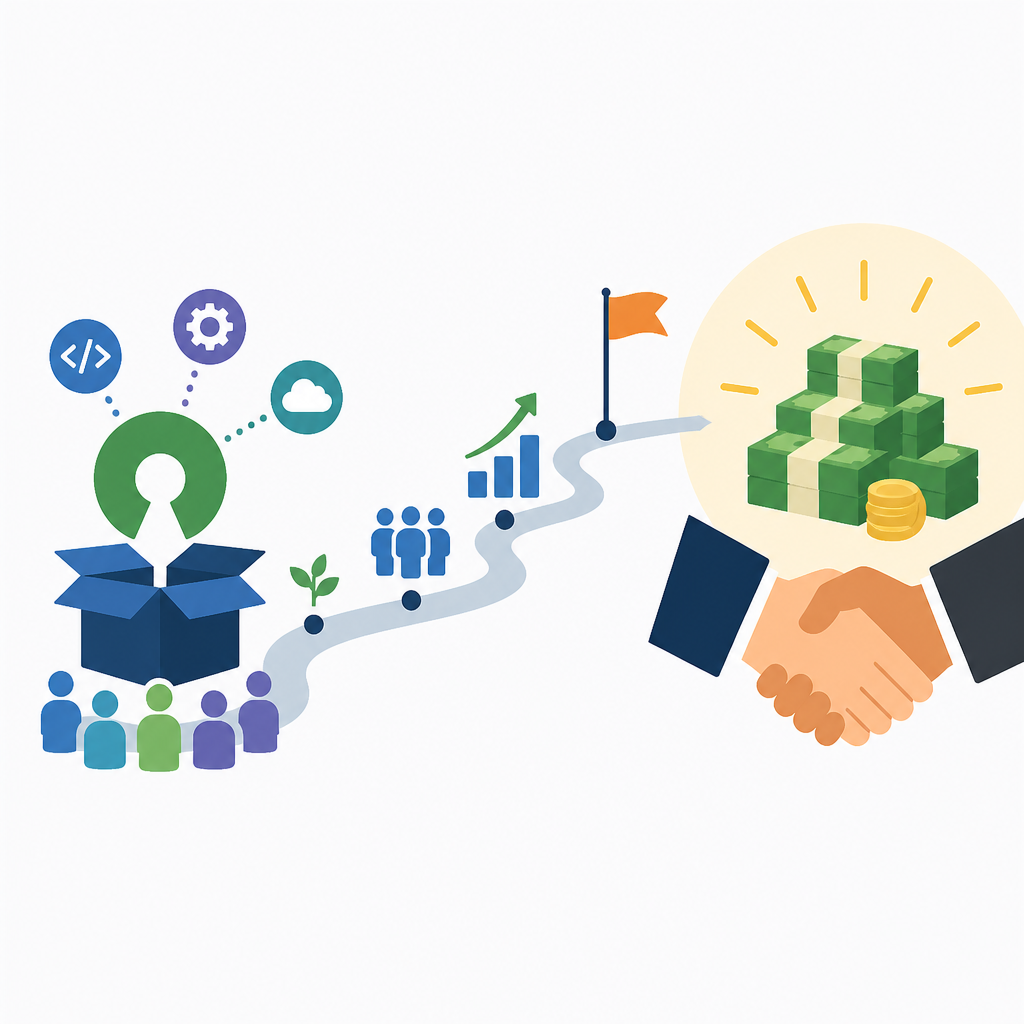
There is also a useful comparison hiding in the numbers. The 2021 and 2022 financings alone total $183 million, which means the final sale price was more than three times that amount. That gap suggests EQT was buying a mature software business with recurring enterprise demand, not a speculative startup story.
- 2006: Intel Capital invested $4 million.
- 2012: WSO2 raised $10 million in its third round.
- 2015: Pacific Controls and Toba led a $20 million round.
- 2021: Goldman Sachs Asset Management Private Credit provided $90 million.
- 2022: Info Edge added $93 million in Series E funding.
There is a second comparison worth noting. WSO2 has 11 offices and 900+ employees, but its main research and operations center remains in Colombo. That mix suggests a company that sells globally while keeping a strong engineering base in Sri Lanka, which is still unusual among enterprise infrastructure vendors of this size.
What the acquisition means for enterprise software buyers
The EQT acquisition does not automatically change what WSO2 ships, but it does change the pressure around growth, packaging, and cross-sell. Private equity ownership usually means sharper focus on recurring revenue and clearer product lines, especially when a company already has a broad portfolio.
For buyers, the practical question is whether WSO2 keeps the same open-source posture while pushing harder into agent management and platform engineering. The company’s pitch is attractive because it combines open-source licensing, multiple deployment options, and enterprise controls in one vendor relationship. That combination is still rare.
For the market, WSO2 is a reminder that infrastructure software can still command serious money when it solves messy integration problems and has a real installed base. The next thing to watch is whether EQT uses the company to expand deeper into AI agent governance, or trims the stack toward the products with the clearest enterprise revenue. Either way, the buyer is paying for the same thing WSO2 has always sold: control over the software that connects everything else.
If WSO2 keeps its open-source roots while tightening its product focus, it could become a stronger reference point for how enterprise AI infrastructure gets packaged and sold over the next few years.
Related reading: open-source enterprise software trends and AI agent platforms in enterprise IT.
// Related Articles
- [IND]
Solana’s $1,000 target is fantasy, not a forecast
- [IND]
Google AX turns agent runs into resumable jobs
- [IND]
design.md turns brand tokens into agent-ready UI specs
- [IND]
Claude vs GPT vs Gemini: Coding Benchmark Leaderboard
- [IND]
Clip Converter’s 2026 rivals are faster and safer
- [IND]
OpenAI’s Sora shutdown proves hype can’t outrun unit economics