Why the 2026 Indiana Fever season is built to win now
The 2026 Indiana Fever are built to contend immediately, not develop slowly.
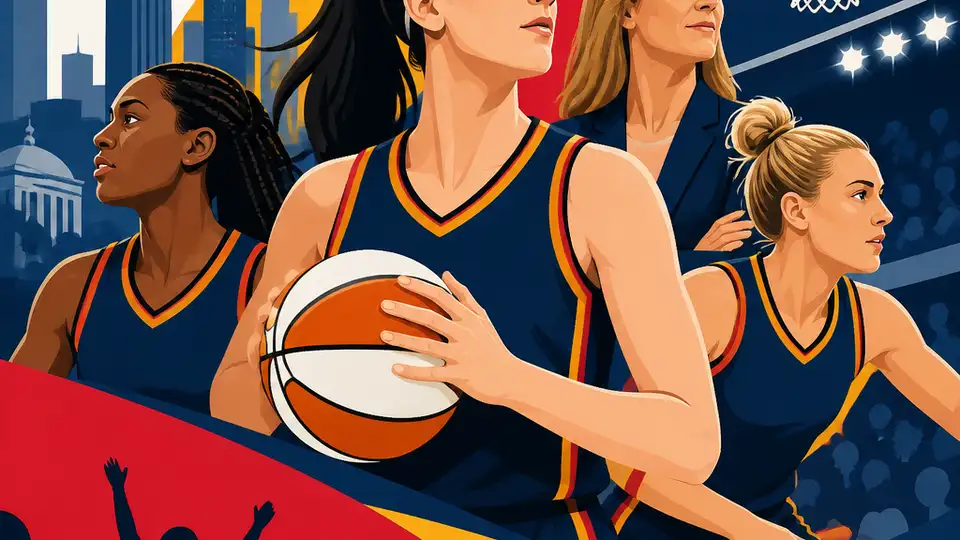
The 2026 Indiana Fever are built to contend immediately, not develop slowly.
The 2026 Indiana Fever are not a project team; they are a win-now roster assembled around Caitlin Clark, Aliyah Boston, and Kelsey Mitchell, with enough veteran depth to make every game matter. Indiana kept its core together, added Monique Billings and Tyasha Harris, brought back Lexie Hull, Sophie Cunningham, and Damiris Dantas, and entered the season with a roster that looks designed to survive the grind of a full WNBA calendar rather than simply chase upside. Even the early schedule tells the story: close losses, a road win over Los Angeles, and a home win over Seattle show a team already operating at a competitive baseline.
First, the roster construction is intentionally aggressive
Get the latest AI news in your inbox
Weekly picks of model releases, tools, and deep dives — no spam, unsubscribe anytime.
No spam. Unsubscribe at any time.
Indiana’s front office did not treat the offseason like a clean-slate rebuild. It retained Kelsey Mitchell on a one-year deal, re-signed Lexie Hull and Sophie Cunningham, and added Monique Billings and Tyasha Harris. That is a clear signal: keep the scoring, keep the spacing, keep the ballhandling, and add players who can stabilize the rotation when the stars sit. Teams that want to grow slowly do not make this many short-term, competitive moves.

The draft class reinforces the same point. Raven Johnson, Justine Pissott, and Jessica Timmons give Indiana more guard depth and more size, but none of those picks suggest a franchise willing to sacrifice 2026 for a multiyear runway. Instead, the Fever are stocking the bench with specialists and insurance. In a league where one injury can unravel a season, that is not conservative management; it is a playoff bet.
Second, the early results already validate the approach
The preseason and first regular-season games show a team that can score with anyone. Indiana opened preseason by beating New York 109-91, then dropped a tight game to Dallas, then handled Nigeria 105-57. In the regular season, the Fever lost by three to Dallas, beat Los Angeles on the road, lost in overtime to Washington, and beat Seattle at home. That is not the profile of a team waiting to become dangerous later. It is the profile of a team that can already trade blows with postseason-level opponents.
More important, the offense is not dependent on one script. Caitlin Clark has already produced double-digit assists and high-usage scoring nights, Kelsey Mitchell has delivered a 30-point game, and Aliyah Boston remains a reliable interior anchor. When a roster can win with different leaders on different nights, it becomes harder to game-plan against. Indiana’s early box scores suggest exactly that kind of flexibility, which is what separates a flashy team from a serious one.
The counter-argument
The strongest case against this view is simple: the Fever are still young, still integrating new pieces, and still vulnerable to the kind of defensive inconsistency that punishes teams in the WNBA. The roster has a lot of talent, but talent alone does not guarantee cohesion. A team built around a high-usage guard like Clark can also become too dependent on shot-making, and the presence of several new rotation players raises the risk of uneven chemistry.

That critique is real, but it does not overturn the argument. Indiana does not need to be perfect to justify a win-now posture. It only needs to be good enough to enter the playoff conversation early and improve from a position of strength. The key reason the counter-argument falls short is that the Fever have already reduced the biggest risk by keeping their core intact. Continuity matters in the WNBA, and Indiana has chosen continuity over churn.
What to do with this
If you are an engineer, PM, or founder looking at Indiana as a model, the lesson is to stop confusing patience with passivity. Build the core, add targeted depth, and measure success by whether the system can compete now, not by whether it looks elegant on a whiteboard. The Fever’s offseason shows a practical truth: the fastest path to durable growth is often to make the current version of the team stronger before you chase the next one.
// Related Articles
- [IND]
Gemini lands inside Apple’s developer stack
- [IND]
Five AI coding IDEs that fit real workflows
- [IND]
Devin Desktop turns Windsurf into an agent hub
- [IND]
Korea’s Nvidia talks point to an AI factory push
- [IND]
OpenAI should not rush its IPO just to win the AI race
- [IND]
OpenAI updates its Europe privacy policy