5 reasons music AI is turning cautiously optimistic
5 signs the music business is warming to AI, with licensing, attribution and artist pay now shaping adoption.

The music business is moving from fear of AI to cautious adoption.
The music business is moving from fear to cautious adoption, but only if AI companies get licensing, attribution and artist pay right. That shift is already visible in a 5:36 CNBC conversation from CONVERGE LIVE in Singapore.
1. Fear is giving way to practical use
Get the latest AI news in your inbox
Weekly picks of model releases, tools, and deep dives — no spam, unsubscribe anytime.
No spam. Unsubscribe at any time.
Bernie Cho and Anand Roy describe a change in tone: executives are no longer treating AI as only a threat. Instead, they are asking where it can fit into day-to-day music work without pushing creators out of the process.
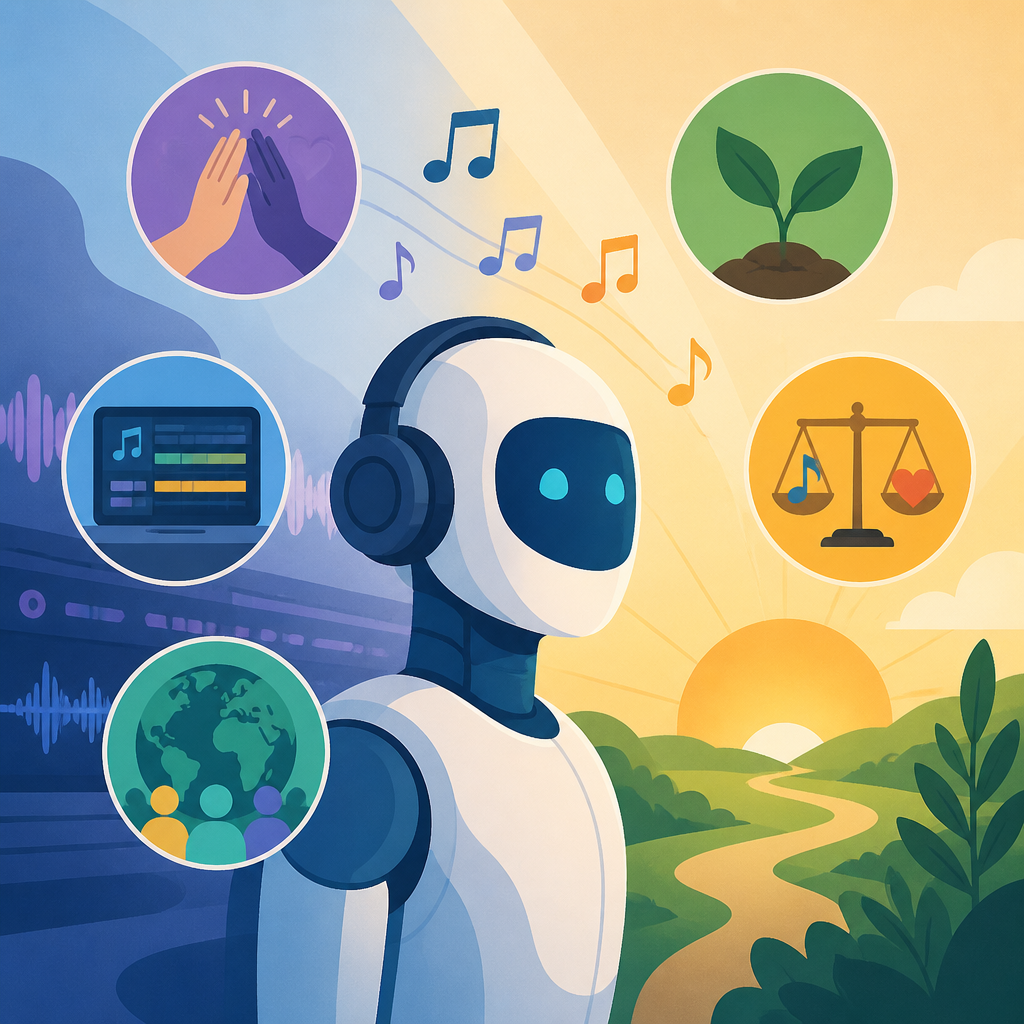
This matters because the industry’s first reaction was often defensive. Now the discussion is less about whether AI exists and more about how to use it without eroding trust with artists, labels and publishers.
- Earlier stance: broad fear and resistance
- Current stance: cautious, pragmatic adoption
- Core concern: keep human creators central
2. Licensing is the first gatekeeper
The executives say AI will only gain wider acceptance if companies handle licensing responsibly. In music, that means permission is not an afterthought; it is the foundation that lets rights holders know their work is being used legally.
For AI firms, this is a business issue as much as a legal one. If they want access to catalogs, training data or voice models, they need to build systems that make rights clear and payments traceable.
- Ask who owns the underlying recording or composition
- Track where training data came from
- Document permission before commercial use
3. Attribution is becoming non-negotiable
Attribution is another condition for broader acceptance. Music executives want clear credit when AI systems use an artist’s work, style or voice. Without that, the technology risks looking like extraction rather than collaboration.

That expectation is especially important in a business built on identity and authorship. If listeners cannot tell what is human-made, AI-assisted or fully synthetic, confidence in the output can fall fast.
Example policy questions:
- Is the source artist named?
- Is AI involvement disclosed?
- Can rights holders audit usage?
4. Compensation has to be built in
Cho and Roy also argue that artist compensation must be part of the model from the start. If AI systems generate value from songs, voices or likenesses, creators should share in that value rather than watch it disappear into platform margins.
That point is likely to shape future deals. Music companies may accept AI more readily if revenue sharing, licensing fees or usage-based payouts are baked into the workflow instead of negotiated only after the fact.
- Flat licensing fees for catalog access
- Usage-based payments tied to outputs
- Revenue splits for AI-assisted creations
5. Human creators still set the standard
The final condition is cultural, not technical. The executives say the industry will keep human creators at the center, even as it adopts more AI tools. That means AI should support songwriting, production or discovery, not replace the people who give music its identity.
This is where cautious optimism becomes a working strategy. The music business is not rejecting AI outright, but it is drawing a line around trust, authorship and creative control.
- AI can assist production workflows
- Humans should keep creative authority
- Adoption depends on visible guardrails
How to decide
If you are a label, publisher or platform, the clearest path is to treat AI as a licensed product category, not a free-for-all. That means building rights checks, attribution rules and payment systems before scaling use.
If you are an artist or manager, the key question is whether a company can show its permissions and compensation model in plain language. In this phase of the market, trust is the real adoption test.
// Related Articles
- [IND]
OpenAI updates its Europe privacy policy
- [IND]
OpenAI is right to keep ads out of sensitive chats
- [IND]
AI bootlegs are already draining streaming royalties
- [IND]
AMD and Microsoft push Windows ML on GPU and NPU
- [IND]
OpenAI’s IPO filing turns hype into scrutiny
- [IND]
Skatteetaten proves public sector AI should be judged by outcomes