5 reasons Wasm is going mainstream in backend
5 reasons WebAssembly is moving into backend work in 2026, from millisecond cold starts to polyglot reuse and tighter isolation.

WebAssembly is moving into backend work because it starts fast, isolates code, and runs many languages.
WebAssembly is no longer just a browser runtime. In 2026, more than 70% of respondents in the CNCF-linked State of WebAssembly survey said they use or evaluate Wasm outside the browser, and backend teams are paying attention.
1. Millisecond cold starts
Get the latest AI news in your inbox
Weekly picks of model releases, tools, and deep dives — no spam, unsubscribe anytime.
No spam. Unsubscribe at any time.
One of Wasm’s biggest backend wins is startup speed. The article cites cold starts in the single-digit millisecond range, which is a major shift for serverless and edge systems that need to answer per request without waiting on heavy container boot times.

That speed matters most when traffic spikes, workloads are bursty, or each request needs its own isolated execution. Instead of keeping large services warm, teams can spin up small modules that are ready almost immediately.
- Cold starts: 1 to 10 milliseconds
- Best fit: edge functions, serverless handlers, request-level compute
- Benefit: less waiting, higher request density
2. Strong default isolation
Wasm’s sandbox model is strict by default, which is a big reason cloud providers and platform teams are adopting it. The runtime limits what a module can touch unless the host explicitly grants access, making it easier to run tenant-specific or plugin-style code with less risk.
This does not remove the need for security work, but it changes the starting point. Teams get a smaller attack surface than they often have with full containers or shared application processes, especially when many small functions are running side by side.
- Sandboxed execution by default
- Useful for multi-tenant systems
- Host controls what capabilities a module receives
3. Polyglot reuse through the Component Model
The Wasm Component Model, standardized through the Bytecode Alliance, is what makes Wasm more than a niche runtime. Typed interfaces let modules written in different languages talk to one another without custom glue code, so teams can mix Rust, Python, JavaScript, and more in one host.
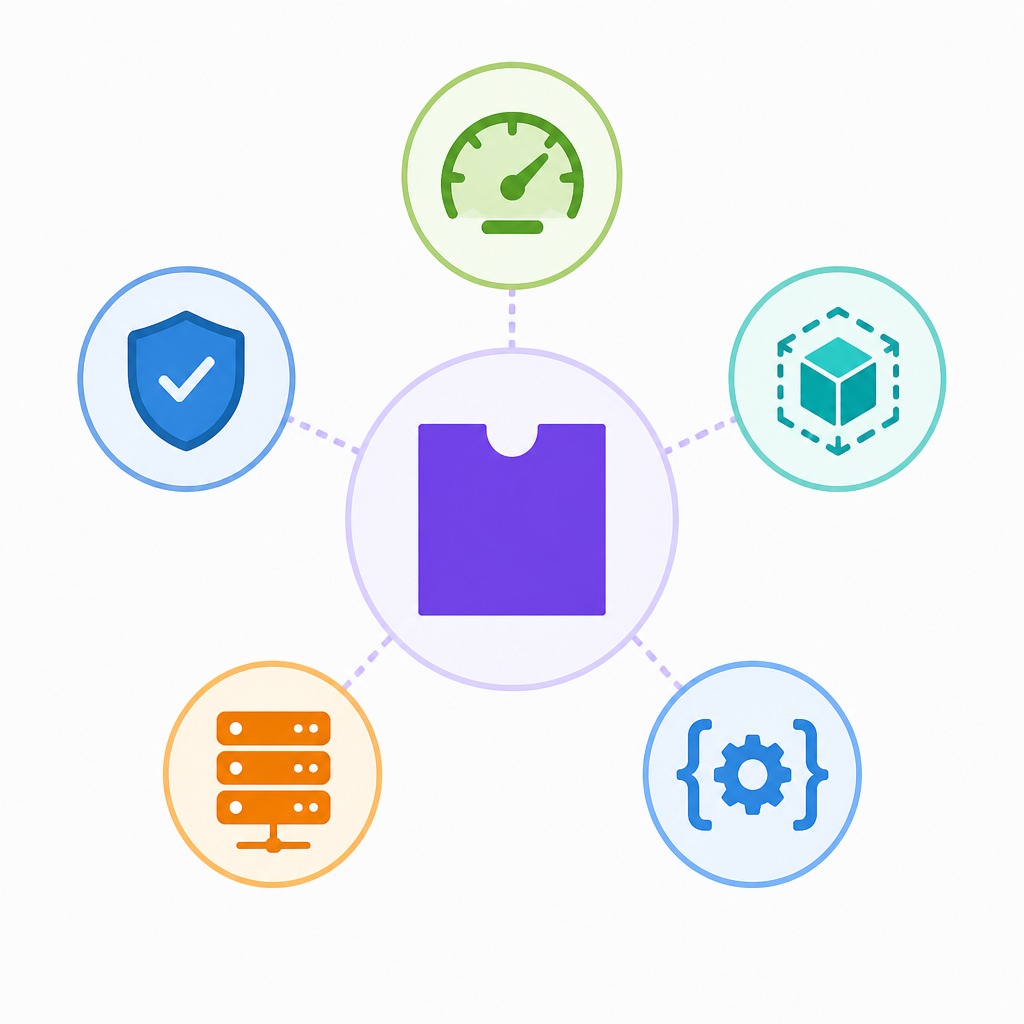
That opens the door to practical code reuse. A team can keep validation in Rust, business logic in JavaScript, and analytics in Python, then package each piece as a Wasm component that fits into the same deployment model.
Rust validation -> Wasm component
JavaScript business rules -> Wasm component
Python analytics -> Wasm component
4. Small binaries and better density
Wasm modules are often much smaller than container images, which helps on edge hardware and in bandwidth-sensitive environments. The source notes that many modules run in single-digit megabytes, a size profile that lets teams pack more work onto the same machine.
For platform teams, size turns into economics. Smaller artifacts move faster, cache better, and use less memory, which can reduce cost when a system is built from thousands of tiny functions instead of a few large services.
- Typical module size: single-digit megabytes
- Good for: CDN edges, low-bandwidth deployments, dense multi-tenant hosts
- Operational upside: lower transfer overhead and better packing efficiency
5. A practical path for edge, plugins, and workers
Wasm is gaining traction because it fits real backend jobs that teams already need. The article points to edge logic for CDNs, plugins for existing platforms, and small event workers as the most mature entry points, which means adoption can start with one narrow use case instead of a full platform rewrite.
That makes the learning curve more manageable. Teams can pick a language they already know, prove the architecture in a limited area, and expand only after the toolchain, debugging flow, and dependency list are understood.
- Common starting points: CDN edge logic, platform plugins, event handlers
- Common language choices: Rust, Go, JavaScript, Python
- Adoption style: pilot first, then expand
How to decide
If your main pain is slow startup, Wasm is worth testing first in serverless or edge workloads. If your team needs safe plugin execution or mixed-language components, the Component Model makes the case even stronger.
Choose a narrow workload, pick the language your team already knows best, and measure the result against your current container or function setup. Wasm is not a replacement for everything, but for small, fast, isolated backend work, it is already a realistic option.
// Related Articles
- [IND]
OpenAI updates its Europe privacy policy
- [IND]
OpenAI is right to keep ads out of sensitive chats
- [IND]
AI bootlegs are already draining streaming royalties
- [IND]
AMD and Microsoft push Windows ML on GPU and NPU
- [IND]
OpenAI’s IPO filing turns hype into scrutiny
- [IND]
Skatteetaten proves public sector AI should be judged by outcomes