5 takeaways from GYG’s U.S. restaurant exit
5 takeaways from Guzman y Gomez’s exit show how a Chicago launch, weak sales, and rising costs can end a U.S. expansion.
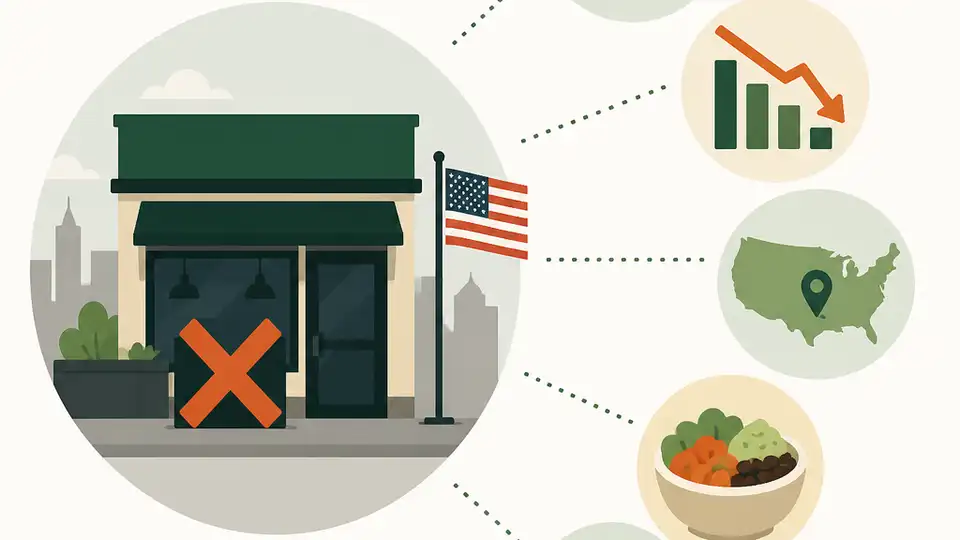
Guzman y Gomez shut all eight U.S. restaurants after six years in Chicagoland.
Guzman y Gomez’s sudden U.S. exit is a compact case study in expansion risk, consumer pressure, and capital discipline. The chain closed all 8 American restaurants in the Chicago area, ending a six-year run that once aimed far beyond Illinois.
1. The Chicago launch was the whole U.S. test
Get the latest AI news in your inbox
Weekly picks of model releases, tools, and deep dives — no spam, unsubscribe anytime.
No spam. Unsubscribe at any time.
Guzman y Gomez entered the American market in 2020 and chose Chicagoland as its only U.S. base. That made the region both a proving ground and a hard stop: when the model did not scale fast enough, the company had no wider network to fall back on.

The chain’s U.S. footprint was small by design at first, but the ambition was large. Founders had once talked about opening “hundreds, if not thousands” of locations, which makes the shutdown more striking because the retreat came before the brand ever got close to that goal.
- U.S. debut: 2020
- U.S. restaurant count at closure: 8
- All locations were in the Chicago area
2. Sales momentum never matched the concept
Company founder Steven Marks said the food and guest experience were different, but that difference was not translating into better sales momentum. That is a familiar problem in fast-casual dining: a clear brand story does not always become enough repeat traffic.
For restaurant chains, the gap between product appeal and store economics can be fatal. If customer visits do not rise fast enough, the cost of staffing, rent, and supply chain support can overwhelm early-stage growth plans.
- Brand position: fast-casual Mexican food
- Pitch: no added preservatives, no artificial flavors, no added colors
- Problem cited by management: weak sales momentum
3. Capital went where the best odds were
Marks said the U.S. business would take more time and capital than expected, and the board concluded it was unlikely to justify continued shareholder investment. That kind of decision is less about emotion than about return on capital.

Rather than keep funding a slow build in a difficult market, Guzman y Gomez chose to redirect resources to regions where it already has scale. The company remains active in Australia, Japan, and Singapore, and executives said Australia still has a long runway.
- Active markets after U.S. exit: Australia, Japan, Singapore
- Long-term Australian target: 1,000 restaurants
- Management focus: concentrate capital and infrastructure
4. The U.S. restaurant market got harder, not easier
The closure also fits a broader pattern. Restaurants are facing cautious consumers, higher food costs, and softer traffic, which makes expansion much tougher for newer chains. One report cited by Fox Business said food-away-from-home prices rose 39.3% from January 2019 to January 2026.
That backdrop matters because a small chain entering a crowded category must spend heavily to win attention while customers are pulling back. Even a differentiated menu can struggle when diners trade down or visit less often.
- Consumer trend: more people cutting back on restaurant visits
- Cost pressure: higher food prices
- Industry effect: weaker traffic for scaling chains
5. The exit may help the parent company more than it hurts
Analysts said the shutdown could actually improve the broader business because the U.S. unit had limited prospects and was weighing on earnings. That is a reminder that closing a weak market can sometimes be a healthier move than stretching losses for years.
The market reaction in Australia reflected that logic. Guzman y Gomez shares rose after the announcement, suggesting investors preferred a cleaner focus on the company’s stronger regions over a costly American experiment.
- Analyst view: exit could be positive for earnings
- Stock reaction in Australia: shares jumped after the news
- Strategic effect: narrower focus on core markets
How to decide
If you are tracking restaurant growth stories, this one is best read as a warning about overestimating early traction. A strong brand idea, a popular menu, and a big expansion dream are not enough if unit economics do not improve quickly.
For investors and operators, the clearest lesson is to compare ambition with cash burn. Chains with a small footprint, rising costs, and slow traffic need a fast path to scale or a willingness to exit before losses deepen.
// Related Articles
- [IND]
Korea’s Nvidia talks point to an AI factory push
- [IND]
OpenAI should not rush its IPO just to win the AI race
- [IND]
OpenAI updates its Europe privacy policy
- [IND]
OpenAI is right to keep ads out of sensitive chats
- [IND]
AI bootlegs are already draining streaming royalties
- [IND]
AMD and Microsoft push Windows ML on GPU and NPU