AI code review catches bugs before merge
4 ways AI code review catches bugs, security issues, and regressions before merge, with Greptile’s merge time dropping from 20 hours to 1.8.

AI code review catches bugs, security issues, and regressions before code merges.
AI code review helps teams find problems earlier, keep standards consistent, and move PRs faster. In one Greptile example, median time to merge dropped from 20 hours to 1.8 hours.
| Item | What it does | Why it matters |
|---|---|---|
| Context-aware PR review | Reads related files, configs, tests, docs, and history | Finds bugs that simple diff-only tools miss |
| Inline comments | Posts line-level feedback in GitHub or GitLab | Makes fixes fast and specific |
| PR summaries | Condenses large changes into a readable overview | Helps reviewers triage faster |
| Security checks | Flags injection, SSRF, and unsafe input handling | Surfaces risk before production |
| Self-hosting | Runs in your VPC | Keeps code and secrets inside your network |
1. Context-aware PR review
Get the latest AI news in your inbox
Weekly picks of model releases, tools, and deep dives — no spam, unsubscribe anytime.
No spam. Unsubscribe at any time.
AI review tools are most useful when they look beyond the diff. They can inspect related files, APIs, configs, tests, docs, and repo history to understand what a change is trying to do, not just what lines changed.
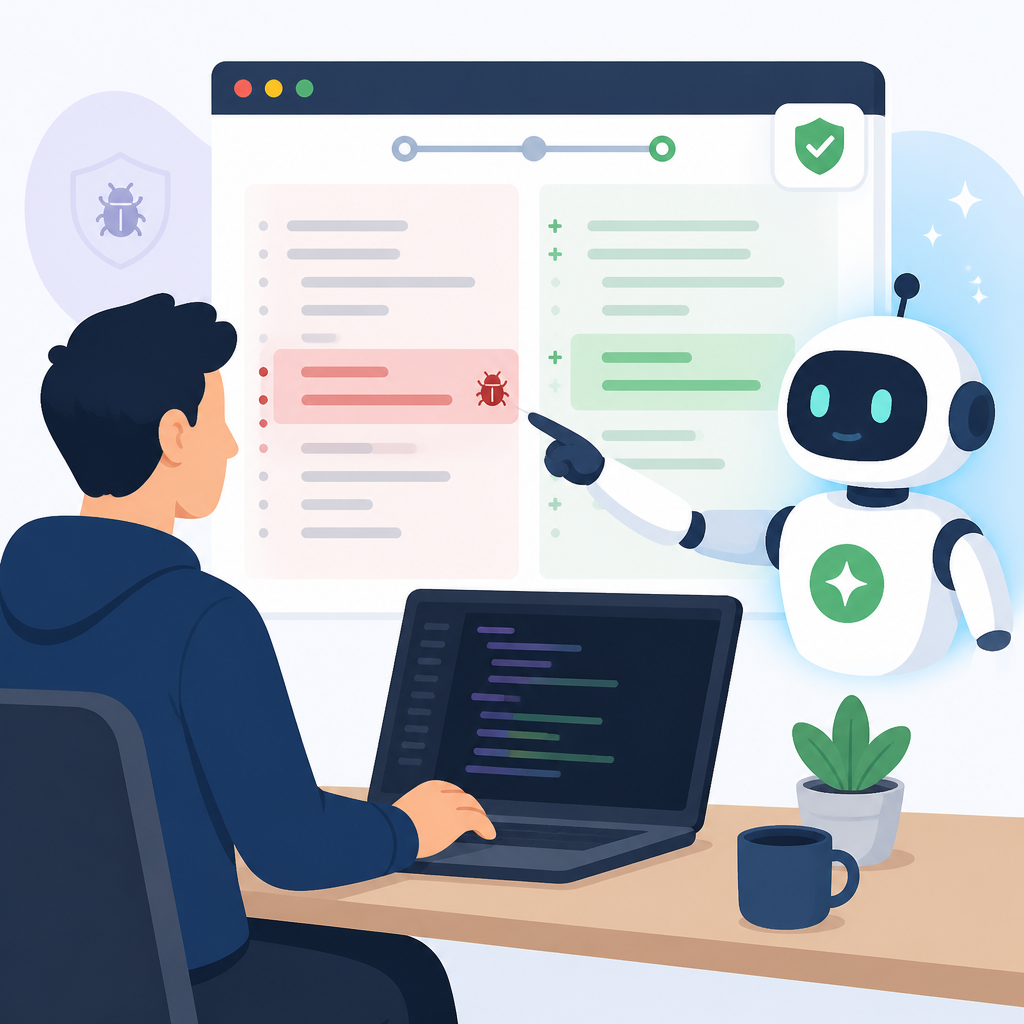
That context helps catch cross-layer bugs that linters often miss, like a frontend flag that defaults one way while the server defaults another. It also helps reviewers spot regressions in auth flows, environment settings, and deployment prerequisites before merge.
- Checks related code paths, not only the edited file
- Flags mismatched defaults across frontend and backend
- Surfaces hidden dependencies in docs and config
2. Inline comments that are easy to act on
Good AI reviewers leave comments where developers already work, inside GitHub or GitLab. That keeps feedback tied to the exact line or block that needs attention, which shortens the loop between finding an issue and fixing it.
Greptile-style reviews can also add sequence diagrams and concise explanations, so a reviewer can see who calls what and in what order. For large PRs, that makes it easier to understand the shape of the change before reading every file.
- Line-level suggestions tied to the diff
- Readable explanations instead of terse warnings
- Sequence diagrams for call flow inspection
3. Security checks during the PR
AI code review is useful for security because it can flag risky patterns as soon as they appear. That includes SQL injection, SSRF, unsafe input handling, and other issues that may slip through if a reviewer is focused on features or deadlines.
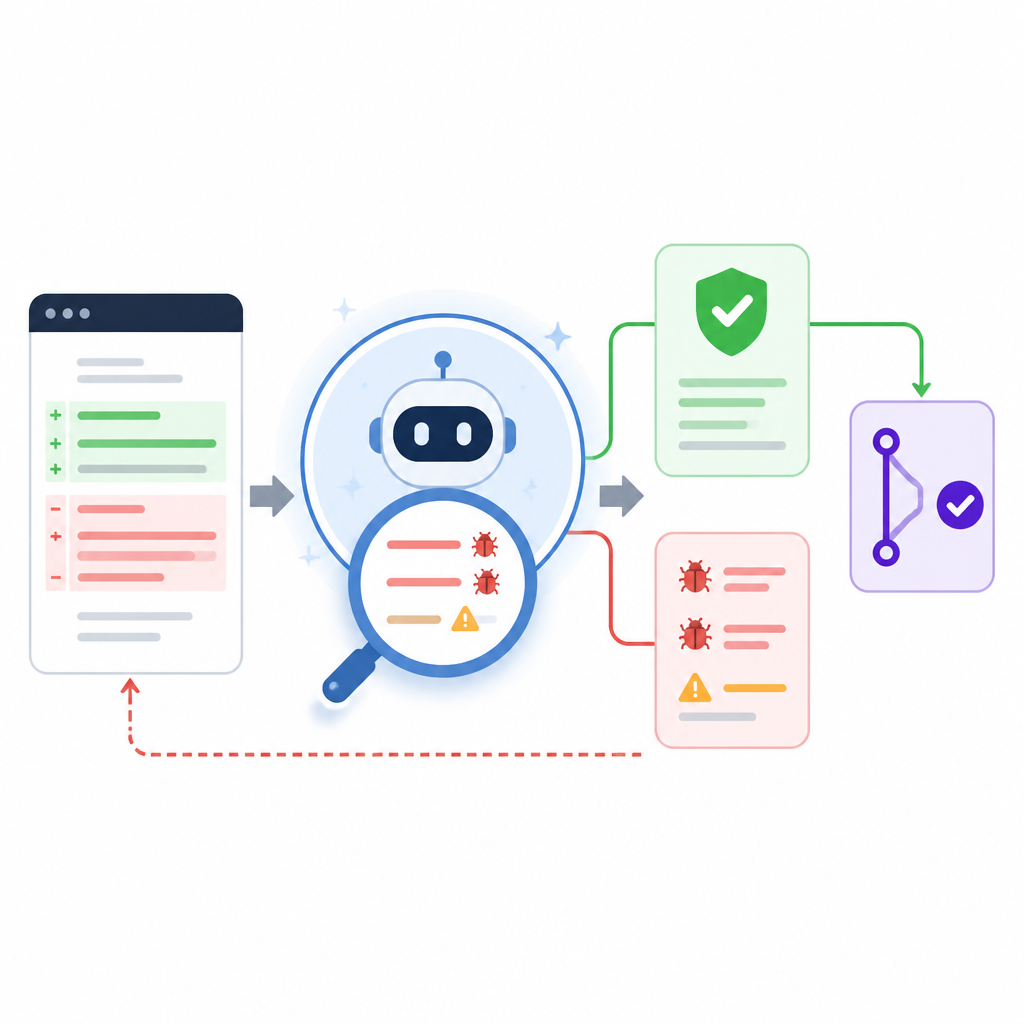
The value is timing. Instead of waiting for a later scan or a production incident, the tool can raise the concern while the change is still open. That gives the author a chance to fix the problem before it reaches users.
- Detects injection-style bugs early
- Flags unsafe request handling and auth mistakes
- Supports team rules for secure patterns
4. Faster merges with less back-and-forth
AI review reduces the amount of manual back-and-forth on straightforward issues, so human reviewers can spend more time on design and architecture. Greptile says its median time to merge dropped from 20 hours to 1.8 hours in practice.
That speed gain matters most on busy teams where PRs pile up. A tool that summarizes the change, ranks findings by impact, and rescans after updates can keep a large review moving without asking every engineer to re-read the whole diff.
- PR summaries speed up triage
- Impact-ranked findings help prioritize fixes
- Rescans after updates keep reviews current
5. Team-specific standards and self-hosting
The best AI review tools do more than generic suggestions. They can learn from manual feedback, enforce custom rules, and adapt to the patterns your team actually uses. That matters when consistency is part of the review process, not just bug detection.
Security and deployment choices matter too. Some teams need self-hosting so code and secrets stay inside their VPC. Greptile also supports custom context and repository indexing, which helps keep feedback aligned with local conventions instead of broad model defaults.
- Learns from reviewer feedback over time
- Enforces custom rule sets uploaded by the team
- Can run in a private VPC for tighter data control
How to decide
If your biggest pain is missed bugs in large PRs, pick a tool that reviews in context and posts comments inline. If your main concern is security, prioritize tools that catch injection and unsafe input patterns during the PR itself. If your team handles sensitive code or secrets, self-hosting should be near the top of the list.
For fast-moving teams, the best fit is usually the tool that combines context, summaries, custom rules, and repeatable reviews. That mix gives you speed without turning code review into a guessing game.
// Related Articles
- [IND]
Cursor downloads for macOS, Windows, and Linux
- [IND]
OpenAI’s June 2026 push spans agents, payments, and legal heat
- [IND]
AI music training is built on a copyright scandal, not a neutral data…
- [IND]
Deezer’s free AI music detector is the right move
- [IND]
OpenAI’s private valuation hits $908.81B
- [IND]
美国AI监管风暴正在逼近OpenAI和Anthropic