Why community resistance will reshape AI data center expansion
Community resistance is now a primary force shaping where AI data centers get built.
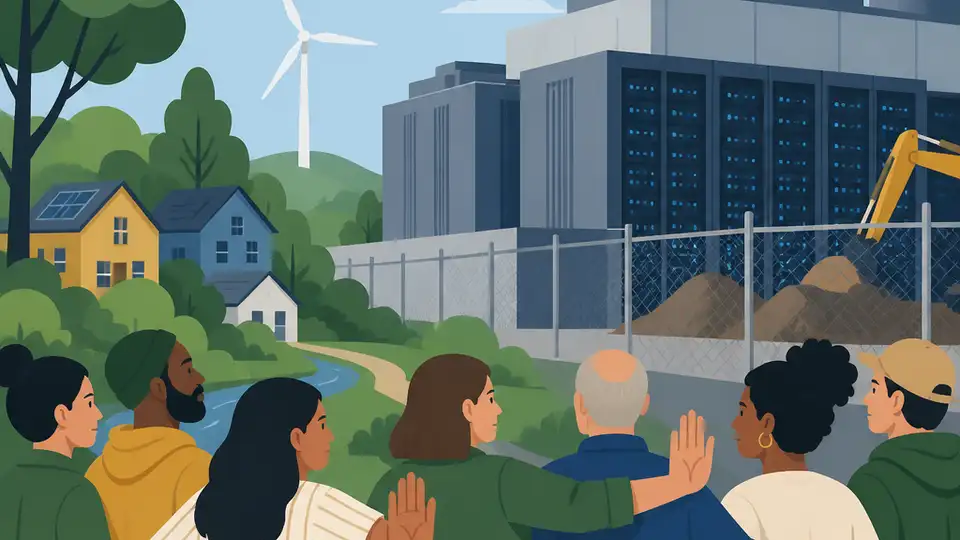
Community resistance is now a primary force shaping where AI data centers get built.
Community resistance is no longer a side issue in AI infrastructure planning; it is a gating force that can delay, reroute, or kill projects before they ever break ground. The clearest evidence is in the new Data Center Opposition dataset, which tracks 268 local protest groups across 37 states and roughly 360,000 followers, while recent fights in places like Prince William County, Virginia, have already produced voided approvals, withdrawn legal fights, and project exits.
First, opposition has become organized enough to change outcomes
Get the latest AI news in your inbox
Weekly picks of model releases, tools, and deep dives — no spam, unsubscribe anytime.
No spam. Unsubscribe at any time.
What used to look like isolated neighborhood backlash now resembles a distributed political network. The new tracking site exists because the opposition itself has become legible as infrastructure: groups are forming, naming themselves, publishing public pages, and connecting across geography. That matters because permitting systems are built to handle local objections one project at a time, not coordinated resistance that can share tactics, messaging, and legal pressure.
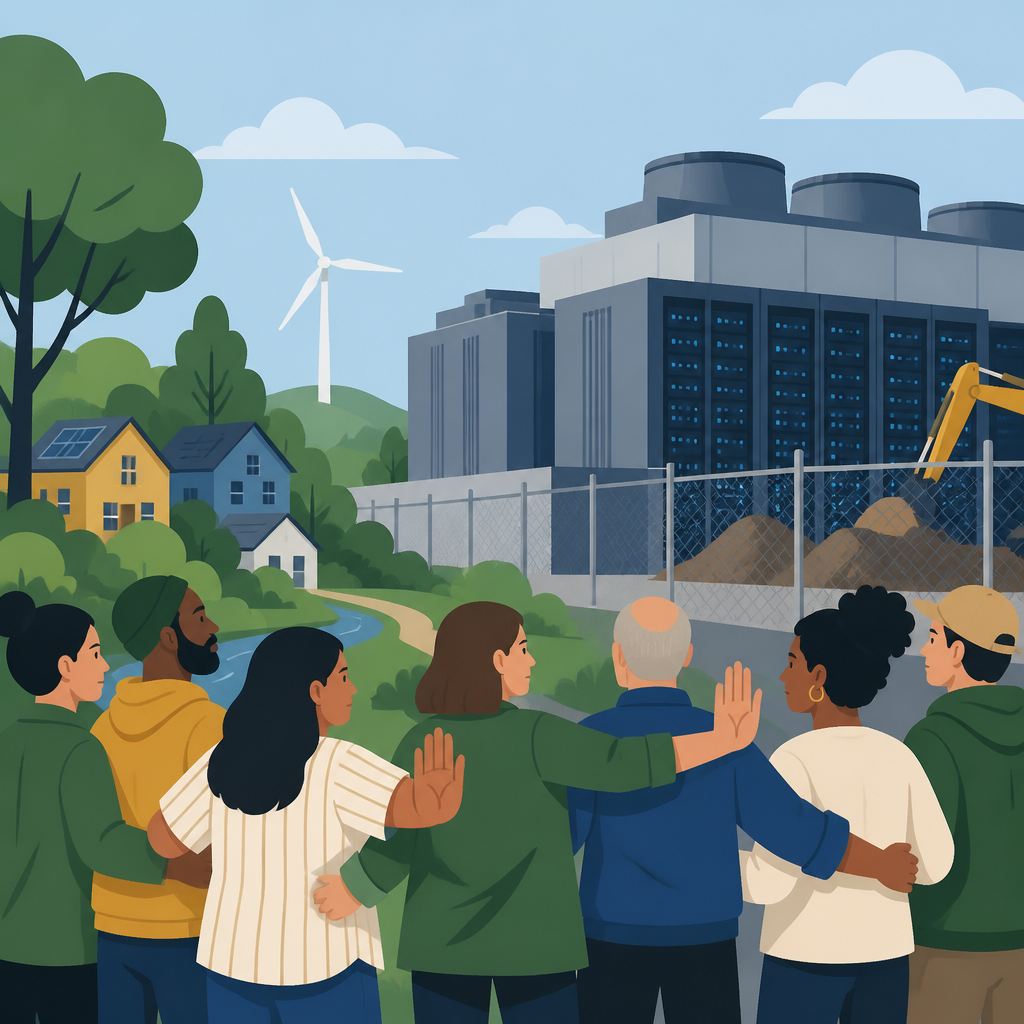
The Prince William County Digital Gateway fight shows the scale of the shift. A proposed 37-building campus near Manassas National Battlefield Park faced sustained rezoning challenges, and court rulings in 2025 voided approvals. County officials stepped back from the legal fight, and one developer left the project. That is not a delay in the ordinary sense. It is a warning that once opposition becomes organized, the approval process itself becomes unstable.
Second, power is now a political and social problem, not just an engineering one
For years, data center siting treated power as a late-stage check: find the land, secure the permits, then confirm the utility can serve the load. That order has flipped. Steve Carlini of Schneider Electric said power availability is now the frontend siting decision, and that is exactly right. In an AI buildout, time-to-power is the real constraint, not just megawatts on paper.
This is why community resistance matters even where utilities are ready. Transmission routing, generation siting, and behind-the-meter solutions all run into local politics. Prithpal Khajuria of Intel said opposition is becoming a meaningful factor in power planning, including where transmission lines go and where generation gets built. That pushes developers toward distributed energy systems, microgrids, and battery storage, not because those options are trendy, but because they are easier to permit and easier to defend in front of a skeptical public.
The counter-argument
The strongest argument against this view is that the AI buildout is too economically important to slow down. Proponents of rapid expansion say data centers support jobs, tax revenue, cloud capacity, and national competitiveness. They also argue that many local campaigns are driven by fear, misinformation, or a narrow view of land use, and that the grid, not the neighborhood, should decide where infrastructure goes.
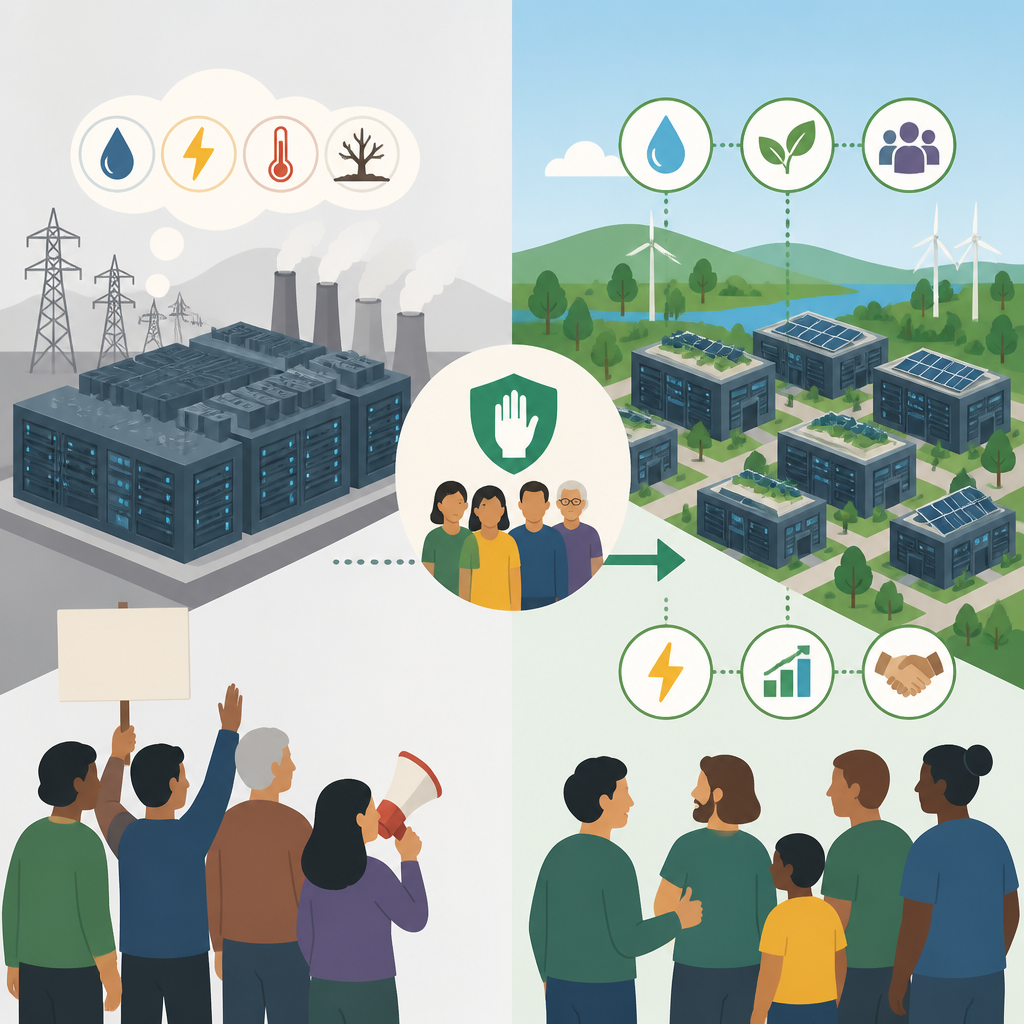
That argument has force. AI infrastructure does serve a broad public interest, and some local opposition is plainly NIMBY politics dressed up as civic concern. But the rebuttal is simple: infrastructure that cannot win legitimacy at the local level is not scalable infrastructure. The industry can ignore community resistance only until it collides with zoning boards, courts, election cycles, and utility timelines. At that point, the cost is not just slower permitting. It is capital stranded in the wrong place.
What to do with this
Engineers, PMs, and founders should stop treating community engagement as a communications task and start treating it as a design constraint. Build site selection around power, water, land use, and public acceptance from day one. Publish clearer load forecasts, explain grid impacts in plain language, and prefer architectures that reduce visible strain on local systems. If your project depends on a single permitting path and a single utility timeline, you are not building resilient infrastructure. You are gambling on silence.
// Related Articles
- [IND]
WebX 2026 turns speaker hype into a conference brief
- [IND]
AI Weekly: 2026-07-06 ~ 2026-07-13
- [IND]
The AI Act should be treated as Europe’s operating system for AI
- [IND]
Booz Allen’s OpenAI Deal Is Real Advantage, Not Hype
- [IND]
OpenSearch’s vector search benchmark in 5 parts
- [IND]
Vector Databases That Work in Production