Why MiniMax Matters More as a Consumer AI Company Than a Model Lab
MiniMax is best understood as a consumer AI company that uses models to build products, not as a pure model lab.
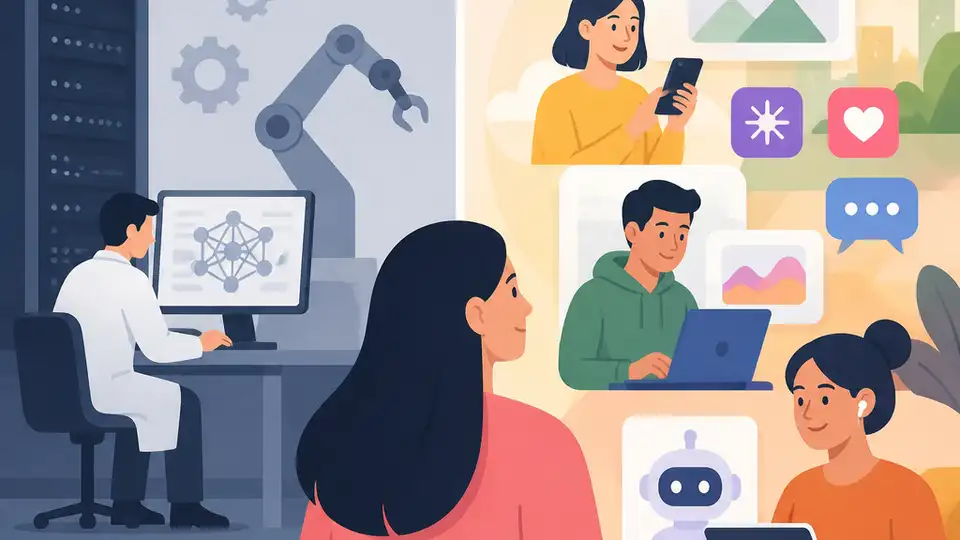
MiniMax is a consumer AI company that uses models to ship apps, video, and voice products.
MiniMax matters less as a benchmark-chasing model shop and more as one of the clearest examples of a Chinese AI company turning foundation models into consumer products at scale. The company’s own history points in that direction: Talkie and Xingye came before most of its later model releases, Hailuo AI became a visible product line, and the firm attracted large strategic capital from Alibaba in a $600 million round that valued it at $2.5 billion in March 2024. That is not the profile of a research lab trying to win prestige through papers. It is the profile of a product company using models to capture users, distribution, and monetization.
MiniMax’s real advantage is product distribution, not model mythology
Get the latest AI news in your inbox
Weekly picks of model releases, tools, and deep dives — no spam, unsubscribe anytime.
No spam. Unsubscribe at any time.
MiniMax’s first breakout was Glow, a character-chat app launched in October 2022, later rebranded into Talkie for international users and Xingye for China. That sequence matters. The company did not begin by announcing a flagship model and then waiting for developers to build on top of it. It built a consumer habit first, then wrapped models around the habit. By July 2024, The Wall Street Journal reported Talkie was among the most-downloaded free entertainment apps in the U.S. and had about 11 million monthly active users. That is a distribution story, not a research story.
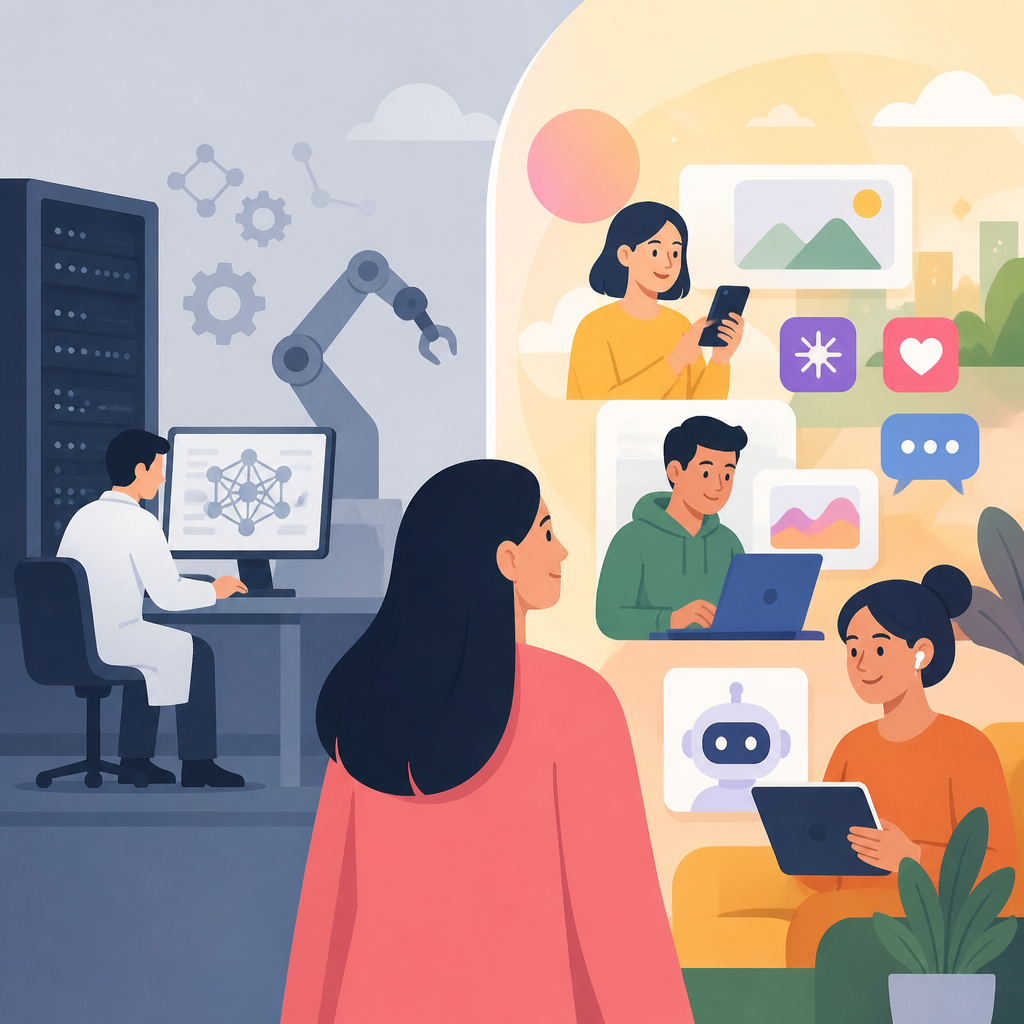
Consumer AI is increasingly a winner-take-most game where the product surface decides the outcome. MiniMax’s character apps show it understands that better than many model-first competitors. The company sells an experience, not an API abstraction. That matters because AI users do not wake up wanting a mixture-of-experts architecture. They want a companion, a video clip, a voice, or a workflow that works without ceremony. MiniMax’s strength is that it keeps meeting users where they actually are.
Its model releases are important because they serve a product stack
When MiniMax launched Hailuo AI in March 2024, it entered the text and music generation market as a platform, and later added video generation with video-01 in September 2024 and audio functions in January 2025. On 17 April 2024, it launched the ABAB 6.5 series, a mixture-of-experts language model. Then came MiniMax-01, Speech-02, M1, M2.5, and M2.7. The pattern is consistent: each model release expands a product capability. The models are not the business by themselves. They are the engine room.
That approach is strategically stronger than the common “faster, bigger, better” model race. A company that can tie text, speech, music, and video into one consumer stack can cross-sell features and retain users longer than a company that only ships isolated models. MiniMax’s breadth makes it resilient. If one modality stalls, another can carry the product. If one app gets regulated, another can absorb the audience. The company has built a portfolio, and portfolios beat single-bet stories when the market shifts fast.
MiniMax also shows how Chinese AI firms are competing on speed and scope
MiniMax is part of the broader wave of Chinese AI firms that have moved aggressively from foundation models into applications. Its funding path shows the market believes this strategy. The company drew backing from MiHoYo early on, then later from Tencent, IDG Capital, Hillhouse, HongShan, and Alibaba. That investor mix signals confidence in a company that can operate across consumer and infrastructure layers. In a market where capital is still sorting winners, that kind of support is a competitive asset in itself.
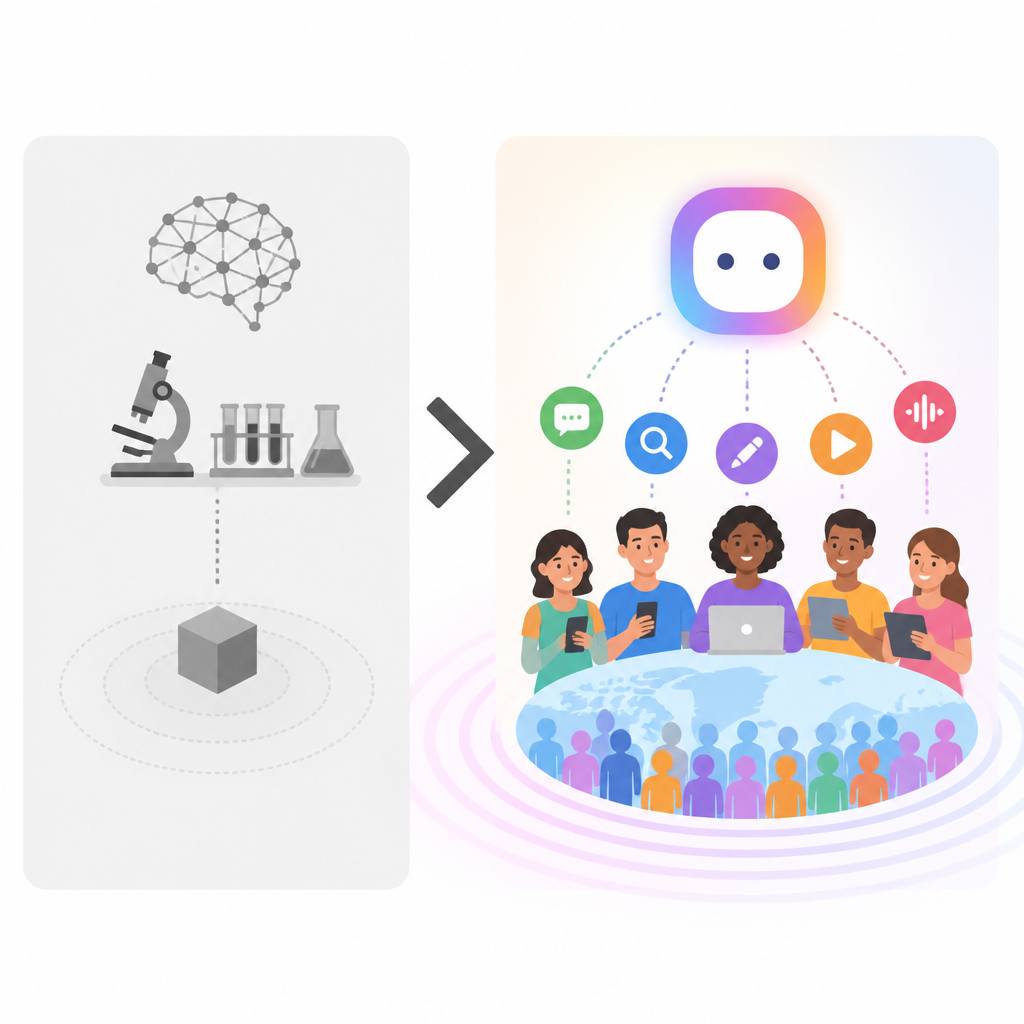
Its product scope also reveals a deliberate attempt to own multiple user behaviors. Talkie targets companionship and entertainment. Hailuo AI targets generation and editing. Speech and music models address creation and localization. MiniMax Agent points toward task automation. This is not random expansion. It is a deliberate attempt to become a multi-surface AI brand. In practice, that is how durable AI companies are formed: not by one model release, but by repeated entry into adjacent daily-use categories.
The counter-argument
The strongest case against this view is simple: model quality still sets the ceiling. If MiniMax cannot keep pace with frontier labs, its apps will become thin wrappers around other people’s breakthroughs. The legal and trust risks are real too. Reuters reported in September 2025 that Disney, Universal, and Warner Bros. Discovery sued MiniMax over alleged copyright infringement tied to Hailuo AI. In February 2026, Anthropic accused MiniMax and two other Chinese companies of using fraudulent accounts to generate millions of Claude interactions for distillation. Those are not trivial footnotes. They are signs that product velocity can outrun governance.
That critique is serious, but it does not overturn the main point. It actually proves it. MiniMax is exposed because it is shipping into real consumer markets, not hiding behind a research roadmap. The company’s risk profile is the price of being product-led at scale. If it were only a model lab, these issues would matter less to the public. Because it is building apps people use, every weakness is amplified. That is not an argument against the strategy. It is an argument for better controls, clearer licensing, and stricter model provenance.
What to do with this
If you are an engineer, PM, or founder, read MiniMax as a warning against worshipping the model layer. Build for a use case, a repeat habit, and a distribution channel, then choose the model stack that supports that business. If you are shipping consumer AI, treat multimodal breadth as a product advantage, not a research vanity metric. And if you are scaling fast, put governance in place before the app becomes popular enough to attract lawsuits. MiniMax’s lesson is blunt: in AI, the companies that win are the ones that turn models into daily use, not the ones that merely publish them.
// Related Articles
- [IND]
WebX 2026 turns speaker hype into a conference brief
- [IND]
AI Weekly: 2026-07-06 ~ 2026-07-13
- [IND]
The AI Act should be treated as Europe’s operating system for AI
- [IND]
Booz Allen’s OpenAI Deal Is Real Advantage, Not Hype
- [IND]
OpenSearch’s vector search benchmark in 5 parts
- [IND]
Vector Databases That Work in Production