ebay-mcp puts eBay Sell APIs in AI assistants
ebay-mcp gives AI assistants local access to eBay Sell APIs with 322 tools, OAuth, and built-in rate-limit handling.

ebay-mcp gives AI assistants local access to eBay Sell APIs through 322 tools.
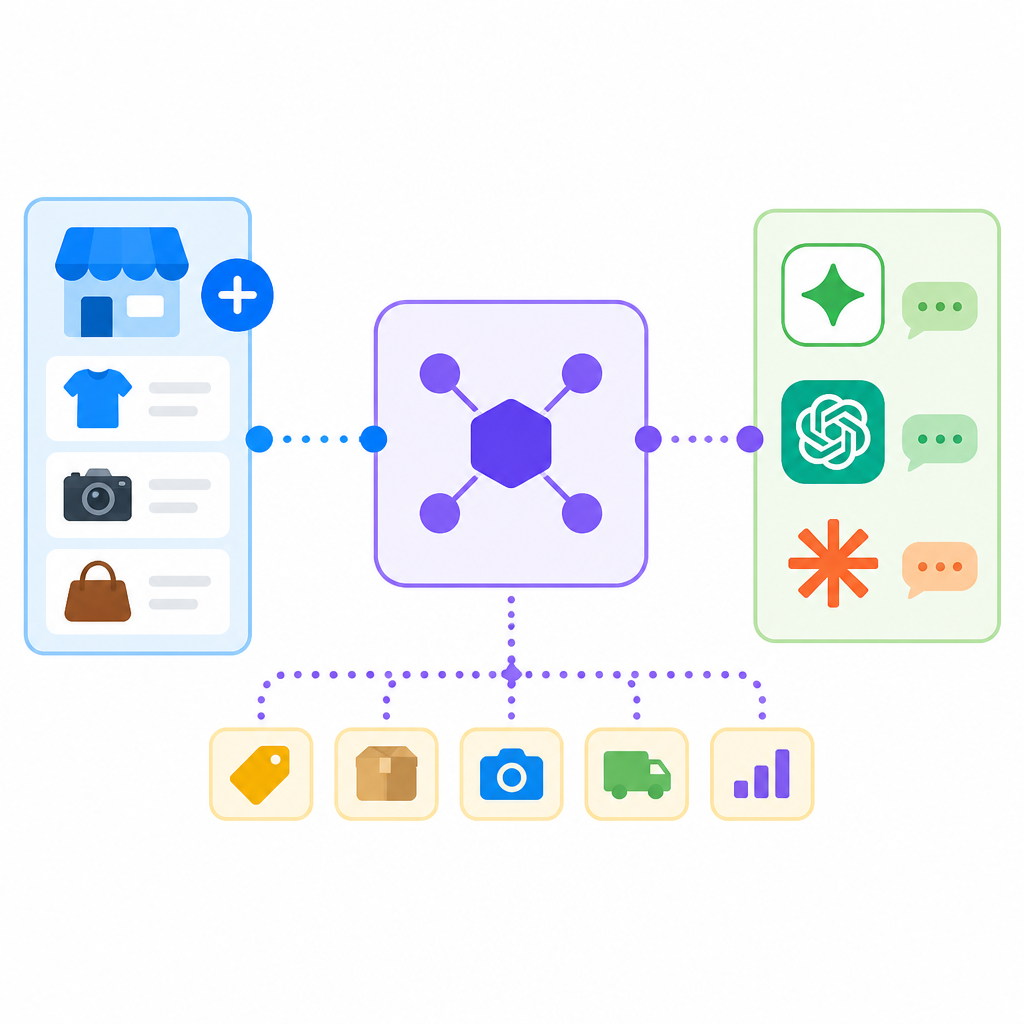
ebay-mcp is an open source local Model Context Protocol server that connects assistants like Claude, Cursor, and Cline to eBay's Sell APIs. The project says it exposes 322 tools, covers 100% of the Sell API surface, and runs locally with your own keys.
That combination matters because eBay sellers usually want more than a chat window. They want inventory updates, order handling, marketing actions, and analytics queries that can be triggered from the same assistant they already use for coding or operations.
| Metric | Value | Why it matters |
|---|---|---|
| Tools | 322 | Broad coverage across Sell APIs |
| Unique endpoints | 270 | Shows the toolset maps deeply to eBay's API surface |
| CI tests | 1,000+ | Signals active automated coverage |
| Client support | 9 AI clients | Works across common desktop and CLI assistants |
| Rate limits | 1,000 vs 10k-50k req/day | OAuth user tokens unlock much higher throughput |
What ebay-mcp actually does
Get the latest AI news in your inbox
Weekly picks of model releases, tools, and deep dives — no spam, unsubscribe anytime.
No spam. Unsubscribe at any time.
The project turns eBay's Sell APIs into callable tools inside an MCP client. Instead of hand-writing requests, parsing JSON, and wiring auth for every action, an assistant can call a tool for inventory, orders, listings, marketing, taxonomy, metadata, or developer flows.

According to the repository, the server exposes 100% of eBay's Sell API surface through 322 tools across 270 unique endpoints. It also supports both STDIO and local HTTP, so the traffic stays on your machine instead of going through a cloud relay.
That local-first design is the real selling point. If you are already using an AI assistant as a workbench, ebay-mcp makes eBay feel like another connected system rather than a separate admin console.
- Runs locally with your own credentials
- Supports sandbox and production with one variable
- Includes TypeScript types and Zod validation
- Handles 429s with exponential backoff
- Auto-configures nine AI clients
Why the setup flow is unusually friendly
The repo leans hard into one-command onboarding. The maintainer says npm run setup configures credentials, OAuth, and the chosen MCP client, then opens a browser for the auth flow. That is a big deal for a project in this category, because tool-rich integrations often fail on setup before anyone reaches the useful part.
The README also gives a clear path for people who do not have eBay credentials yet. It points them to the eBay Developer Portal, where they can create an app, copy the Client ID and Client Secret, and grab the RuName for the redirect URI.
“The setup wizard configures your eBay credentials, sets up OAuth, auto-detects and configures your MCP client, and saves everything automatically.”
That quote from the project README captures the pitch well: spend less time wiring auth and more time using the tools. The repo also says user-token auth can raise the daily limit from 1,000 requests to 10k-50k requests, depending on account tier.
How it compares with raw eBay API work
The comparison table in the README is blunt, and it should be. Raw API work means building auth, refresh logic, validation, backoff, and client wiring yourself. ebay-mcp packages those chores into a server that the assistant can talk to directly.
That difference shows up in the day-to-day workflow. A seller or ops team can ask an assistant to inspect inventory, update a listing, or check analytics without jumping between docs and HTTP clients. The project also makes the tradeoffs visible: client credentials give you 1,000 requests per day, while user-token auth can climb to 10k, 25k, or 50k+ depending on account type.
- Auth: built-in OAuth and refresh handling instead of custom token code
- Validation: Zod schemas and TypeScript types instead of ad hoc payload checks
- Backoff: automatic retry on 429s instead of manual rate-limit logic
- Client support: 9 assistants auto-configured instead of one-off setup per app
There is also a practical security angle. The project says credentials and data stay on your machine, which matters for merchants who do not want API keys flowing through a third-party relay.
What the numbers suggest about the project
The repository is not a tiny proof of concept. It shows 666 commits, 84 stars, 37 forks, and a changelog-driven structure that includes docs, tests, a UI, and release files. That is enough activity to suggest the maintainer is iterating on both the developer experience and the API coverage.
It also has a broad documentation footprint: README files in multiple languages, a compliance guide, security notes, contributing docs, and an AGENTS.md file for AI-assisted workflows. Those details matter because MCP projects often live or die on documentation quality, not just on code.
Here is the part that should interest developers most: the project is opinionated about where AI belongs. It does not try to be a general e-commerce platform. It is a bridge between assistants and one specific API family, with enough guardrails that the assistant can act without improvising every request.
If you build internal tools, this repo is a useful pattern to study. It shows how to wrap a large REST API in a local MCP server, how to expose a wide tool surface without making setup painful, and how to keep the whole thing usable for non-engineers who still need to operate a storefront.
What to watch next
For eBay sellers, the immediate question is whether the assistant can do real work faster than the web UI or a custom script. For developers, the more interesting question is whether this kind of MCP wrapper becomes the default way to expose enterprise APIs to AI clients.
My bet is that the next useful step is narrower, not broader: better tool grouping, more opinionated workflows for inventory and order ops, and tighter observability around what the assistant called and why. If the project keeps that focus, it may become the template other marketplace integrations copy.
// Related Articles
- [AGENT]
GLM-5 turns vibe coding into agentic engineering
- [AGENT]
Kimi K2.6 turns agents into a swarm
- [AGENT]
LightRAG proves graph RAG needs simpler defaults, not more complexity
- [AGENT]
Build a code-aware RAG pipeline with LangChain
- [AGENT]
GitHub’s last30days skill is the right model for AI research
- [AGENT]
TCS and Anthropic strike enterprise AI pact