Google’s 2026 AI Agent Report, Decoded
Google’s AI Agent Trends 2026 report surveyed 3,466 leaders. Here’s what the numbers say about ROI, workflows, security, and hiring.

Google Cloud says its AI Agent Trends 2026 report draws on a survey of 3,466 business decision-makers worldwide. The headline is simple: AI agents have moved past demos and pilot projects into day-to-day operations.
That shift shows up in the numbers. Google says 52% of companies already using generative AI have put agents into production, and 88% of early adopters report positive ROI in at least one genAI use case. Those are strong signals that agents are becoming part of how companies run support, security, internal operations, and customer-facing work.
From assistants to coworkers
Get the latest AI news in your inbox
Weekly picks of model releases, tools, and deep dives — no spam, unsubscribe anytime.
No spam. Unsubscribe at any time.
The most useful idea in the report is that agents change the employee’s job, not only the software stack. Instead of clicking through tools step by step, workers increasingly describe an outcome and let an agent plan the path, call systems, gather data, and complete multi-stage tasks.
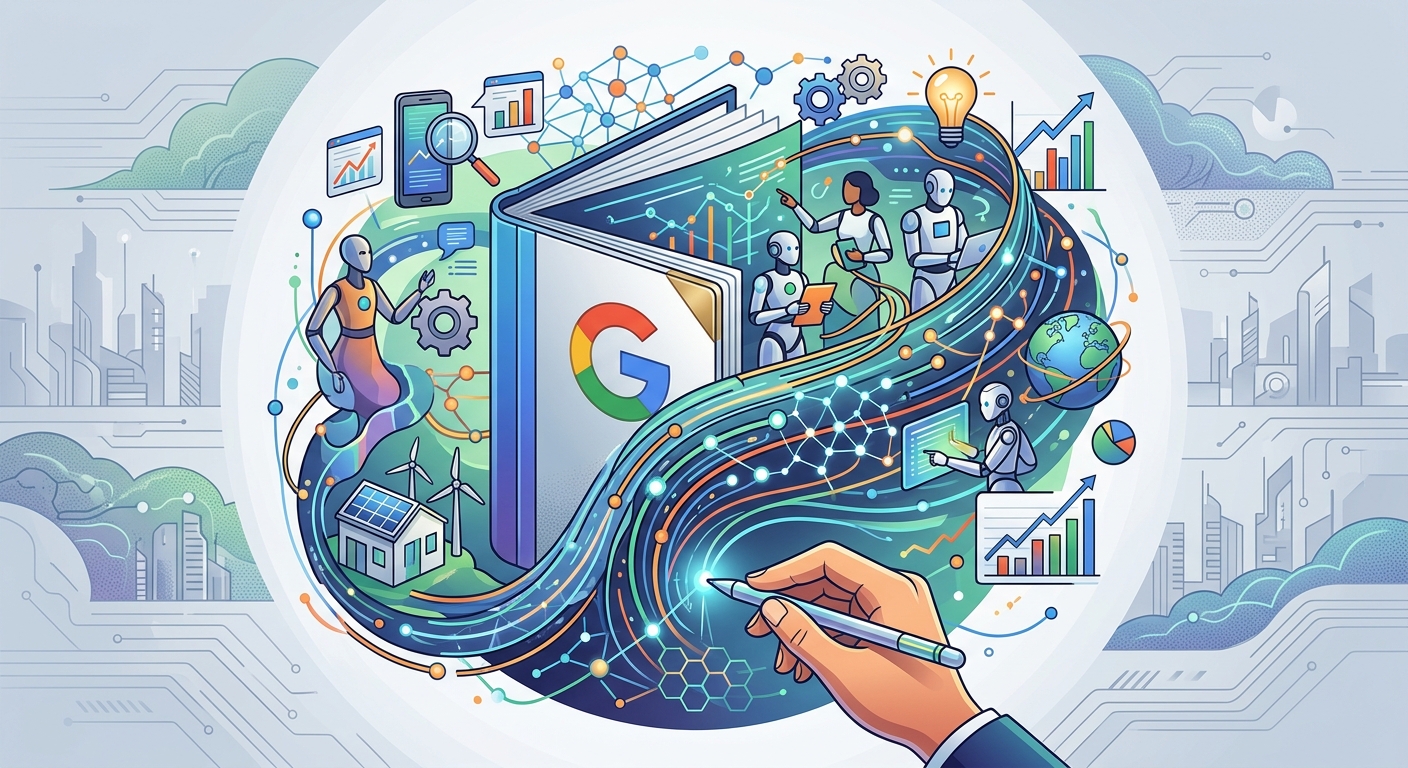
That sounds abstract until you look at where companies are already deploying these systems. Google’s survey suggests agents are spreading across customer support, marketing, security operations, technical support, product work, and general productivity. In practice, the employee becomes a reviewer, coordinator, and exception handler.
- 52% of generative AI users have agents in production
- 49% use agents for customer service
- 46% use them in marketing or security operations
- 45% use them for technical support
- 43% use them for product innovation or productivity gains
The report also points to a concrete enterprise example. TELUS says 57,000 team members regularly use AI agents, with an average time savings of 40 minutes per interaction. Even if that number varies by task, it gives a sense of why executives are paying attention.
This is where the agent story gets more interesting than the chatbot story from a few years ago. A chatbot answers questions. An agent can take action across systems, keep context, and hand results back to a person who checks quality and approves edge cases.
Why workflows matter more than chat windows
The report’s second big point is that the real value comes from workflow integration. A good agent is not a smarter text box. It is software that can read business context, connect to tools, and coordinate tasks across departments.
Google highlights two technical pieces behind that shift: Agent2Agent (A2A), which aims to let agents work with other agents across vendors and frameworks, and the Model Context Protocol (MCP), which gives models a standard way to connect to external tools and live data. If those standards stick, companies will spend less time building one-off integrations for every agent deployment.
“AI is driving a generational shift in enterprise software, transforming workflows and the entire technology stack.”
— Francis deSouza, President of Security, Google Cloud
That quote matters because it gets at the core business issue. Companies do not buy agents because they like conversational interfaces. They buy them because procurement, support, finance, security, and operations are full of repetitive work spread across disconnected systems.
If A2A and MCP gain broad support, the winners will likely be the firms that connect agents to real processes first. Fancy demos will matter less than whether an agent can pull data from a CRM, check a billing platform, update a ticket, and route an approval without creating a compliance mess.
Customer service is the first big proving ground
Google’s data says 49% of agent-using companies already deploy them in customer service and experience. That makes sense. Support has clear metrics, lots of repetitive tasks, and enough structured data to make automation useful.
The report argues that customer-facing agents will look less like old scripted bots and more like digital concierges. The difference is context. A modern agent can combine purchase history, shipping data, account status, and policy rules before it responds. It can also act on that information rather than simply present it.
Google gives a logistics example: if a delivery fails at 3 p.m., an agent could check the reason, rebook the earliest available slot for the next day, issue a $10 service credit in the billing system, and text the customer with the update before the customer even complains. That is much closer to operations automation than classic support automation.
- 49% of surveyed agent adopters use them in customer service
- Old call center automation relied on scripted flows and menu trees
- New agent systems can pull context from CRM, logistics, and billing tools
- Proactive actions, such as rebooking or compensation, are part of the workflow
This is also where customer trust gets tested. A support agent that can issue credits or modify orders needs hard limits, audit logs, and clear escalation paths. Otherwise, the cost of one bad automated decision can wipe out a lot of efficiency gains.
If you want a useful comparison point, look at how vendors such as Salesforce Agentforce and Microsoft Copilot position their products. They are moving toward systems that can complete tasks inside business software, not only answer prompts. Google’s report fits that broader industry direction.
Security may become the most important agent market
The security section of the report is easy to believe because the pain is already obvious. Security teams deal with too many alerts, too many tools, and too few analysts. Google cites a figure that 82% of analysts worry real threats may be missed because of alert overload.
That makes security operations a strong fit for agent-based systems. An agent can triage alerts, pull threat intelligence, summarize evidence, draft response steps, and pass a cleaner case to a human analyst. The analyst still makes the hard judgment calls, but the machine takes over the repetitive evidence gathering.
Google says 46% of agent-using companies already apply them to security operations or cybersecurity. It also describes a semi-autonomous loop where specialist agents for data management, threat research, malware analysis, and response engineering share context and coordinate actions through A2A and MCP.
There is a practical reason this area may grow fast: security teams already measure time-to-detect, time-to-triage, and time-to-respond. When an agent cuts minutes or hours from those metrics, buyers can defend the budget. That is often easier than proving the value of a more general workplace assistant.
One caution here: security agents need tighter controls than many other enterprise tools. They may touch sensitive logs, endpoint data, identity systems, and incident records. That means permissions, model behavior testing, and rollback plans matter from day one.
The real bottleneck is people, not models
The final section of Google’s report is probably the most grounded. The company argues that scaling agents across an enterprise is mainly a workforce problem. Skills age fast, and companies do not yet have enough people who can supervise agents, define safe operating boundaries, and redesign workflows around them.
Google says the half-life of professional skills has fallen to four years, and in tech it is closer to two. It also says 82% of decision-makers think learning resources help companies stay competitive in AI, while 71% report revenue growth after participating in learning programs. On the employee side, 61% of workers at AI-using firms use AI daily, and 84% want their employer to invest more in AI skills.
Those numbers point to a hiring and training shift. Companies will need people who can do process design, prompt and policy design, evaluation, exception handling, and vendor management. Titles will vary, but the work is real already.
If you are building an agent strategy now, the practical takeaway is straightforward: start with one workflow that has measurable pain, connect the agent to the systems that matter, and train the team that will supervise it. Then expand only after you have logs, controls, and a clear ROI story. For 2026, my bet is that the companies getting the most from agents will not be the ones with the biggest model budget. They will be the ones that pick five high-friction workflows and automate them end to end.
// Related Articles
- [AGENT]
Perplexity should build Teammate as a coding agent, not a copilot
- [AGENT]
HP adopts OpenAI Frontier across global operations
- [AGENT]
Build a production vector DB for RAG
- [AGENT]
Ornith-1 turns agent coding into a server
- [AGENT]
Crypto AI agents are useful, but only for narrow workflows
- [AGENT]
AI Agents in Crypto: 2026 Protocol Guide