Google I/O and the shift to AI science agents
Google is shifting from specialized science tools like AlphaFold toward agentic AI systems that can plan and execute research.
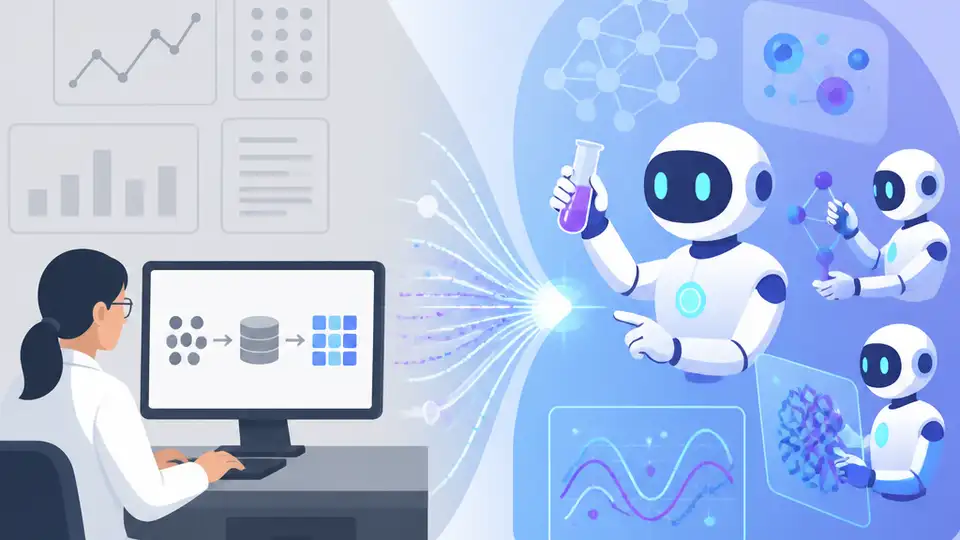
Google is shifting from specialized science tools toward AI systems that can help run research.
At Google I/O on Tuesday, Demis Hassabis told the crowd we are “standing in the foothills of the singularity.” That line landed beside a very concrete demo: WeatherNext, Google DeepMind’s weather model, which the company says helped provide early warning before Hurricane Melissa hit Jamaica last year.
The contrast matters. Google still has some of the most famous science-focused AI systems in the industry, but the company is now putting more public weight behind agentic systems that can reason, plan, and execute tasks across domains. That shift changes how you read the company’s science strategy, and it changes how the rest of the AI industry is likely to spend money.
| Signal | Number | Why it matters |
|---|---|---|
| AlphaFold users | 3 million+ researchers | Shows how widely specialized science tools already spread |
| Isomorphic Labs Series B | $2 billion | Signals continued investment in drug discovery AI |
| Google I/O framing | “foothills of the singularity” | Shows the company’s public emphasis moving toward agentic AI |
| WeatherNext release | November 2025 | Shows Google is still shipping domain-specific science models |
Google is still shipping science tools, but the center of gravity is moving
Get the latest AI news in your inbox
Weekly picks of model releases, tools, and deep dives — no spam, unsubscribe anytime.
No spam. Unsubscribe at any time.
Google is not walking away from specialized scientific models. It released AlphaGenome and AlphaEarth Foundations last summer, and the latest version of WeatherNext arrived in November. Those are domain-specific systems built for genetics, Earth science, and weather prediction.
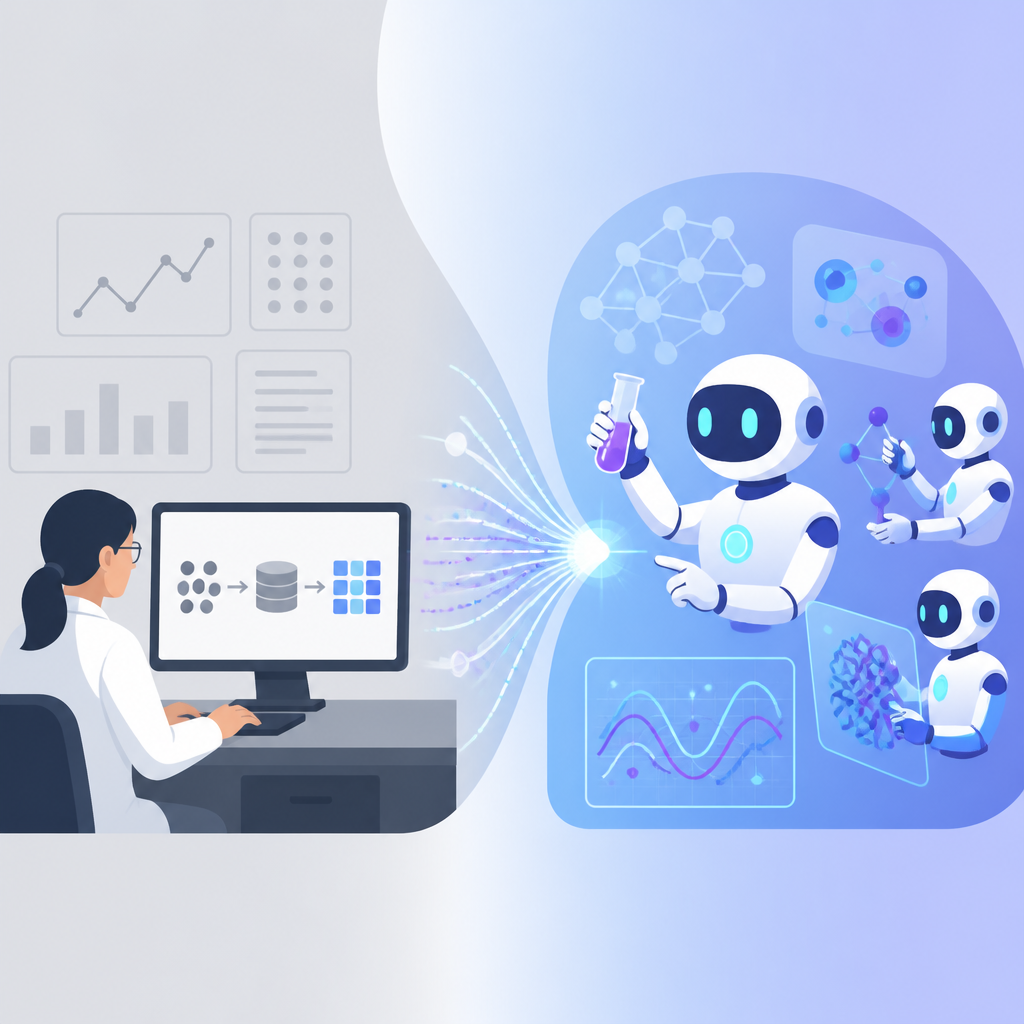
But the public story is changing. Google now groups several LLM-based science products under Gemini for Science, which includes the hypothesis-generating AI Co-Scientist and the algorithm-optimizing AlphaEvolve. Google says researchers can now apply for access, which suggests these tools are moving from private testing into wider use.
- AlphaFold protein predictions have been used by more than 3 million researchers worldwide.
- Isomorphic Labs raised $2 billion in Series B funding.
- Google says WeatherNext helped warn about Hurricane Melissa’s landfall in Jamaica.
That matters because specialized models solve one narrow class of problems very well, while agentic systems try to stitch together many steps of a research workflow. If Google thinks the next big leap is in systems that can reason across tasks, then science tools become building blocks rather than the main event.
The real bet is on AI that can do research work
Pushmeet Kohli, Google Cloud’s chief scientist, put the shift in plain language in a recent essay for Daedalus: “We are moving toward AI that doesn’t just facilitate science but begins to do science.” That is a much stronger claim than “AI helps scientists write code faster” or “AI speeds up literature review.” It points toward models that can form hypotheses, run experiments in software, and maybe one day coordinate parts of a research program.
“We are moving toward AI that doesn’t just facilitate science but begins to do science.” — Pushmeet Kohli
Google’s own language keeps a human in the loop for now. The company chose the name AI Co-Scientist, not AI Scientist, and Hassabis has been careful to frame these systems as collaborators for the next decade or so. That wording is doing a lot of work. It signals ambition without promising full autonomy before the tech can support it.
There’s also a practical reason Google is leaning into agents. The company has taken hits for coding tools that trail those from Anthropic and OpenAI. If coding is a core skill for agentic systems, then improving code generation helps science agents too, since a lot of modern research depends on software pipelines, simulation, and analysis.
Google’s personnel moves hint at where resources are going
One of the clearest signs of reordering came from the personnel side. The Los Angeles Times reported last month that John Jumper, the Google DeepMind fellow who won a Nobel Prize for AlphaFold, is now working on AI coding rather than science-specific tools. That does not mean AlphaFold is being abandoned, but it does suggest Google is assigning top talent to the problem that now matters most to the company.
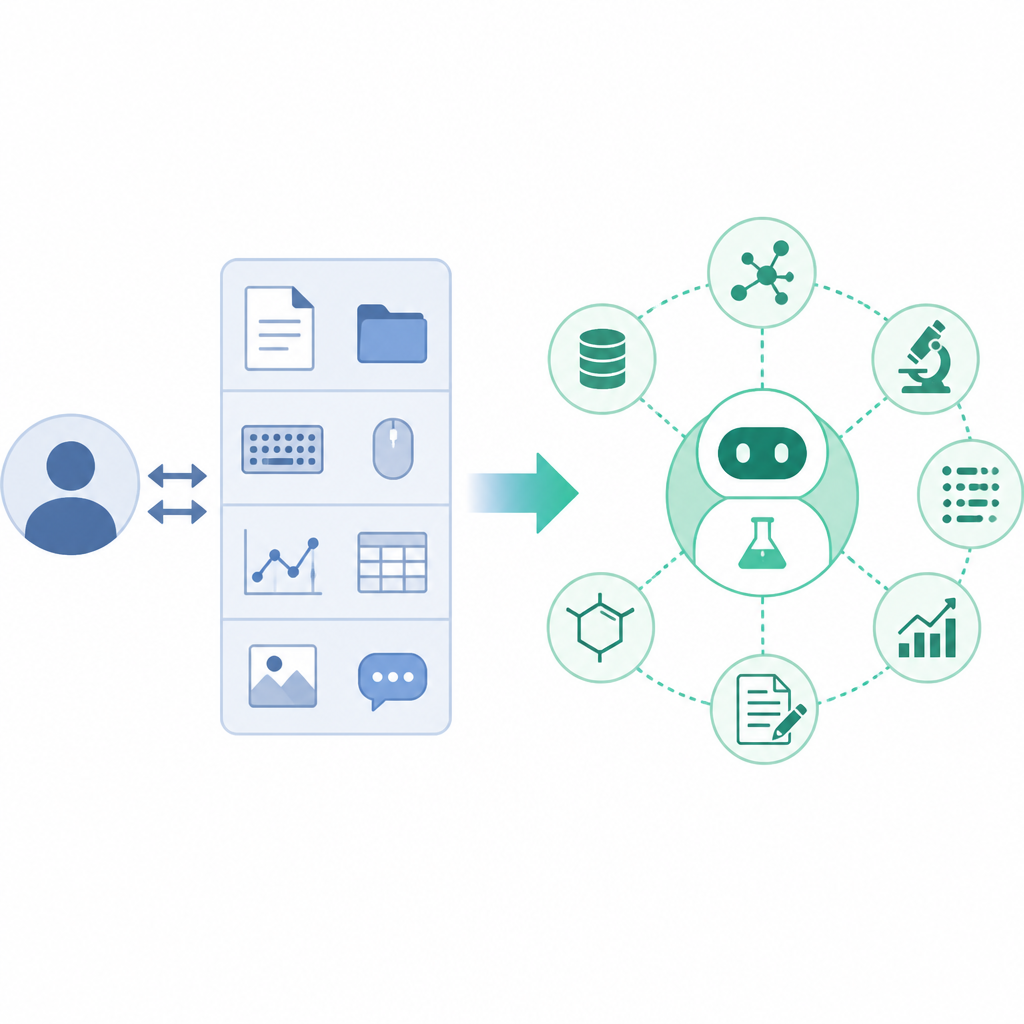
The company’s public messaging backs that up. At I/O, the science announcement was not a new protein model or another narrow breakthrough. It was a packaging move around agentic systems. That is often how strategic shifts show up in big companies: not with a press release that says “we changed direction,” but with product names, keynote airtime, and where the best engineers spend their weeks.
- John Jumper won the Nobel Prize for AlphaFold.
- Google DeepMind’s science release at I/O was Gemini for Science, not a new AlphaFold update.
- Google says AI Co-Scientist is already in early testing with scientists such as Stanford geneticist Gary Peltz.
That last point matters because early users seem impressed. In a Nature Medicine article, Gary Peltz compared using the AI Co-Scientist to “consulting the oracle of Delphi.” That is a strong endorsement, but it also hints at the real risk: if researchers start treating these systems like wise assistants, they may trust them faster than the evidence warrants.
OpenAI’s math result shows how far general models have come
Google is not alone in this shift. This week, OpenAI announced that one of its models disproved an important mathematics conjecture. Some mathematicians described it as the most meaningful contribution generative AI has made to math so far. The important detail is that the model was general-purpose, not a tool built only for mathematics or research.
That is the same pattern Google seems to be betting on. Specialized systems still matter, but general reasoning systems are starting to produce original work. In math, that can mean a proof or a counterexample. In science, the bar is higher because ideas have to survive experiments, lab work, and the messy world outside the model. Still, once a general model can contribute in one hard domain, it is reasonable to ask how long it takes before it contributes in another.
Here is the comparison that should matter to developers and researchers:
- Specialized tools like AlphaFold solve one scientific task extremely well.
- Agentic systems like Gemini for Science try to coordinate multiple steps in a research workflow.
- General reasoning models from companies like OpenAI are already making independent contributions in math.
- Google is now packaging its science work around agentic systems, which suggests where it thinks the next gains will come from.
The catch is verification. A model can propose a protein structure, a weather forecast, or a mathematical idea, but science still needs a way to test the claim. That is why autonomous AI scientists are such a big deal: if they get good enough at proposing and testing ideas, humans may move from doing the research to supervising it.
Google is betting on a slower but bigger prize
Hassabis said in the Daedalus interview that for the next decade or so, AI should be thought of as a tool for scientists, and only later as a collaborator. That sounds cautious, but the direction is clear enough. Google is still building specialized tools, yet its public momentum now points toward agentic systems that can do more of the scientific workflow on their own.
My read is simple: the next phase of AI science will not be decided by whichever company builds the best single-purpose model. It will be decided by which company can combine reasoning, coding, domain knowledge, and experimental feedback into one system that researchers actually trust. Google has a head start in science branding, but the race is shifting toward general agents that can earn a place in real research labs.
So the question is no longer whether AI can help scientists. It is whether the most valuable AI science product in two years looks more like AlphaFold, or more like a research assistant that can propose the experiment, write the code, and explain the result.
// Related Articles
- [IND]
Korea’s Nvidia talks point to an AI factory push
- [IND]
OpenAI should not rush its IPO just to win the AI race
- [IND]
OpenAI updates its Europe privacy policy
- [IND]
OpenAI is right to keep ads out of sensitive chats
- [IND]
AI bootlegs are already draining streaming royalties
- [IND]
AMD and Microsoft push Windows ML on GPU and NPU