Manus shows how AI agents get bought
I break down Manus’s rise, relocation, and Meta deal into a copyable playbook for AI agents that need global distribution.

I break down Manus’s rise, relocation, and Meta deal into a copyable playbook for AI agents that need global distribution.
I’ve been watching AI agent products long enough to know when something feels off. The demo looks slick, the task list sounds ambitious, and the whole thing gets wrapped in “autonomy” like that word explains everything. But then you try to build around it and the story falls apart. The agent is either too eager, too brittle, or too tied to the wrong market assumptions. Manus had that weird mix of hype and friction from the start. It wasn’t just another chatbot with a new coat of paint. It was trying to be a worker, a browser, a planner, and a product people would actually pay for. That’s a hard bundle to make hold together. The part that got my attention wasn’t the demo. It was the way the company kept reshaping itself around distribution, regulation, and capital. That’s the real lesson here, and it’s much more useful than the usual “AI agents are coming” noise.
The source that triggered this breakdown is the Wikipedia page for Manus (AI agent), which stitches together the product’s founding, launch, funding, Singapore move, and Meta acquisition. I’m using it as a map, not as gospel. Where the page cites reporting from The Wall Street Journal, TechCrunch, Reuters, and Semafor, I treat those as the stronger anchors. The point here is not to retell the whole biography. I want to pull out the moves that matter if you’re building an AI agent product and wondering why some teams get traction while others just collect demos.
Manus started as a product bet, not a model bet
Get the latest AI news in your inbox
Weekly picks of model releases, tools, and deep dives — no spam, unsubscribe anytime.
No spam. Unsubscribe at any time.
“In October 2024, Butterfly Effect began developing Manus, drawing inspiration from the San Francisco-based AI coding tool Cursor.”
What this actually means is simple: the team didn’t start by asking which model was hottest. They started by looking at a product that changed how people worked and asking, “What if we do this for a broader class of tasks?” That’s a very different starting point. Cursor is not interesting because it has a model. It’s interesting because it sits where the work happens and makes the work feel faster. Manus seems to have copied that instinct, not the exact interface.

I’ve made this mistake myself. It’s tempting to begin with model capability and then bolt on a workflow later. That usually gives you a toy. The user gets a text box, a few buttons, and a vague promise that the system is “smart.” Manus’s origin story says the opposite. The product idea came first, then the model stack had to support it. That’s why the page mentions Butterfly Effect had already shipped Monica, a browser extension that aggregated multiple commercial models behind one interface. They were already thinking in terms of workflow aggregation, not model worship.
If you’re building an agent, this matters because your real competitor is rarely another model vendor. It’s the user’s current habit. Cursor beats generic code assistants because it lives in the editor. Manus tried to live inside a task completion loop. That’s the right mental model. Stop asking what model you can expose. Start asking what job you can finish.
- Pick one user workflow and own the whole loop.
- Design around a task outcome, not a model response.
- Use models as interchangeable parts when you can.
How to apply it: write down the exact moment your user feels stuck, then build the agent around that moment. If your user is triaging resumes, don’t build “an AI assistant.” Build the thing that reads, scores, explains, and exports. If your user is analyzing stock data, don’t build “a smart chat.” Build the thing that fetches, compares, summarizes, and formats the result in the way they already need.
The launch hype was real, but hype is not a moat
“The launch demo video, which depicted the agent autonomously completing tasks such as resume screening and stock analysis, drew more than one million views within twenty hours.”
That number matters because it tells you the market was hungry for a believable agent story. Not “chat with your files.” Not “ask questions and get answers.” Actual task completion. The demo didn’t just show text generation. It showed work being done. That’s why people paid attention. But I also think this is where a lot of founders get themselves in trouble. A million views is not product-market fit. It’s attention. Attention is useful, but it’s also cheap.
I’ve seen teams confuse demo velocity with product strength. They ship a polished video, the internet goes nuts, and suddenly the internal narrative becomes “we’re onto something big.” Maybe. Or maybe you’ve just found a format that people like to watch. Manus’s launch proves that a clear autonomous-task narrative can cut through the noise. It does not prove the product is durable. Those are different problems.
Still, there’s a practical lesson here. If your agent can’t be explained in one sentence without the word “AI,” you’re probably hiding the actual value. Manus’s examples were concrete: resume screening, stock analysis. Those are legible. They let people imagine a before and after. That’s what made the demo travel.
How to apply it: build your launch around one task that has obvious manual pain and obvious output. Then show the agent finishing the task end to end. Don’t make the audience infer the value. Make it visible. And if you can’t show the output in a format a normal user would save, send, or paste into work, keep iterating.
- Use one concrete task in your demo, not five half-finished ones.
- Show input, process, and output.
- Make the output something a user would actually ship to a teammate.
Scarcity turned Manus into a market, which is both smart and annoying
“Demand for invitation codes drove a secondary market in which codes were resold … for prices reportedly between ¥50,000 and ¥100,000.”
That’s a wild signal, and it tells me the team understood something about distribution even if they didn’t fully control it. Scarcity can make a product feel important fast. It also attracts the exact kind of attention you don’t want if the product isn’t stable. I’m not romantic about this. A resale market is not proof of quality. It’s proof that access is constrained and people think the access is worth something.
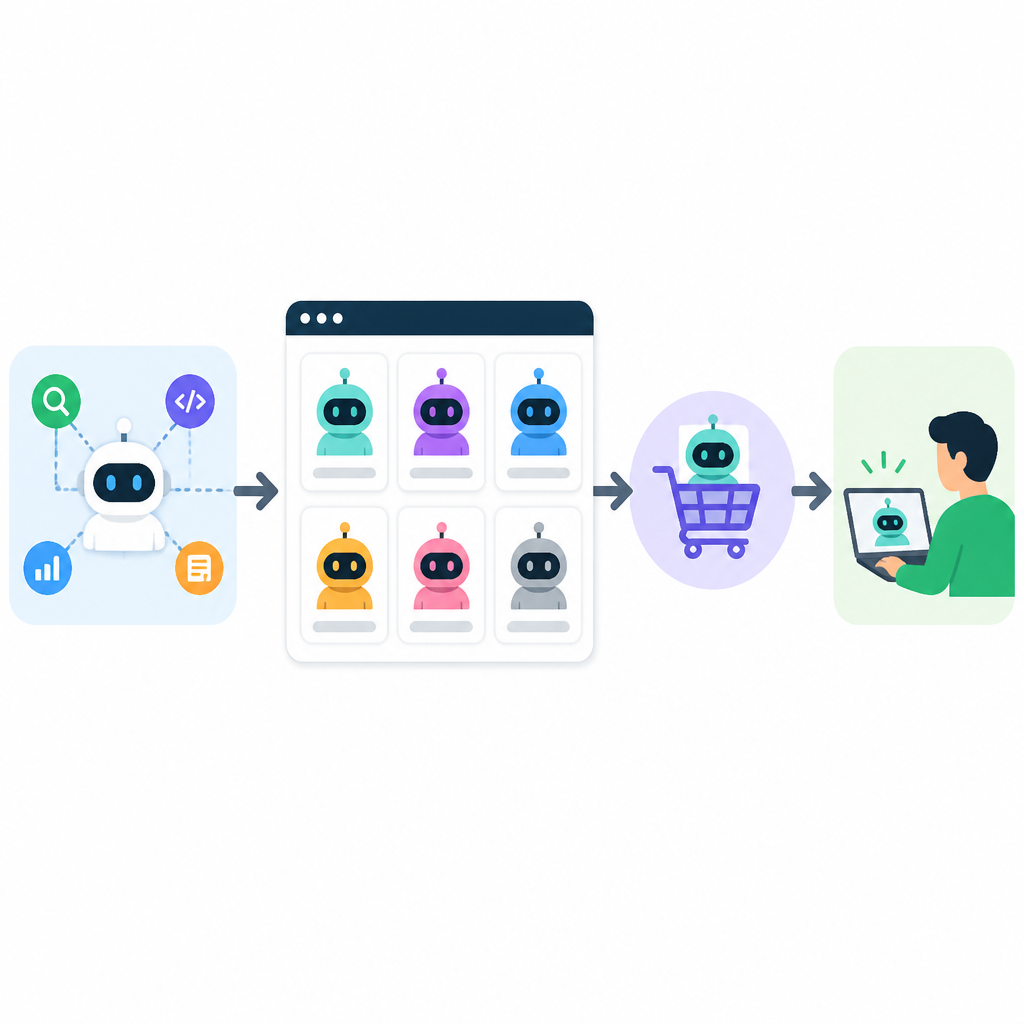
What I take from this is that Manus had a clearly legible “I need this now” story for a subset of users. That’s good. But scarcity is a tactic, not a strategy. If your product only feels valuable because it’s hard to get, you’re borrowing energy from the launch window. Eventually users want repeatability, not exclusivity.
This is where a lot of AI products get lazy. They build an invite wall to buy time, but they don’t use that time to reduce failure rates, tighten the task scope, or make onboarding less weird. Manus seems to have used the launch buzz to establish itself globally, which is the better version of the play. But if I were building my own agent, I’d treat scarcity as a diagnostic, not a business model. If people are reselling access, ask what job they’re trying to unlock, then make that job easier and cheaper.
How to apply it: if you’re using waitlists or invites, define the one thing you need to learn before opening access. Is it reliability? Is it pricing? Is it the right user segment? If you can’t name the learning objective, the scarcity is just theater.
Manus was built for markets outside China because the model stack forced it
“Manus was designed for markets outside China because it relied on American AI models that were unavailable domestically.”
That line is the most interesting one in the whole story to me, because it shows how infrastructure choices shape product geography. People love to talk about AI products like they float above politics and regulation. They don’t. Model access, data rules, export controls, and regional availability all push products into certain markets and away from others. Manus didn’t just “choose” international expansion. Its technical dependencies made that path more natural.
I’ve run into this when shipping products that depended on third-party APIs. Everything looks global until one dependency breaks in a region you didn’t think about. Then suddenly your “universal” product is very specific. Manus had that problem at a much bigger scale. If your agent depends on a model provider, a browser environment, a payment rail, or a cloud region, you’ve already made a strategic decision whether you admit it or not.
The useful takeaway is not “be global.” It’s “know what makes you region-specific.” Manus had to understand that early, and the company’s later moves show it kept reacting to that reality. If you’re building an agent today, map your dependencies like a hostile auditor would. Which model APIs are blocked where? Which data flows are likely to trigger scrutiny? Which user segments are easiest to serve without crossing a legal line?
How to apply it: create a dependency table for your product. For each model, service, and data source, note where it works, where it doesn’t, and what breaks if it disappears. That table will tell you more about your go-to-market than a dozen strategy slides.
Singapore wasn’t a cosmetic move, it was the operating system
“Following the Series B round, Butterfly Effect relocated its headquarters from Wuhan and Beijing to Singapore.”
This is where the story stops being just about product and starts being about survival. The move to Singapore wasn’t some branding exercise. It was a structural answer to capital access, market trust, and regulatory friction. The page also notes that the company closed Chinese-language social accounts, blocked mainland access, and shelved a planned Chinese version. That’s not a side note. That’s the operating reality of the business.
I’ve seen founders underestimate how much their company shape affects product shape. They think the product can stay the same while the legal entity, headquarters, and market posture change around it. Nope. Once you move the center of gravity, the product follows. The user base changes, the support burden changes, the compliance burden changes, and the roadmap changes. Manus basically chose a different center of gravity so it could keep growing.
There’s also a hard truth here: when an AI company wants global capital and global customers, it often has to make itself legible to regulators in more than one jurisdiction. That’s not optional. The Singapore move looks like a clean business decision from the outside, but it was also a way to reduce friction for investors and customers who would otherwise worry about Chinese ties. That’s the part people skip when they talk about “international expansion.” They mean legal, financial, and operational repositioning.
How to apply it: if you’re building an AI agent with cross-border ambitions, decide early what your company needs to look like to the people who will underwrite it. Not just users. Investors. Partners. Regulators. Your structure is part of the product.
- Choose your legal home based on your actual target markets.
- Assume your entity structure will affect sales cycles.
- Plan for compliance before it becomes a blocker.
The Meta acquisition shows agents are becoming platform features
“Meta said it would continue to operate and sell the Manus service and integrate its technology into products, including Meta AI.”
This is the part that should make every agent founder sit up. The acquisition framing says the standalone product matters, but the real prize is the capability. Meta didn’t just want a company. It wanted a system it could fold into its own products. That’s usually how these stories end when a new product category gets validated: the best ideas get absorbed into bigger platforms.
That doesn’t mean standalone agents are dead. It means the bar is higher. If your product is easy to copy in spirit, you need either deep workflow ownership, strong distribution, or a technical edge that survives platform imitation. Manus had enough of a story that Meta wanted it. That’s a strong signal. But it also tells me the long-term value may live less in the brand and more in the methods, the interfaces, and the operational know-how.
I’m skeptical of founders who act like acquisition is validation in itself. It’s validation of interest, not necessarily of independence. If a platform wants your product because it helps them fill a gap, that can be great. It can also mean the market is moving from “best-of-breed agent” to “agent feature inside a larger suite.” If you ignore that shift, you’ll wake up with a nice product and no distribution story.
How to apply it: ask yourself whether your agent is a destination product or a capability. If it’s a capability, design for integration from day one. If it’s a destination, invest harder in habit, data, and switching costs. Don’t pretend you can be both without tradeoffs.
The template you can copy
# AI agent product playbook inspired by Manus

## 1. Start with a task, not a model
- Pick one job users already do manually.
- Define the exact input, output, and success criteria.
- Build the agent around finishing that job end to end.

## 2. Make the demo concrete
- Show one real task.
- Show the agent taking input, acting, and producing a useful output.
- Avoid vague “assistant” language.

## 3. Use scarcity only to learn
- If you run an invite-only beta, define the one thing you need to validate.
- Use the closed beta to improve reliability, onboarding, or pricing.
- Open access once you know the product can repeat the core task.

## 4. Map your dependency risks
| Dependency | Where it works | Where it breaks | What happens if it disappears |
|------------|----------------|-----------------|-------------------------------|
| Model API   |                |                 |                               |
| Payments    |                |                 |                               |
| Data source  |                |                 |                               |
| Hosting      |                |                 |                               |

## 5. Decide your operating geography early
- List the markets you want.
- Check whether your model stack, data flows, and company structure support those markets.
- Choose a legal home and entity setup that matches the business you’re actually building.

## 6. Plan for platform absorption
- Ask whether your product is a destination or a feature.
- If it’s a feature, design clean integration points.
- If it’s a destination, build stronger habit loops and switching costs.

## 7. Launch checklist
- One clear task
- One clear user segment
- One clear output format
- One clear pricing story
- One clear compliance posture
- One clear expansion path

## 8. Copy-ready prompt for agent design
You are building an AI agent that completes one specific task for one specific user.
Your job is to:
1. Identify the task boundary.
2. List the inputs needed.
3. List the steps the agent must take.
4. Define the final output format.
5. Identify failure modes.
6. Identify the minimum viable workflow.
7. Suggest how to test it with real users.

Return the result as:
- Task
- User
- Inputs
- Steps
- Output
- Failure modes
- Test plan
That template is the stripped-down version of what I think Manus teaches. Start with a real task. Show the work. Know your dependencies. Don’t ignore geography. And never confuse a launch spike with a business.
The original source is the Wikipedia article on Manus (AI agent), and the article’s claims are derivative of the reporting it cites from outlets like The Wall Street Journal, TechCrunch, Reuters, and Semafor. My framing, template, and takeaways are original.
// Related Articles
- [AGENT]
Claude Code 动态工作流:AI 自写 Harness
- [AGENT]
Agent orchestration is the missing layer for enterprise AI
- [AGENT]
AI agents use blockchain as a trust layer
- [AGENT]
8 RAG patterns that turn demos into prod
- [AGENT]
Fine-tuning beats RAG when the goal is style, not facts
- [AGENT]
OpenClaw shows how small businesses use AI staff