OpenAI’s $250M fund turns AI shock into support
I break down OpenAI’s $250M Foundation plan into a practical template for worker support, measurement, and economic transition work.

OpenAI’s new $250M Foundation plan funds worker support, measurement, and transition work.
I've been watching AI product teams talk about “impact” for a while now, and honestly, most of it feels like hand-waving. They ship the model, collect the usage stats, then act surprised when the conversation turns to layoffs, wage pressure, or who actually gets paid when the software starts doing the work. That’s been the weird part for me: the technical story always moves faster than the social one. We get a demo for automation, and then everyone pretends the economic fallout is somebody else’s problem.
So when I saw OpenAI say it’s putting $250 million through its Foundation into transition support, measurement, and broader prosperity work, I paid attention. Not because I think a foundation fixes the whole mess. It doesn’t. But because it’s one of the few times a major AI shop is admitting the real issue out loud: the model isn’t the only product. The labor shock is part of the product too.
This matters for people building tools, running teams, or writing policy-facing docs inside companies. If AI changes work, then the response can’t be a vague “reskilling” slide. It has to be a system: what gets measured, who gets helped, who pays, and what kind of safety net gets built before the damage spreads.
OpenAI’s own Foundation statement is the anchor here. Sam Altman posted the announcement on X, and the American Bazaar article quotes the Foundation’s framing around measurement, transition support, and shared prosperity. I’m using that reporting plus the linked Foundation language as the source for the breakdown below. No hype numbers beyond the reported $250 million; that’s the only concrete figure I’m comfortable repeating.
They’re admitting the real problem is distribution, not just automation
Get the latest AI news in your inbox
Weekly picks of model releases, tools, and deep dives — no spam, unsubscribe anytime.
No spam. Unsubscribe at any time.
“A central question is not only what AI can do, but where that value accrues.”
That line does a lot of work. What this actually means is that OpenAI is no longer pretending the conversation is only about capability. It’s about who captures the upside. If AI makes one engineer ten times more productive, fine. If that also means the company captures the gains while workers absorb the instability, then the system is lopsided. That’s the part the Foundation is trying to name.
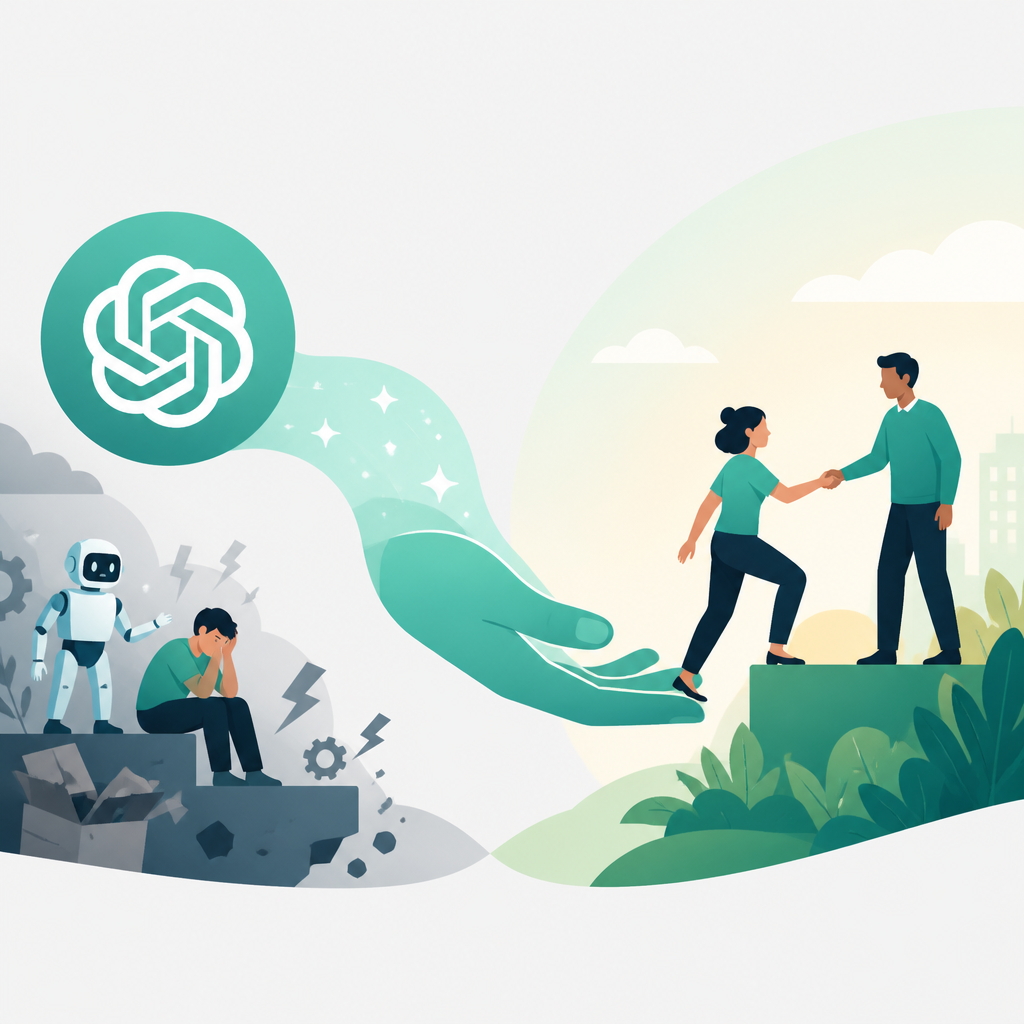
I’ve seen this exact mistake in internal AI rollouts. Teams obsess over throughput and ignore the payout structure. Managers celebrate fewer support tickets, but nobody asks whether the people who used to do that work are getting moved, retrained, or just quietly squeezed out. Distribution is the missing spreadsheet column.
How to apply it: if you’re writing an AI strategy, add a section called “where value lands.” Not “what the model can do.” Not “efficiency gains.” Spell out who gets the benefit, who bears the cost, and what changes if the model replaces labor in a workflow.
- List the tasks AI will absorb.
- List the roles that lose hours or headcount.
- List the groups that gain revenue, margin, or time.
- Decide whether any of that gets redistributed through wages, training, or benefits.
Measurement comes first because vibes are useless
“Invest in independent measurement systems capable of tracking how AI changes employment patterns, wages, and labor markets globally.”
This is the least glamorous part of the whole announcement, and it’s the part I trust the most. Good measurement beats confident guessing. The Foundation is basically saying the existing economic dashboard may miss the real effects of AI, especially if gains show up in capital returns, software subscriptions, or productivity metrics while wages stay flat.
That’s not abstract. I’ve worked around enough analytics teams to know how easy it is to measure the wrong thing beautifully. You can count model calls, latency, and cost per token all day. None of that tells you whether a customer support team shrank, whether freelance work dried up, or whether a small business replaced three contractors with one AI workflow and a lot of denial.
If you want to copy this logic into your own org, stop using generic “AI adoption” dashboards. Build a transition dashboard instead. Track job titles affected, hours removed, wage changes, contractor churn, and new roles created. If you can’t measure the labor effect, you’re not managing change. You’re just hoping it stays invisible.
- Baseline headcount before automation.
- Workflow volume before and after AI.
- Hours saved, but also hours removed from billable or paid work.
- Promotion, reassignments, and severance outcomes.
OpenAI’s Foundation is also pointing at global measurement, which matters because AI won’t hit every market the same way. A tool that trims office work in the U.S. may hit service access, translation, or admin-heavy jobs differently in lower-income countries. If you only measure in one market, you’re blind to the rest.
“Retraining” is not a plan, it’s a reflex
“Economic transitions are lived before they are fully understood.”
I like that line because it cuts through the usual corporate nonsense. What this actually means is people get hit before the charts catch up. By the time a labor market report confirms the shift, somebody has already missed rent, lost health coverage, or taken a worse job with a longer commute.
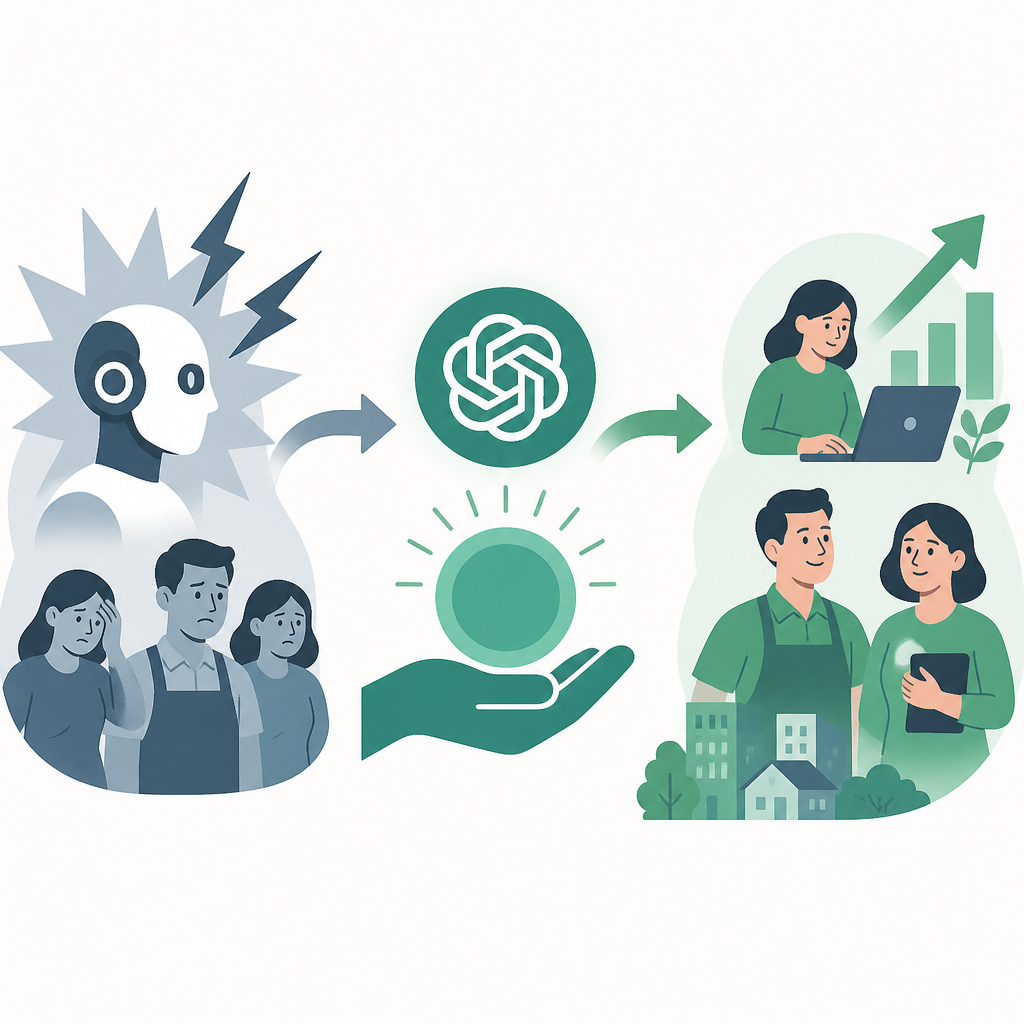
That’s why I don’t buy the lazy version of retraining. A four-hour course and a certificate page do not solve displacement. Sometimes they help, sure, but too often they’re a PR move dressed up as workforce strategy. The Foundation seems to know that. It mentions transition assistance, unemployment support, wage-loss insurance, and retraining, but it also says traditional retraining alone may not be enough.
I ran into this mindset in a company that tried to replace a chunk of support work with automation. Leadership offered a learning portal and called it compassion. The people affected wanted time, income stability, and a path to a real role. A course was not the missing piece. Security was.
How to apply it: if you’re designing a transition program, treat training as the last mile, not the first response. Start with income continuity, role mapping, and redeployment options.
- Offer wage protection for a defined transition window.
- Map old roles to adjacent roles before announcing cuts.
- Pay for training during work hours, not after exhaustion.
- Make retraining tied to an actual job path, not a generic certificate.
The best part is the focus on practical help, not just theory
The Foundation said it is interested in tools that help underserved populations access legal, healthcare, financial, and career guidance.
That’s the part that feels most usable to me. It’s easy to get lost in macroeconomics and miss the people who need help right now. If AI is going to reshape work, then one immediate use case is helping people navigate the mess: benefits, job searches, legal forms, basic financial guidance, and healthcare routing. Not as a replacement for professionals, but as a front door.
I’ve seen teams build AI assistants that answer internal policy questions faster than HR can. Useful? Yes. But the real win is when those systems reduce friction for people who already have too little time and too much bureaucracy. If you’re unemployed, underpaid, or stuck in a transition, a decent assistant that explains forms and next steps can matter more than a flashy enterprise demo.
How to apply it: build small, bounded tools with human escalation. Don’t make the system pretend to be a lawyer or doctor. Make it good at triage, explanation, and routing.
- Legal aid intake and document prep.
- Benefits navigation and eligibility checklists.
- Career path matching based on current skills.
- Healthcare appointment and coverage explanations.
For reference, this is the kind of work that gets a lot more credible when it’s tied to real institutions. If you want examples of adjacent infrastructure, look at the OpenAI Foundation page, the broader Foundation announcement, and public-interest groups like Niskanen Center and Brookings that already spend time on labor and policy questions.
They’re flirting with bigger economic ideas because the old ones look thin
“Society will likely need new approaches that give people durable stakes in the systems creating value.”
This is where the announcement gets more ambitious. The Foundation points at ideas like taxing capital instead of labor more heavily, and at sovereign wealth funds modeled after Norway and Alaska. That’s not a small shift in thinking. It means the old assumption, that wages alone will carry most people through economic growth, may not survive a world where software captures more of the productivity gains.
What this actually means is OpenAI is poking at ownership, not just compensation. If AI systems create durable value, then maybe people need a stake in that value, not just a promise that they can learn a new tool and keep up. That’s a much more honest frame than the usual “adapt or else” corporate line.
I’m not pretending these policy ideas are easy. They’re not. Tax reform, public funds, and shared ownership models are political fights, not product features. But they’re at least in the right category. They acknowledge that if the machines do more of the work, the distribution mechanism has to change too.
How to apply it: inside a company, the analog is profit-sharing, equity grants, transition bonuses, or worker funds linked to automation savings. If a team cuts costs with AI, don’t let all the savings disappear into margin.
Open calls and partnerships are the only sane way to do this at scale
“The $250 million initiative will support outside organizations through grants, institutional partnerships, and open calls for proposals.”
This part matters because no single company, not even OpenAI, can map all the effects of AI job disruption on its own. The Foundation is signaling that it needs researchers, nonprofits, policy groups, and local institutions to do the actual work. That’s the right instinct. If you want credible labor and economic research, you need outside scrutiny.
I’ve seen too many internal “impact” programs turn into self-referential theater. Same people, same assumptions, same metrics, same conclusions. Grants and open calls are better because they force the project out into the world where other people can disagree with it.
How to apply it: if you’re building your own AI transition initiative, don’t keep it locked inside one team. Fund outside researchers. Publish your assumptions. Let other people test whether your model is nonsense.
Here’s the practical version:
- Write a public call for proposals with a narrow scope.
- Fund measurement work separately from intervention work.
- Require grantees to publish methods, not just outcomes.
- Partner with labor groups, universities, and local nonprofits.
The template you can copy
# AI Transition Support Program Template

## Purpose
Build a program that measures AI-driven job disruption and funds practical support for affected workers.

## What we are trying to solve
AI adoption can increase productivity while also reducing hours, wages, or entire roles. This program exists to track those changes and respond before the damage becomes permanent.

## Program pillars
1. Measurement
   - Track affected job titles, hours removed, wage changes, contractor churn, and redeployment outcomes.
   - Compare baseline data before AI rollout with quarterly follow-up data.
   - Publish a short report with methods and findings.

2. Transition support
   - Offer wage protection for a defined transition period.
   - Provide job placement help, benefits navigation, and paid training time.
   - Prioritize workers whose roles are partially automated before cutting headcount.

3. Durable economic security
   - Explore profit-sharing, transition bonuses, or worker funds tied to automation savings.
   - Evaluate whether the program should include legal aid, healthcare routing, or financial guidance tools.
   - Partner with outside researchers and community organizations.

## Operating rules
- Do not treat a course catalog as the whole solution.
- Do not count model usage as proof of worker benefit.
- Measure who gains value and who loses income.
- Publish assumptions so outside groups can challenge them.

## Simple intake questions
- Which roles are affected?
- How many hours or tasks are being automated?
- What happens to the people doing that work?
- What support is available in the first 30, 90, and 180 days?
- What gets measured and reported publicly?

## Copy-ready proposal blurb
We are funding measurement, transition support, and long-term economic security work so AI adoption does not leave workers behind. Our program will track labor effects, support people through disruption, and test models that spread the gains more broadly.
If I were turning this into a real internal doc, I’d keep the template short and concrete like that. No motivational fluff. No “future of work” wallpaper. Just the mechanics of who gets measured, who gets helped, and who benefits.
That’s the real lesson I take from OpenAI’s $250 million Foundation move. It’s not that AI disruption is coming. We already knew that. It’s that the response needs to be built with the same seriousness as the systems causing the disruption. Otherwise we get the usual routine: big gains on one side, a pile of vague retraining brochures on the other.
Source attribution: I’m breaking down the American Bazaar report at americanbazaaronline.com/2026/05/28/openai-launches-250-million-foundation-program-focused-on-ai-job-disruption-481732/, which quotes OpenAI Foundation language and Sam Altman’s X post. The template above is mine, derived from that reporting and not copied from OpenAI verbatim.
// Related Articles
- [IND]
Korea’s Nvidia talks point to an AI factory push
- [IND]
OpenAI should not rush its IPO just to win the AI race
- [IND]
OpenAI updates its Europe privacy policy
- [IND]
OpenAI is right to keep ads out of sensitive chats
- [IND]
AI bootlegs are already draining streaming royalties
- [IND]
AMD and Microsoft push Windows ML on GPU and NPU