Pipedrive’s open MCP server packs 155 tools
155 tools, v2-first API calls, and MIT licensing make this Pipedrive MCP server ready for local Claude workflows.

This open-source Pipedrive MCP server gives Claude local access to 155 CRM tools.
Built for agentic and conversational workflows, this Pipedrive MCP server is now open source under MIT and aimed at users who want to query, create, and update CRM data without living in the UI. The release is notable for its size, its API choices, and the guardrails around destructive actions.
| Item | Tools | API approach | Tests | Transport |
|---|---|---|---|---|
| Pipedrive MCP server | 155 | v2 first, v1 fallback where needed | 1,741 | STDIO |
| License | MIT | Commercial use allowed | Published with build provenance | npm package |
1. Broad CRM coverage in one server
Get the latest AI news in your inbox
Weekly picks of model releases, tools, and deep dives — no spam, unsubscribe anytime.
No spam. Unsubscribe at any time.
The main draw is simple: one MCP endpoint covers a wide slice of Pipedrive CRM work. The server exposes tools for deals, persons, organizations, activities, products, projects, tasks, leads, notes, mail, and fields, so a client like Claude can act on CRM data instead of just reading it.

That breadth matters if your team wants one local integration rather than a patchwork of scripts. The author says the server was first built for a client, then open-sourced because it proved general enough for broader use.
- 155 tools total
- Works with Claude Code, Claude Desktop, and other MCP clients
- Targets agentic and conversational workflows
2. v2-first API behavior
This server is built to prefer Pipedrive’s v2 REST API whenever an endpoint exists. It only falls back to v1 for the small set of features that still lack a v2 equivalent, including notes, mail, users, and leads CRUD.
That design choice reduces surprises for developers who want the newest supported behavior by default. It also makes the toolset easier to reason about when you are mapping MCP actions to CRM operations.
- v2 for entities where available
- v1 fallback only for gaps in v2 coverage
- Useful if you want current API behavior first
3. Contract-tested instead of improvised
The author says the v2 tools are contract-tested against Pipedrive’s published OpenAPI v2 spec, then live-smoke tested against a real account, including Growth+ deal installments. In CI, the test count is over 1,700, with 1,741 reported at the time of posting.
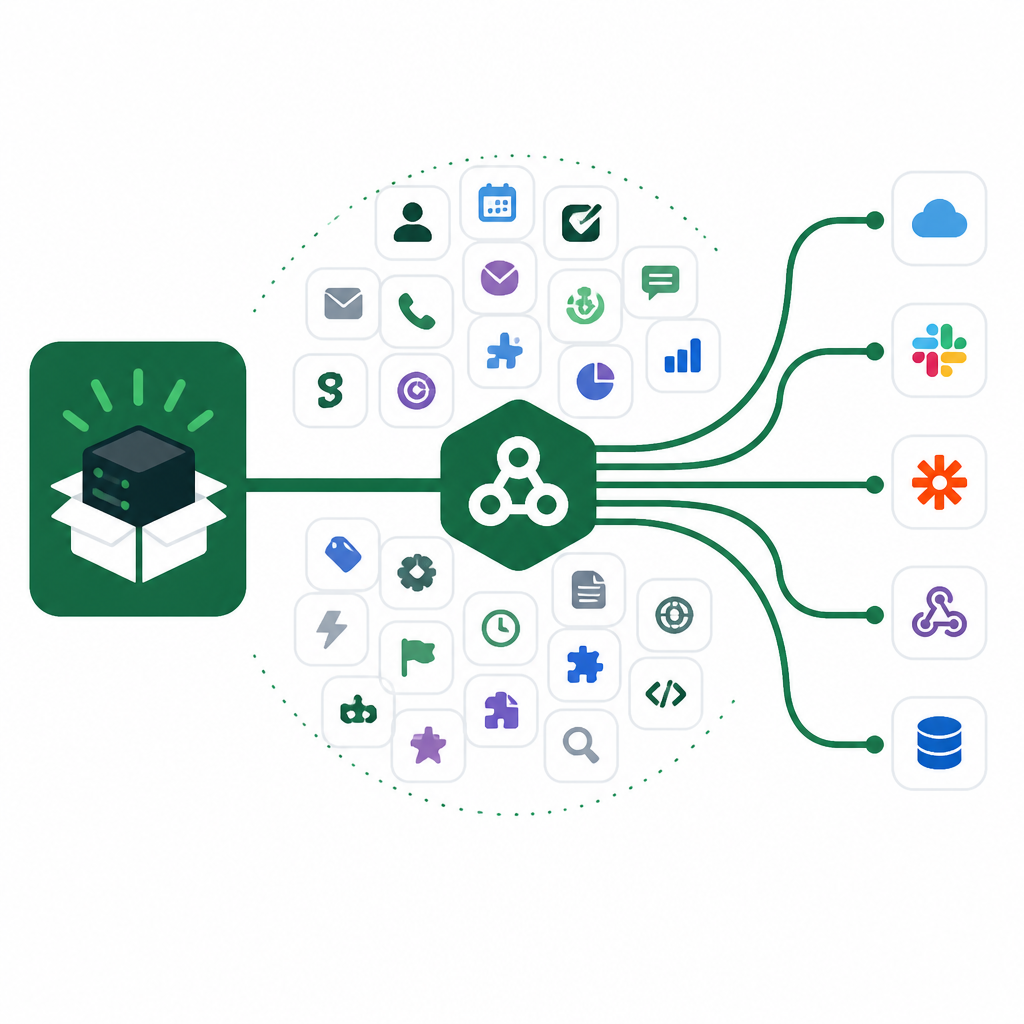
That makes this release more than a demo wrapper around API calls. For teams evaluating an MCP server for production-adjacent use, the testing story is the strongest signal that the tool table is grounded in actual API behavior.
CI tests: 1,741
Validation: OpenAPI v2 contract tests + live smoke tests
4. Safer defaults for destructive actions
Out of the box, the server allows read and create operations, while deletes and conversions stay disabled until you set an environment flag. That means a fresh install is biased toward safer usage, which is a good fit for teams experimenting with AI-driven CRM actions.
Each tool also carries MCP hints for read, destructive, and idempotent behavior, so policy-aware clients can make smarter decisions. In practice, this helps separate routine lookups from actions that should require extra care.
- Read and create enabled by default
- Deletes and conversions require opt-in
- MCP metadata helps client-side policy checks
5. MIT licensing and local deployment
The package is published to npm as @ckalima/pipedrive-mcp-server under MIT, including commercial use. The server runs over STDIO today and uses a Pipedrive API key rather than hosted OAuth, which fits a self-hosted setup.
The posted config is straightforward, with an .mcp.json block that points MCP clients at the npm command and injects the API key. If you want a local-first integration and do not need remote transport yet, this setup keeps the moving parts small.
{
  "mcpServers": {
    "pipedrive": {
      "command": "npx",
      "args": ["-y", "@ckalima/pipedrive-mcp-server"],
      "env": {
        "PIPEDRIVE_API_KEY": "your-40-character-api-key"
      }
    }
  }
}
How to decide
Pick this server if you want broad Pipedrive coverage, local MCP access, and a setup that favors safety and test coverage. It is especially attractive for teams already using Claude and for developers who want to automate CRM work without writing a custom integration from scratch.
If you need remote transport, hosted OAuth, or a more managed deployment model, this release is not there yet. If your priority is a local, MIT-licensed server with 155 tools and a v2-first bias, it is a strong starting point.
// Related Articles
- [IND]
Hermes Agent packs learning, memory, and gateways
- [IND]
Rust Built Different Update Hits Server Admins
- [IND]
OpenAI’s IPO prep turns policy into a hiring play
- [IND]
OpenAI is right to hire Dean Ball for policy power
- [IND]
Rust’s rolling release model is the right tradeoff for teams
- [IND]
Cloudflare Faces Director Vote Pressure Amid AI Push