5 Rust books that build real-world skill
5 Rust books that take you from basics to WebAssembly, concurrency, and machine learning.

Five Rust books cover basics, systems work, WebAssembly, concurrency, and machine learning.
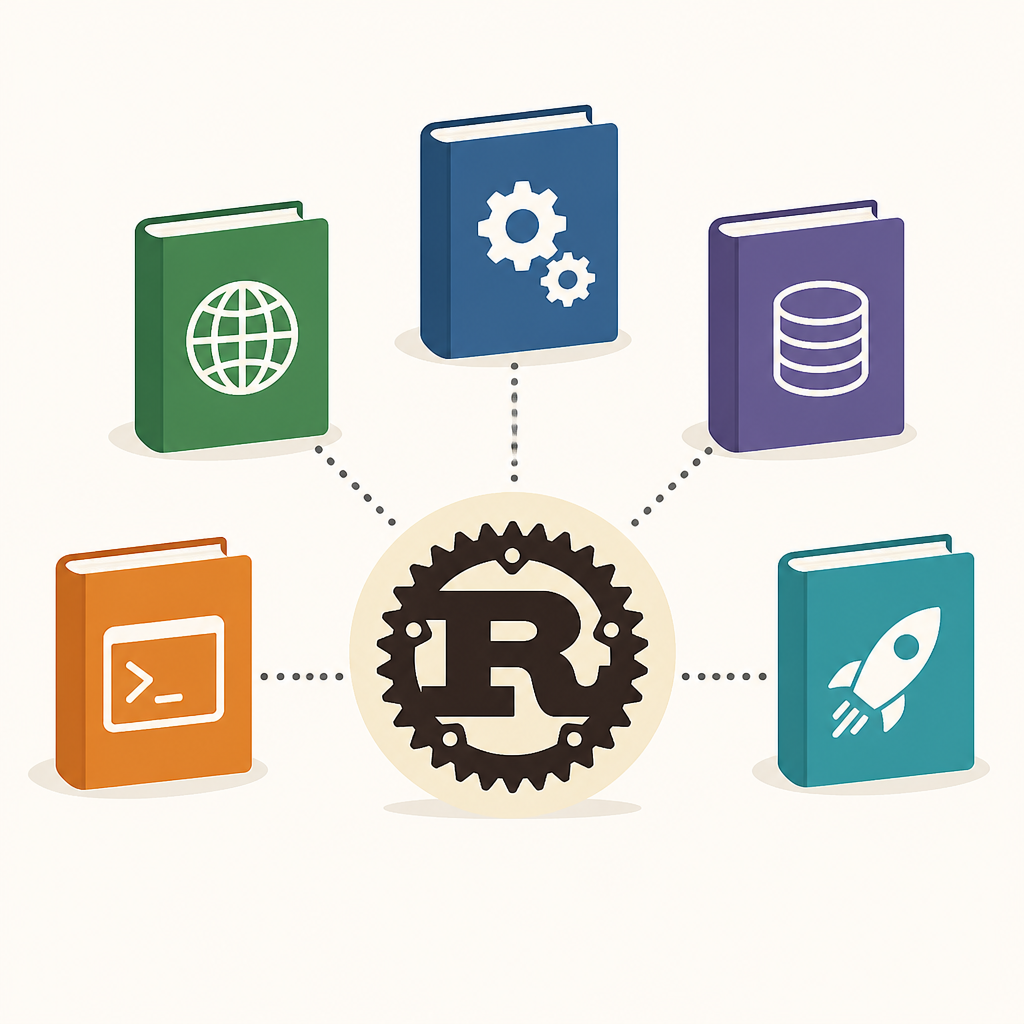
If you want a Rust reading list that maps to real projects, these five books cover the language from first steps to specialized work. Rust now powers everything from browser components to operating systems, and the article’s picks reflect that range.
| Item | Level | Focus |
|---|---|---|
| Beginning Rust | Beginner | Syntax, iterators, errors, memory allocation |
| Hands-On Data Structures and Algorithms with Rust | Beginner to intermediate | Data structures, algorithms, technical practice |
| Programming WebAssembly with Rust | Intermediate | Cross-platform apps, WebAssembly |
| Mastering Rust | Intermediate to advanced | Concurrency, error handling, migration |
| Practical Machine Learning with Rust | Intermediate | ML basics, NLP, Rust libraries |
1. Beginning Rust: From Novice to Professional
Get the latest AI news in your inbox
Weekly picks of model releases, tools, and deep dives — no spam, unsubscribe anytime.
No spam. Unsubscribe at any time.
Carlo Milanesi’s Beginning Rust: From Novice to Professional is the clearest entry point on this list for new readers. It starts with core Rust concepts and moves toward iterators, error handling, and memory allocation.

That structure makes it useful if you are still learning how Rust thinks about ownership and safe code. It is aimed at readers who want a guided path rather than a reference they have to assemble on their own.
- Best for first-time Rust learners
- Covers app development basics
- Moves from syntax to advanced language features
2. Hands-On Data Structures and Algorithms with Rust
Hands-On Data Structures and Algorithms with Rust by Claus Matzinger is for readers who want practice, not just explanation. It focuses on the technical side of Rust by pairing the language with core computer-science topics.
If you are already comfortable with programming basics, this book can help you see how Rust handles common structures and algorithm work. It is especially useful for learners who want to sharpen problem-solving skills while getting familiar with Rust’s style.
- Targets beginners who want deeper practice
- Centers on data structures and algorithms
- Useful for interview prep and coding drills
3. Programming WebAssembly with Rust
Programming WebAssembly with Rust by Kevin Hoffman is the most specialized pick here. It shows how to build cross-platform apps without giving up performance or rewriting code for every environment.
This book matters because WebAssembly has become a practical route for shipping code to the web with less friction. If your goal is browser-adjacent development, this is the book that connects Rust knowledge to deployment reality.
- Good for cross-platform app builders
- Connects Rust to WebAssembly workflows
- Useful for web performance-focused teams
4. Mastering Rust
Vesa Kaihlavirta’s Mastering Rust is the strongest choice for readers who want to understand how Rust behaves in larger systems. It explains concurrency, safe parallel work, and the logic behind Rust error handling.
The book also helps readers think about migration, including how legacy applications can move toward Rust. That makes it a smart bridge between learning the language and using it in existing codebases.
- Best for advanced learners
- Explains safe concurrency
- Touches on migrating older apps to Rust
5. Practical Machine Learning with Rust
Practical Machine Learning with Rust by Joydeep Bhattacharjee is the most domain-specific book in the set. It combines Rust basics with supervised, unsupervised, and reinforcement learning, plus topics like natural language processing.
That mix makes it useful for developers who want to apply Rust outside traditional systems work. If you are exploring ML tooling and want to know which Rust libraries can support production-grade applications, this is the most relevant pick.
- Combines Rust with ML concepts
- Covers NLP and learning types
- Good for applied, project-based readers
How to decide
If you are new to Rust, start with Beginning Rust. If you want stronger fundamentals for coding interviews or practice, choose Hands-On Data Structures and Algorithms with Rust. For web deployment work, Programming WebAssembly with Rust is the best fit.
If your goal is production systems, concurrency, or migration from older code, Mastering Rust is the right next step. If you want to bring Rust into AI work, Practical Machine Learning with Rust gives you the most direct path.
// Related Articles
- [IND]
OpenAI’s Sora shutdown proves hype can’t outrun unit economics
- [IND]
Anthropic’s model shutdown shows safety can bite back
- [IND]
Boy George AI vs Taylor Swift rerecordings
- [IND]
Four music datasets are shaping AI music training
- [IND]
Deezer is right to expose AI music in playlists
- [IND]
Claude Partner Program turns Anthropic into a channel