RustWeek 2026 turns Rust into shipped code
RustWeek 2026 showed Rust moving from promise to production in kernels, tooling, embedded, and graphics.

RustWeek 2026 showed Rust moving from promise to production in kernels, tooling, embedded, and graphics.
I've been following Rust for years, and honestly, the story has changed in a way I didn't fully appreciate until this recap hit my inbox. For a long time, Rust events felt like a lot of good intentions wrapped in polished talks: safer systems, nicer tooling, maybe someday the kernel, maybe someday embedded, maybe someday the boring enterprise stuff. Fine. I believed it, but it still felt a little aspirational.
RustWeek 2026 in Utrecht sounded different. Not because the talks were louder or the crowd was bigger, but because the center of gravity moved. I kept seeing the same pattern: production systems, real maintainers, real infrastructure, real shipping work. That matters. When people are talking about election software, GPU drivers, kernel CVEs, Cargo, and actual projects already in use, the conversation stops being about whether Rust can do the job. It becomes about how fast teams can adopt it without setting themselves on fire.
That’s the part I wanted to unpack here, because the Rust Bytes recap of RustWeek 2026 is full of signals that are easy to miss if you only skim the headlines.
RustWeek stopped feeling like a demo reel
Get the latest AI news in your inbox
Weekly picks of model releases, tools, and deep dives — no spam, unsubscribe anytime.
No spam. Unsubscribe at any time.
“RustWeek 2026 felt less like ‘Look what Rust could do’ and more like ‘Here’s what we’re already shipping.’”
That line from the recap is the whole story, at least for me. What this actually means is that Rust has crossed a very annoying threshold: the community is no longer spending all its energy proving the language is technically interesting. It is now spending more time proving it is operationally useful.

I’ve seen this shift before in other ecosystems, and it always looks the same from the outside. First you get the hobbyists and early adopters. Then you get the conference talks. Then you get the awkward “yes, but can it handle production?” phase. RustWeek 2026 sounds like it landed squarely in the last phase, which is where the real work starts.
The recap mentions more than 900 Rustaceans in Utrecht, plus workshops, multi-track talks, a hackathon, an unconference, and the Rust Project All-Hands. That mix matters because it’s not just a marketing event. It’s a working event. People are there to compare notes, argue about tradeoffs, and figure out what actually ships next.
How I’d apply this: if I’m evaluating a language or framework, I stop asking “does the community look active?” and start asking “are maintainers, users, and upstream contributors in the same room solving the same problems?” That’s a much better signal. RustWeek seems to have that in spades.
- Look for talks about deployment, not just language features.
- Pay attention when maintainers show up and stay for the hard questions.
- Trust ecosystems where the conference feeds the roadmap, not just the hype cycle.
The kernel story is no longer theoretical
The recap calls out Greg Kroah-Hartman’s presence and the Rust-for-Linux discussion, including the claim that Rust could eliminate around 80% of kernel CVEs. I’m not going to pretend that number is magic or universally applicable, but it’s the kind of number that forces you to pay attention because the pain it targets is very real.
What this actually means is that Rust’s safety model is now being evaluated where mistakes are expensive in the worst possible way. Kernel bugs don’t just mean a crash. They mean security incidents, patch churn, and a lot of tired people on pager duty. If Rust can reduce even a large chunk of that, the argument stops being philosophical.
I ran into this mindset in my own work when I watched teams spend weeks debugging memory issues that never should have existed in the first place. The frustrating part isn’t the bug itself. It’s the recurring cost. Every fix becomes a future hazard unless the underlying model changes. Rust is attractive because it changes the model, not because it makes engineers smarter overnight.
The recap also frames this as a community and governance story, not just a language story. That’s important. Kernel adoption is never just about syntax or compiler support. It’s about trust, review culture, and whether long-time maintainers believe the new tool reduces risk instead of moving it around.
How to apply it: if you’re introducing Rust into a critical codebase, don’t pitch it as “new and safer” and leave it there. Tie it to a concrete pain point: memory corruption, undefined behavior, incident rate, or review burden. The kernel conversation works because it maps Rust to a cost center everyone already understands.
- Start with one subsystem where failures are expensive and well documented.
- Measure defect reduction, not developer vibes.
- Bring maintainers into the design discussion early, before the rewrite becomes a religion.
Embedded and graphics are where Rust gets real
One of the strongest parts of the recap is the embedded and graphics coverage. Espressif’s esp-hal 1.1 work makes Rust on ESP32 chips more ergonomic, and the Tyr team showed off an open-source Rust driver for Mali GPUs. That’s not trivia. That’s Rust moving into the kind of environments where every byte, every unsafe boundary, and every portability choice matters.
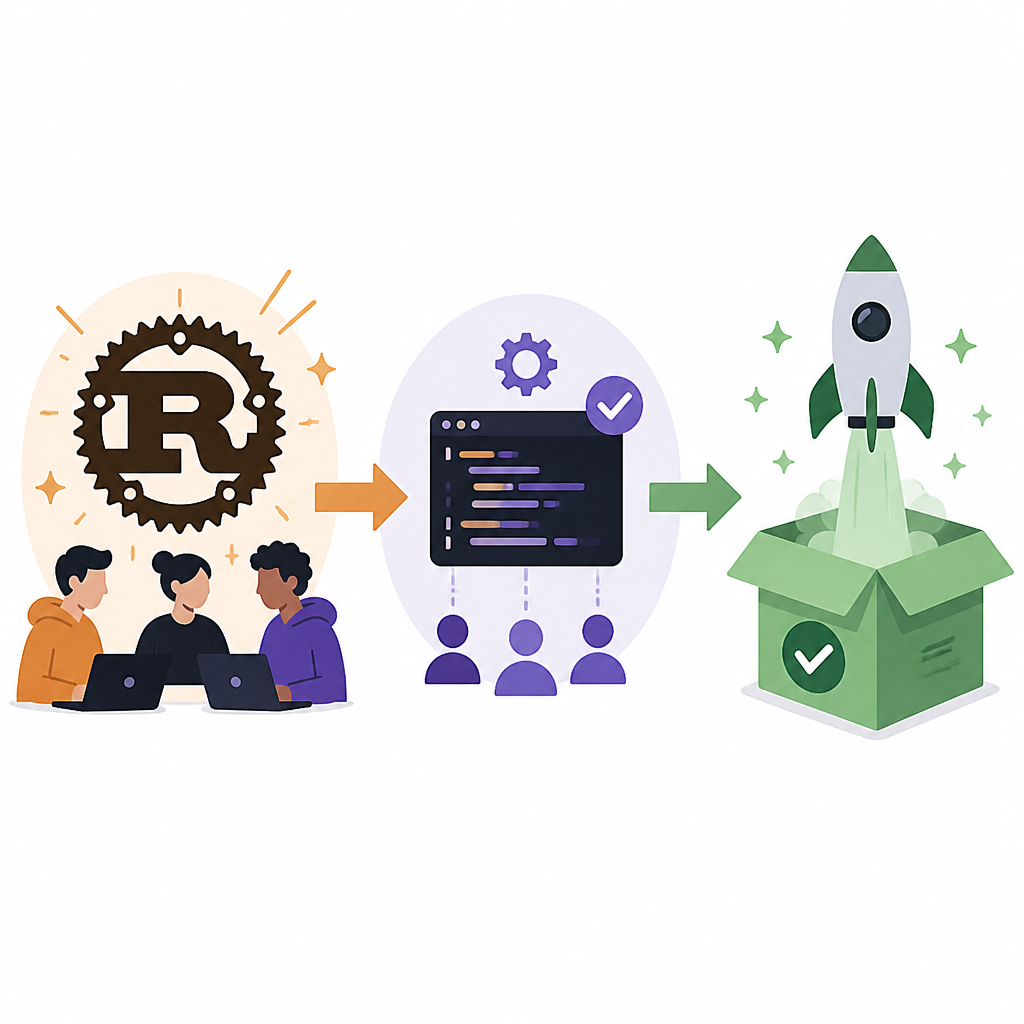
What this actually means is that Rust is no longer just the language you pick for backend services and CLI tools. It is increasingly a serious option for hardware-adjacent work, where the old default was “well, I guess we’re writing C again.” That default has been getting more expensive for years, and people are finally sick of it.
I’ve had to work in codebases where the hardware layer was treated like a sacred mess nobody wanted to touch. The result is usually the same: tribal knowledge, brittle abstractions, and a release process held together by coffee and fear. Rust helps because it gives you a way to build guardrails without pretending the hardware is friendly.
The SuperTuxKart tournament detail is funny on the surface, but I think it’s doing real work. It shows the graphics stack isn’t just a slide deck exercise. People are testing drivers, rendering paths, and integration in public. That’s how trust gets built in systems work. Not through slogans, through demos that survive contact with reality.
How I’d use this in practice: if you’re in embedded or graphics, start by isolating the nastiest boundary. Use Rust where the invariants matter most and where C’s flexibility keeps biting you. Don’t try to rewrite the whole stack at once. That’s how you end up with a half-finished migration and a lot of regret.
- Wrap the hardware boundary first.
- Keep the unsafe surface area tiny and reviewed.
- Use Rust where testing is hard and failures are costly.
Tooling is becoming boring, and that is a compliment
The recap highlights parallel tracks on compilers, async patterns, and tooling improvements that will land in coming releases. It also points to the April 2026 goals update, which includes faster compilation, trait-system progress, Cargo improvements, Rust-for-Linux work, and ongoing language experimentation. That’s the kind of list that sounds dull until you’ve spent months waiting on builds or fighting your package manager.
What this actually means is that Rust is trying to become less dramatic in the day-to-day. Faster compilation is not sexy, but it changes whether a team tolerates the language in a large codebase. Cargo improvements matter because build tooling is where developer goodwill goes to die. Trait-system progress matters because the language’s power is only useful if the compiler can still keep up with humans.
I’ve been on teams where the language was technically loved and practically resented because every edit turned into a coffee break. That’s not a sustainable adoption story. Tooling is the difference between “we use this in a few places” and “we can actually standardize on it.”
How to apply it: if you’re choosing a stack, don’t separate language features from toolchain quality. Measure build times, dependency pain, editor integration, and release friction. If those are bad, no amount of type-system elegance will save you. Rust’s current direction seems to understand that, which is why it feels more mature than a lot of its louder peers.
There’s also a governance angle here. A language that keeps improving compiler speed, package management, and trait ergonomics is a language that respects the people using it every day. That sounds obvious, but a lot of ecosystems still act like developer time is free. It isn’t.
Rust is getting adopted where money and risk live
The recap mentions Abacus rewriting election software in Rust, a 25-year-old Java rendering engine being modernized with Rust and Bevy, and AWS open-sourcing ExtendDB, a Rust-written DynamoDB-compatible adapter. It also calls out gRPC officially adopting Tonic under CNCF and planning a production-ready Rust gRPC crate. That is a lot of adoption pressure in a very short span.
What this actually means is that Rust is showing up in places where correctness, portability, and maintainability have direct business value. Election software is not a toy. Rendering engines that have been around for a quarter century are not toy problems. A local/on-prem DynamoDB adapter is not a hobby project. These are the kinds of systems where teams get punished for choosing the wrong abstraction.
I like this part because it cuts through the usual language-war nonsense. Nobody rewrites a mission-critical system because they’re bored. They do it because the old stack is expensive to maintain, hard to secure, or too risky to evolve. Rust keeps winning these conversations because it reduces the number of ways a system can fail.
The gRPC/Tonic piece is especially notable because it shows the ecosystem is maturing around real standards bodies and production expectations. That is a huge deal for enterprise adoption. A lot of teams don’t want “a Rust library.” They want a path that fits into existing infrastructure without a heroic migration story.
How I’d use this: if you’re trying to justify Rust internally, anchor your argument in one of three buckets: security, long-term maintenance, or interoperability. You do not need to sell the entire company on Rust. You need one project to prove the economics.
- Security-sensitive systems get the strongest Rust pitch.
- Long-lived codebases benefit from fewer memory bugs and clearer ownership.
- Interop-heavy projects need ecosystems like Tonic that fit existing standards.
The community is still the secret weapon
The recap spends time on the Project All-Hands and the mix of maintainers, contributors, and newcomers working side by side. That might sound soft compared with kernel CVEs and compiler work, but I think it’s one of the strongest signals in the whole piece. Tools matter. Communities decide whether tools survive.
What this actually means is that Rust is not just a language with good docs and a good compiler. It is an ecosystem with enough shared norms to keep moving without fragmenting into a hundred incompatible subcultures. That is harder than it looks. Most technical communities are great at starting arguments and mediocre at resolving them.
I’ve watched projects collapse because the maintainers became unreachable, the newcomers got ignored, or the roadmap turned into a private diary. Rust’s conference format, with its mix of formal and informal sessions, seems designed to prevent that. It keeps the project close to actual users, which is how you avoid building a language for an imaginary audience.
How to apply it: if you’re building an internal platform or framework, copy the social structure, not just the code. Create a place where users can talk to maintainers, where feedback gets folded into the roadmap, and where new contributors can actually find a way in. That’s not fluff. That is how technical systems stay alive.
And honestly, that’s why Rust feels different right now. Not because every problem is solved. Because the people around it seem to know which problems matter, and they keep showing up to do the work.
The template you can copy
# Rust adoption recap template for your team

## What changed
- We stopped treating Rust as an experiment and started using it in production paths.
- We picked one area where bugs are expensive and rewrote the boundary first.
- We measured build time, defect rate, and maintenance load instead of arguing from taste.

## Why this matters
- Memory safety reduced the class of issues we kept paying for twice.
- The toolchain was good enough for daily use, not just demos.
- The ecosystem had the libraries and standards we needed to fit existing infrastructure.

## Where we used Rust
- Kernel-adjacent or systems-critical components
- Embedded or hardware-facing code
- Tooling, adapters, and integration layers
- Performance-sensitive services with long maintenance horizons

## Migration rules
1. Start at the highest-risk boundary, not the whole app.
2. Keep unsafe code isolated and reviewed.
3. Prefer interoperability over rewrites.
4. Track compile times and developer friction from day one.
5. Use Rust where failures are costly, not where it is fashionable.

## Decision checklist
- Does this code own memory or interact with untrusted input?
- Are bugs here expensive to diagnose or patch?
- Do we need a standard protocol or adapter path?
- Can we keep the Rust surface area small at first?
- Do we have maintainers who will stay with the code?

## Internal pitch
Rust is worth it here because it lowers the cost of correctness in a part of the system we keep revisiting.
We are not rewriting everything.
We are replacing the pieces where safety, maintainability, and long-term cost matter most.

## Adoption metrics
- Compile time before and after
- Number of memory-related incidents
- Review time for unsafe or boundary code
- Time to onboard a new engineer
- Maintenance effort per release
If I were rolling Rust out in a real team, I’d use that template as the first internal memo. It keeps the conversation grounded in risk, cost, and rollout shape instead of vague enthusiasm. That’s usually where these discussions go off the rails.
Source attribution: this breakdown is based on Rust Bytes’ RustWeek 2026 Recap and the linked items mentioned in that issue. I’ve added my own framing, but the event details and project mentions come from the original recap.
// Related Articles
- [IND]
Gemini lands inside Apple’s developer stack
- [IND]
Five AI coding IDEs that fit real workflows
- [IND]
Devin Desktop turns Windsurf into an agent hub
- [IND]
Korea’s Nvidia talks point to an AI factory push
- [IND]
OpenAI should not rush its IPO just to win the AI race
- [IND]
OpenAI updates its Europe privacy policy