Spotify’s AI remix deal turns fandom into a workflow
Spotify’s Universal deal adds licensed AI remixes and covers, and I break down what it means for builders, artists, and product teams.
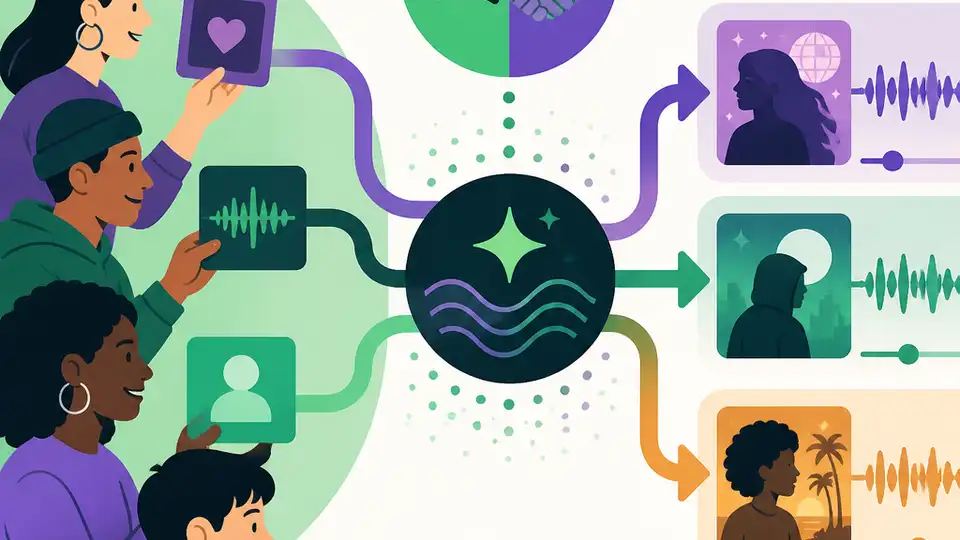
Spotify’s new AI remix deal turns listening into licensed creation.
I've been using Spotify for years, and honestly, the product has always felt a little too clean for how messy music fandom actually is. I can favorite a track, queue it, share it, and save it to a playlist I’ll forget about later. But if I want to do what fans actually do online, which is poke at a song, remix it, cover it, mash it up, and make it weird in a way that still feels respectful, the platform has usually had nowhere to go. That gap has annoyed me for a while. Spotify is where music lives for a lot of people, but it has mostly treated listeners like passive consumers with a very nice shuffle button.
So when I saw The Guardian’s report on Spotify and Universal Music Group agreeing to let subscribers create AI remixes, my first reaction was not “cool.” It was: finally, they’re admitting the old boundaries are fake. People already use AI tools to make music-adjacent junk, tribute tracks, and fake covers. The real question is whether the platform chooses to ignore that behavior or wrap it in consent, credit, and compensation. Spotify is clearly trying to do the second one, and that changes the product conversation a lot.
What follows is me unpacking the deal the way I would for a team trying to ship something similar without stepping on every rake in the yard.
Spotify is not selling “AI music.” It’s selling permission
Get the latest AI news in your inbox
Weekly picks of model releases, tools, and deep dives — no spam, unsubscribe anytime.
No spam. Unsubscribe at any time.
“This initiative is firmly artist-centric, rooted in responsible AI, and will drive growth for the entire ecosystem.”
That line is from Universal Music chief executive Lucian Grainge in the Guardian piece, and it tells you exactly how this deal is being framed. Not as a free-for-all generator. Not as a toy. Not as a replacement for artists. It’s permissioned creation wrapped in licensing language.
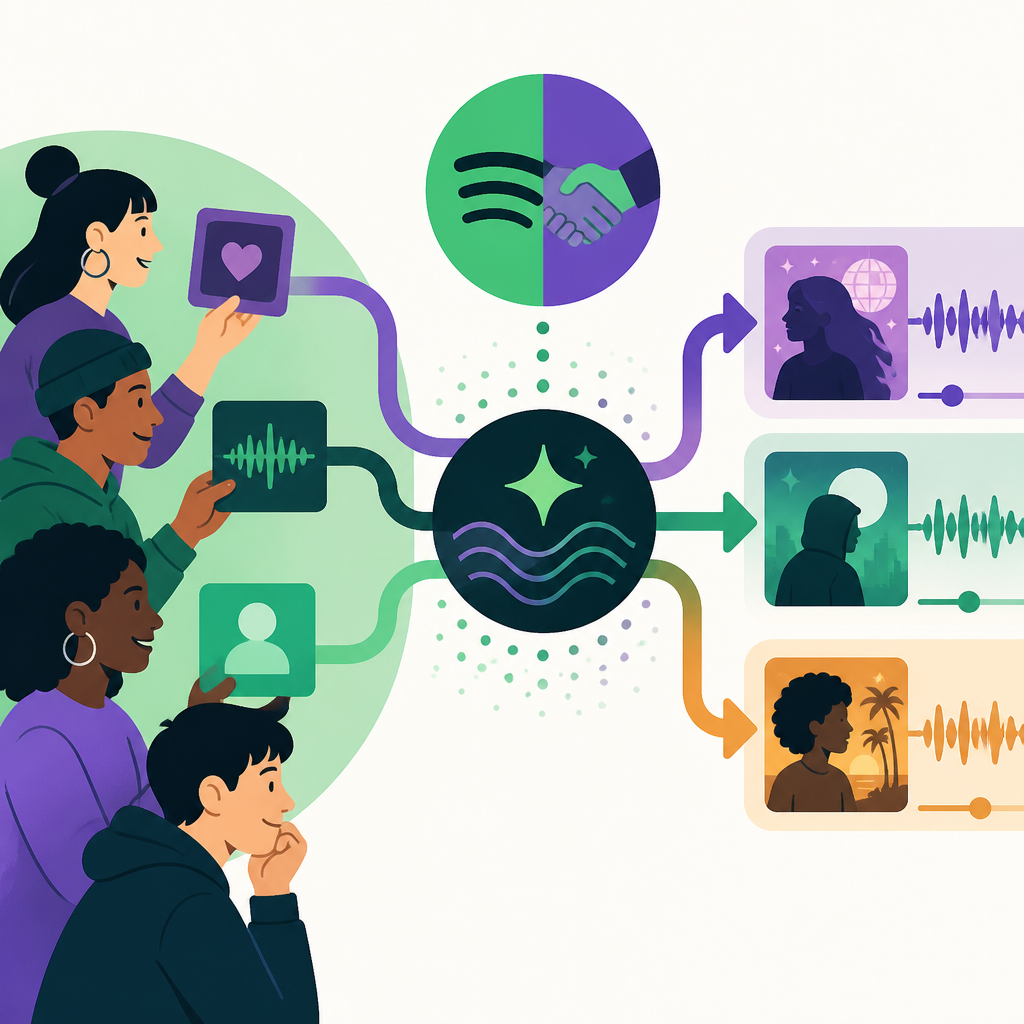
What this actually means is that Spotify is trying to move AI music from the gray market into a paid, contracted product surface. The important word here is not AI. It’s licensed. Spotify is saying: if you want to create a cover or remix, you can do it inside our system, but only with participating artists and only under terms we’ve negotiated.
I’ve seen enough product teams make the same mistake here. They hear “AI” and start designing the generation flow first. That’s backward. The real product is the rights layer. If you don’t solve who gets paid, who gets credited, and who can opt out, the feature becomes a lawsuit with a nice UI.
How to apply it: if you’re building anything generative around third-party content, start by mapping the permission model before you sketch the prompt box. Ask three questions up front:
- Who has to consent before generation is allowed?
- What gets tracked for credit and payout?
- What can users export, publish, or share after creation?
That’s the boring part. It’s also the part that decides whether your feature survives.
The paid add-on model is the real story
The Guardian says the feature is expected to arrive as a paid add-on in Spotify’s app, available to Premium users. That matters more than the AI branding. Spotify is not just adding a button; it’s building a new monetization tier on top of the existing subscription stack.
What this actually means is Spotify is testing whether fandom can be converted into a higher-value creation workflow. Basic listeners stay on the standard plan. The people who want to remix, make licensed covers, and play with artist-approved AI get a paid upgrade. That’s a classic platform move, and it makes sense if you’re trying to expand revenue without blowing up the core subscription product.
I’ve run into this pattern in SaaS a few times: when the base product is mature, the easiest growth path is not more users, it’s more intense users. Spotify seems to be betting that a slice of fans will pay for creative participation, not just playback. I think that’s plausible. Fans already pay for vinyl variants, deluxe editions, stems, sample packs, Patreon tiers, and weird merch. Paying for a sanctioned remix tool is not some huge leap.
But there’s a catch. If the add-on feels like a tax on creativity, people will hate it. If it feels like access to something they couldn’t do legally anywhere else, they’ll tolerate the price. That distinction is everything.
How to apply it: if you’re designing a paid AI feature, don’t sell “AI.” Sell the outcome and the legitimacy. For example:
- licensed remix access
- artist-approved cover generation
- exportable fan edits with attribution
That language is less flashy and way more honest. Also, it keeps your product from sounding like a demo nobody asked for.
Consent, credit, compensation are the whole interface
Spotify chief executive Alex Norström said the company is building this around “consent, credit and compensation.” That’s the product spec hiding in plain sight. Those three words are not PR decoration. They are the actual control surface for the system.
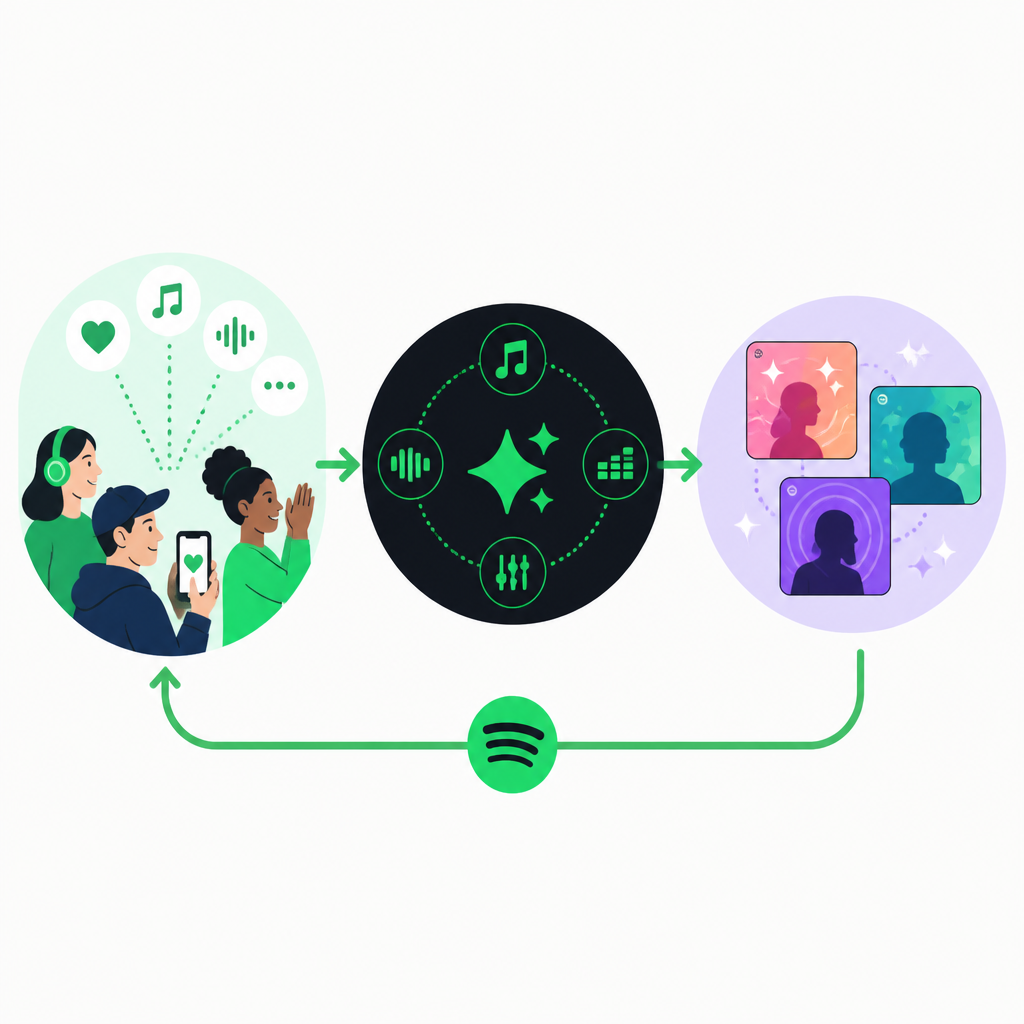
What this actually means is that every AI output needs to be traceable back to a rights relationship. Consent means an artist or label can participate or not. Credit means the output can’t erase the source. Compensation means the platform has to account for usage in a way that pays the right people. If any one of those breaks, the whole promise gets flimsy fast.
I ran into this exact tension when I helped shape a content workflow that used licensed assets. The engineering team wanted a single “generate” endpoint. Legal wanted a matrix of permissions. Product wanted speed. The only workable answer was to treat permissions as first-class data, not a policy footnote. Spotify has to do the same thing here, except at a much bigger scale and with much louder stakeholders.
This also explains why Universal Music matters so much. Spotify is not trying to negotiate with the entire internet. It’s starting with a major rights holder that can bring catalog depth and institutional cover. That’s a much saner launch path than pretending every song is equally available for AI transformation.
How to apply it: build your system so every asset has metadata for:
- participation status
- attribution requirements
- revocation rules
- revenue share logic
If you cannot model those fields cleanly, you are not ready to ship generative features on top of someone else’s work.
This is Spotify trying to grow beyond passive streaming
The Guardian notes that Spotify is looking for new ways to expand beyond the traditional music subscription and adopt AI into its ecosystem. That’s the strategic layer underneath the feature. Streaming alone is mature. Margins are finite. If Spotify wants more room to grow, it has to create new behaviors, not just more listening minutes.
What this actually means is Spotify wants to become a place where music is not only consumed but remade. That is a different product category. Once users can create licensed remixes inside the app, Spotify is no longer just a catalog and playback layer. It becomes a creative platform with distribution built in.
That’s a smart move, but it also raises the bar. If you invite creation, you inherit moderation, provenance, abuse, and quality problems. The article mentions Spotify’s earlier move to distinguish human artists from AI-generated content with its Verified by Spotify badge. That’s not unrelated. If you open the door to AI-assisted creation, you also need a way to tell users what they’re hearing and who made it.
I like this part of the strategy, even if it’s messy. The old model was simple: upload, stream, repeat. The new model is more honest about how people already interact with media. They don’t just listen. They remix, annotate, parody, and repost. Spotify is finally trying to meet that behavior where it lives.
How to apply it: if your product is stuck in a consumption loop, look for one adjacent creation action that users already do off-platform. Then ask whether you can support it with rules instead of pretending it doesn’t exist.
The artist problem is not a side issue
The Guardian reports that Spotify says the tool could create an extra stream of income for artists and songwriters. That sounds nice, but it’s also the hardest part to get right. A lot of platforms say “new revenue” when they really mean “new usage.” Those are not the same thing.
What this actually means is artists are being asked to trust that fan-made AI remixes will not cannibalize their work, distort their brand, or flood the market with junk. Some will be open to that. Some will hate it. Universal’s participation gives Spotify a way to say the system is artist-centric, but that claim only holds if artists can actually control participation and see meaningful money.
I’ve watched creator platforms get this wrong before. They launch with feel-good language about empowerment, then bury the payout math in a dashboard nobody checks. That’s how trust dies. If Spotify wants this to work, artists need clear terms, clear opt-ins, and a way to understand what kinds of fan outputs are allowed.
There’s also a brand issue. A licensed remix tool can still produce embarrassing results. Not every artist wants a thousand half-baked AI versions of their biggest hit floating around. So the product needs taste controls, not just generation controls.
How to apply it: if you’re building a creator-facing AI feature, give rights holders real knobs:
- which tracks are eligible
- which transformation types are allowed
- where outputs can be shared
- whether outputs can be public or private only
If the only choice is yes or no, you’ve probably designed too shallow a system.
Verification is the other half of the story
The same article mentions Spotify’s Verified by Spotify badge, a green checkmark that appears on artist profiles and in search results to help users distinguish human artists from AI-generated content. That’s a small detail on paper, but it’s actually part of the same trust architecture.
What this actually means is Spotify knows that once AI creation becomes normal, identity becomes a product feature. Users need to know whether a track, profile, or remix came from a human artist, an AI-assisted workflow, or some blend of the two. Without that, the service gets noisy very fast.
I think this is the piece a lot of teams underestimate. Generative tools don’t just create content. They create ambiguity. If you don’t label that ambiguity clearly, users lose confidence in the whole system. Spotify is trying to avoid that by pairing generation with verification. That’s the right instinct.
The interesting part is how this might affect discovery. A verified human artist badge can become a trust signal, but it can also become a status layer. That may help listeners, but it also creates a hierarchy between human and AI-generated material. Given the current music industry anxiety around fake tracks and spam uploads, I don’t think Spotify has much choice.
How to apply it: if your platform allows generated content, add visible provenance tags early. Don’t hide them in settings. Make them part of search, profile pages, and share cards. Users need to know what they’re seeing before they decide to care.
The template you can copy
# Licensed AI remix feature template

## Product goal
Let subscribers create AI-generated remixes and covers of participating artists inside the app, with clear consent, credit, and compensation rules.

## Eligibility
- Only available to paid subscribers
- Only available for tracks from participating rights holders
- Only available for content that passes rights and safety checks

## Rights model
For each track, store:
- participation_status: opted_in | opted_out | pending
- allowed_transformations: remix | cover | stem_edit | none
- attribution_requirements: required | optional | none
- revenue_share_model: fixed | percentage | custom
- export_permissions: private_only | shareable | downloadable
- revocation_rules: immediate | scheduled | contract_term

## User flow
1. User selects an eligible track.
2. App shows what transformations are allowed.
3. User chooses remix or cover mode.
4. System confirms consent and rights before generation.
5. Output includes attribution and provenance metadata.
6. User can save, share, or export only within allowed permissions.

## Artist controls
- Opt in or out per track or catalog group
- Choose which transformation types are allowed
- Set public/private sharing rules
- Review payout reporting
- Revoke participation according to contract terms

## Safety and trust
- Label outputs as AI-generated or AI-assisted
- Show source track and participating rights holder
- Block generation for disallowed content
- Log every generation event for audit and payout
- Display verification badges for human artists where relevant

## Payout logic
- Track every eligible generation event
- Attribute usage to the correct rights holder(s)
- Calculate payouts based on agreed contract terms
- Provide a monthly rights dashboard

## Launch checklist
- Legal approval for all participating catalogs
- Product copy reviewed for accurate claims
- Provenance metadata included in every output
- Search and profile surfaces updated with labels
- Support flow for takedowns, disputes, and opt-outs

## Copy line for the product page
Create licensed AI remixes and covers from participating artists, with consent, credit, and compensation built in.
That template is the part I’d actually hand to a team. It’s not fancy, but it forces the right questions before anyone gets distracted by prompt UI, model choice, or some nonsense demo video.
If I were building this from scratch, I’d keep the first release painfully narrow. One transformation type. A limited catalog. Strong labeling. Clear payout terms. That’s enough. The mistake would be trying to make it look like a universal music generator on day one. That’s how you end up with a licensing headache and a feature nobody trusts.
Spotify’s deal with Universal Music is interesting because it treats AI as a negotiated product surface instead of an uncontrolled novelty. That’s the part worth copying, not the headline.
Source attribution: I broke this down from The Guardian article by Zesha Saleem. The framing, breakdown, and template are mine; the deal details and quoted statements come from the original report.
// Related Articles
- [IND]
Korea’s Nvidia talks point to an AI factory push
- [IND]
OpenAI should not rush its IPO just to win the AI race
- [IND]
OpenAI updates its Europe privacy policy
- [IND]
OpenAI is right to keep ads out of sensitive chats
- [IND]
AI bootlegs are already draining streaming royalties
- [IND]
AMD and Microsoft push Windows ML on GPU and NPU