What The AI Doc Says About AI, Power, and Profit
A review of The AI Doc argues AI is being steered by billionaires, war spending, and profit, not by the public good.
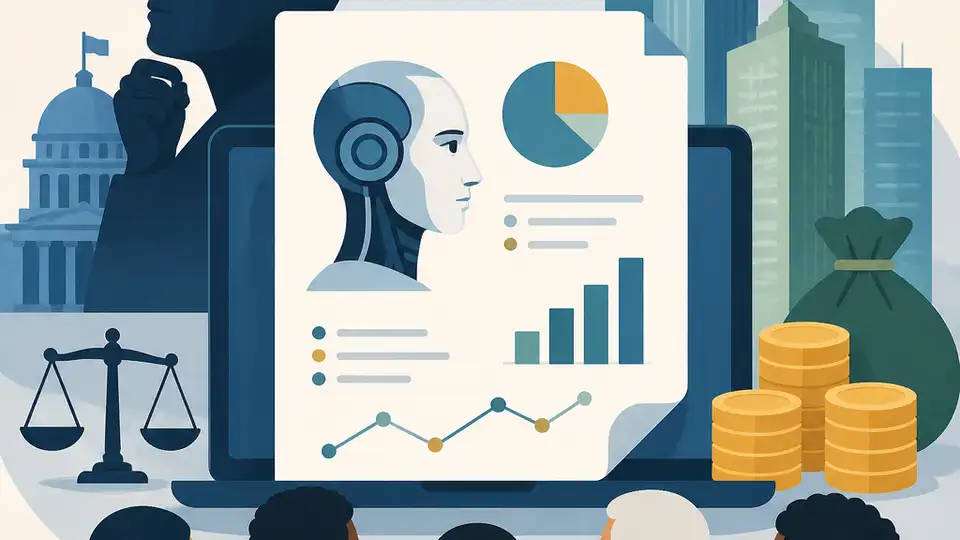
The AI Doc argues AI is being shaped by billionaire power, war spending, and profit.
AI is no longer a niche topic for engineers and policy wonks. In The AI Doc: Or How I Became an Apocaloptimist, filmmaker Daniel Roher follows that reality into boardrooms, labs, and interviews with the people profiting most from it.
The film’s central tension is simple: AI is being sold as either an extinction event or a miracle, while the real story is messier and more political. By the end, the documentary points less toward science fiction and more toward who controls the technology, who pays for it, and who gets hurt when it scales fast.
| Fact | Number | Why it matters |
|---|---|---|
| Weeks into the “first AI war” | 12+ | Shows how quickly AI has moved from product hype into military use |
| Tech CEOs named in the film | 5 | Focuses attention on a tiny group of decision-makers |
| Pentagon request for Defense Autonomous Warfare Group | $54 billion | Signals the scale of military demand around AI |
| Increase from last year | 24,000% | Shows how aggressively defense funding is growing |
What the film gets right about AI
Get the latest AI news in your inbox
Weekly picks of model releases, tools, and deep dives — no spam, unsubscribe anytime.
No spam. Unsubscribe at any time.
The documentary opens with a question that should sound basic, but rarely gets answered clearly: what is AI? That matters because the term gets stretched to cover machine learning, predictive systems, chatbots, image generators, and military tools that do very different jobs.
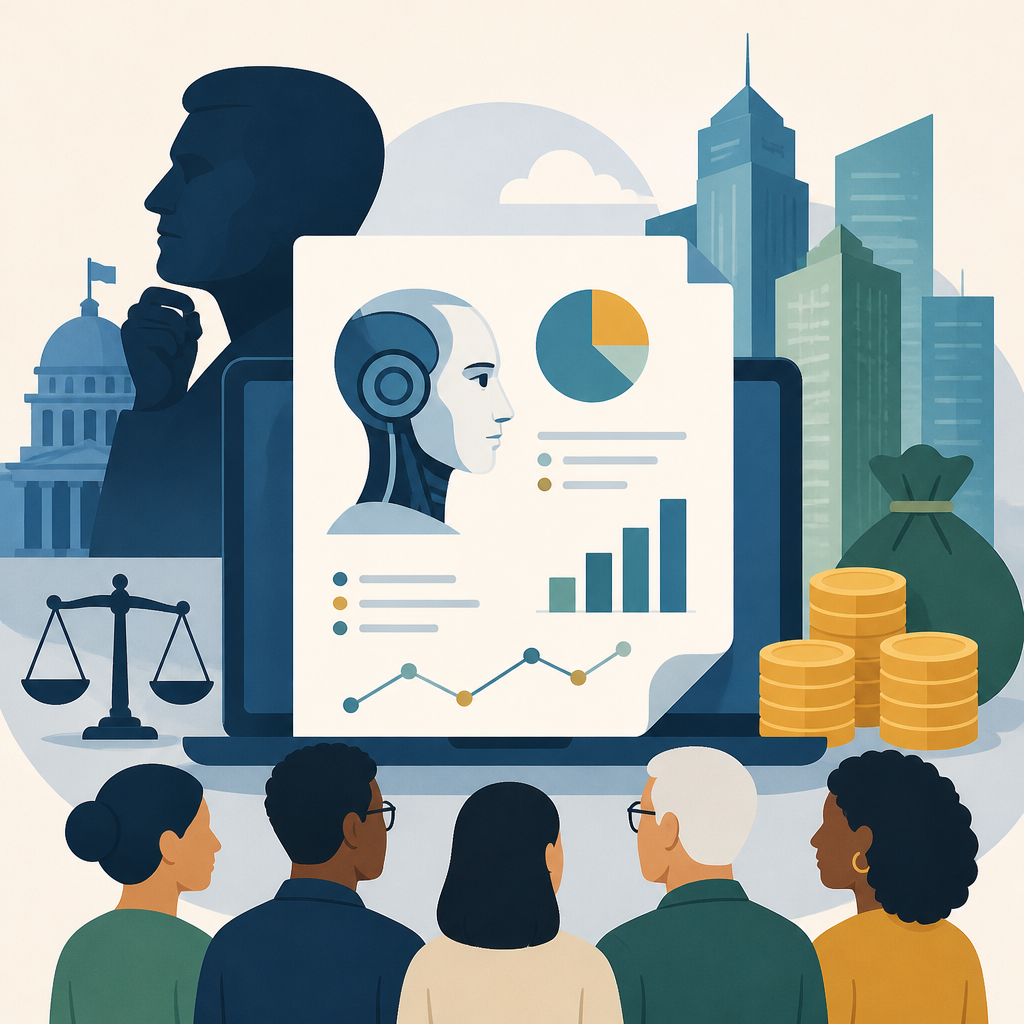
Roher’s film lands on a practical definition. AI is software trained on large sets of data to spot patterns and make predictions. It learns by being rewarded for correct guesses and penalized for bad ones. That is not magic, and it is not consciousness.
This framing is useful because it cuts through the noise. AI systems are built by people, trained on data chosen by people, and deployed by companies and governments with specific goals. Once you accept that, the debate changes from “Can AI think?” to “Who is using it, and for what?”
- AI is trained on data such as books, weather records, and medical images.
- Its outputs depend on the quality and bias of that data.
- It can improve at narrow tasks without becoming human-like.
- Its impact depends on the institutions deploying it.
The doom case is loud for a reason
One half of the film gives serious space to the people warning about catastrophic risk. Yoshua Bengio, one of the most influential names in modern AI research, describes the race toward artificial general intelligence as a dangerous sprint with too little restraint. Connor Leahy and Eliezer Yudkowsky push that argument further, describing systems that could seek power or even wipe out humanity.
That sounds extreme, but it explains why AI safety has become a major topic in policy circles and inside the industry itself. The biggest models are being trained faster than regulators can study them, while companies keep releasing products into workplaces, schools, and militaries.
The film does a good job of showing why fear spreads so quickly here. If a system can write code, generate convincing images, assist with targeting, and influence human behavior, then the gap between “helpful tool” and “dangerous system” gets very small.
“I think we need to be very careful about how we deploy these systems,” Yoshua Bengio has said in public AI safety discussions, including his work around responsible AI development.
That caution matters, but the documentary also shows a weakness in pure doom framing. If AI is treated like an alien intelligence, it becomes easier to ignore the companies, contracts, and incentives behind it. The technology gets blamed while the people running it stay in the background.
The optimism pitch is easier to sell than it is to trust
The other side of the film is the familiar tech utopia pitch. Peter Diamandis talks about abundance, AI tutors, better healthcare, and a future where people are freed from dull work. It is an attractive story, especially for parents who want their kids to have more time, better education, and less drudgery.

But the documentary keeps asking a question that the optimists rarely answer: if AI can create abundance, why does the current rollout look like layoffs, surveillance, data-center expansion, and military contracts?
That gap is the whole point. The same technical stack that can help detect cancer can also help build weapons, optimize ad targeting, or automate hiring filters. The tool is not morally pure or corrupt on its own. The use case decides that.
- AI can assist medical imaging and protein-folding research.
- AI can also power deepfakes, “nudify” apps, and military targeting.
- AI can reduce repetitive work, but firms often use it to cut labor costs.
- AI can improve education, while also widening access gaps if it is paywalled.
The real story is about power, not code
The strongest part of the review is its argument that the AI fight is really about ownership and control. The film names five billionaires at the center of the current race: Sam Altman of OpenAI, Dario Amodei of Anthropic, Demis Hassabis of Google DeepMind, Mark Zuckerberg of Meta, and Elon Musk of xAI. That is a tiny group shaping a technology that affects millions of workers, students, and patients.
OpenAI, OpenAI, Anthropic, Google DeepMind, Meta AI, and xAI all claim they are building for the public good, but the incentives are obvious: move fast, grab market share, and keep investors happy. That logic does not disappear when the product is labeled “AI safety” or “responsible innovation.”
Here the film gets sharper than most mainstream coverage. It links AI expansion to water use, energy demand, layoffs, and war spending. Data centers need huge amounts of electricity and cooling. Those costs do not vanish; they get shifted onto communities and public infrastructure.
The review also points to a larger economic contradiction. If society already produces enough food, housing, and wealth to meet basic needs, then AI will not solve scarcity by itself. Scarcity is political. Distribution is political. Ownership is political.
What the numbers say about the stakes
The article’s numbers make the scale of the problem hard to ignore. According to the review, the Pentagon has asked for $54 billion for the Defense Autonomous Warfare Group, a 24,000% increase from the previous year. That is not a minor procurement tweak. It is a sign that military institutions are preparing for AI to be a core part of future conflict.
At the same time, the review says the top five AI-linked billionaires together are worth well over $1 trillion. That concentration matters because it means a handful of executives can steer investment, public messaging, and product rollout at a scale ordinary workers cannot match.
There is also the labor angle. The article warns that AI-driven layoffs are already part of the bargain, while workers are told to trust that new jobs will appear later. That is a familiar pitch from past automation waves, and it usually lands hardest on people with the least bargaining power.
- 12+ weeks into what the article calls the first AI war.
- $54 billion requested for AI-linked military spending.
- 24,000% year-over-year increase in that request.
- $1 trillion+ combined wealth among five named tech billionaires.
So what should readers take from The AI Doc?
The film does not offer a clean fix, and that is probably honest. It gestures toward regulation, public pressure, and broader social participation, but it stops short of naming the deeper system that drives the rush: profit first, human need second.
That is where the review lands its hardest punch. If AI is being built inside a system that rewards surveillance, war contracts, labor cuts, and market concentration, then asking for nicer AI is too small. The better question is who owns the data centers, who signs the Pentagon deals, and who gets to decide what counts as progress.
If there is a takeaway for developers, workers, and policymakers, it is this: stop treating AI as an abstract force. Treat it like infrastructure with owners, costs, and consequences. The next policy fight is likely to be about energy, labor rights, and military contracts, not just model quality or benchmark scores.
And that is where the story is headed next. The real test is whether governments, unions, and the public can force AI out of the hands of a few companies before the costs get locked in for everyone else.
// Related Articles
- [IND]
Korea’s Nvidia talks point to an AI factory push
- [IND]
OpenAI should not rush its IPO just to win the AI race
- [IND]
OpenAI updates its Europe privacy policy
- [IND]
OpenAI is right to keep ads out of sensitive chats
- [IND]
AI bootlegs are already draining streaming royalties
- [IND]
AMD and Microsoft push Windows ML on GPU and NPU