Why Walrus Is Right to Put AI Memory on a Blockchain
Walrus is right: AI agents need verifiable, portable memory, not another vendor-locked cache.

Walrus is right: AI agents need verifiable, portable memory, not another vendor-locked cache.
Walrus’s MemWal SDK is the right answer to a real problem: AI agents are becoming useful only when their memory outlives a single app, model, or provider.
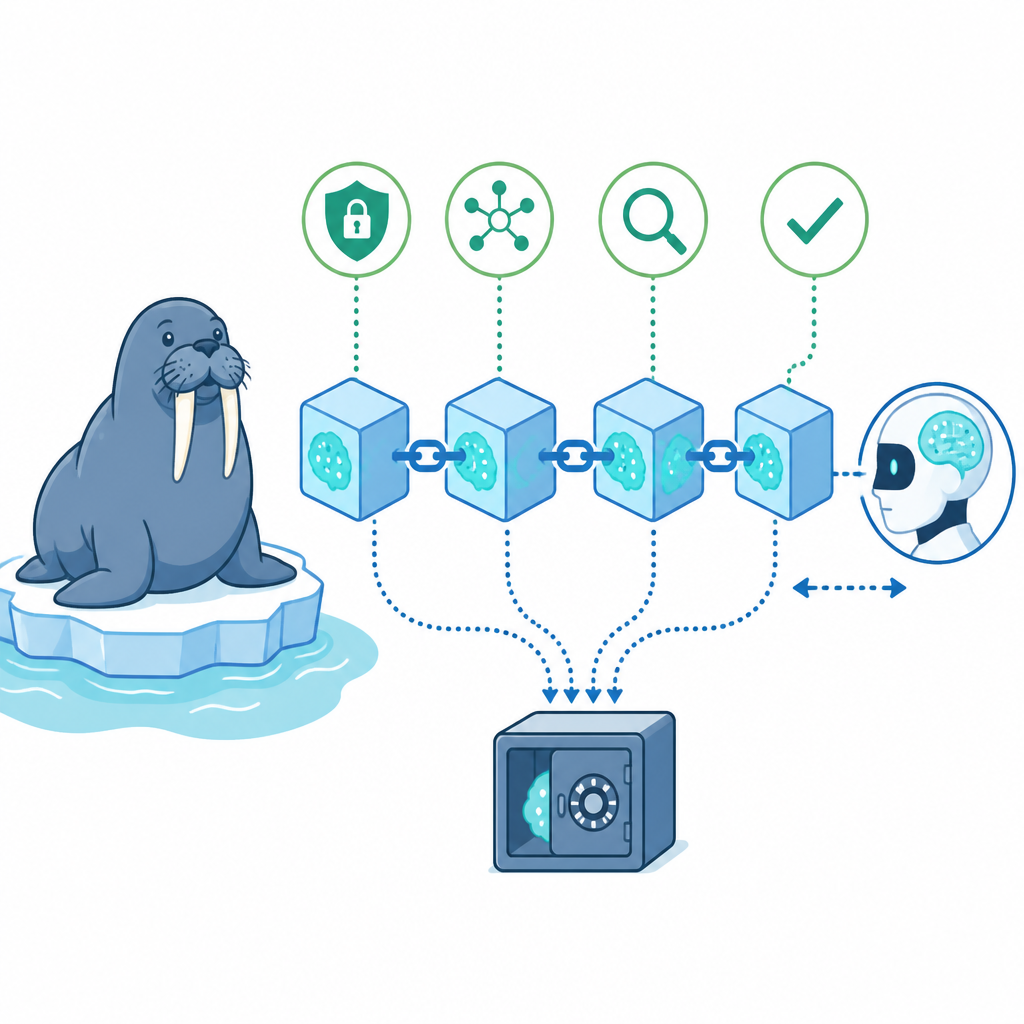
The current default is brittle. Agent memory usually lives inside a product database, a vector store tied to one stack, or a proprietary service that disappears the moment a team changes vendors. That is fine for demos and dangerous for systems that are supposed to remember users, workflows, and permissions over time. MemWal’s pitch is simple and correct: store memory on decentralized infrastructure, encrypt it, make it searchable by meaning, and let users control access instead of handing the keys to whichever model vendor happens to be in the loop.
First, memory without portability is not memory at all
Get the latest AI news in your inbox
Weekly picks of model releases, tools, and deep dives — no spam, unsubscribe anytime.
No spam. Unsubscribe at any time.
The strongest case for MemWal is that AI memory only matters if it survives model churn. A customer support agent that learns a user’s preferences is useless if that knowledge is trapped inside one provider’s API or one framework’s internal store. Walrus says MemWal is built to move memory across models and vendors, and that portability is the difference between a feature and a moat. If the memory cannot travel, the user cannot own it.

There is already a familiar example of what happens when portability is ignored: enterprise teams build around one assistant, then discover that migration means starting over. Conversations, preferences, and task history do not cleanly transfer because the memory was never designed as infrastructure. MemWal takes the opposite stance by making memory a data layer, not a side effect of one product. That is the right architecture for agents that are supposed to work across Vercel AI SDK, OpenClaw, NemoClaw, and whatever comes next.
Second, verifiability is the missing trust layer for agent memory
AI systems fail quietly when memory is altered, lost, or rewritten without anyone noticing. Walrus’s claim that MemWal stores encrypted memories on a verifiable data layer matters because agent memory is not just convenience data; it can drive decisions, permissions, and downstream actions. If an agent forgets a policy, or worse, remembers the wrong one, users need a way to confirm what was stored and whether it changed.
This is where decentralized storage has a real advantage over ordinary cloud persistence. A centralized database can be secure, but it is still controlled by one operator and one administrative trust domain. Walrus and Sui are arguing for a stronger model: ownership and access control enforced by the network, with users deciding who can read, write, or share memory. That is a meaningful upgrade for collaborative agents, especially in regulated workflows where auditability is not a nice-to-have but a requirement.
The counter-argument
The best objection is that blockchain-based memory is overengineered for a problem that most teams can solve with a standard database, a vector store, and a good permissions layer. For many products, that is true. Startups do not need decentralized storage to build a note-taking bot, a sales copilot, or a personal assistant prototype. They need speed, low latency, and simple operations, and a conventional stack often delivers those more cleanly than a new infrastructure layer.
There is also a practical concern about complexity. Developers do not want to manage encryption, semantic retrieval, access control, and chain-adjacent storage unless the payoff is obvious. If MemWal adds friction without making the product better, teams will ignore it. That criticism is fair, and Walrus should not pretend that every agent needs verifiable memory on day one.
But that limitation does not defeat the argument. It defines it. MemWal is not for throwaway demos; it is for agents that are meant to persist across products, teams, and providers. Once memory becomes user data, not app data, the bar changes. At that point, portability, verifiability, and shareability are not luxuries. They are the minimum standard, and decentralized infrastructure is the cleanest way to get there.
What to do with this
If you are an engineer, build memory as a separate layer from the model, and treat portability and access control as first-class requirements from the start. If you are a PM, stop specifying “remember the user” as a vague feature and define what must be stored, who owns it, how it is audited, and how it moves if you switch vendors. If you are a founder, choose infrastructure that survives your first model migration, because the AI stack will change faster than your product roadmap, and memory that cannot move will become technical debt on day one.
// Related Articles
- [AGENT]
Claude Code 动态工作流:AI 自写 Harness
- [AGENT]
Agent orchestration is the missing layer for enterprise AI
- [AGENT]
AI agents use blockchain as a trust layer
- [AGENT]
8 RAG patterns that turn demos into prod
- [AGENT]
Fine-tuning beats RAG when the goal is style, not facts
- [AGENT]
OpenClaw shows how small businesses use AI staff