Why Azure DevOps release timelines are the real product roadmap
Azure DevOps release timelines are the clearest signal of where Microsoft is actually investing.

Azure DevOps release timelines show where Microsoft is actually investing.
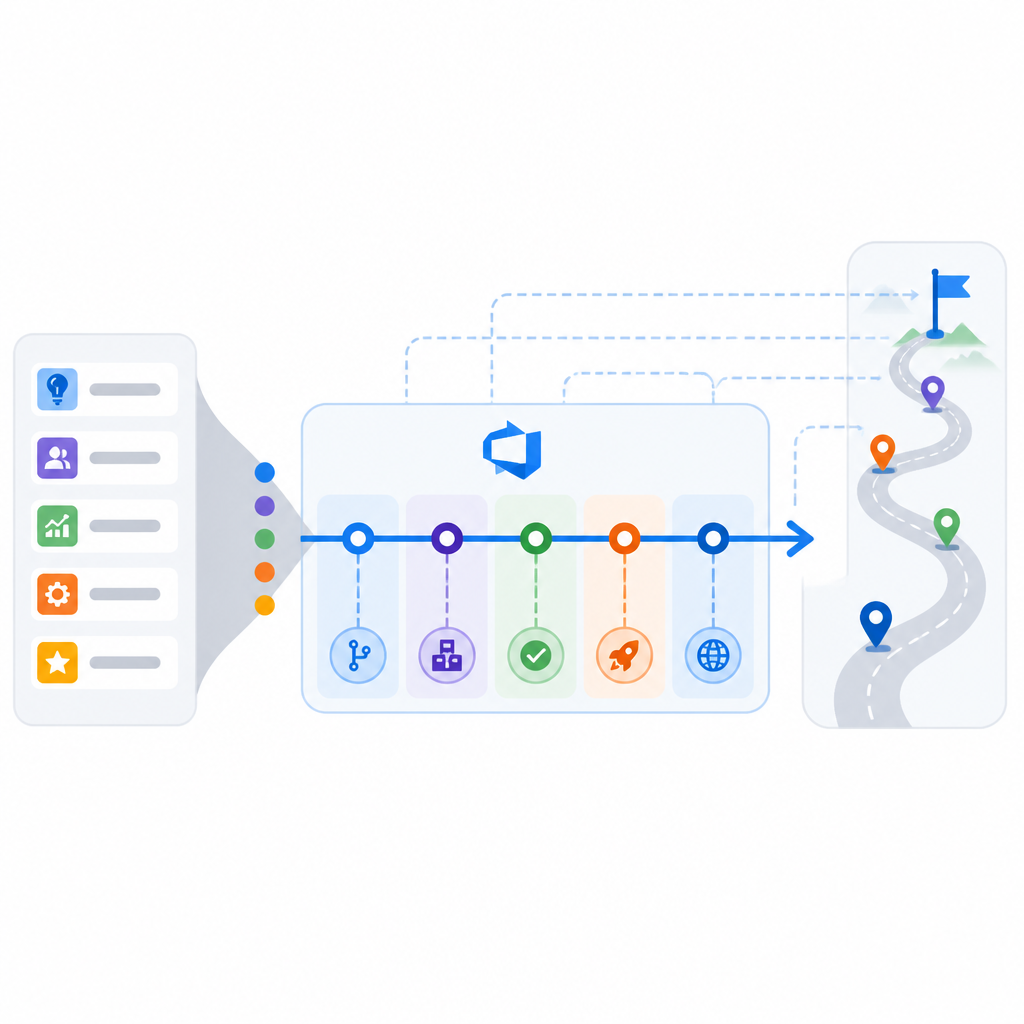
Azure DevOps’s released-features timeline is not just a changelog; it is the clearest public map of where Microsoft is putting engineering weight, and teams that ignore it are planning with a blindfold on. The pattern is obvious in the current timeline: the same few areas keep getting repeated investment, especially GitHub Advanced Security, Boards, Pipelines, Repos, and test tooling, while older habits like TFVC are being pushed toward retirement. When a vendor repeatedly ships around the same workflow surfaces, that is not noise. That is strategy.
The release timeline reveals product gravity, not trivia
Get the latest AI news in your inbox
Weekly picks of model releases, tools, and deep dives — no spam, unsubscribe anytime.
No spam. Unsubscribe at any time.
The strongest reason to treat this page seriously is that it exposes what Microsoft considers durable enough to keep funding. In the 2025 and 2026 entries, security dominates the cadence: secret scanning, CodeQL defaults, dependency scanning, alert UX, permissions enforcement, exportable security overviews, and status checks for pull requests all show up in a steady stream. That is not a random collection of point releases. It says Azure DevOps is becoming more opinionated about secure software delivery, and the center of gravity is moving toward policy, detection, and enforcement.

The same pattern appears in the platform’s collaboration surfaces. Boards gets richer filtering, improved Markdown editing, dynamic checklists, and Copilot integration. Repos gets pull request notification improvements, branch dropdown enhancements, unresolved comments on PR lists, and better status checks. Pipelines gets deployment history, stage navigation, debugging improvements, and secret rotation support. A product roadmap could claim these are separate feature tracks. A practical reader should see the opposite: Microsoft is tightening the loop between planning, code review, automation, and release.
The timeline is a migration guide in disguise
The clearest example is the repeated retirement language around legacy features. Obsolete TFVC check-in policies are being disabled, TFVC proxy upgrades are required for hosted repositories, and old OAuth apps are being removed or constrained. On top of that, Microsoft is narrowing older access patterns with PAT policy changes and token restrictions. This is what platform maturation looks like in real life: the company is not merely adding features, it is removing escape hatches that keep teams on outdated paths.
That matters because release notes often get read as optional reading, when in fact they are the earliest warning system for forced migration work. If your organization still depends on TFVC, old release flows, or brittle auth assumptions, the timeline is telling you to budget engineering time now. The same is true for organizations that rely on extension behavior, legacy pipeline tasks, or outdated security workflows. The timeline is a migration guide because it shows the future shape of the platform before the deprecation deadline arrives.
Microsoft is turning Azure DevOps into a policy engine
Look at the security features alone and the direction becomes unmistakable. The timeline includes secret push protection bypass details in audit logs, stale scan detection, one-click dependency scanning enablement, improved coverage filters, and work item linking for Advanced Security alerts. That is not just “better security.” It is a shift from passive reporting to governed operations, where every exception, bypass, and status change becomes observable and actionable. The platform is moving from tools that assist teams to controls that supervise them.
The same policy-first logic shows up in identity and access changes. Expired PATs can no longer be modified, global PATs are being retired, OAuth client secrets are shown only once, and continuous access evaluation is arriving. Those are not convenience upgrades. They are enforcement mechanisms. For engineering leaders, the implication is direct: Azure DevOps is becoming less tolerant of informal access management, and teams that depend on ad hoc permissions or long-lived secrets will feel the friction first.
The counter-argument
The best objection is that release timelines are backward-looking and therefore poor strategy tools. By the time a feature appears on this page, the real architectural decision has already been made, and the most important work may have happened months earlier in private preview. That is fair. A release timeline does not predict every move, and it does not replace product docs, roadmap calls, or direct engagement with Microsoft.
But that objection overstates the limitation. A public release timeline is still the most reliable signal available to most teams because it compresses thousands of product decisions into an auditable sequence. Even when the feature was incubating earlier, the released version tells you what is now stable enough to depend on, what is becoming mainstream, and what older behavior is being displaced. The value is not prophecy. The value is operational truth.
So yes, the timeline is not a crystal ball. It is better than that for working teams because it shows the platform’s actual direction in shipping form. If you need to know whether Microsoft is serious about security automation, board intelligence, pipeline ergonomics, or legacy retirement, the answer is already on the page. You do not need speculation when the release pattern is this consistent.
What to do with this
If you are an engineer, PM, or founder building on Azure DevOps, read the release timeline like a quarterly risk register. Track every feature that touches identity, secrets, pull requests, Boards, and pipeline behavior, then turn repeated themes into concrete backlog items. Audit your use of PATs, TFVC, old pipeline tasks, and extension dependencies now. Align your internal rollout plans with Microsoft’s cadence, not with your own assumptions. The teams that win on this platform will be the ones that treat release notes as architectural input, not product marketing.
// Related Articles
- [IND]
Gemini lands inside Apple’s developer stack
- [IND]
Five AI coding IDEs that fit real workflows
- [IND]
Devin Desktop turns Windsurf into an agent hub
- [IND]
Korea’s Nvidia talks point to an AI factory push
- [IND]
OpenAI should not rush its IPO just to win the AI race
- [IND]
OpenAI updates its Europe privacy policy